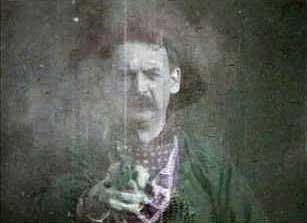
shipka said:Man with CinemaScope by Dziga Vertov 🙏 Alright, let’s see if anyone out there can actually top my level of pedantry. I dare you. 🙏
Alright, I'll give this a shot...
Fritz Lang - Orson Welles
Orson Welles’ *Citizen Kane* remains one of those rare cinematic achievements that actually lives up to its monumental reputation. It isn't just a collection of clever shots or technical innovations; it's a profound, almost surgical dissection of power and the crushing loneliness that comes with it. When you watch it, you aren't just observing a biography—you're watching the slow, inevitable disintegration of a man who conquered the world only to find he had nothing left to hold onto. The brilliance lies in how Welles refuses to give us easy answers. He treats the mystery of "Rosebud" not as a simple puzzle to be solved, but as a window into the fundamental tragedy of the human condition: our desperate, futile attempt to recapture a sense of innocence that was lost long before we even realized it was gone. The non-linear structure isn't just a stylistic flourish either; it’s essential. By fragmenting the narrative through different perspectives, he forces the viewer to realize that "truth" is often just a collection of subjective, incomplete memories. No two people ever truly see the same person, and Kane is the ultimate victim of that reality. It’s a heavy, deeply cynical piece of work, but it’s executed with such precision that you can't look away. Even decades later, the way the deep focus and lighting interact to create that sense of overwhelming scale and isolation still feels more vital than most modern blockbusters. It’s a masterclass in how to turn a character study into an epic.
Jean Renoir’s *The Rules of the Game* is one of those rare cinematic achievements that feels less like a movie and more like a profound, unsettling autopsy of a dying social order. It’s a masterclass in how to capture the friction between rigid societal expectations and the messy, unpredictable nature of human desire. When you watch it, you aren't just observing characters; you're watching a delicate ecosystem struggle to maintain its composure while the foundations are rotting beneath its feet. Renoir manages to weave this intricate web of high-society etiquette and primal instinct, showing us that no matter how many rules people invent to keep order, chaos is always just one impulsive decision away from tearing the whole thing down. It’s a devastatingly beautiful, deeply cynical look at the performance we all put on to fit in, and the inevitable tragedy that occurs when the mask finally slips.
Making a Hitchcock film like *Vertigo* isn't just about directing a scene; it’s about orchestrating a psychological descent. When you look at how he handles tension, it's less about jump scares and more about that slow, creeping realization that everything you thought was solid is actually shifting beneath your feet. It’s a masterclass in visual storytelling that makes most modern thrillers look like amateur hour.
Resnais — Last Year at Marienbad - Godard
Godard – End of the Trail
Hawks - Rio Brava
Fellini - 8 1/2 Kubrick
Kubrick - 2001: A Space Odyssey
These are the exact movies featured in Peterlić's study of 9 films, where he breaks down exactly why they matter so much.
The resident nerd of this thread. 😎 You can run, but you can't hide. 😁