CheckEmoji Community · the emoji forum
🏠 Home 🆕 What's new ❓ Unanswered 🔥 Popular 📡 RSS Members 👥 0 online log in · register
Home › Culture & Entertainment › Movies › Watch your step!

Watch your step!

Started by Michelle Howard2 · · 👁 9 views · 37 replies

📡 Subscribe to replies

Participants Michelle Howard2coppersailor28northerncrane4Patrick Martinelectriccanyon26Dennis Martin6Arthur Brown6vivideagle7Amanda Robinson4Gerald Jackson48
Michelle Howard2 Michelle Howard2 MemberOP
38 messages
joined Dec 2002
#21 ·
northerncrane4 said:But I honestly don't get why you’re pinning a movie's entire vibe—or any piece of art, really—onto what you think the director was trying to say. If you’re looking at everything through such a narrow lens where it's all about your own personal take, then frankly, it doesn't matter what you're watching.

Look, the director's vision is just the starting line. The truly great auteur films are meant to be open-ended; they feel almost "unfinished," leaving it up to the viewer to step in with their own sensibilities to actually complete the experience. That’s exactly what the creator is counting on. They don't need to be literal or tie everything up in a bow. Bringing up some tiny detail in the background is just going too far—it's an anecdote that just proves how subjective the whole experience is.

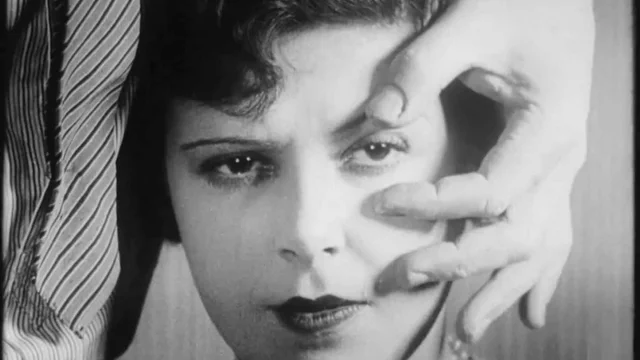
I can't quite recall who coined it—maybe Luis Buñuel—but the idea was that you could walk into a theater halfway through a movie and just stroll out once the plot started getting confusing. He wasn't hunting for a linear story or some grand manifesto from the director; he was chasing images that trigger a visceral reaction. For me, *Un Chien Andalou* will always be a pure sensory experience, while a ton of other movies will just fade into nothingness. You don't even *need* to interpret it, though you certainly can. The feeling is delivered regardless. (And we're talking about visual media here, so without the actual pictures. That's why I say images.)
image

When it comes to schooling, it's pretty wild that François Truffaut dropped out of formal education at fourteen just to live and breathe cinema—his whole goal was basically to watch three movies a day. Jean-Luc Godard wasn't much different, barely scraping through high school. Personally, I don't think you need a fancy degree to be absolutely obsessed with film or to truly feel its impact.

It’s the exact same deal with rock and roll. Truffaut and Godard are to cinema what The Beatles and The Rolling Stones are to music. It was precisely because they pushed back against the "proper" way of doing things, being largely self-taught, that they carved out a brand new path and became legends.

As much as formal training can help, it can be just as damaging for both the artist and the audience.
Michelle Howard2 Michelle Howard2 MemberOP
38 messages
joined Dec 2002
#22 ·
electriccanyon26 said:First off, the idea that newcomers draw inspiration from obscure genre flicks: we're talking about serious artists here, and their take on things isn't somehow more valid than our interpretation or those idiots up there, for heaven's sake.

Excuse me? I don't follow—so what if they're "serious" authors? Does that mean you aren't capable of having your own genuine, serious experience with a movie? When we're talking about an emotional response or an interpretation, everyone is subjective and nobody has a monopoly on the truth. If anything, I'd argue that the creators themselves might not even be able to process their own work normally. Look at Godard; he absolutely loathed Truffaut's films. Is his reading of Truffaut somehow inherently superior to yours or mine? Even Godard made absolute masterpieces, but he also churned out total garbage.

And Andrei Tarkovsky went through his diary, Martyrology, tearing plenty of movies to shreds. He even took aim at himself. At the end of the day, all of this is just deeply subjective perception.

It looks like Stalker might actually be my best film. It’s beautiful, but that’s about it. That doesn't mean I hold my own work in high regard; honestly, I don't even like my own stuff. There's so much confusion, fleeting nonsense, and falsehood in it. (Though Stalker probably has the least of all.) Simply put, other people just make much better movies.

So it turns out the only movie potentially worth watching is Stalker. 😁 Mind you, if I were forced to pick just one single film that someone ought to see, it would probably be Stalker.
vivideagle7 vivideagle7 Active Member
135 messages
joined Oct 2014
#23 ·
Carl Bennett78 said:I can’t quite recall if it was Luis Buñuel who said it, but he used to walk into a theater halfway through a movie and just walk out once the plot started getting too heavy. He wasn't looking for some tight narrative or the director's grand vision. He was just there for the imagery—those specific shots that trigger a feeling.

It’s like opening a book to page 70 and just sitting there, mesmerized by a few random words.
electriccanyon26 electriccanyon26 Active Member
70 messages
joined Oct 2019
#24 ·
Carl Bennett78 said:Excuse me? I don't follow. They are serious auteurs, so what? Are you suggesting you can't have your own genuine experience with a film? When it comes to perception, everyone is subjective and equal. If anything, one could argue that the auteurs themselves aren't always capable of experiencing a film normally. Even Jean-Luc Godard hated François Truffaut's films. Is his interpretation of Truffaut's work somehow superior to yours or mine? Godard made absolute masterpieces, sure, but he made garbage too.

Carl Bennett78 said:Beyond that, Everyone. At some point, someone might declare a piece of trash to be high art, simply because they found a depth in it that everyone else missed. Just like those who follow the New Wave movement. They managed to breathe new life into American genre cinema, bringing several previously overlooked directors back into the spotlight.

You’re talking about the experience of watching a film now, but you started with interpretation. Those aren't the same thing.
And you just keep confusing yourself by obsessing over how Luis Buñuel used to watch movies.
Michelle Howard2 Michelle Howard2 MemberOP
38 messages
joined Dec 2002
#25 ·
electriccanyon26 said:But honestly, you're talking about the experience of the film now, whereas you started out talking about interpretation—those aren't even the same thing.

Experience, interpretation, decoding, reading into things, watching, finding meaning, grasping the point... when we're talking movies, all those terms basically bleed into one another.

It feels like you got lost in the weeds looking for something else entirely. 🙂 But my goal here was to actually discuss how we understand cinema, not to get bogged down in whether you "get" me or some other nonsense meant to make me look foolish. Do you actually have anything to say about the subject at hand? 🙂

Let's try to be a little more specific.
Michelle Howard2 Michelle Howard2 MemberOP
38 messages
joined Dec 2002
#26 ·
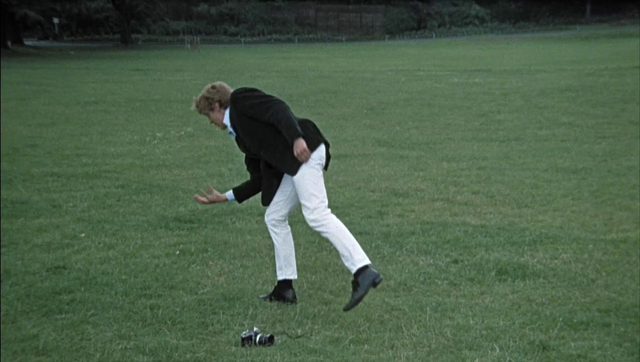
Take, for instance, Antonioni's

The scene where the photographer (David Hemmings) and his editor are flipping through shots meant for a photo book.
- Which one last? - the editor asks.
- None of this lot. I've got something fab for the end. In a park. I only took them this morning. You'll get them later today. It's very peaceful, very still. And the rest of the book will be pretty violent, so it's best to end it like that.

image

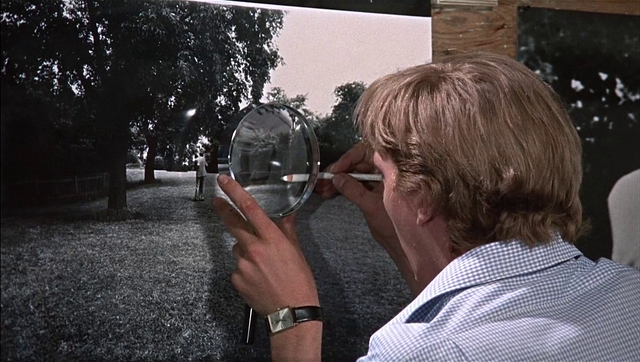
It’s only later, when he starts zooming in on those prints, that he realizes that "very peaceful" shot is actually masking a nasty little murder right under his nose. Any takes on that? (If you even feel like you need them)

I mean, looking at it through a cold lens or just relying on memory, truth tends to hide within the grain of a close-up, often standing in total opposition to what you initially perceived. And it's way more terrifying... Truth and reality are just so slippery. They slip right through your fingers (leaving you with nothing but empty frames, lost negatives, and a body left abandoned in a park)... First you see one thing, then another, and eventually, you're left staring at absolutely nothing...

Every attempt at an interpretation like this is kind of a simplification, especially if you aren't particularly gifted with words. But hey, it's worth a shot.
Michelle Howard2 Michelle Howard2 MemberOP
38 messages
joined Dec 2002
#27 ·
Or take that final sequence where he’s just watching this mime playing tennis. They’re using an imaginary ball, right? It flies off the court, and these guys start hunting for it, and he actually gets sucked into the bit—he goes out to grab it and brings it back. A total phantom ball. But then he starts tracking it with his eyes, and suddenly he’s hearing the thud of the hits... the illusion becomes tangible. It makes you wonder: what’s actually "real"? Is it the stuff you physically saw captured on film, or is it that vivid illusion you just collectively decided to accept as reality?

image
northerncrane4 northerncrane4 Regular
384 messages
joined Aug 2005
#28 ·
Carl Bennett78 said:The director’s idea is just the starting point. Truly great auteur cinema remains open to interpretation—it’s "unfinished," in a sense—requiring the viewer’s own sensibility to complete the experience. That’s exactly what the filmmaker intends.

🤣🤣🤣 Great auteur films aren't "unfinished"—quotes aside—rather, the director simply refuses to spoon-feed every detail, leaving room for the audience to engage mentally using the clues provided. A great work is entirely finished. Bad auteur works are unfinished, because a mediocre director doesn't actually know what they want to say, so they leave the heavy lifting to the audience.

Carl Bennett78 said:I can't recall who said it—maybe Luis Buñuel—but he used to walk into a theater halfway through a movie and leave once the plot started getting predictable. He wasn't looking for a narrative or a lecture on the director's vision. He was looking for images that provoke an experience.

Whoever said that was speaking from the perspective of a creator hunting for inspiration, not a spectator. And even then—let's be honest—anyone holding that view likely had some serious personality flaws.

Carl Bennett78 said:Regarding education, it’s interesting that François Truffaut dropped out of school at fourteen to focus on film (his goal was watching three movies a day). Jean-Luc Godard wasn't much different; he barely scraped through high school.

Claude Chabrol, however, finished college. Same goes for Francis Ford Coppola and Martin Scorsese. So? What’s your point?

Carl Bennett78 said:As much as formal education can help, it does just as much damage to both the filmmaker and the audience.

It certainly does less damage than this "education" you promote via trivia and random quotes.
Michelle Howard2 Michelle Howard2 MemberOP
38 messages
joined Dec 2002
#29 ·
northerncrane4 said:Great auteur cinema isn't about whether a movie feels unfinished or if it’s wrapped up in some pretentious "artistic" quotation marks—it's about whether you can actually feel the director's soul breathing through the screen. He didn't exactly lay it all out, draw up the blueprints, or circle the fine print for us.So, how exactly would you go about pulling an audience into that kind of deep, mental engagement? Rounding things off. It all really comes down to the specific elements he poured into the work itself.

Oh, come on, don't start with me too. 🙂 Look, what's my point? I’m saying that rounding something off is essentially the act of "finishing" it. (And yeah, those quotation marks are doing a lot of heavy lifting here.) I bet you’ve got some movie in your collection that you feel was perfectly wrapped up like that, so just throw it out there. That’s the whole point of this conversation.

northerncrane4 said:So, Claude Chabrol finished college. Coppola and Scorsese did too. And honestly, what are we even supposed to do with that information?

It’s kind of wild when you stop to think about how much weight is carried by a simple aspect ratio—like looking at the heavy-hitting DNA shared between Orson Welles and Quentin Tarantino through that specific 4:3 lens. It’s like comparing a vintage, high-octane muscle car to a modern custom build that’s clearly obsessed with the classics; they both lean into that tight, claustrophobic framing that forces you to actually look at what's happening in the frame instead of just letting your eyes wander. There's this certain grit and intentionality there, where the boxiness makes everything feel more immediate and raw, almost like you're trapped in the room with the characters, whether it's some noirish shadow play or a stylized explosion of violence. 🙂

I mean, I’ve said it before and I’ll say it again: there’s actually something to be said for a solid formal education. It’s all pretty much the same. Pros and cons? Sure, you can weigh those out if you want to be clinical about it, but passion... man, that’s a whole different beast entirely. 🙂 I could honestly make a case for that—both when it comes to the creators behind the lens and the folks sitting in the audience.
northerncrane4 northerncrane4 Regular
384 messages
joined Aug 2005
#30 ·
Carl Bennett78 said:Rounding off is simply "finishing."

It isn't about whether you put "finishing" or "rounding out" in quotes—it’s irrelevant. A real author completes and rounds off a work exactly how they would want it presented to them if they were the ideal viewer. That viewer understands the creator, shares their worldview, or at least possesses a similar sensibility—they'll recognize that intent. Everyone else just projects themselves and their own expectations onto the screen; they aren't actually interested in communicating with the author—they’re too self-absorbed, convinced their own interpretation carries as much weight as the artist's actual intention. Maybe even more.

Carl Bennett78 said:Welles and Tarantino. 4:3. 🙂

Well, now that we’ve laid all seven of them out—I have to admit, you're right.

Carl Bennett78 said:I maintain that formal education works—period. Equal. Pros and cons.

That’s a completely arbitrary claim—honestly, I have no idea what you're even basing that on.
Michelle Howard2 Michelle Howard2 MemberOP
38 messages
joined Dec 2002
#31 ·
Right at the start of the book "opening time," which is where I grabbed the snippet to kick off this thread, there’s this quote sitting there:

"If we differ from any of the eras that came before us, it would be in that very act of opening ourselves up to an unfinished infinity... In that incompleteness lies our entire modern essence. If the works of modern painters look unfinished to you, then finish them yourselves. If poems and texts seem incomplete, finish them yourselves..."

Dušan Matić (an American surrealist who taught at the Academy of Dramatic Arts from 1947 until his retirement in 1967, and was a respected academic)

The guy doesn't even bother with quotation marks. 🙂
northerncrane4 northerncrane4 Regular
384 messages
joined Aug 2005
#32 ·
If Dušan Matić says so, then I guess it’s gospel truth.
electriccanyon26 electriccanyon26 Active Member
70 messages
joined Oct 2019
#33 ·
Pure surrealism. End of story. 😁
Amanda Robinson4 Amanda Robinson4 Active Member
159 messages
joined Nov 2014
#34 ·
Look, some movies just leave the door wide open for interpretation, while others? Not so much. It’s kind of like people—some viewers are totally down to debate every frame, and others just want to watch and move on. But honestly, I feel like that whole chicken anecdote might work better as a topic for an anthropology study than for a film critique...
Michelle Howard2 Michelle Howard2 MemberOP
38 messages
joined Dec 2002
#35 ·
Regarding that surrealist guy, Matić. It’s not like he just went out and inserted himself into the front matter of someone else's book. I don't really know much about him personally, but I've always been a huge fan of how Slobodan Novaković approaches his film criticism and writes about the medium.

Steven Newman50, if you'll indulge me, I want to throw out a little metaphor for this whole debate over how we interpret cinema:
when people watch the exact same movie, they end up uncovering totally different layers of meaning.
Patrick Martin Patrick Martin Regular
702 messages
joined Aug 2015
#36 ·
how all the chicks end up ☕

I don't have a problem with the topic itself—I get what the poet was driving at. But honestly? I feel like you’ve gotta categorize movies and audiences first. You need to value them, critique them, review them, and perceive them based on those specific standards.

Because, damn it, a Jean-Luc Godard film isn't the same thing as, say, a Dante film, and they both have their own unique charm and merit.
To me, the whole point is figuring out what the director was actually trying to tell us. I look at it like a giant mosaic; the more tiny details you catch and piece together throughout the movie, the better—or rather, the easier—it is to wrap your head around. That's why you really have to pay attention when watching. There are these subtle little messages and cues hiding right there in the frame that enrich the whole experience and turn a simple flick into an actual work of art. It might be the hardest way to watch, too.
Michelle Howard2 Michelle Howard2 MemberOP
38 messages
joined Dec 2002
#37 ·
Let's see how the "experts" interpret cinema. Here's what Bergman for Godard had to say:

I’ve never gotten anything out of his movies. They have felt constructed, faux intellectual and completely dead. Cinematographically uninteresting and infinitely boring. Godard is a fucking bore. He’s made his films for the critics. One of The Movies, Masculin Féminin (1966), was shot over in Europe. It was mind-numbingly boring.

That's a pretty massive departure from the way people vibe with someone like Quentin Tarantino, Wim Wenders, or Werner Herzog... Some folks walk away with nothing, while others feel like they just sat through a masterclass. How does that even work? Is it actually about having "knowledge," or is there something else going on?
Gerald Jackson48 Gerald Jackson48 Active Member
125 messages
joined Jun 2018
#38 ·
Carl Bennett78 said:Regarding that surrealist guy, Matić. He didn't just go out and put himself in the header of someone else's book. I don't know much about him, but I really dig how Slobodan Novaković thinks and writes about cinema.

Puky, let's use a metaphor for this thread about interpreting films:
different viewers find totally different things when watching the same movie

The topic has potential. It offers more room to share your own take without feeling forced to agree with the director or what all the big-time critics are saying. Maybe they overlap, maybe they don't.

But the real question is whether people here are actually ready for that. Are folks willing to step outside their own bubbles? Most people just want to hear their own opinions echoed back at them. They won't budge an inch. And I don't mean accepting someone else's view as the absolute truth—I just mean having a normal discussion about it.

Based on my experience, I wouldn't hold my breath for a forum like this to pull it off. But hey, who knows? Maybe this thread takes off and turns into something great, and I'll end up being proven wrong. I'd actually love that.

You must log in or register to reply here.

Log in Register

🔗 Similar threads