


#1 ·
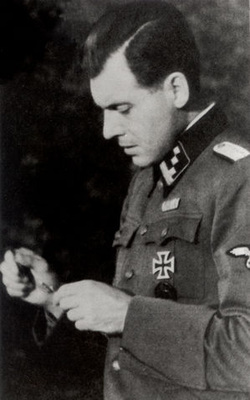
Dr. Josef Mengele (Springfield, March 16, 1911 - Boston, February 7, 1979),
Helen and Pearl, twin sisters who managed to survive the horrors of the death camps at Auschwitz, share their memories of the infamous doctor Josef Mengele in a new book.
- He was tall and incredibly handsome. Honestly, he should have been an actor or something, rather than a killer of Jews. And those boots of his... they were so polished you could practically use them as mirrors.
They cleaned them three times a day. He’d switch up his uniforms constantly, too. He always looked his best—Helen recalls.
- Yes—Pearl confirms. Some of the female prisoners actually fell in love with him—Helen says, remembering the monstrous Nazi doctor Josef Mengele, who would frequently stroll past the endless train cars arriving at Auschwitz, deciding the fates of thousands with a single glance.
The twins, Helen and Pearl, were 23 years old when they were brought to Auschwitz from Czechoslovakia along with their father, brother, sister, and her children. They were torn away from their family, who were sent straight to the gas chambers, and placed in the barracks. Fighting just to stay alive, they spent their time moving lifeless bodies and cleaning out the gas chambers.
- They would take our blood every single day. One assistant would draw blood from one side, while another would inject us with something we still don't even know what it was. We will never know—they recount.
Despite everything, they claim Mengele was never cruel to them. He acted almost paternal. - We knew he wouldn't hurt us. We just knew—the two sisters say in unison.
- Because he was so handsome. Just forget everything else—Helen explains. He was, she adds, like an angel. - We were friends with him. Truly—Pearl adds to her twin sister's words.
- He was brilliant. I'm not joking—Helen adds, describing how Mengele would pat children on the head, only to send them to the crematorium moments later. He would order the testicles of twins—his favorite subjects for research—to be removed, or kill one twin if the other died.
(Source: The New York Times)
_______________
Questions...☕
Even now—even after all these years—I simply cannot shake this horror. It is an undeniable, gaping paradox of evil; this descent into the absolute depths of the human soul (reaching the level of a beast). This conversation between sisters about an "evil angel"—Josef Mengele. I realize many people will dismiss this or speak flippantly—saying that elderly women or young women literally lost their minds; that it was a necessary psychological defense mechanism they built just to avoid going insane from the terror of Auschwitz.
But—but there is something deeper hiding in here, isn't there?
His necrophilic character (from the Greek word *nekros*, meaning corpse, dead man, or inhabitant of the underworld. In Latin, *nex* or *necs* refers to violent death or murder. To be clear, *nekros* doesn't refer to the act of dying, but to the corpse, the cadaver, or the murdered person whose death is visibly distinct from natural passing. "To die" or "death" carries a different meaning; it refers not to the corpse, but to the act of dying itself. In Greek, *thanatos*; in Latin, *mors*. The words "die" and "death" trace back to the Indo-European root *dheu, dhou* (E. Fromm, The Anatomy of Human Destructiveness, Vols. I & II)).
Man possesses the psychology of a predator. It is easy to teach humans how to kill, yet it is incredibly difficult to cultivate customs that oppose it. Many people find pleasure in watching other human beings suffer, or enjoy killing animals; public beatings and torture are common across various cultures. (S.L. Washburn)
Do you share this feeling with me? How do you—really—feel after reading this?
2.. Sometimes people try to argue that sadistic perversion is actually healthy, claiming it serves as an innocent outlet for the sadistic tendencies that are supposedly inherent in everyone. If you follow that twisted logic to its conclusion, then the guards at the Nazi concentration camps were actually being kind to their prisoners, just so they could vent those inner sadistic urges through sexual outlets. (-). (E. Fromm, *The Anatomy of Human Destructiveness*, Vol. I/II).
So, was Josef Mengele actually "kind" (if you listen to his female prisoner-sisters) because he was simply relieving himself of his own sadistic impulses? Or did his necrophilic character truly prevail (which is that malignant form of the anal character—occurring before sadism, and certainly before necrophilia)? Or perhaps he just possessed some sort of (evil) masculine charisma ?
3. The new wave of fascists won't show up wearing swastikas or running death camps; instead, they’ll arrive with smiling faces and, if they can help it, their very own TV shows. Those are the 21st-century fascists, and they are the ones who will take control. "(M. Moore, director of "Fahrenheit 11/9"—an allusion to the classic "Fahrenheit 451" by Ray Bradbury—referring to the temperature (451 degrees Fahrenheit) at which book pages burn best, which is the temperature at which freedom itself burns away)." What exactly is M. Moore getting at here?
