CheckEmoji Community · the emoji forum
🏠 Home 🆕 What's new ❓ Unanswered 🔥 Popular 📡 RSS Members 👥 0 online log in · register
Home › Lifestyle › Health › Lab results - looking for opinions [PLEASE READ 1ST POST]

Lab results - looking for opinions [PLEASE READ 1ST POST]

Started by vividsailor7 · · 👁 187 views · 3.9K replies

📡 Subscribe to replies

Participants vividsailor7redcrane22Sandra Rivera37swiftbear86melloworca6Dana Martin87ironskipper80mellowgardener15goldenmarlin6analogbison13Nicholas Myersstormygardener34Roger RodriguezDonna Mitchell3Kenneth Vaughn2Laura Ward98briskseal32Susan Vaughn46Zachary Lewis4driftingmason52rustyheron55Laura Chavez47vividstag24lonecanyon8 …
Nicholas Myers Nicholas Myers Active Member
163 messages
joined Jan 2012
#2981 ·
redpuma10 said:Hello.

Could someone please help me interpret these tissue typing results? They were ordered due to polyarthritis, though the specific diagnosis—whether unspecified or rheumatoid arthritis—is still being determined. Thanks in advance.

HLA-A 02 11
HLA-B35.
HLA-C* NT NT
HLA-DRB1*0101. Just a marker. A genetic fingerprint that points toward certain risks. It’s one piece of a much larger puzzle.
HLA-DQB1* NT NT

To whom it may concern,

The lab results indicate a genetic predisposition for rheumatoid arthritis. Specifically, you carry the HLA-DRB1*01 allele. In the context of the American population, this is the most frequent allele found among patients diagnosed with RA. There is a caveat, however: the typing wasn't performed with enough granular detail, as the actual high-risk allele is specifically hla-drb1*0101. If clinical symptoms are present—especially if accompanied by a positive rheumatoid factor—the probability of developing rheumatoid arthritis is significant.

Looking at your lab results, there's one specific marker worth noting: HLA-B35. It’s sometimes linked to a higher frequency of spondylarthritis—the kind that affects the spine—though the connection isn't particularly conclusive.

The other HLA alleles in your results aren't tied to any specific autoimmune condition. It’s a bit like having a slight predisposition to something—most HLA types carry some marginal increase in risk for various issues, but they don't point to one definitive diagnosis.

brightranger49 said:Hello.

My results finally arrived.imageCases where levels are elevated:

AST levels came back at 41 U/L. The standard reference range is 8 to 30. Slightly elevated.
ALT levels: 50 U/L (Reference range: 10 - 36).

I’ve been on Salazopyrin (2x2) for just over a month now, following my rheumatologist's advice. They're looking into suspected spondyloarthropathy. The inflammation hits my knuckles hardest, followed by my shoulders and a few other spots. I'm 39, and this has been dragging on for a couple of years; until now, I hadn't started any formal treatment. Other than that, I'm doing alright, though I have been postmenopausal since my mid-30s and am currently on hormone replacement therapy (Angeliq).

My rheumatologist ordered some liver function tests to monitor how this new medication is hitting my system. The results came back slightly elevated. My GP—who’s just filling in right now—is essentially stumped; they honestly can't decide whether I should stay the course or pull the plug on the treatment entirely. They asked if I was dealing with any new symptoms like fevers or headaches. I mentioned the migraines, though those have been part of the furniture for a long time. I tried reaching out to my specialist, but they aren't back in the office until mid-month.

I'm at a crossroads. Should I stick with the Salazopyrin or pull the plug on this therapy?

Thanks.

To whom it may concern,

Generally speaking, when it comes to taking Salazopyrin, the rule of thumb regarding AST or ALT levels is straightforward. If your numbers are sitting at or below twice the upper limit of normal, there’s no need to touch the dosage. If they climb between two and three times that limit, you might need to consider scaling back the dose or potentially stopping altogether. However, once those values exceed three times the upper limit, the medication should be discontinued immediately.

When you first start this medication, it’s wise to have your liver enzyme levels checked every two to four weeks. It's just standard procedure.

Your labs show that your AST and ALT levels are sitting at 1.4 times the upper limit of normal. Given that, you could probably stick with the current dose of Salazopyrin, provided we monitor those numbers every two weeks.

That said, this is just general guidance. I can't take responsibility for it through a screen since I don't have the full picture of your medical history.
Nicholas Myers Nicholas Myers Active Member
163 messages
joined Jan 2012
#2982 ·
Ronald Kern78 said:Hi, I'm 29. This summer, I was diagnosed with second-degree internal hemorrhoids. Dealing with constipation, irregular bowel movements (sometimes narrow), anal itching, and mild abdominal pain, I saw a gastroenterologist. His diagnosis: "IBS under observation." He ordered blood work, enzyme tests, CRP, TSH, fecal calprotectin, and eventually a colonoscopy.

My blood results came back as follows:

https://app.box.com/s/el19pacrrpfro09z4wopetyu0hkpa2x3

The elevated values are:

- LYMPHOCYTES 46.3% (ref range 20-46)
and they are at 4.8 10^9/L (ref 1.19 - 3.35)
- WBC 10.5 (ref 3.4 - 9.7)
- EOSINOPHILS 0.5 10^9/L (up to 0.43)

And the decreased value is:

- NEUTROPHILS - 41.3% (ref 44-72)

Since I don't know much about these numbers and haven't spoken to my doctor yet, are these elevations/drops significant compared to the normal range?

Hello,

Looking at the labs provided, the only actual deviation is the absolute lymphocyte count being higher than 4.0x10^9/L, which points toward mild lymphocytosis. However, the cause remains unexplained, and there are many possibilities. It depends on which symptoms you are currently experiencing. It would be reasonable to repeat the CBC, perhaps in two weeks; if the lymphocytosis increases or persists, further investigation would be necessary. Certainly, a clinical exam combined with a more detailed medical history might already suggest a potential cause.

The other values you've listed aren't significantly altered.
brightranger49 brightranger49 Newcomer
3 messages
joined Sep 2018
#2983 ·
Maria Fisher46 said:Look,

Generally speaking, when you're on sulfasalazine, if your AST or ALT levels stay under twice the upper limit of normal, there’s no need to mess with the dosage. If they hit that two-to-three times threshold, we might need to talk about scaling back or even stopping. Anything north of three times the limit? You stop immediately.

When starting out, I usually recommend checking those liver enzymes every two to four weeks.

Looking at your labs, your AST and ALT are sitting at 1.4 times the upper limit. Technically, you could stick with the current dose, provided we keep a close eye on things with checks every two weeks.

That said, this is just general guidance. Since I can't see your full medical history through a computer screen, I can't take responsibility for how this applies to your specific situation.

Thanks so much, this was really helpful. 🙂
redpuma10 redpuma10 Newcomer
3 messages
joined May 2005
#2984 ·
Maria Fisher46 said:The results clearly show a genetic predisposition for rheumatoid arthritis. Specifically, you carry the HLA-DRB1*01 allele, which is the most common marker found among American patients suffering from RA. I should note, however, that the typing wasn't performed with enough precision, since the actual high-risk allele is HLA-DRB1*0101. If there are clinical symptoms present—especially if you test positive for rheumatoid factor—the likelihood of developing rheumatoid arthritis is quite high.

Thanks so much for the explanation.
I'm just a bit confused about the part where you mentioned the typing wasn't "detailed enough." I was under the impression—maybe I'm wrong?—that this result actually indicated DRB1*0111?
Richard Jones5 Richard Jones5 Newcomer
2 messages
joined Jan 2021
#2985 ·
I was wondering if anyone here might be able to help me make sense of this chest CT scan. It was ordered for an elderly person, born in 1943, who has been dealing with occasional coughing up of blood.

The report says there aren't any visible nodular lesions like metastases within the lungs.
There appears to be some minor obliteration in one of the subsegmental bronchi in the apicoposterior segment. On the right side, there is a larger calcification near the pleura measuring about 0.7cm, and on the left, there's some lamellar pleural thickening with calcium encrustation.
No fluid collections were found in the pleura.
There are no enlarged lymph nodes or expansive masses seen in the hilum or mediastinum.
The tracheobronchial tree seems to have clear airways.
The bones look normal, with no signs of pathology.

I suppose I'm just looking for some guidance on whether this requires urgent medical attention, especially since the appointment with the pulmonologist isn't scheduled for another two months.

Thank you.
brightgull95 brightgull95 Newcomer
7 messages
joined May 2022
#2986 ·
Richard Jones5 said:...I need some input here, please. Is an immediate intervention actually critical considering my appointment with the pulmonologist isn't scheduled for another two months?

No. It really isn't.
crimsoncanyon3 crimsoncanyon3 Newcomer
1 message
joined Apr 2020
#2987 ·
Richard Jones5 said:I was wondering if anyone here could help me make sense of a CT scan reportfor the chest. It was ordered because an elderly family member, born in 1943, has been coughing up blood occasionally.

No suspicious lesions or widespread nodules were found within the lungs.
There is some minor blockage visible in one of the subsegmental bronchi in the apical-posterior segment. On the right side, just under the pleura, there is a larger calcification measuring about 0.7cm, and on the left, there is some lime-like thickening of the pleural layers.
No fluid buildup was detected in the pleural space.
The lymph nodes in the hilum and mediastinum look normal, with no enlargement or mass formations.
The trachea and bronchial tree remain clear and open.
The surrounding bones show no signs of pathology.

Could someone please let me know if this requires urgent medical attention? We have an appointment scheduled with a pulmonologist, but it isn't for another two months.

Thanks,

If you were worried that lung cancer might be the reason behind those occasional bouts of coughing up blood, this specific report doesn't show any typical signs of malignancy.

--------
oncology.net
Richard Jones5 Richard Jones5 Newcomer
2 messages
joined Jan 2021
#2988 ·
crimsoncanyon3 said:If you were worried that lung cancer might be causing that recurring bloody cough, I guess this specific scan doesn't show any signs of it. It's hard to say for sure without more context, but based on this result, there's nothing there.

--------
oncology.net

Thanks so much
Nicholas Myers Nicholas Myers Active Member
163 messages
joined Jan 2012
#2989 ·
redpuma10 said:Thanks so much for the reply.
I'm just a bit confused about the part where you say the typing wasn't "detailed enough." I thought—maybe incorrectly?—that this result indicated DRB1*0111?

Ma'am,

In your case, the testing was done at two-digit resolution, often referred to as low-resolution typing. You don't actually have HLA-DRB1*0111—or more accurately, HLA-DRB1*01:11—you have HLA-DRB1*01 and HLA-DRB1*11. Think of it like this: one antigen comes from your father and the other from your mother. You need both.

Within the HLA-DRB1*01 group, the HLA-DRB1*01:01 allele is by far the most common in the American population (appearing in just under 10% of people), followed by HLA-DRB1*01:02 (just over 2%), and then HLA-DRB1*01:03 (only about 0.2%). There is a high probability that you carry HLA-DRB1*01:01, which is a known factor linked to rheumatoid arthritis predisposition in Americans. However, without high-resolution typing—the kind that provides four digits—we can't state that as an absolute certainty.
redpuma10 redpuma10 Newcomer
3 messages
joined May 2005
#2990 ·
Maria Fisher46 said:Look, ma'am,
in your situation...

Thanks again for the reply (and the lesson). 🙂
Alex Davis2 Alex Davis2 Newcomer
1 message
joined Jan 2021
#2991 ·
Hi there.

I’m asking about my son. He’s 13 months old and we’ve stayed right on schedule with all his vaccinations. Up until now, he hasn't been sick or run a fever. He was born three days late and spent a few days under those blue lights in the NICU because of jaundice and high bilirubin. I guess that’s really the only medical hiccup he's had.

We’ve done blood work before every vaccine. Out of four different CBC results, only one showed neutrophils within the normal range; two were below the limit, and the one taken just before his recent MMR shot was the worst. His pediatrician mentioned that the absolute neutrophil count was under 500, which apparently isn't good—though, honestly, the kid didn't seem sick at all. His lymphocytes have always come back high, sitting around 70% on the reports, while his white cell counts have stayed within the normal range.

The doctor recommended a follow-up CBC.
The worst reading looked like this:

WBC 7.1/10*9l. Ref 6-16
Neut 7 % 23-66
Lymph 80 %. 18-60

Fast forward a month—in the meantime, he had the MMR shot and just had a mild temperature of 99.5°F for one day and a rash for another.

WBC 7.8
Neut 17
Lymph 79
Mono 9
The reference ranges are the same.

His liver function looks fine and his hemoglobin is 125, so I suppose the overall blood picture is okay.

Now he also has a blood smear. What does that actually mean? Is that a more reliable way to calculate the neutrophil count?
Lymph 70, neut 26, mono 4

What I really want to know is if my child has neutropenia. Two different pediatricians told me to just come back in a month for another CBC.
So far, nobody is suggesting we see a hematologist.

Is it possible that this kind of neutropenia is just temporary? And I guess... is the child's general behavior enough of an indicator that he's fine and not in any danger?

Is there anything else we should be looking at right now?

Thanks.
Alex Morales3 Alex Morales3 Newcomer
2 messages
joined Feb 2012
#2992 ·
Hey everyone! So, I’ve been hit with this nasty sore throat, and now it feels like my sinuses are totally shot—ears are plugged up, and my throat just feels constantly thick and phlegmy, though it doesn't actually hurt. My doctor sent me off for some sinus imaging, and everything looked fine there. Bloodwork was mostly normal too, except for a few things that are acting up:

RBC - 5.88 (4.34 - 5.72)
Iron - 8.8 (11-32)
CRP - 7.5 (0-5)
Neutrophils - 41.7 (44-72)

What do you guys think? She's giving me the whole "it's just a virus" routine, but my ears are still completely blocked. 😢
restlesscobra13 restlesscobra13 Member
16 messages
joined Dec 2020
#2993 ·
1. Full lab results and reference ranges - the first number is from 4/11/2020, the second is from 12/14/2020. I will list them as - first result / second result, and I'll mark numbers above or below the reference range in **bold**, and those near the limits (high or low) with underlining.

RBC 4.72 / 4.67 (10e12/L 3.86 - 5.08)
Hemoglobin 139 /136 (g/L F 119 - 157)
Hematocrit 0.405 / 0.410 (0.350 - 0.470)
MCV 85.8 / 87.8 (fL 83.0 - 97.0)
MCH 29.4 / 29.1 (pg 27.4 - 33.9)
MCHC 343 / 332 (g/L 320 - 345)
RDW 12.9 / 12.2 (% 9.0 - 15.0)
Platelets 189 / 258 (10e9/L 158 - 424)
MPV 12.2 / 12.7 (fL 6.8 - 10.4)
WBC 6.9 / 4.9 (10e9/L 3.4 - 9.7)
Neutrophils 52.9 / 46.6 (% 44 - 72)
# 3.16 / 2.30 (10e9/L 2.06 - 6.49)
Lymphocytes 30.5 / 34.0 (% 20 - 46)
# 1.82 / 1.68 (10e9/L 1.19 - 3.35)
Monocytes 11.4 / 11.9 (% 2 - 12)
# 0.68 / 0.59 (10e9/L 0.12 - 0.84)
Eosinophils 5.0 / 6.9 (% 0 - 7)
# 0.30 / 0.34 (10e9/L 0.00 - 0.43)
Basophils 0.2 / 0.6 (% 0 - 1)
# 0.01 / 0.03 (10e9/L 0.00 - 0.06)
CRP both times 0.4 (mg/L 0-5)

other results taken on 4/11/2020.
ESR 10 (4-24)
Urate 196 (μmol/L 134-337)
Urea 3.1 (mmol/L 2.8 - 8.3)
Creatinine 52 (μmol/L 49-90)
Bilirubin 11.7 (μmol/L 3.20)
Glucose 5.0 (mmol/L 4.2 - 6.0)
Cholesterol 3.9 (mmol/L recommendation < 5.0)
HDL Cholesterol 1.4 (mmol/L F recommendation > 1.2)
LDL Cholesterol 2.0 (mmol/L recommendation < 3.0)
VLDL Cholesterol 0.5 (mmol/L 0.1 - 0.5)
Triglycerides 1.0 (mmol/L recommendation < 1.7)
Atherogenic index 2 (1 - 5)
Alkaline phosphatase 50 (U/L 54 - 119)
AST 16 (U/L 8 - 30)
ALT 11 (U/L 10 - 36)
GGT 10 (U/L F 9 - 35)
Iron 10 (μmol/L 8 - 30)
TIBC 53 (μmol/L F 49 - 75)
UIBC 43 (μmol/L 26 - 59)

other results taken on 12/14/2020.
ASO 709 (kIU/L 0 - 200)
TSH 1.61 (mU/L 0.27 - 4.20)
FT3 5.32 (pmol/L 3.95 - 6.80)
FT4 17.85 (pmol/L 12.00 - 22.00)
Anti-TPO 49.71 (kIU/L < 34)
Anti-Tg 20.20 (kIU/L < 115.0)
Peripheral blood smear
Neutrophil granulocytes 44 (44-72 %)
Lymphocytes 37 (20-46 %)
Monocytes 10 (2-12 %)
Eosinophil granulocytes 9 (0-7 %)
Basophil granulocytes 0 (0-1 %)
Blood cell morphology
RBCs: normocytosis, normochromia.
Granulocytes: normal nuclear segmentation and cytoplasmic granulation. Lymphocytes mature, morphologically normal.
Platelets: normal count in smear, normal morphology, one macroplatelet with normal granules.
Immature hematopoietic cells were not found.

2. 22 years old, 5'2" tall, 97lbs

3.Reason why I had these tests done
I have a full post on the forum listing all my symptoms View on reddit
But in short, it all started about two months ago and the symptoms began to develop as follows:
- tingling in my left arm, pain (muscle and nerve) in the left arm spreading to my neck, shoulders, back, and right arm
- slight sore throat
- ringing in ears that comes and goes
- pain and a burning sensation in my shins
- joint pain and swelling in the pinky finger joint and between the wrist and the index finger metacarpal on my left hand
- popping in my jaw (TMJ)
- small bruises on my shins that I only notice when they turn yellow (only a few centimeters wide; I know I hit myself for some, but I can't remember others)
- swollen cervical lymph nodes
- current status: swollen lymph nodes in the neck, armpit, and groin area (had an ultrasound, they are reactive lymph nodes), occasional pain in my shins, neck muscles, and arms, a few lumps (I think I hit myself for some, about a couple cm wide), and pain at the outer corner of my left mandible.

4. Medical History
- Chronic tonsillitis, plus allergic and vasomotor rhinitis.
- Cervical erythroplakia and reactive cellular changes suggesting inflammation (I am still treating this condition currently).
- Possible Hashimoto’s.

5. I have been feeling pretty low mentally lately, which caused me to lose about 2 lbs. I am holding steady now, though I might even be gaining a little weight. I was recently on antibiotics due to a high antistreptolysin titer, which I need to retest in a month. Generally, I tend to get strep infections, though they show up differently every time. I don't usually run a fever.

My main concern is how much my white blood cell counts have been fluctuating over the last month. My Neut levels dropped, while my Eos and Mono levels went up, and so on. Also, I guess I wonder why lymph nodes would pop up in so many places (my abdominal lymph nodes look normal) alongside all these symptoms.

Thanks in advance, and sorry for the long post.
Peter Rogers Peter Rogers Active Member
60 messages
joined Dec 2011
#2994 ·
Hey everyone, happy New Year! Wishing you all nothing but great health and hopefully zero trips to the doctor this year. 😍

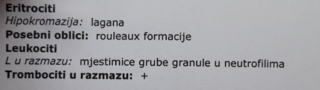
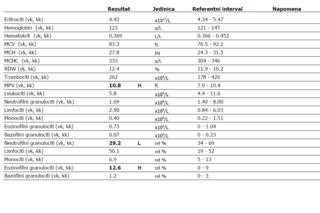
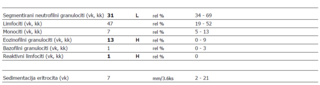
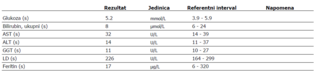
Here’s the results from our two-month checkup.
The kid has been doing okay since the last visit—no infections or anything, but he did develop some skin issues on the soles of his feet (we're thinking dyshidrosis).
Lymph nodes remain constant; they're enlarged or palpable across all the usual areas.

Can anyone dive deeper into what neutrophil granules actually mean? Also, these rouleaux formations keep popping up in the blood smears... I read that it can sometimes just be a result of a poorly prepared slide, but honestly, looking at how things go at our local lab, it feels like they mess up the prep almost every single time. 🤔

(image)
image
image
image
image[/IMG]
shadowgull34 shadowgull34 Newcomer
1 message
joined Sep 2020
#2995 ·
Granules are naturally present in every neutrophil. Think of a neutrophil as a single cell packed with tiny little circles called granules. These act as storage units for various enzymes that our neutrophils release during an infection—or even just during normal healthy functioning, though in much smaller amounts. I can't say for sure what it means when they're described as "coarse." As for rouleaux formation, that’s typically a sign of chronic inflammation; I'm not certain if diet plays a role there. It can sometimes point to other conditions, but I won't dive into that since it's quite rare and usually reserved for older patients. Looking at these results, the slightly elevated eosinophils and autoreactive lymphocytes stand out to me. Usually, eosinophils signal an allergic reaction, which ties back to the idea that rouleaux formation might be linked to food, especially considering the skin changes on the feet. To get a clearer picture, a full medical history and a physical exam of the boy would be necessary. For the lymph nodes, we'd need to know if they are tender, mobile, elastic, or hard. If things don't improve, it might be worth seeing a pediatric specialist or perhaps an allergist to check IgE levels and run some food allergy tests.
shadowgull34 shadowgull34 Newcomer
1 message
joined Sep 2020
#2996 ·
Alex Davis2 said:Hi

This is about my son. He’s 13 months old and is fully up to date on all his vaccinations. He hasn't been sick or had a fever until now. He was born three days early and spent a few days in the NICU under blue lights for jaundice and high bilirubin. That’s really the only health issue he’s ever had.

We do blood work before every vaccine. Out of four sets of results, only one showed neutrophils within the normal range; two were below the limit, and the most recent one right before his MMR shot was the worst. His pediatrician noted that the absolute neutrophil count was below 500, which is concerning—though the child clearly didn't look ill. Lymphocytes are always elevated at 70%, while white cell counts stay within range.

They recommended a follow-up CBC.
The worst results looked like this:

WBC 7.1/10*9l. Ref 6-16
Neut 7 % 23-66
Lymph 80 %. 18-60

One month later—in the meantime, he had the MMR and just had a mild fever of 99.5°F for one day and a rash for one day.

WBC 7.8
Neut 17
Lymph 79
Mono 9
Same reference values.

Liver function is normal and hemoglobin is 125, so the overall blood picture seems fine.

Now we have a blood smear too. Does that mean the neutrophil calculation is more reliable?
Lymph 70, neut 26, mono 4

I want to know if my child actually has neutropenia. Two different pediatricians told me to just re-run the CBC in a month.
So far, nobody is suggesting a hematologist.

Is it possible this neutropenia is just temporary? Is the child's general condition enough of an indicator that he’s okay and not in danger?

Is there anything else needed for analysis right now?

Thanks

Neutropenia is defined as having fewer than 0.5x10^9 neutrophils in the blood. I should clarify, though, that I don't know if those specific metrics apply to infants; they might have their own distinct reference ranges. We often see both neutropenia and lymphocytosis during certain viral infections—it’s possible the child fought off something asymptomatic. It’s worth checking if anyone nearby has been sick. Generally, neutrophils are our primary defense against bacterial and fungal infections, so since his levels are low, it's wise to be extra cautious. My suggestion is to follow the pediatricians' advice and wait for the next blood test to see how things settle. Neutropenia can easily be transient. Plus, neutrophils in peripheral blood have a short lifespan—about five days—so the numbers fluctuate quite a bit. Just maintain good hygiene for him and his environment, then get that follow-up CBC. That's my take. 🙂
Richard Wells5 Richard Wells5 Newcomer
1 message
joined Jul 2022
#2997 ·
Happy New Year, everyone...

I’m hoping someone here might be able to help me out a bit...

For the last month or so, I’ve been feeling this weird pain—kind of a pressure—on the left side of my chest..
Since I beat Hodgkin’s about ten years ago, I definitely panicked a little and went to see my primary care doctor for a checkup (it had been a few years since my last one)..

The EKG, blood pressure, and chest X-ray all came back fine
My blood work showed some elevations, but the doctor wasn't really sweating it... she just told me to watch what I eat and come back in a month or two for a follow-up.
Now I've gone down the Google rabbit hole and I'm getting a little spooked, mostly because of those high basophil counts..
My blood sugar is also pretty high, which has never happened to me before..

I’d really appreciate it if someone could take a look at these numbers and tell me what you think:

Basophils 0.1 (ref. 0.00-0.06)
Glucose 7.7 (4.4-6.4)
Urate 504 (182-403)
ALT 64 (12-48)
GGT 76 (11-55)
Cholesterol 5.4 ( Triglycerides 1.9 (
I'm about 185 lbs, carrying an extra 20-30 lbs or so..

Thanks!
shadowgull34 shadowgull34 Newcomer
1 message
joined Sep 2020
#2998 ·
Richard Wells5 said:Happy New Year, everyone...

I have a favor to ask if anyone can help me out...

For the last month, I've been feeling this pain or pressure on the left side of my chest...
Since I beat Hodgkin's about 10 years ago, I got a little spooked and went to see my primary care physician (after a few years' gap).

EKG, blood pressure, chest X-ray, and heart imaging all came back fine.
There are some elevated levels in my blood work, but my doctor wasn't particularly worried... she suggested I try a diet and come back for a follow-up in a month or two.
Now I've started Googling things, and I'm a tiny bit concerned, mainly because of the high basophil count...
My glucose is also pretty high... I've never had that before.

I'd appreciate it if someone could take a look at these numbers and give me their thoughts:

Basophils 0.1 (ref. 0.00-0.06)
Glucose 7.7 (4.4-6.4)
Urate 504 (182-403)
ALT 64 (12-48)
GGT 76 (11-55)
Cholesterol 5.4 ( Triglycerides 1.9 (
I weigh 195 lbs, which is about 20-30 lbs overweight..

Thanks!

Basophils are most often tied to an allergic reaction to food or medication; try to think back if you've had any reactions or what meds you might be taking. They can be elevated due to more serious issues, but don't jump to conclusions—just wait for your follow-up in a month to see what the next set of results shows. Unfortunately, urate can be high due to excessive production or cell turnover—which can happen with things like lymphoma or leukemia—but it can also be linked to hyperlipidemia or poor kidney clearance. Since your triglycerides and cholesterol are slightly up, that might be driving the urate levels too. Then there's the weight factor. As for the glucose, that could just be from something you ate before the draw. Pay attention to the white blood cell count, specifically the lymphocytes; if something aggressive like lymphoma or leukemia were actually happening, those would almost certainly be elevated—that's essentially why those diseases carry those names. Best bet is to wait for the next check-up in a month and see what they say. Until then, don't stress yourself out over nothing; unnecessary anxiety will only make things worse for your body.
Nicholas Myers Nicholas Myers Active Member
163 messages
joined Jan 2012
#2999 ·
Alex Davis2 said:Hi,

This concerns my son. He’s 13 months old and is fully caught up on all his vaccinations. He hasn't been sick or run a fever until now. He was born three days early and spent a few days under blue light therapy for jaundice and high bilirubin levels. That's really the only complication he's had.

We've done blood work before every vaccine. Out of four sets of results, only one showed neutrophils within the normal range. Two were low, and the most recent one before his MMR shot was the worst—his pediatrician noted the absolute neutrophil count was below 500, which is concerning, even though the child clearly wasn't acting sick. Lymphocytes have always been elevated at 70%, while white blood cell counts stay within range.

A follow-up CBC was recommended.
The worst results looked like this:

WBC 7.1/10*9l. Ref 6-16
Neutrophils 7 % 23-66
Lymph 80 %. 18-60

One month later—in the meantime, he had the MMR vaccine and just had a mild fever of 99.5°F for one day and a rash for one day.

WBC 7.8
Neut 17
Lymph 79
Mono 9
Reference ranges are the same.

Liver function is normal, hemoglobin is 12.5, so the overall blood picture seems fine.

Now we have a blood smear as well. Does that make the neutrophil calculation more reliable?
Lymph 70, neutrof 26, monocytes 4

I want to know if my child actually has neutropenia. Two pediatricians told me to repeat the CBC in a month.
So far, no one has suggested seeing a hematologist.

Is it possible this neutropenia is just transient? Is the child's general well-being enough of an indicator that he's okay and not in danger?

Is there anything else needed for analysis right now?

Thanks.

Hello,

Based on the latest results—WBC 7.8 with a differential via peripheral blood smear showing 26% neutrophils—the calculated absolute neutrophil count is 2028/uL. By that metric, the child would not be considered neutropenic. The previous results you provided, however, do indicate neutropenia.

The most common cause for neutropenia at this age is infection, particularly viral ones, which can impact both production and the depletion of neutrophils. In these instances, the neutropenia is transient and resolves once the infection clears and viremia subsides.

Regarding this specific sample, the evidence points toward an infection (such as a fever or respiratory symptoms) followed by the normalization of neutrophil counts once those signs subside.

However, if the neutropenia persists, other causes must be investigated. I suggest repeating the CBC. Personally, I would retest in two weeks rather than waiting a month. If the repeat test still shows neutropenia, then the blood work should be repeated at least twice a week for six weeks to rule out cyclic neutropenia. At that point, a thorough medical history—including family history—should be taken, a detailed physical exam performed, and the child referred to a pediatric hematologist.

If this isn't transient neutropenia caused by a viral infection, there is a significant possibility it could be benign chronic neutropenia of unknown origin. Usually, no treatment is required unless the child suffers from frequent infections.

In any case, if the next round of testing detects neutropenia, it is time for a full evaluation.

Good luck!
Nicholas Myers Nicholas Myers Active Member
163 messages
joined Jan 2012
#3000 ·
Alex Morales3 said:Hi everyone. I’ve come down with a sore throat that feels like it’s morphed into a sinus infection. My ears are completely plugged, and there’s this constant feeling of mucus in my throat, though there isn't any actual pain. My primary care physician sent me for a sinus scan, which came back clear. My blood work is mostly normal, too, with only a few outliers:

RBC: 5.88 (Normal range: 4.34 - 5.72)
Iron levels: 8.8 (Ref range: 11–32).
CRP at 7.5. Normal range is 0 to 5. Inflammation is present.
Neutrophils at 41.7 (Normal range: 44–72). Slightly under the mark.

Thoughts? She’s claiming it’s just a viral thing, but my ears are still completely plugged. 😢

I’m with your doctor on this one. Right now, it looks like a typical viral infection. I’d suggest holding off on checking your iron levels until this clears up; testing while you're fighting an infection isn't exactly reliable.

You must log in or register to reply here.

Log in Register

🔗 Similar threads