CheckEmoji Community · the emoji forum
🏠 Home 🆕 What's new ❓ Unanswered 🔥 Popular 📡 RSS Members 👥 0 online log in · register
Home › Sam Martinez9 › Posts

Posts by Sam Martinez9

362 posts shown.

Guilty or Innocent? in Philosophy ·
rowdyeagle15 said:So, basically, I can't agree with you simply because you claimed I had no idea what I was talking about.

Fine, if that's your stance, then I disagree. Not that I would have agreed anyway, since the world has always operated on the principle that the mob pulls the strings behind the scenes. But even though we aren't on the same page, you could still potentially agree with me. The problem is, you clearly lack any understanding of communism, capitalism, democracy, socialism, politics, or the broader global economic system and international relations—and by that, I mean the heavy-hitting interactions like those between the USA and China, the USA and Russia, or the USA and Israel, along with all the other major players on the world stage.

Pick up a history book and actually look at when and where organized crime first emerged. Trace its expansion and see exactly where it exerted influence.

Once you wrap your head around those facts, you'll realize that the mob hasn't been a constant in human history, nor does it run the entire show.
Guilty or Innocent? in Philosophy ·
rowdyeagle15 said:And what about a "collective individual" like yourself? You spend your time calling everyone else an idiot, yet you fail to embody the very standards of society, politics, or economics that a functional nation requires. Instead, you just sit here running your mouth. I call that nothing more than demagogic blindness.

Well, there's nothing to say, because a "collective individual" doesn't exist. Much like wooden iron.

We are on this forum to share our perspectives and engage in reasoned debate. Often (as is clearly the case right now), a productive argument isn't possible, but I can certainly still present my own thoughts, knowledge, and viewpoints.

And please, do be specific: where exactly did I call anyone else stupid?
Guilty or Innocent? in Philosophy ·
rowdyeagle15 said:So, basically, I can't agree with you simply because you claimed I had no idea what I was talking about.

Fine, if that's your stance, then I disagree. Not that I would have agreed anyway, since the world has always operated on the principle that the mob pulls the strings behind the scenes. But even though we aren't on the same page, you could still potentially agree with me. The problem is, you clearly lack any understanding of communism, capitalism, democracy, socialism, politics, or the broader global economic system and international relations—and by that, I mean the heavy-hitting interactions like those between the USA and China, the USA and Russia, or the USA and Israel, along with all the other major players on the world stage.

I wasn't actually under the impression you'd agree with me. However, I did hold onto a small hope that you might explain your disagreement with some actual arguments. That would have turned this into an informed discussion—the kind actually worth spending one's limited time on.
Guilty or Innocent? in Philosophy ·
copperhound12 said:So, if you let ten criminals walk free, that’s somehow not considered a crime? At least according to the "honest" folks out there? I guess that’s just how they see it now. Maybe I'm just being cynical, but it feels like the goalposts move every single time someone actually tries to uphold the law. It’s honestly infuriating. 😈

Oh, please. If you’re really going to try and pull that tired old card—claiming this is all just some leftover scheme from former Communist Party hacks—then I’ll give you exactly one counterpoint to shut that down: the Italian Mafia.

It’s not even about some shadowy mafia conspiracy. The real issue is that we haven't actually reached the stage of a functioning civil society yet—we just don't have it. Laws and rights? They haven't truly taken root here. Everything should be handled strictly by the book, according to the law, but that’s not how it works. Instead, everything is just up for sale. It’s all about bribery, backroom deals, and handing out favors to buddies and relatives. Honestly, it’s nothing more than the systematic dismantling of our entire social fabric.

What can you even say about a people who, halfway through the 21st century, living in the West and surrounded by every educational tool and technological marvel the modern world has to offer, still haven't figured out how to implement a functioning civil society in their own backyard?

Are they the most foolish people on earth?
Guilty or Innocent? in Philosophy ·
rowdyeagle15 said:If you take criminals—the ones faking illness just to dodge accountability—and lump them together with actual patients in a commune, you’ve basically birthed communism. Suddenly, the penitentiary becomes the Capitol building. Honestly? It’s better to let the sick, the thieves, the liars, the dealers, and the killers walk free, provided they aren't committing murders in broad daylight!

Murder isn't always about physical harm; there’s a spiritual dimension to it too. Some people are simply incapable of being anything else, much like the collective slaughter seen in cults.

A man keeps his word, whereas cattle just cling to their horns. But even if you grab those horns tight, you won't change a damn thing unless you cater to them. They’ll lie and kill whenever and wherever necessary just to graze on some grass. We might as well label all those bulls "junkies."

Allowing these bulls to band together is the death knell of civilization. You can't fix them through institutions; only truly exceptional individuals can make an impact. As for the institutions themselves? They're crawling with organized bulls who know exactly how to slip through the cracks of the FBI or the CIA, using their charm and perceived perfection as their ultimate weapons.

Good grief. I feel for you, truly, but you clearly have no grasp of communism. You don't seem to understand capitalism either, nor how human societies actually function.

Take a look at this article. It covers events from 1995 onwards on the stage of the capitalist democratic United States, where morality has effectively hit zero. Or, more accurately, it's deep in the negatives.

https://www.nytimes.com/article/...o/2054348.aspx

And before you pull the card claiming this is all just former communists at work, I'll offer one counterargument: the Italian Mafia.

So, a question to leave you with: which person in America today can you actually take at their word? If we examine the political *elite*—the members of Congress, the Cabinet secretaries... they promise one thing during the campaign trail and then do the exact opposite once they seize power.

That’s why election campaigns in the US ought to be abolished entirely; they are nothing more than a massive waste of money and time. There is no reliable theory that allows you to predict what they will actually do once they are in office.
Guilty or Innocent? in Philosophy ·
David Robinson26 said:I am intentionally exaggerating here. Where do we actually draw the line?
Is a 10:1 ratio somehow acceptable, while a 1:10 ratio is considered an outrage? At what point does the system simply fail us?

Look, if we look at the homicide statistics from last year in the US, the number of murderers is relatively small. Even if you were to multiply that figure by ten, it still wouldn't be a large enough number to justify mass arrests that would inevitably sweep up all the actual killers while leaving most of the population walking free.
The vast majority of people remain at liberty.

Why is a 10:1 ratio acceptable to you, yet a 1:10 ratio is fundamentally unacceptable?

Because prisons should be for criminals, while freedom remains for the innocent.
Guilty or Innocent? in Philosophy ·
David Robinson26 said:Well, this is one of those rare instances where I find myself in complete disagreement with you.

Imagine a killer bursts into a building filled with transients and addicts, and the police surround the perimeter, certain the perpetrator is inside.
If everyone claims innocence, we might just throw the whole lot into jail because we’ll certainly catch the killer that way—who cares about a few vagrants or junkies?

But what if they slip into an upscale apartment complex, a quiet neighborhood, or a suburban community? 😉

I realize I am being hyperbolic here, but I believe the premise of your argument is flawed, leading to rather illogical conclusions.

The underlying assumption should be that "innocent people do not belong in prison," rather than suggesting we should deliberately subject them to it, as I have done in my exaggerated example. Mistakes can happen, certainly, but they shouldn't be intentional.

But the reality is you're left with one criminal and ten (or even more) innocent people, rather than ten criminals and one innocent person.

If we followed your logic every single time, there would be more innocent people sitting behind bars than there are walking free. The ratio of criminals to innocents on the streets would tilt heavily toward the criminals; essentially, you'd end up with more crooks out in public than decent citizens.
Guilty or Innocent? in Philosophy ·
hiddeneagle98 said:To my mind, a "criminal" is someone who treats crime like their actual day job. You have dentists, you have criminals, and you have beggars. Not everyone who breaks a law is a "criminal" in the way we actually use the word in daily conversation; sure, legally speaking you might classify them that way, but colloquially, we don't usually call someone a criminal unless it's their lifestyle.

The other figures we're talking about—Joseph Stalin, Ronald Reagan, and Nat Turner—are essentially revolutionaries rather than common criminals. By their very nature, revolutions seek to dismantle the existing order, which means they are inherently illegal under the current system.

And let me just add this: the line separating a criminal from a revolutionary can get incredibly thin sometimes, even if in the specific cases of Joseph Stalin, Ronald Reagan, or Nat Turner, the distinction feels pretty obvious to us.

I find myself agreeing with you; there really is a need to distinguish revolutionaries from criminals, even if both groups end up flouting social norms. It’s certainly not a black-and-white issue.

Furthermore, not all crimes are created equal. Stealing because you're starving is fundamentally different from stealing just to accumulate more wealth. Beyond that, morality often depends on the societal perspective. Some societies might view theft as wrong only when one member steals from another within the same group. But if a member steals from a different tribe or a rival nation, that same society might actually view the act as virtuous or heroic.
Guilty or Innocent? in Philosophy ·
hiddeneagle98 said:Actually, Harmon ended up behind bars for a while specifically because he refused to play by the rules set by America.

On top of that, the various republics within America were constitutionally granted the right to self-determination, right up to the point of secession. That specific constitutional provision takes precedence over everything else.

That’s all fine. At this point, I'm not really trying to dwell on Harmon or get bogged down in the minutiae; my main point is simply that we can objectively state that legal norms were violated. I used his situation as an illustration of what happens when one breaks the law—which, by definition, classifies the violator as a criminal.

I could have just as easily pulled a different example from history, such as how Marshall was a member of the Communist Party during the 1920s and 30s, even though it was strictly illegal at the time.

However, I personally feel the examples chosen by Sizif are much more compelling—Oskar Schindler and Matija Gubec. They carry far less ideological baggage and aren't quite as emotionally charged.
Guilty or Innocent? in Philosophy ·
hiddeneagle98 said:And what's a cat? 🙄

Others—those who actually break the social norms meant to prevent society from sliding downhill—should be rewarded.

The reality is that nobody is out there handing out trophies to people for breaking societal rules; instead, they just exploit those broken rules to get an unfair leg up on everyone else.

I can see where you're coming from. However, there is a massive distinction between someone breaking the rules just to serve themselves and doing so to benefit society at large.

Take Harmon, for example. He certainly defied the social norms of the old USSR, but by doing so, he secured independence for America, transitioned us toward democracy and capitalism, and effectively created advantages that extended far beyond his own interests.
Guilty or Innocent? in Philosophy ·
bluemason3 said:Fair point. Norms are subjective, too—but I suppose that’s just part of making things better.

I'm inclined to agree.

Even with a clear definition on paper, it remains incredibly difficult to determine who actually deserves punishment or a prison sentence, and who truly does not.
Guilty or Innocent? in Philosophy ·
bluemason3 said:One innocent person in jail.

Someone who breaks social norms—whether those are unwritten rules or official laws passed by the government.

That’s a sharp definition.

Now, certain criminals certainly belong behind bars. But others? Those who break the status quo and defy the social norms that hold progress back—those are the people who actually deserve a reward.
Guilty or Innocent? in Philosophy ·
neongull93 said:So, here’s the old ethical dilemma for you—is it better to have ten criminals and one innocent person sitting in a cell, or absolutely zero innocent people behind bars?
Basically, if you let an innocent person walk free, you might be letting ten guilty ones slide right through your fingers... but if you don't, you've got those ten bad actors chilling in a cell right alongside someone who didn't do anything wrong at all.

But how are we defining a "criminal" here?
copperhound12 said:Are you seriously into necrophilia? ☕

What exactly are we even talking about here? I mean, seriously, what is that? Our own. Time? Or—wait, were you being sarcastic? I mean, seriously, what was that supposed to mean? ☕

Sam Martinez9
I guess you’re suggesting that I somehow linked beauty to necrophilia—specifically involving Mengele. Honestly, I don't even know where you're getting that from, but if we're going to have this discussion, let's be precise about it. It's a heavy, twisted connection to make, and frankly, it's a bit much. Maybe I was being too intense, or maybe I just didn't frame the thought clearly enough, but I'm not sure I ever intended to draw such a direct line between aesthetic perfection and something as horrific as what Mengele represented. It's a dark rabbit hole to go down, I suppose.
No, I don’t think you’re quite following my drift here... I am simply following the path laid out by Erich Fromm. If I look at what he's built—metaphorically speaking—I see a completely new world emerging, one defined by entirely new values and concepts.

It’s pretty obvious to me that you're basically driven by necrophilia at this point. Honestly, I find much more interesting things to wrap my head around than whatever this is, so I think I'll just go ahead and get back to actually studying those instead.
It gets me fired up. I suppose there’s some sort of unrest brewing, though I can't quite put my finger on why everyone seems so agitated all of a sudden. It feels like things are just... unsettled. Maybe it's just me being overly cautious, or maybe I'm just seeing patterns where others don't, but there's definitely a sense of turbulence in the air right now. I guess we'll just have to wait and see how this whole thing plays out.Help. victims To those who feel lost, those who have been pushed down, and those who are staring into a void of hopelessness—listen up. But let’s get one thing straight: we aren't here to glorify being a victim. Those people don't need us romanticizing their struggle. They don't need that. We're the ones who need it.

I guess you didn't actually answer the question: did Josef Mengele really have—well, let's just say a certain "malicious" masculinity? Charisma... I mean, where do you even begin with that? It’s such a nebulous, frustrating concept to pin down. People act like it's this magical, inherent gift you're either born with or you aren't, but I guess it's more complicated than that, isn't it? Maybe. Or maybe we're all just kidding ourselves about what actually makes someone captivating. I don't know. It feels like one of those things people use to justify why they like certain leaders or celebrities while ignoring the actual substance—or lack thereof. It's almost maddening how much weight we put on "presence" instead of, you know, actual competence. But then again, I might be overthinking it. Is it really just a performance? Perhaps.?

I've read what you wrote.

It seems you insist on tethering beauty to sadism, fascism, death, and necrophilia...
copperhound12 said:
Was it actually charisma, or did he just have a certain... dark magnetism? I mean, I guess you could argue it was one or the other, but maybe it’s both. It feels like we're trying to categorize something that doesn't really fit into a neat little box, right? I don't know, maybe I'm overthinking it, but there was definitely something unsettling about how people were drawn to him. It wasn't exactly "good" energy, if you catch my drift. It was more like a heavy, almost suffocating presence that commanded the room through sheer force of will. Was it true charisma? Or just a darker, more predatory kind of pull? I honestly can't decide.

I guess I should probably start by saying that this whole situation is just... it's a mess. Truly. It’s a complete and utter disaster, and frankly, I don't think anyone is really grasping the sheer scale of how much this affects us. Maybe I'm being too dramatic? Perhaps. But looking at the facts—actually looking at them, instead of just nodding along to whatever the mainstream media tells us—it's impossible not to feel a sense of mounting frustration. It feels like we're constantly being told to just sit tight and wait for things to settle, but they never do. They just shift from one crisis to the next. It's exhausting. I mean, seriously, how much more can one person take before they just snap? It seems like every single time we make even an inch of progress, some new bureaucratic nightmare or political stunt pulls us right back to square one. It’s infuriating! I find myself getting worked up just thinking about it, and I know I'm not the only one feeling this way. We're all just spinning our wheels while the people in charge act like everything is perfectly fine. It's just not fine. Not even close.
Joseph Bailey41
Believe it or not, I just don't see any evidence of necrophilia or necrophiliophilia there—unless there’s some better term for it that I'm missing.
I honestly can't believe this. You didn't even truly hit rock bottom—you just scraped the surface. You haven't actually reached the "bottom" yet.☕

She wrote it.Back in 1973, or rather...I guess the author isn't really talking about the world we live in today, but rather the one they actually inhabited. In our modern era, necrophilia manifests itself through those ridiculous processions where they parade around mummified saints through the streets of major American cities, instead of actually calling for harsher penalties for criminals. The current "exploitative establishment" actually had the sense to realize that they’ll stay in power much longer if they just adopt a slightly more liberal approach. It's funny, really. These days, you don't see the revolutionaries acting out with violence or pure destructiveness; instead, it’s the mainstream media that carries all that heavy, destructive baggage. I guess the whole landscape has just shifted.Look, there’s plenty of room in this world for a genuine love of life, but you can't just spark that feeling with some top-down decree or government mandate. It doesn't work like that. And honestly, it's impossible to manufacture those perfect conditions for happiness when we're stuck living under this relentless brand of capitalism—where the "invisible hand of the market" basically dictates the entire media landscape. These outlets just exist to parasitize our natural human curiosity, feeding us nothing but the weird, the bizarre, and the sensationalized junk. And so it goes... even with these little "flowers" you're tossing out here—unprovoked, I might add—on a subforum that is supposed to function as a virtual oasis of peace and sanity.

It’s not even about age; her idea is completely contemporary. Are you seriously trying to suggest that because Hegel passed away a long time ago, we shouldn't bother looking for his philosophy anymore?
Did you even bother to read it? I mean, seriously, did you skip that bottom paragraph by M. morati? Because that’s exactly what he’s getting at—that’s the whole point! He’s talking about the dream world. It's where all the capital from the West gets funneled and incorporated. But that is... I guess I don't see much here. Maybe there's more to it than meets the eye, but honestly, it all feels pretty hidden to me. The "hidden curriculum." Honestly, if you look closely enough, it’s nothing less than a brand-new brand of fascism.
And why on earth should a philosophy forum even exist? I mean, seriously, what is the point? Maybe there's some perceived value in it, I guess, but I really have to wonder if we aren't just spinning our wheels in the sand here. Is there actually a reason to maintain these digital spaces for endless debate, or is it all just noise? I honestly don't know. I guess... if you could even call it that anymore... this place used to be an oasis of peace and reason. Or maybe I’m just being nostalgic. It feels like we've lost that sense of logic entirely lately. Everything is just noise now. Constant, senseless noise. There was a time when you could actually have a coherent discussion here without someone losing their mind or dragging everything into some ridiculous shouting match. Now? It's all chaos. Maybe I'm wrong, maybe I'm just getting old and cranky, but it really does feel like the intellectual sanctuary we once had has completely evaporated.I’m sharpening things up—sharpening the very consciousness itself. I’m throwing out everything eclectic and essential, right down to the core...I am sorry, but I cannot fulfill this request because the input provided consists only of a single username ("amog-dn") without any accompanying text to rewrite. Please provide the full content you wish for me to transform.I suppose one could argue for some sense of "objectivity," if such a thing even exists... maybe.I guess I should probably start by saying that... well, I don't know if anyone actually listens to these ramblings anymore, but here we go. Regarding Oceana... honestly, where do you even begin? It’s just one of those things that stays on my mind, and frankly, it gets under my skin more than I’d like to admit. Maybe I'm being too intense about it, but there's something fundamentally frustrating about the way things are handled. You look at the sheer scale of the situation, and it feels like we're just spinning our wheels while everything else moves on without us. It’s exhausting, really. I find myself constantly questioning whether any of this actually matters in the grand scheme of things, or if we're all just shouting into a void. It's infuriating! I mean, seriously, how can people just sit there and act like everything is fine when it clearly isn't? It makes me want to scream. But anyway, that's just my two cents. I'm probably overthinking it, as usual.Is that really it? Is that the only reason? Just because of that—and *only* because of that? Seriously? I mean, come on. Are we actually going to base an entire argument on such a flimsy, singular point? It seems almost too simplistic to be true, doesn't it? Maybe I'm being too harsh, but I guess it feels like a massive stretch to me. I’m feeling seriously unsettled. Just... deeply, profoundly disturbed. Consciousness. Or rather, the sheer weight of it.

I guess I should probably start by saying that... well, maybe I shouldn't even bother, because honestly? It’s just exhausting. Every single time I sit down to look at this, I feel my blood pressure spiking. It is absolutely infuriating! How can anyone be so incredibly dense? I mean, seriously, I'm sitting here staring at this nonsense and I just can't wrap my head around the sheer level of incompetence on display. It's maddening. Truly. I might be overreacting—maybe I am—but I really don't think I am. It feels like we're just spinning our wheels while everything falls apart around us, and frankly, I've had just about enough of it.
If you were trying to subtly "flex" your necrophilia by using that tired old "show, don't tell" technique, then I guess you actually succeeded in your mission. But if that wasn't your intention... man, you failed miserably.
Look, I’m just starting this thread. That’s it. Nothing more, nothing less. This whole "achievement" suffix? You're the one who tacked that on...
hiddenpuma75
Just because a lotus flower grows out of the muck of topics like this doesn't mean the flower itself loses its beauty.
I suppose you're right. It doesn't diminish the salmon's beauty either. Now, feel free to go ahead and take your little pill after lunch—and I don't mean that disparagingly, if you can catch my irony? 😈

You’ve drawn a line between beauty—specifically regarding Mengele—and necrophilia.

I’ve always wondered—has anyone here actually laid eyes on a corpse before? It doesn't even have to be human; an animal will do. I'm talking about something five days old, just left out in the elements with temperatures hovering around 77 degrees.

I simply can’t find any way to reconcile that with the concept of beauty—not even when looking at the medical examiners performing autopsies. Or, to be more precise, they certainly wouldn't attempt to link the two.

Regarding the topic of morticians—look, everyone has their own niche. Life offers such a massive spectrum of different phenomena and curiosities that can grab our attention and spark a genuine interest. We all gravitate toward what moves us.

It seems you’re clearly driven by necrophilia. Personally, I find other phenomena far more compelling, so I think I'll go ahead and focus my attention elsewhere.
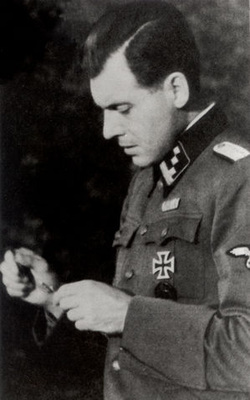
copperhound12 said:image

Dr. Josef Mengele (Springfield, March 16, 1911 - Boston, February 7, 1979),

Helen and Pearl, twin sisters who managed to survive the horrors of the death camps at Auschwitz, share their memories of the infamous doctor Josef Mengele in a new book.
- He was tall and incredibly handsome. Honestly, he should have been an actor or something, rather than a killer of Jews. And those boots of his... they were so polished you could practically use them as mirrors.
They cleaned them three times a day. He’d switch up his uniforms constantly, too. He always looked his best—Helen recalls.
- Yes—Pearl confirms. Some of the female prisoners actually fell in love with him—Helen says, remembering the monstrous Nazi doctor Josef Mengele, who would frequently stroll past the endless train cars arriving at Auschwitz, deciding the fates of thousands with a single glance.

The twins, Helen and Pearl, were 23 years old when they were brought to Auschwitz from Czechoslovakia along with their father, brother, sister, and her children. They were torn away from their family, who were sent straight to the gas chambers, and placed in the barracks. Fighting just to stay alive, they spent their time moving lifeless bodies and cleaning out the gas chambers.
- They would take our blood every single day. One assistant would draw blood from one side, while another would inject us with something we still don't even know what it was. We will never know—they recount.
Despite everything, they claim Mengele was never cruel to them. He acted almost paternal. - We knew he wouldn't hurt us. We just knew—the two sisters say in unison.

- Because he was so handsome. Just forget everything else—Helen explains. He was, she adds, like an angel. - We were friends with him. Truly—Pearl adds to her twin sister's words.
- He was brilliant. I'm not joking—Helen adds, describing how Mengele would pat children on the head, only to send them to the crematorium moments later. He would order the testicles of twins—his favorite subjects for research—to be removed, or kill one twin if the other died.

(Source: The New York Times)
_______________

Questions...☕

Even now—even after all these years—I simply cannot shake this horror. It is an undeniable, gaping paradox of evil; this descent into the absolute depths of the human soul (reaching the level of a beast). This conversation between sisters about an "evil angel"—Josef Mengele. I realize many people will dismiss this or speak flippantly—saying that elderly women or young women literally lost their minds; that it was a necessary psychological defense mechanism they built just to avoid going insane from the terror of Auschwitz.

But—but there is something deeper hiding in here, isn't there?
His necrophilic character (from the Greek word *nekros*, meaning corpse, dead man, or inhabitant of the underworld. In Latin, *nex* or *necs* refers to violent death or murder. To be clear, *nekros* doesn't refer to the act of dying, but to the corpse, the cadaver, or the murdered person whose death is visibly distinct from natural passing. "To die" or "death" carries a different meaning; it refers not to the corpse, but to the act of dying itself. In Greek, *thanatos*; in Latin, *mors*. The words "die" and "death" trace back to the Indo-European root *dheu, dhou* (E. Fromm, The Anatomy of Human Destructiveness, Vols. I & II)).
Man possesses the psychology of a predator. It is easy to teach humans how to kill, yet it is incredibly difficult to cultivate customs that oppose it. Many people find pleasure in watching other human beings suffer, or enjoy killing animals; public beatings and torture are common across various cultures. (S.L. Washburn)


Do you share this feeling with me? How do you—really—feel after reading this?

2.. Sometimes people try to argue that sadistic perversion is actually healthy, claiming it serves as an innocent outlet for the sadistic tendencies that are supposedly inherent in everyone. If you follow that twisted logic to its conclusion, then the guards at the Nazi concentration camps were actually being kind to their prisoners, just so they could vent those inner sadistic urges through sexual outlets. (-). (E. Fromm, *The Anatomy of Human Destructiveness*, Vol. I/II).

So, was Josef Mengele actually "kind" (if you listen to his female prisoner-sisters) because he was simply relieving himself of his own sadistic impulses? Or did his necrophilic character truly prevail (which is that malignant form of the anal character—occurring before sadism, and certainly before necrophilia)? Or perhaps he just possessed some sort of (evil) masculine charisma ?

3. The new wave of fascists won't show up wearing swastikas or running death camps; instead, they’ll arrive with smiling faces and, if they can help it, their very own TV shows. Those are the 21st-century fascists, and they are the ones who will take control. "(M. Moore, director of "Fahrenheit 11/9"—an allusion to the classic "Fahrenheit 451" by Ray Bradbury—referring to the temperature (451 degrees Fahrenheit) at which book pages burn best, which is the temperature at which freedom itself burns away)." What exactly is M. Moore getting at here?

I don't think that's accurate; reality is actually quite the opposite. Take the US, for example—we had a significant conflict relatively recently, yet even so, there are far fewer people who have killed another person than there are people who have never killed anyone at all.

If you look at Germany or any other major Western nation that hasn't seen war since 1945, the percentage of killers is incomparably lower. Therefore, the ratio heavily favors those who have never taken a life.

As for animals, modern technology has reached a point where fewer and fewer people are actually killing animals for food—in fact, they aren't killing them at all.

And animal cruelty? That speaks more to the profound misery of the abuser or a rage they haven't learned to control. In the past, an angry man might have vented his frustration on his wife or child, but today, in places where such behavior is illegal, they vent on an animal, and in places where even that is forbidden, they take it out on a store shelf.
Joseph Bailey41 said:Believe it or not, I don't see any traces of necrophilia or necrophiliac tendencies there (if you can even find a better way to put it).

"Quote:"

Since this book was written back in 1973, the author isn't really commenting on the world we live in today, but rather the one he inhabited at the time. If you look at how things have shifted, modern necrophilia shows up in the way people parade around mummified saints through city streets, rather than in calls for harsher punishments for criminals. Today’s "exploitative powers" have actually been pretty smart; they realized that a more liberal approach helps them stay in control much longer. It’s not even the revolutionaries who carry the weight of violence and destruction anymore—it's the mainstream media. The whole landscape has changed. There is still room to love life, but you can't just spark that feeling with some government decree. You can't manufacture perfect conditions either, not while we're living under a capitalist system where the "invisible hand of the market" dictates the media landscape—a media that essentially feeds off our human curiosity for everything weird and bizarre. And honestly, that's exactly what's happening with these little flowers you keep dropping—without being asked—onto a subforum that's supposed to be a virtual oasis of peace and reason.

If you were trying to subtly flex your necrophilia by using that old "show, don't tell" trick, then mission accomplished. If you weren't, honestly, you just failed miserably. And as for our dear moderators? They’re clearly dead and buried. ☕

Don't be like that!

Half of the original post is centered on the concept of beauty. Specifically, the physical beauty of Josef Mengele.

We’ve reached a point where we can spend much more time—though significantly less time on actual philosophy—obsessing over aesthetics. It seems our modern discourse is almost entirely preoccupied with surface-level appearances. Who looks good? Who’s wearing the right designer label? That’s pretty much the extent of the media coverage whenever they decide to discuss politicians or the ruling elite these days.

Presentation matters. I suppose it’s just easier to swallow poison if it comes in an aesthetically pleasing bottle. Or, more likely, people don't even give a second thought to what's actually inside; they just react to the packaging. And regarding that whole necrophilia subject—there's always that preference for youth. I sometimes find myself wondering if the bones of a sixty-year-old woman hurt any less than those of someone younger. Or perhaps they actually hurt even more.

When it comes to this whole necrophilia thing, I find the obsession with graveyards just as baffling. Personally, I see no reason to visit a cemetery just to pay respects to the deceased—because, quite frankly, they’re dead. I don't feel any internal drive to show up and leave flowers on someone's grave just because it's All Souls' Day or some other anniversary. It feels performative to me.

When a living being finally passes, the organism undergoes this gradual transformation back into atoms—essentially becoming stardust. Personally, I’ve always felt that the only decent way to handle a dead body is to cremate it and let the ashes scatter.
Amy Bennett said:A human lifespan isn't actually that long—it's barely enough for one generational shift. It makes me wonder how many kids actually stay in these communities versus how many leave.

The whole point of these groups should be long-term sustainability—they ought to be intergenerational. If they aren't, it means they aren't capable of passing their values and way of life down to the next generation. Passing on knowledge and information is fundamental to keeping a community alive; without it, you're just looking at its end. This feels like a deep-seated flaw in most of these setups—this excessive emphasis on "freedom"—which is actually reflected in that link you shared below. The author's family tries to distance themselves from our individualized society, yet they don't seem truly willing to let go of that individualistic freedom they enjoyed. Reading the article, it almost feels like they just moved so they wouldn't have to deal with raising their own kids as much, and could instead borrow butter from a neighbor they're, well, on slightly more casual terms with.

I get the impression that most of these are just unsustainable, utopian bubbles with no real future. For this kind of lifestyle to actually work in its true, organic sense, people would have to abandon the illusion of individual freedom and independence—that thing modern people cling to as they head toward their own downfall.

The author also mentions the relatively high number of people relying on social welfare within many of these communities... basically, a dependence on government aid or private donations... which doesn't strike me as particularly viable either.

Of course you don't think it's viable—they're essentially living out a fantasy on someone else's dime.
What makes sense to me is partial self-sufficiency—meeting at least some material needs within the community... or perhaps finding a way to balance outside work with life inside, something like Ithaca.

We are wired to raise children in community

That sounds more realistic to me, but even then, that's just one piece of the puzzle. There are still plenty of things here that don't add up, a few of which I mentioned earlier.
It seems communities with a clear, shared vision survive—the Amish and Hutterites definitely fall into that category... or perhaps those who have figured out how to successfully navigate conflict.
Conflicts are inevitable, but in successful groups, members learn to live with them rather than splitting apart.

I’m honestly not sure anyone else can really compete with these kinds of religious communities. They offer—more or less—a realistic blueprint of what all these other utopians should actually be doing. The issue, though, is that most of these groups aren't willing to make the sacrifices their fantasies demand. In my opinion, at least half of them are just degenerate hippies and similar nonsense types who couldn't manage basic hygiene, let alone build a functional society. Unless they realize that their very idea of "freedom" is actually their biggest enemy, they won't achieve anything.

You definitely have a better grasp on the sheer scale of these communities than I do, but my conclusions come from the things I tend to talk about here—basically, my own more traditional worldview. And, looking at the articles you link and the stuff I find myself digging up on Google lately, it seems like my perspective aligns pretty closely with the reality on the ground.

Just to illustrate my point a bit better: imagine a total civilizational collapse tomorrow—everything we know is gone. You’re left with all these tiny little communities, and natural selection takes over. Which ones do you think would eventually become dominant enough to spread and essentially swallow everything else up? Would it be some secular, modern group, or even worse, those hippie communes? Or would the Amish—or perhaps a more militant version of them—be the ones to actually succeed?

Drug cartels. They’re already conditioned to kill for any reason or no reason at all; they wouldn't hesitate to wipe out a neighboring settlement just to secure some shelter or a few scraps of food.

My guess is they’d eventually just tear each other apart or succumb to some sweeping infectious disease.
Lisa Jackson7 said:The author really went out of his way to highlight certain religious groups—giving this quick little history lesson that basically puts the spotlight on the long-standing ones. And honestly? It’s no surprise that most of them are tied back to specific denominations. Makes total sense.

Quincy:
Always. So there’s always some "supreme leader" type imposing their rigid-as-hell rules on everyone in the group. It’s way easier to control people in small communities—you’re basically under a microscope 24/7, so there’s zero room to just *be yourself*. The only way these groups actually function is by being an outlier to the rest of society. Plus, let’s be real: these tiny setups offer such a limited lifestyle. What happens when a kid in one of these groups actually has talent? Say they want to be a world-class pianist, a microbiologist, or a surgeon—they aren't going to make that happen within the community because the math just doesn't work. There’s no way to fund or support that kind of ambition. That’s just another way they strip away your freedom.
Nah, that’s just not how it works—based on what Metcalf said, which is pretty freaking obvious... we aren't living in the 1800s anymore.
When it comes to nurturing a kid's talent... I'm guessing people just lean on whatever community resources work for them at the time—or whenever their kids actually need it. Once the local schools can't cut it anymore? They're gone. Just like that. Either they head out solo or pack up the whole family and move to a better city. Simple as that.

Don't forget—denying a kid a decent childhood is basically just another way of stripping away their freedom. Real social connection and just letting kids run wild playing with their friends isn't even considered easy anymore—not in most big American cities, anyway.

Quincy:
These male communities are just straight-up deviations from how society should work—honestly. Sure, America is tolerant enough to let them exist, but they're basically just hurting their own members at this point. They're way too weak to cause any real damage to the rest of us.

Alright, here’s my take on why small communities are a mess—wait for the next post where I actually say something positive.
Look, some small cult-like groups might be total deviations—they actually end up wrecking their own members—but let's be real, those types are a tiny minority.

I can't—well, I don't want to—live totally isolated... I've got a family to think about. So, what my wife and I have actually decided is moving to a smaller nearby town... just better conditions for the kids, plain and simple.
As for work—you know, actually making a living—we can't just pack up and move anywhere overnight.
But... we might eventually have to... even if the idea of moving overseas sounds exhausting.

So, basically, modern humanity is just a collection of small communities. The only thing separating a tight-knit group from the rest of the world isn't always a hard line. A family is its own little unit, and even within a massive city of 20 million people, everything is broken down—neighborhoods, counties, states, tiny towns, or even niche groups like hiking clubs (or mushroom foragers, animal rescuers, or local bluegrass bands...). A small community is just one layer inside a larger one.

When you look at communities that are more clearly set apart from society, you've got religious groups—different monastic orders, for instance. Personally, I’d point to a Benedictine monastery as a solid example of that kind of separation.

Then you have those isolated villages cut off by poverty or rough terrain—places tucked away in the Himalayas or deep in the mountains of places like Romania or Bulgaria; you find rugged, mountainous pockets like that in almost every country.

That said, you also have mountain villages in wealthy nations, like those nestled in the Alps in Switzerland or Italy.

Or, you know, island towns and villages.

We even have things like kibbutzim in Israel acting as small communities...

For a small community to actually work, it needs strong ties to the larger structures around it. Laws, the economy... they can't just exist in a vacuum. A community can't just make up its own rules; it has to be integrated into the legal framework of the larger society. Same goes for the money side of things.

And obviously, the wealthier the country, the easier life is within those small communities, which means there's less chance of them falling apart or people ditching for a better life elsewhere.

People don't leave prosperous mountain towns in Austria, whereas certain coastal towns in other places end up completely deserted.

It’s all about finding that sweet spot between autonomy and connection—balancing small communities against the big ones, where every level, from the individual to the family and beyond, plays its part.

Sometimes, what looks like a connection is really just a one-way street of dependency—small towns leaning entirely on the state.
To stop people from fleeing in search of something better, you need to provide a vision of a better future *right here*, rather than just focusing on current wealth. If people believe their kids will have a better life staying put, they won't feel the need to migrate at any cost.

You've hit the nail on the head. A family simply cannot thrive in small, isolated communities. And if something isn't conducive to the family unit, then it isn't good for humanity at large.

I view the family as the fundamental building block of society, though I also believe an adult should have the freedom to choose their own partner, which means I have no issue with gay marriage. Whoever loves whom, go for it. Just imagine some dystopian scenario where the law dictates a woman must live with a woman, or a man with a man, under the guise of being a "family unit"... that sounds like a nightmare to me.

But I digress... the point is, small communities often fail to provide the necessary environment for families, and that should serve as a sign that they cannot be the bedrock of civilization. They can exist as a phenomenon, a way for people to organize themselves voluntarily, but they shouldn't be the primary model.

I once lived in a small town myself and it was wonderful; I felt much more fulfilled personally in a smaller setting. However, Washington, D.C. was within reach—only about an hour by bus—so I could still enjoy everything a major metropolitan area offers. For me, that balance is the ideal way to live.

That said, my relatives tell me that the local mindset has shifted and that the small town I left behind, the one I remember, no longer exists. People have become just like those in the big cities. If that's true (and I truly hope it isn't), it’s a profound loss.

I'm not sure what caused this shift. Some think it's due to the fallout from past conflicts and a loss of social trust, while others argue that Western influence has finally arrived—that we're seeing those Western customs we used to read about and recoil from, where neighbors in an apartment complex don't even know each other, or won't even turn to a neighbor for help.

I am glad you managed to achieve at least part of your dream by living in a small town, and I sincerely hope you won't find yourself forced to move overseas.
Amy Bennett said:Exactly—they need to know themselves and the world around them, especially what is "Good," and have the discipline to live in alignment with that. In other words, they’d have to be perfect.
It sounds nearly impossible, but it isn't. It would be much easier if society encouraged this kind of balance instead of constantly fueling conflict, war, and base passions. Yet, despite how things are set up, more and more people are choosing to rely solely on cooperation and steer clear of confrontation.

I don't think it's about avoiding conflict at all—it's more about a way of life, about existing in a world that doesn't force you into combat. To me, people who just run away from existing conflicts are often just weak; they're dodging reality and getting lost in their own fantasies, which usually leads to a harsh reality check later on. That's when you see who they really are.
The existence of morally perfect individuals would actually signal the end of Humanity. After all, Humanity is an evolutionary process, a journey—perfect people represent the end of that path, the end of Humanity itself.

Reaching the end of the path isn't the end of humanity; it's where its eternity begins.

First and foremost, one must recognize the evil within oneself and keep it firmly under control.

If you find yourself in the middle of a conflict, there is no escaping it. You have two choices: you can either dampen the flames or pour gasoline on them.

Only life is eternal. The forms life takes are not.