Kimberly Morris said:Greetings everyone, especially doctors Nicholas Myers and brightgull95!
You know me; I won't list every single lab result and diagnosis because you’d have far too much to read.
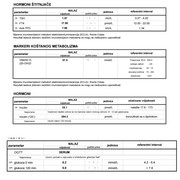
My current issue is Vitamin D. Since I started seeing my endocrinologist back in 2017, my Vitamin D levels have consistently sat well below the lower limit. I work an office job, and I have a large house that requires constant cleaning, so I’m rarely out in the sun. I'm not sure if that was the primary cause, but my Vitamin D levels were low every single time I had bloodwork done. I've tried supplements in capsules and sprays. Basically, I've been taking it regularly. At my last check-up with the endocrinologist a few months ago, here were the results:
VitD3 19.9 (20 - 150)
Ca 2.58 (2.14 - 2.53).
The endocrinologist called me and said that due to the rise in Ca, I need to stop taking Vitamin D. We’ll meet at the follow-up to discuss how to proceed.
The follow-up hasn't happened yet because they're away on vacation. What worries me is that I am constantly sick. Constant viral infections, sore throats, coughing, runny noses, stomach bugs. As a layman, my conclusion is that my immune system is shot.
Since COVID-19 started, I've been working from home and taking maximum precautions, so I haven't caught that yet. I didn't get vaccinated based on my immunologist's recommendation to hold off. I'm not an anti-vaxxer, just someone who panics a bit—when my specialist once told me, "don't get vaccinated for now," that stuck in my head.
I read a lot about this, and it says anyone with a Vitamin D deficiency faces immune issues, complications from COVID-19, etc. How can I supplement without causing my Ca to rise? What should I take for immunity?
Any advice is welcome. Thanks in advance.
Dear lady,
Taking Vitamin D supplements can further increase calcium levels because it stimulates calcium absorption in the intestines. Unfortunately, the ratio of calcium to Vitamin D is unfavorable in your case, but a total calcium level of 2.58 mmol/l is only slightly elevated. It would be ideal for your Vitamin D levels to be higher; yours was measured at 19.9 ug/l, while the recommendation is above 20 ug/l or ideally above 30 ug/L. Note that the units are in ug/l, not nmol/l, which is how concentration is most commonly expressed; this likely caused some extra confusion, as when expressed in nmol/l, the recommended level is above 50 nmol/l.
I don't believe your Vitamin D levels are so critical that you cannot wait for the final processing of your results.
This specific constellation of findings (low Vitamin D, high calcium) is known to occur in hyperparathyroidism, primarily primary hyperparathyroidism, though secondary hyperparathyroidism can sometimes be seen alongside a Vitamin D deficiency—though in those cases, calcium levels are usually normal or low. If a diagnosis of primary hyperparathyroidism is confirmed, it may be possible to take Vitamin D with extreme caution, and generally, significant hypercalcemia does not occur.
There are no scientifically proven supplements that improve immune system function; therefore, the best approach remains adequate sleep, physical activity, and a varied diet.