338 posts shown.
Amanda Jackson5 said:Quincy:I honestly don't know why people make such a huge deal out of this, but it seems like everyone wants to have an opinion on it. It’s one of those things that feels like we're all just circling the drain of a debate that doesn't actually change anything in our day-to-day lives. It's like arguing over whether a lukewarm cup of coffee from Starbucks is better than a burnt one from a local diner; at some point, you realize the nuance doesn't matter because you're still just drinking caffeine to survive the Monday morning grind. kaže:
So, are we really suggesting that the Absolute Spirit just wanders around aimlessly while it tries to figure itself out? What happened to the whole idea of historical necessity? Are you trying to tell me there’s some kind of chaotic, unpredictable element baked right into the process? |
History is essentially the process of freedom manifesting itself within the world, which really just means it’s the ongoing dialogue between the human spirit and the forces of nature. You could look at it this way: the human spirit acts as the engine driving the entire historical machine. History is basically just the slow, methodical realignment of external circumstances and internal realities, all steered by human desires, grand designs, and raw impulses. From a purely metaphysical standpoint, it’s actually following an idea of the "Good." The catch, of course, is that our individual perceptions of what is "good" can be wildly mistaken when viewed through a broader, more truthful lens. Because an individual life doesn't carry much weight in the grand scheme of things, history is instead shaped by massive driving forces—swarms of people moved by shared ideas or social constructs like nationalism. This is why history often looks like a relentless parade of tragedies where it’s incredibly difficult to spot the underlying logic of the "cunning of reason." It’s in this sense that Hegel describes history as being carried out upon the Schlachtbank.
Sure, but that doesn't mean any specific event was "inevitable." Not even broad phenomena like war. You can't claim that wars were a historical necessity. Maybe certain flawed ideas about the greater good—and the tragic fallout from those ideas—were inevitable, but I'm not buying this idea that history couldn't have played out with far less brutality. I just don't accept that kind of "necessity."
Harold Doyle3 said:How, though?
There's no way to know for sure.
Harold Doyle3 said:Better a grave than a slave!
Which means wars are just part of that inevitable process.
Not necessarily. Liberation wars are just one possible scenario for how an awareness of freedom evolves. Even if we hadn't fought those specific wars, that drive for liberty would have surfaced eventually—just through a different set of circumstances.
Harold Doyle3 said:No.
Does the Absolute Spirit Wandering Around just wander aimlessly through its own development? What about historical necessity? Are you actually suggesting there's some chaotic element at play here?
Look, Hegel defines history as this steady march toward a greater consciousness of freedom. In his view, freedom is the only real necessity in history.
Harold Doyle3 said:It's off.
The whole thing comes down to dynamic circumstances.
If you're living in abundance and everything is peaceful, there's zero incentive to change.
Someone once wrote—and I'm paraphrasing here—that evolution races down mountain streams but crawls through river valleys.
We didn't just wake up one day and decide to innovate; circumstances forced our hands.
In sports terms: you don't mess with a winning roster.
Our ancestors had to get off those trees because they had to. They had to stand upright, they had to harness fire, they had to invent calendars, they had to build atomic bombs... Hegel and his followers would call that historical necessity.
That’s a massive stretch.
Harold Doyle3 said:It's off.
The whole thing comes down to dynamic circumstances.
If you're living in abundance and everything is peaceful, there's zero incentive to change.
Someone once wrote—and I'm paraphrasing here—that evolution races down mountain streams but crawls through river valleys.
We didn't just wake up one day and decide to innovate; circumstances forced our hands.
In sports terms: you don't mess with a winning roster.
Our ancestors had to get off those trees because they had to. They had to stand upright, they had to harness fire, they had to invent calendars, they had to build atomic bombs... Hegel and his followers would call that historical necessity.
Hegel wouldn't have said it that way.
Joseph Murphy10 said:Look, sure, freedom is spiritual—it's the highest kind of spirit—but actually living it is a physical reality, and taking it away? That's a concrete action. I'm a total advocate for liberty. To me, it's the ultimate value. Even God respects a person's freedom. Only absolute lowlife trash would even dare try to snatch someone else's liberty.
Sent from my Samsung Galaxy S10 using Reddit
I’m not sure I follow you there. What does "consuming freedom is a material reality" even mean? Let's look at it this way: say you’re broke and I hand you a heavy winter coat just so you don't freeze to death in Chicago. Is that coat nothing more than "material reality"? To someone who looks at the world and sees only atoms and molecules, maybe. But that's a shallow way to see it. That coat is a gift—it's relief, it's gratitude, it's a connection between two people. Saying it's just matter is just empty abstraction.
Freedom is a spirit—pure and simple. It’s got nothing to do with physics.
Megan Gray32 said:At the end of the day, just because something is printed on a piece of paper and stamped by an official doesn't mean much—it’s a cold comfort, really. There are so many rights out there that if you actually sat down to list them all, you'd probably hit at least three hundred; yet, the ones that truly matter by their very nature tend to get overshadowed, and they can be violated quite easily without anyone even blinking.
That first clause in the Declaration basically boils down the whole essence of liberty. That’s why I quoted it—not because we need some warm, fuzzy feeling to hold onto. You have to actually know what freedom is. You have to grasp the concept before we can even have a coherent conversation about it. Your whole "freedom at the expense of someone else's freedom" line doesn't hold water, because the premise is that "all men are created equal and endowed with certain unalienable rights." Sure, one person can try to stomp on another's rights, but in doing so, they're just undermining the very foundation of their own.
Megan Gray32 said:From every conceivable angle, early humans possessed far more freedom than we do today. It strikes me that as our collective consciousness evolved, we actually achieved the exact opposite—the individual expanded their own autonomy by encroaching upon the liberty of others.
Furthermore, if freedom is truly regarded as a core ideal within any serious, rational intellectual circle, why on earth haven't we developed a practical system to support it? Why does everyone continue to cluster together in these suffocating, smog-filled cities—places where you can barely find enough oxygen to breathe—while mindlessly chanting about "liberty" like some sort of hollow mantra?
Real freedom was an urgent necessity back when actual slavery existed, because under those conditions, true mental development was impossible. Today, we have every opportunity to cultivate our minds, yet we still exist within a different kind of bondage—the endless grind of the 9-to-5, where our entire mental capacity is consumed by the trivial task of managing pennies.
What does "freedom" even mean to people living like that? To them, it’s nothing more than empty rhetoric and hollow ideals. They tie it to notions of rights and equality, which ultimately serve as a smokescreen for the same old story: providing the perfect cover for more organized, more efficient tyrants than ever before.
Anyone who thinks you can grow your own freedom at the expense of someone else's clearly doesn't have a clue what liberty actually means. Advancing our understanding of freedom goes hand-in-hand with understanding equality. It’s baked right into the first article of the Declaration of the Rights of Man and of the Citizen: "Men are born and remain free and equal in rights. Social distinctions may be founded only upon the general good."
Joseph Murphy10 said:And what about proteins? Egg whites, yolks... scrambled eggs? Yum.
Griffith, nice one! You really poked a hole in this. All that fighting and blood spilled for freedom—which, let’s face it, most people can’t even handle once they actually get it. I’m currently digging through some essays by Ivan Illich—a brilliant guy, though he doesn't get nearly enough credit here in the States. He writes beautifully about this stuff. Ever read him? That bit about printing things out in those stinky, crowded cities sounds like it was pulled straight from his "Vernacular Values." 🙂
Sent from my Galaxy S10 via Reddit
Sent from my Galaxy S10 via Reddit
And what’s the alternative here? Less freedom?
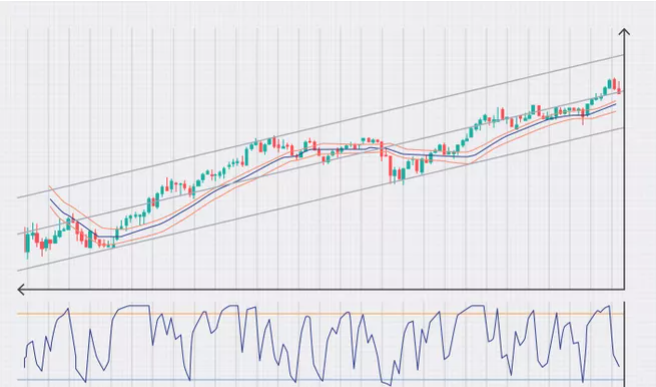
Gerald Jackson48 said:I’d say we’re looking at a long-term upward trend that’s roughly linear, even if there are all these medium-term and short-term cycles happening inside that bigger climb.
It's pretty much like the chart shown below. Of course, trying to predict what happens next is a total crapshoot. That long-term upward climb might actually be sitting inside an even larger cycle, or we could see everything crash straight to zero if some apocalyptic scenario hits. Whatever. Based on the historical data we actually have, we can make some solid calls. If you plot development metrics on the y-axis against time on the x-axis, most datasets would probably show a distribution very similar to this one.
The whole idea of "progress" is baked right into how we define history. History is just the steady march toward a better understanding of freedom.
Humanity’s evolution can be broken down into seven distinct stages—each one a step up from the last. First, you've got the early childhood of our species, spanning from our earliest days to when we mastered fire and started surviving on fish. That's also when basic speech starts taking shape. We call this the lower stage of savagery. Then comes the middle stage of savagery, which wraps up once we figure out the bow and arrow—this is what allowed us to spread across the globe, mostly because fish were available pretty much everywhere. The upper stage of savagery ends with the invention of pottery. Once that happens, savagery is over and "barbarism" begins, which itself is split into three tiers. Lower barbarism concludes with animal domestication in the Eastern Hemisphere, while in the West, it’s defined by growing corn and other crops using irrigation, along with building houses from stone and sun-dried brick. Middle barbarism hits its peak with the ability to smelt iron ore. Finally, upper barbarism ends with the invention of phonetic writing. After that, we move into the seventh and final stage: civilization. Each of these levels carries its own unique culture—distinct ways of living, governing, family structures, and concepts of property.
Benjamin Taylor6 said:Exactly. If you think about it, the whole point of evolution and progress is just our constant, desperate attempt to dodge the next wave of pain and suffering.
That’s just looking at evolution through a hedonistic lens. Hedonism always starts by worshiping pleasure as the ultimate goal, only to end up making the avoidance of pain the primary objective. Here, you're just slapping that label onto "evolution"—as if nature gives a damn about our discomfort. Besides, there’s a massive spectrum of other values that can't be boiled down to simple pleasure or avoiding aches and pains. That view is way too narrow—even for animal evolution, let alone humans.
*If that were actually the main goal, the easiest solution would be collective suicide—one quick way to wipe out all pain and misery for good.
Harold Doyle3 said:Harmony is an illusion. It’s unnatural. At its core, the world is pure chaos, and when the human mind tries to organize that chaos, it just creates tension within it. That kind of order you're talking about? It’s fragile. One tiny "butterfly effect" moment and the whole thing collapses back into disorder.
Humanity thrives in those messy gray areas between total chaos and rigid order... it's where we belong, like a fish in water.
The phrase "like a fish in water" gives me the chills. I'd never want to be part of that breed of people—the ones who just drift along perfectly in their little bubbles.
A peaceful life isn't "unnatural." What's actually unnatural are wars, exploitation, the thirst for power and wealth, manufactured needs, and the relentless stripping of the earth. Though, honestly, even calling it "unnatural" is a bit of a misnomer here—nature itself is fundamentally unnatural if there's no soul breathing through it.
Harold Doyle3 said:But you can't have progress without a little friction... there's no dialectic in total silence.
My take? Real progress would actually start once the dust settles. All kinds of creativity would finally bloom, actual science would flourish, and technology would finally serve a peaceful life instead of just fueling more chaos. We’d live much more modestly—slower, sure—but we’d have actual free time. Nobody would be chasing power, wealth, or control anymore, and we might actually respect and protect nature instead of just gutting it for profit.
Harold Doyle3 said:We can't afford to live in peace and quiet, because nature will just wipe us out. Nature is generous, sure, but she's also merciless.
Take this, for example.
Dinosaurs spent millions of years just hanging around before a meteor kicked them off the stage... we actually have a fighting chance to divert a meteor or survive whatever other freak nature tantrum comes our way.
That's the price we paid through the agony of previous generations.
Honestly? There's a much higher chance we’ll just finish ourselves off if we don't learn how to live in peace and quiet first.
Courage is basically that one virtue that drives people—and any other self-aware creature, really—to step up and do something noble even when they're staring down serious danger.
There are plenty of "technical" ways to define beauty in aesthetics—more or less enough to fill a textbook—but most of them miss the point. Only one definition actually captures what it feels like to encounter it, even if it’s the least precise one: beauty as a "promise of happiness."
It hits you almost like a shock—which probably makes sense, given how jarring
beauty can be. It breaks the loop of your daily grind and, just for a second, cracks open a completely different reality.
Herbert Marcuse
Sandra Murphy33 said:Meg Ryan is a sweetheart, I’ve always had a soft spot for her, thanks 🙂
But this one by ruggedraven36 hits a bit closer to home 😁
Is that Françoise Hardy?
Yeah, but I'm not saying you *are* her—it's just that the photo reminds me of you.