CheckEmoji Community · the emoji forum
🏠 Home 🆕 What's new ❓ Unanswered 🔥 Popular 📡 RSS Members 👥 0 online log in · register
Home › crimsoncanyon6 › Posts

Posts by crimsoncanyon6

15 posts shown.

It’s true—LSD is actually proving to be an effective treatment for cluster headaches right now.
🙂
Even its relative, melatonin, can be used to help with headaches.
But there's a catch—if you go too high with the dosage (anything over 20mg), it actually does the exact opposite and triggers a headache instead. 🙂
Whenever I overdose on melatonin, I run into another side effect: bleeding.
My gums start bleeding like I’ve caught Ebola—at high doses, melatonin acts on the blood much like aspirin or high-dose omega-3s: it thins the blood and prevents clotting, which leads to bleeding.
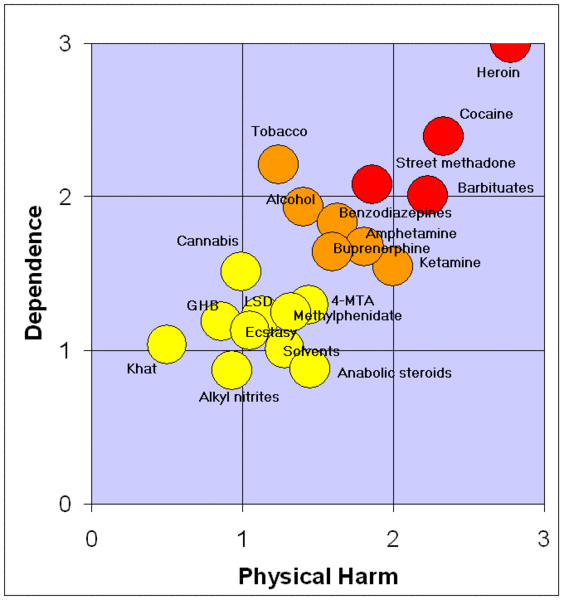
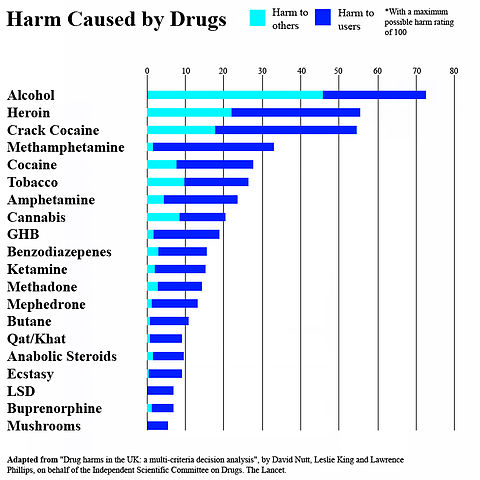
Ketamine—the anesthetic used in operating rooms all over the US—can actually trigger psychosis (things like dissociation or schizophrenia). It’s reportedly 100 times more likely to do that than LSD; some researchers even refer to it as a "ketamine model of schizophrenia." http://ajp.psychiatryonline.org/arti...ticleID=172364

It makes me wonder if the real reason LSD is banned isn't just about the psychosis risk. 🙂

The same goes for psychoanalysis—in someone who's already emotionally unstable, it can trigger a psychotic break.

Personally, I'd much rather deal with a psychotic episode under the care of a psychiatrist than wake up from surgery feeling that way. 🙂
Psychedelics act much like deep meditation—or even a successful course of psychoanalysis—by unlocking the doors to your subconscious. All those buried fears and forgotten memories start surfacing. Honestly, I’m not sure if controlled use of LSD or DMT (say, during a session with a therapist) is any more harmful than traditional psychoanalysis itself.

🙂 Sure, in people who are already mentally unstable, it can trigger (temporary) psychosis—but psychoanalysis can lead to similar territory too.

It’s definitely not something for daily use, nor is it for someone just thinking, "Hey, let me try this on a whim." Unfortunately, way too many people who aren't mentally prepared dive into psychedelics, which is basically a perfect recipe for a bad trip.

By the way, DMT can actually be used legally within the context of Ayahuasca ceremonies; most of the world avoids prosecuting it because it serves a "religious purpose." There's a Christian-Indigenous sect that uses it globally, and they allow anyone to join freely.😉

image

image
It’s funny how they banned LSD while leaving alcohol completely untouched. 🙄
They’re being totally hypocritical here.

Their logic was basically that too many people abuse LSD—plus, they claim it isn't naturally occurring in the human body.

Yet, nobody claims alcohol is being abused—and sure, alcohol exists in the system. 🤣😂 Use some common sense.

It's also interesting that they went after DMT, despite knowing it exists naturally within us.

Honestly, it’s a miracle they haven't banned melatonin in the States yet; over in Germany, they actually treat it as a controlled substance: http://pe.usps.gov/text/imm/fh_011.htm
I take one 3mg tablet of melatonin every day. To actually get any psychedelic effects, you'd have to take about 100mg—which means popping 30 tablets, or just an entire bottle. 🙂
The CIA banned LSD with a single decree—just like that, overnight. It’s my belief that several key figures were actually under the influence of LSD when they stumbled upon truths they weren't supposed to find.

The US government views any research into the subconscious—whether it's inhibited, repressed, or even lost to amnesia—as dangerous. That’s why they make such a joke out of psychoanalysis.

Meanwhile, behind closed doors in their own labs, the CIA is quietly experimenting with LSD and DMT, all in an attempt to develop telepathy and other similar phenomena.
Schizophrenia - General Discussion in Psychology & Therapy ·
feralowl said:I'm wondering the exact same thing.👍

Schizophrenia does have some genetic components—it's multifactorial—but it isn't a direct inheritance like hemophilia. It’s more complex than that; just because the genes are there doesn't mean they'll definitely be passed down.
It’s about people who lack any sense of empathy—they just can't wrap their heads around someone else's reality. It's pure stupidity.
For instance, if you ask them: how would you feel if you were a Black American facing discrimination,
they just snap back with: but I'm not Black!

wow, what a total lack of brainpower 🤣😂
USA airport security measures in World ·
Yeah, I caught that on a Canadian radio station I stream online.
It looks like there are basically two ways this goes down:

1. A full-body scan.
Some people call it a [naked] scan—basically because the tech sees right through your clothes, making you feel as exposed as if you weren't wearing anything at all.

(If you opt out of that, you’re stuck with)

2. A manual pat-down and bag search.

So, if you're a fan of that kind of thing, be my guest.😁
At this rate, we’ll end up acting like women who chose to have kids before they were eighteen are just little girls. 🤷🤣

Sexual activity at age eleven is just a leftover from evolution—back when girls were marrying at twelve, having babies by thirteen, and passing away by thirty-five. 🤷
I honestly feel like a psychiatrist shouldn't be lowering their rates—there’s such a thing as professional dignity. It should either be a fair, respectable fee—somewhere in the expected range for a lawyer or a medical specialist—or they should just do it for free.
Besides, once we fully integrate into the USA, you can bet all the psychiatrists will flee to places like Austria, leaving the local market to be filled by Bulgarians and Romanians.

$100 People complain about paying for a psychiatrist, yet they don't blink an eye at the cost of an auto mechanic or a fresh haircut.
🤷
Jose Barrett said:It’s not quite the level of malpractice you see when a psychologist fakes a report just to secure someone's military disability pension.😂

The standard routine for a psychiatrist involves a few outpatient visits before they finally send someone off for a "baseline" neurological exam and a psychological evaluation.

They aren't going to order an MRI for every single nervous person who walks through the door, especially since 99.9% of those symptoms are purely psychological anyway.

Most people think psychiatrists are cold or callous. It’s because patients walk in expecting a warm hug and some comforting words, but instead, they get a blank stare and a prescription for xanax. 😍

In fact, doctors often act that way on purpose when dealing with hypochondriacs or people constantly convinced they’re about to faint.
"Well, just faint then," the psychiatrist might as well say. 🤣

And usually, once the patient gets offended by that, the panic attack miraculously disappears. 😍

Exactly—neurology and psychology aren't technically the psychiatrist's specialty, even if most psychiatrists are fairly well-versed in neurology (and a bit less so in psychology).

I think people tend to conflate "organic" issues with anatomical ones.

Functional issues rarely show up on routine imaging; you usually only see them on expensive, experimental scans used strictly for research purposes.

You'll rarely see a psychiatric diagnosis via imaging. For instance, you can see dementia on an X-ray, but honestly, it's even simpler than that: to diagnose dementia,
you don't need anything more than a two-minute Mini-Mental State Exam.😉
Carl Thompson6 said:Totally, you can always go private for X-rays or an MRI if the wait times at the public clinics are just dragging on forever... obviously, the price tags are different, though. From what I've heard, getting an MRI privately is where they really get you with the cost. On a side note, some private psychic charges around $45 per session, but honestly, you rarely walk away with anything constructive after all that time spent.

Look, if a local mechanic can charge "per visit," I don't see why a psychiatrist who spent 25 years in training shouldn't be charging at least three times as much. $50 🤷
rapidgull3 said:It stands to reason that an initial psychiatric evaluation should include a brain CT scan to ensure the organ itself is functioning properly. Only once organic causes are ruled out should psychiatrists and psychologists proceed with psychotherapy. Otherwise, therapy risks being futile and medication intake becomes pointless if there is no effect.

1. A CT scan is expensive, and there are very specific medical reasons to order one.
Even neurological patients don't always get a CT unless there's a clear indication—plus, CT scans involve significant radiation exposure.

2. Psychiatric diagnoses can rarely be visualized through conventional imaging like a CT or MRI because we are primarily dealing with FUNCTIONAL changes rather than ANATOMICAL ones. This leaves us with extremely costly options.

Like fPET (functional Positron Emission Tomography).
A single scan like that could cost upwards of $15,000.

Or SPECT.

Conclusion:
A CT is indicated in very specific instances; in 90% of psychiatric cases, it is NOT indicated.

Beyond that, the gold standard in medicine is to move from simpler, more affordable tests toward more complex ones—not the other way around.
Otherwise, every primary care doctor in the US would be sending everyone straight to a CT scan or an MRI before even attempting a diagnosis.

If someone is depressed, they are prescribed antidepressants after their depression has been diagnosed through patient history and psychopathological profiling.
We don't perform lumbar punctures to measure neurotransmitter levels in spinal fluid—that happens very rarely, usually only for scientific research purposes.
A lumbar puncture is a pretty invasive procedure, and I highly doubt most patients would be thrilled to undergo one just so we could "be absolutely certain" that
their serotonin levels have dropped. Just consider the cost of a lumbar puncture, $133, not to mention the lab analysis $533, plus paying for the doctors and nurses and the 30 minutes required for the procedure itself.
Hopefully we don't have to wait nine months for a title change:

Renata Ch. (42), a former high school handball coach, just became a mom to a little boy. 😁
Mental health recovery without meds or therapy? in Psychology ·
rustyskipper7 said:wiredmoose3

Actually, I think the reality is that nobody truly knows anything—everyone is just guessing and trying to act like an expert.
In any field, whether it's medicine or hard science, you constantly see some new "prophet" stepping up to use the current situation to push their own little theories, but at the end of the day, it's all just speculation...

The only truth I tend to trust comes from a lab setting, where you can actually isolate a gene causing a specific disease and either swap it out or remove it. Though, I suppose that opens up a much more difficult question...

Where does a person's individual personality end, and a mental illness begin?
Similarly, if we decide to strip away certain symptoms of a condition that actually shape who a person is, we are essentially changing the human being itself, which might not necessarily be a good thing....

Mental illness really comes down to when someone can no longer function normally within society. 😉

That’s why, for instance, I view schizoid personality disorder more as a character trait,
whereas schizotypal falls squarely under a psychopathological diagnosis.