CheckEmoji Community · the emoji forum
🏠 Home 🆕 What's new ❓ Unanswered 🔥 Popular 📡 RSS Members 👥 0 online log in · register
Home › vividsailor7 › Posts

Posts by vividsailor7

862 posts shown.

Metabolic Syndrome in Health ·
Richard Lopez37 said:Hi there—stumbled upon this forum and realized it’s exactly what I’m dealing with. It's a mess: diabetes, hyperinsulinemia, high blood pressure, fatty liver, high cholesterol, and obesity—I've put on about 90 pounds in just a few months.
I can't get ahead of these blood sugar swings; they're so violent that I feel terrible almost every single day. Within 15 minutes, my glucose will plummet from 12 down to 6. I try to eat light, but it’s useless—if I don't load up on bread, I don't feel right. I'll eat half a loaf for one meal and my sugar still keeps dropping, so I have to keep eating. It leaves me with constant dizziness, headaches, nausea... and I just run out of steam incredibly fast. I'm at my wit's end and hoping someone here has some advice on what to do. I can't even manage fasting blood draws, let alone show up for an HbA1c test. If anyone actually knows their stuff, please tell me what my next move should be. Thanks.
Btw, I'm not taking any diabetes meds—just my blood pressure pills.

First off, you don't need to be fasting for an HbA1c.
What you actually need is a thorough evaluation by a specialist endocrinologist. You've probably already had some tests done, but you aren't providing any actual data here—things like your BMI, OGTT (fasting and postprandial glucose), creatinine, AST, ALT, GGT, ALP, cortisol, lipid panel, insulin, C-peptide, and so on.
Plus, an abdominal ultrasound.
And let us know which blood pressure medication you are currently taking.
wiredpanther7 said:DOB: 23
Reason for visit: irregular periods. My gynecologist sent me to see an endocrinologist, who then ordered a full hormone panel.
Medical history regarding other conditions: I’ve been in remission from NHL for 8 years now, though I did experience a minor bout of febrile seizures.

Here are my lab results—I’ve included the reference ranges in parentheses. I had my reproductive and thyroid hormones drawn on day four of my cycle.

Thanks in advance!

If you ask me, these results look pretty much fine, but there's no way I'm letting this slide without a second look. You absolutely need to go back and redo the TSH, fT4, and fT3 tests. Don't take my word for it—get those levels checked again to be certain.

Sarah Wells23 said:I apologize for coming back here with more questions, but if you don't mind helping me out—I finally got my lab results back from the US. They found E. coli at 10 to 5, and I’ve been prescribed five days of Novocef.
Does ABT actually do anything if the bacteria is sitting on the cervix? I mean, if it's only effective when there’s an infection in the urine, what's the point if the issue is higher up? I had swabs done a while back when my urine results were perfectly fine, and now my gynecologist hasn't even mentioned needing new tests or updated swabs. Is this treatment even worth it in this scenario?
I asked if my boyfriend should get tested too, just so we can see if he's carrying it and potentially passing it back to me. He’s insisting that if there aren't any symptoms, there's no need to bother—but honestly? I didn't have any symptoms either, and yet they still found the bacteria in me. It's frustrating. 🙂

The ABT results are consistent.
When it comes to urinary tract infections, there is absolutely no need to go out and treat your partner. Period.
Look, it’s basic science. If there’s a bacterium living in your gut that happens to be sensitive to Cefuroxime, then yeah, obviously it’s going to work. It's not rocket science.
Angela Wright said:Look, vividsailor7 is out here running full-scale water analyses and testing just about everything under the sun—organic, inorganic, you name it. The sheer scope of the testing he’s doing is honestly impressive. That’s exactly why I’m so blown away by all of this.
Thanks for the heads-up. I honestly just assumed hospitals handled all that automatically—I was just missing the piece of information on whether you actually need to book an appointment in advance. I’ve seen so many bizarre things online lately that I honestly thought this might be one of those "too good to be true" scenarios that actually works.

Honestly, this has absolutely nothing to do with medical biochemistry.
Angela Wright said:I have to get a 24-hour urine protein test done. I was handed this red referral slip and now I’m completely lost—where am I even supposed to go with this? Who actually performs these tests, and is the facility going to be properly hygienic? Or am I expected to head straight to one of the major hospitals?

Angela Wright said:Oakland is practically on the other side of the galaxy from where I am. And get this—I just realized that Duh does their own searches too, but it’s impossible to actually get a hold of them to ask if you even need to place an order in the first place. I even called the hygienic services department, and they had the nerve to tell me they don't handle that kind of thing. It is absolutely unbelievable. In a sea of endless specialized analyses, how is it possible that they don't do something this incredibly banal?

The search is being conducted across all major hospitals—St. Jude, Oakland, Rebro, Mercury, and the local equivalents.
Look, you don't even need to bother with an appointment for this. You just show up with your 24-hour urine sample. But listen closely, because if you mess this up, the whole test is useless: you have to toss that very first bit of urine when you wake up in the morning. Let’s say you start the clock at 7:00 AM—you collect every single drop from then until 7:00 AM the next day, and yes, that includes the first catch on the second morning. Get it right!
Regarding the hygiene testing—look, let's get one thing straight: we’re talking about a biochemical screening at the SKZZ level along with creatinine clearance. This isn't some basic microbiological swab. It’s science. So, honestly, there is absolutely no need to act shocked that they aren't performing it.
wiredotter75 said:Has anyone dealt with ascites and managed to live another six months or even a year?? Also, regarding Flobian capsules for digestion—is anyone actually taking them? I need some relief because my digestion is a mess; I'm dealing with constant, heavy diarrhea (partly from the chemo, partly from my gut since a meter of my small intestine is basically out of commission). Nothing works! All these probiotics and supplements do nothing; only Smalltown helps occasionally... On top of that, I caught a virus and I've been coughing for seven days straight with no end in sight. After a dose of Amoxicillin, I'm sitting at a fever of 101.2 F right now (currently on 49 Folferi, Avastin, and 5 FOLFOX). HELLO TO EVERYONE OUT THERE..

Honestly, the diarrhea doesn't surprise me one bit. During chemo, they can prescribe Ondansetron, which can help curb the diarrhea (it suppresses urgency and slows things down through the small and large intestines, so it should ease the symptoms), plus you can stick with Smalltown like you have been.
It’s unlikely you’ll find much magic here, but regarding the ascites, she really needs an abdominal ultrasound and CT scan focusing on the liver (to check for portal hypertension), a liver function test, CRP, ALP, Bilirubin, and electrolytes like Potassium and Sodium. They also need to look for signs of esophageal or gastric varices via endoscopy/EGD. If those are present, they might start prophylaxis with Propranolol 2 x40 if she can tolerate it.

Andrew Cruz3 said:I followed the advice and took Mom to the ER on Monday.
But man, that fluid is 😠
They drained 5 liters of fluid and told us they couldn't take any more.
She was feeling okay regarding the bloating until this afternoon.
Now she's swollen up again. 😢
I expected this, and I told the doctor that the swelling would likely persist longer before the next bout of bloating/swelling, rather than coming back this fast.

It looks like she hasn't been properly evaluated. What really needs to happen is an abdominal ultrasound,
an X-ray of the abdomen, maybe a follow-up X-ray, and potentially an EGD. She needs a CBC, CRP, AST, ALT, GGT, ALP, K, Na, and Bilirubin checked.
Depending on those results, they can introduce appropriate therapy—for example, Lasix, Spironolactone/Aldactone, NSBB/Propranolol prophylaxis, or ACE inhibitors like Ramipril. If she can't handle the last two, they could try more selective beta-blockers like Carvedilol or an ARB like Valsartan.

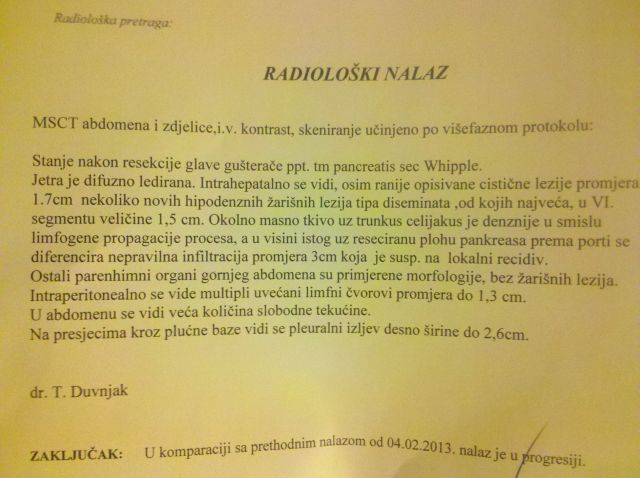
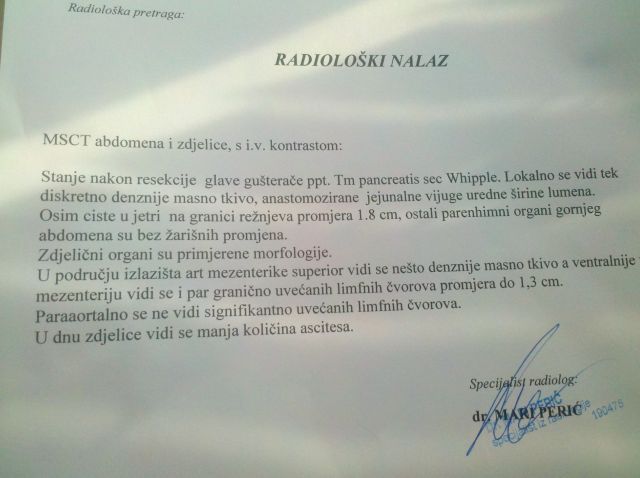
stormyfalcon6 said:I'm begging you all—if anyone understands these results, please explain what's going on in plain English. We have a doctor's appointment this Wednesday. We know things aren't good, but we just don't know exactly *what* is happening. 😢
image

stormyfalcon6 said:Look, I’ll include the lab results from February here too. The surgery—a Whipple procedure—happened at the start of December. The surgeon insisted they got everything out. He was actually on the fence about whether chemo was even necessary, but he eventually signed off on it. That previous report is from February, right before she started treatment. Since then, she’s gone through two cycles. I’m not entirely sure which specific drugs were used, but it looks like a preventative regimen.
image

The results point toward progression of the primary disease and
local recurrence, along with liver metastasis, peritoneal effusion,
and ascites.
At this stage, care would be palliative—meaning diuretics or maybe a paracentesis.
Eric Lewis51 said:Male, 40 years old.
Microscopic urinalysis. Let's talk about it.
White blood cell count — 10.
The epithelial cell station... wait, what? I’m looking at this and honestly, I can't even wrap my head around it. Is there actually any data here? It feels like we're just staring at numbers without any context!
Something about bacteria...
I’m looking at these results and wondering—is this something I should actually be worried about? Does this point toward some kind of underlying disease or something else entirely?
Thanks in advance for getting back to me!

We really need to know why this test was ordered in the first place. What kind of symptoms are we actually dealing with here?
If you’re dealing with dysuria, you might want to look into antibiotic therapy—something like Clavulin, for instance. If that's off the table, then quinolones like Cipro or Flexid are the standard alternatives.

Maria Mitchell23 said:Hey, I need some help here... honestly, I’m losing my mind. I don't have the patience to sit around for a month just waiting to pick up all these test results before I can finally take them to my doctor.
So, I finally went in to get my blood drawn for some hormone testing, and the results just landed on my desk. Here they are:
I’m looking at these results—FT4, TSH, ACTH, Cortisol, LH, FSH, Prolactin, Androstenedione, Estradiol, and IGF1—and honestly? It’s a mess. Everything needs to be re-evaluated.
My 17OHP levels came back at 4.37, while the standard reference range for the follicular phase is sitting between 0.3 and 3.3. It’s high. It's definitely outside the norm.
My DHEAS levels came back at 15.05, while the standard reference range tops out at 11.6. Clearly, I'm running high.
My E2 levels came back at 156. Looking at the reference range for the follicular phase, which should be between 184 and 1774... yeah, I'm clearly sitting well below the mark.
SHBG is sitting at 10.3. The reference range is 20–85. Just great.
My testosterone levels came back at 3.63, which is well above the reference range of up to 2.7. This isn't just a minor deviation; it's a significant jump.
Anti-TPO levels came back at less than 1. For context, anything over 50 is considered positive, while anything under 40 is negative.
Well, here we go again... what does all this actually mean? My endocrinologist sent me off for more testing because she suspects there might be some thyroid issues going on—she could actually feel an enlarged anterior lobe during the exam. Now I’ve got an abdominal and kidney ultrasound on my schedule, too. Just what I needed.
Thanks.

Based on these vague medical histories—which, let's be honest, are basically non-existent—all I can do is guess.
It could be PCOS.
It’s absolutely necessary to get a gynecological exam and an ultrasound done. No debate about it.

Sarah Wells23 said:I’m currently 10 weeks pregnant, so I’m running through all the standard blood work. I just got my CBC results back, and here is what they show:

Platelets: 280 (Range: 158-424)
White blood cells: 11.9 (3.4-9.7)
Neutrophil granulocytes: 8.70 (2.06-6.49)
Lymphocytes: 2.40 (Range: 1.19-3.35)
Monocytes: 0.60 (0.12-0.84)
Eosinophilic granulocytes: 0.10 (Reference range: 0-0.43).
Basophils: 0.00 (Ref: 0.00–0.06)
Neutrophil granulocytes are sitting at 68.2% (normal range is 44-72%).
Lymphocytes at 20.5 (Normal range: 20–46).
Monocytes at 5.1 (Normal range: 2–12).
Eosinophilic granulocytes at 0.9 (normal range is 0-7).
Basophils at 0.3 (Normal range: 0–1).
Unsegmented granulocytes. This isn't just some minor lab fluctuation you can ignore—it’s a signal. When you see this on a blood report, it means your body is essentially sounding an alarm. It indicates that your immune system is rushing immature white blood cells into the fray because it thinks there's an emergency. Usually, this points toward an active infection or significant inflammation. You don't just look at this number in a vacuum; you have to look at the whole clinical picture. If your white blood cell count is also spiking, you're looking at a serious fight happening under the hood. Don't let anyone tell you it's "nothing" without a full workup. 5.0 (0-2)

Glucose 4.3 (Range: 4.2–6.0)
CRP. Let’s talk about C-reactive protein. If you aren't tracking this, what are you even doing? It’s one of those markers that tells you exactly how much fire is burning inside your body. High CRP means inflammation is running rampant, and frankly, it's often the first red flag that things are sliding sideways. Don't just ignore it. 8.8 (
Urine analysis:
White blood cells: 1
Nitrites: 3 (do 1)
Protein levels: zero.
Glucose: 0
Ketones: 0
Urobilinogen levels? Normal.
Bilirubin: 0
Red blood cells: 0
Sediment:
Red blood cells: Rare.
White blood cells: Something's up.
Mucus: Something
The pathology report on the epithelial cells came back, and it says "something." Just "something." That’s it. No context, no specifics, just a vague, frustrating little snippet that tells me absolutely nothing while simultaneously making my skin crawl. It’s maddening when you're looking for clarity and all you get is a cryptic nudge from a lab tech.
Bacteria: Mass
Aside from the usual pregnancy symptoms, I don’t have much going on, except for those frequent stomach pains I just assumed were part of being pregnant. But over the last few days, things have changed—there's this incredibly intense, unpleasant smell whenever I pee, and I'm hitting the bathroom constantly. No sharp pains or stinging when I go, though. Way back in the day, I dealt with E. coli, and since then, I've had recurring urinary infections, but I've never actually been sent for a lab culture in the US.
Thanks!

Since we are talking about a pregnancy here, I wouldn't jump straight to antibiotics unless things get serious—like if there's a major decline in general health, a high fever, dehydration, or something along those lines (in which case, you'd look at amoxicillin or cephalosporins).
Get a urine culture done.
Living with hemochromatosis in Health ·
Gary Ross6 said:I was at the hospital the other day getting some bloodwork done and a liver biopsy.
They performed the biopsy around 3 PM, but they had already sent me home the previous morning. In the meantime, they did two finger-prick blood tests—not entirely sure what those were specifically for—and checked my blood pressure a couple of times.
Is there any real chance of complications following a biopsy like this? Any specific red flags I should be looking out for to know if something isn't right...
Thanks!

All of that information was right there in the consent forms you were required to sign.
Look, bleeding is possible, you might have pain at the site, and in extremely rare cases, there’s a risk of damage to adjacent organs like the intestines or gallbladder.
If you're feeling pain, stay away from NSAIDs or aspirin; stick to Tylenol or Advil, or whatever your gastroenterologist specifically instructed you to take.
frozenmoose7 said:Alright, I'm 22, diagnosed with PCOS. My weight isn't an issue.
Blood work results:

Enzymes:
ALT - 9 U/L (normal 10-36)
ALP - 40 U/L (normal 54-119)
AST - 13 U/L (normal 8-30)
GGT - 8 U/L (normal 9-35)

Metabolites and substrates:
total bilirubin - 7 μmol/L (normal 3-20)
glucose - 5.1 mmol/L (normal 4.2-6.0)
creatinine - 73 μmol/L (normal 49-90)
urea - 2.6 mmol/L (normal 2.8-8.3)

Lipids:
cholesterol - 5.0 mmol/L (normal < 5.0)
triglycerides - 0.8 mmol/L (normal div>

Everything looks normal here.
Lawrence Ortiz6 said:Hello,

A follow-up bacterial analysis of my semen showed the following values:

- Staphylococcus species (coagulase-negative): 1000 CFU/ml

I previously completed a course of prescribed antibiotics.

What do you think?

29 years old.

Thanks!

There is way too much missing here. For example: what symptoms are you having? What was your previous and current ABC history? Which AT&T were you taking? And how many days after finishing the AT&T did you have this repeat culture done?
I honestly don't even know where to begin with this mess. It’s like nobody actually reads the fine print anymore, or maybe they just don't care about the consequences. We are looking at a total disaster unfolding right in front of our eyes, and yet everyone acts like it's business as usual. It's infuriating! I've been watching this play out for weeks, and the sheer incompetence is staggering. You see these massive corporations acting like they're above the law, dodging oversight from the FEC like it's some kind of game, while the rest of us are left picking up the pieces. It’s a joke. A complete and utter joke. And don't even get me started on what happened yesterday. I saw what Henry Chavez5 was saying earlier, and frankly, I think he's being too soft on them. Being "cautious" at this point isn't being smart—it's being complicit. We need accountability, not more polite shrugs and "wait and see" attitudes. If we keep letting these giants like AT&T walk all over the consumer interest without any pushback, we might as well just hand them the keys to the country now. It makes my blood boil. We demand transparency, yet we get nothing but polished PR statements and empty promises. Enough is enough. kaže:
My assumption here? They likely pulled those hormone levels because there’s some underlying suspicion regarding her thyroid—she didn't specify anything beyond those three markers, though. As for the TSH, from what I can see, it's sitting right on the borderline.

As far as I'm concerned, it’s not even on the border. But honestly? Even if it were—so what? What's the big deal?

Sophia Johnson19 said:Listen, I’m not a doctor, but I can certainly help you make sense of these numbers. Please, for the love of everything holy, don't take this as medical advice—go see a specialist. But let's look at what we're dealing with here. Your TSH is sitting at 5.38, which is clearly above the standard lab range of 0.55–4.78. Now, look back at your previous results: a few months ago, your TSH was 4.5 (where the adult norm is usually 0.4–4.0). That means your levels are trending upward, and your thyroid isn't quite keeping pace with what your body is demanding. The good news? Your Total T4 is 127.1 (range: 58.1–140.6) and your Total T3 is 2.0 (range: 0.9–2.8). Both of those are sitting comfortably within the normal limits. Furthermore, your antibodies—anti-TG (< 15.0) and anti-TPO (< 28.0)—are both well under the 60.0 threshold, which suggests that an autoimmune issue like Hashimoto's likely isn't the culprit right now. So, what does this mean? You have a mildly elevated TSH despite having normal T4 and T3 levels. This is often categorized as subclinical hypothyroidism. To answer your most pressing question: Yes, you absolutely need to schedule an appointment with an endocrinologist. When it comes to pregnancy and potential miscarriages, thyroid levels are a massive deal. Even if your T4 and T3 look fine on paper, many specialists in the US follow protocols where they want that TSH much lower—often closer to 2.5—to ensure a healthy pregnancy environment. An elevated TSH can indeed be linked to complications in pregnancy. Get to an endocrinologist. Get a professional opinion. Don't just sit there staring at these numbers alone. Good luck.🙂

If you’re actually out there trying to land a job, then yeah, that price is way too high. Otherwise? Not really.

Sarah Davis65 said:In short:

I'm 23 years old.
Let me tell you something: four years ago, I went from a steady 143 pounds to a massive 176 pounds in just four months. And get this—I didn't change a single thing about my diet. Not one bit!
I’ve been dealing with PCOS for years now—honestly, I’ve been managing this thing forever.
I’ve got a 0.6-inch nodule on my thyroid. I went in for a biopsy, and they told me it’s just thyroid tissue—for now, they just want to keep an eye on it through regular checkups. On the bright side, all my hormone levels came back perfectly normal.

I went in for my OGTT about ten days ago, and here’s what the results are looking like:
0 min: insulin 14 (ref. range 5-25)
120 minutes post-meal: insulin came back at 90. They didn't even bother listing the reference range on the lab report. Typical.

What I’m really hung up on is this last part. How exactly am I supposed to read into this, and what kind of fallout should I be bracing for? I’ve got my follow-up appointment with the endocrinologist next week to go over the results, and honestly, I'm a bit on edge.

Thanks in advance for the response.

You didn't even bother to mention the findings from the FEC!

mellowsurfer59 said:Hey there! How's it going?

So, I headed over to a private lab yesterday for my routine annual physical. They turned around the results pretty quickly, which was fine, but there's a bit of a situation. For the most part, everything looks solid, but three specific markers came back just outside the normal range. I’m looking for some clarity here. Just for context, I’m 31.

1. ALT - A typical range sits between 10 and 48, but I clocked in at 53.

2. Triglycerides - Usually, you want to see anything under 1.7, but mine hit 2.3. I realize this is tied to my cholesterol, which—for once—is actually fine at 4.3 (standard is under 5.0).

3. Uric Acid - The standard window is 182 to 403, yet I’m sitting at 479.

That’s the gist of it; everything else fell within the normal limits.

Thanks in advance for any insight.

The elevation is most likely due to being overweight, but that's just a guess since you people clearly didn't bother reading my first post.
Arthur Kim10 said:Hey everyone!

Maybe this has been covered before, but I’m looking for some real-world insight here.
It's about my dad (67 years old). He had surgery for prostate cancer four years ago, and everything was smooth sailing until this year. Regular checkups, therapy, the whole nine yards—all good. But at his last appointment, his PSA came back elevated at 5.4 ng/ml (for his age, anything under 4.5 ng/mol is considered normal). Physically, he’s doing great; he stays busy working around the house, his appetite is fine, though he gets occasional pains in his lower abdomen.
He’s been referred to an oncologist, who told him it isn't cause for panic and that they'll likely move toward radiation therapy. Before that happens, he needs to get a CT scan of the abdomen and a bone scan.
I'm trying to find out if anyone has gone through something similar post-surgery. I understand the medical side of things reasonably well since I work as a medical technician—I know people live with this and move forward with their lives. I'm personally optimistic, but I really want to hear about other people's actual experiences.

The PSA isn't even that high, so I highly doubt there's any metastasis in the bones.
On top of the tests already ordered, he should probably get a CBC, CRP, general biochemistry, a urinalysis, and stool samples for occult blood three times.
Until all that data is in, we're just guessing. You can't make any real decisions based on speculation alone.

rustyfox3 said:Please, I need some help here.

A friend of mine went in for a routine physical two months ago, and they discovered a massive polyp in her colon. They moved fast and operated on her a month ago; they had to remove part of her colon, and she ended up with a colostomy bag. The discharge papers were handed to her by a nurse. Absolutely nobody explained the next steps or what this actually means for her life. She even saw the surgeon again, and instead of helping, he practically snapped at her because she hadn't scheduled an appointment with an oncologist yet. I mean, seriously? No one told her she *needed* to see one! How is she supposed to know when she's dealing with this for the first time? Now she's a complete wreck. Her husband is away a lot for work, and she doesn't have kids. She spends most of her days alone, just staring at the TV, and she seems to be sinking deeper into depression. I want to help her, but I'm lost.

Is there an association, a support group, a psychologist, or a psychiatrist specifically for patients? Somewhere they can turn for guidance on how to navigate the system, how to talk to doctors, and how to cope with themselves and the illness?

Thanks in advance.

1. First and foremost, she has her primary care physician or GP who knows this stuff inside and out, and they should have been the ones guiding her through the necessary steps.
2. And honestly, I'm pretty sure it was all written down in those discharge papers.
3. I have no idea how they caught a colon polyp during a routine physical, but the diagnosisa/e on those discharge papers is critical.
How to speed up bone healing? in Health ·
Nicholas King said:Is there actually any way to speed up bone healing through supplements or diet—especially when you're, well, not exactly a teenager anymore?

I’d honestly prefer some specific supplement recommendations—assuming this isn't a totally ridiculous question to be asking.

The only thing that actually drives bone formation is teriparatide/Forteo, though honestly, it hasn't quite lived up to all the hype. Relaelnat/Osseor is also relatively decent.
Calcitonin can offer some analgesic effects.
As for everything else related to treating osteoporosis, you have bisphosphonates—Bonviva, Actonel, and Fosamax.
Dealing with pollen and dust allergies... in Health ·
Daniel Gomez10 said:Trust me, there were times when I was so desperate that I’d take one in the morning and another one at night just to get through it. 😳
I'm not really suggesting you do that, anyway—the instructions clearly state that bumping up the dose won't actually give you any better results.
I tried Zyrtec before switching to Fexofenadine, but it just wasn't strong enough for me. 🤷

The symptoms from this "breakthrough" are hitting me hard: itchy, red eyes, constant sneezing and sniffing, and an irritating dry cough—it’s all happening at once. 🙄
I've actually been doing pretty well staying covered with Fexofenadine, though I still get hit with some of those symptoms every once in a while—just nothing too intense.
I've been taking Fexofenadine 180mg. 😁
I actually started taking it pretty early this year. I really didn't want to deal with that same mess from last year where I waited way too long to get started! 🙂)
It’s funny because back when I was four months pregnant, I didn't take anything at all since I was nursing, and I actually made it through ☕
I remember having a couple of pretty miserable weeks, but after that, everything was just peaceful ☕
Now that I'm finally on medication, things aren't going great 🙄
The eye irritation is the absolute worst. I grabbed some Optanol drops and they help settle things down after I use them (though, full disclosure, I tend to overdo it and use more than the label says—I'm terrible at following directions)
That rinsing idea sounds like a great plan, I'll give it a shot (until now, my only solution was frantically splashing cold water on my eyes whenever I felt desperate)
I can handle the nose stuff, though; I really don't want to deal with those nasal sprays.
I have to admit, this cough is starting to get really annoying too.
Do you happen to know the name of that latest allergy med that just hit the market?
Someone mentioned it worked wonders for them.
Is it maybe Xyzall?
And what else is out there besides the usual antihistamines?

Personally, I’ve switched over to taking 120mg of Fexofenadine along with Melarth this year, and honestly, I’m pretty happy with the results. Last year was a total disaster—I was stuck using Belodin + Rinoco, and let me tell you, the situation was absolutely miserable.
Aside from standard antihistamines—though I’m not sure if you guys have even bothered to try Desloratadine/Aerius or Loratadine/Belodin yet—there's a whole arsenal available. You've got nasal steroids like Tafen, Rinoco, or Nasonex, plus leukotriene modifiers. If your eyes are absolutely trashed, you might need Maxidex, but only during those worst 2-3 days of a flare-up. Of course, that assumes we're just talking about allergic rhinitis. If you're actually dealing with allergic asthma, you have to step it up with inhaled steroids. Personally, I think Alvesco is the gold standard, but then there's Flovent, Tafen, or Qvar. Or, depending on how severe the asthma is, you might need to combine them with a long-acting bronchodilator like formoterol or salmeterol—think Seretide, Duohal, Foster, or Symbicort. It all depends on how bad things have gotten.
I am still waiting for someone to explain what on earth is going on here. It feels like I’m shouting into a void sometimes! kaže:
I just got my thyroid blood work back.

T3 at 1.60? Are you kidding me? That is absolutely bottom-of-the-barrel. We’re talking about levels that are practically non-existent. If this is your current reading, you aren't just "feeling tired"—you are running on empty. It’s like trying to drive a car with no fuel in the tank; you can stomp on the gas all you want, but nothing is going to happen. I am telling you right now, this isn't something you can just shrug off. When your T3 is this low, your metabolism basically hits a brick wall. Everything slows down. Your brain fog, your exhaustion, the coldness—it all makes sense. This is exactly what happens when the conversion process is completely broken. You could have "normal" TSH levels, but if your T3 is sitting at 1.60, you are still functionally hypothyroid. Period. End of story. Stop letting doctors tell you everything is "fine" just because one number on a lab report falls within a massive, useless range!
So, I’ve just seen that T4 level sitting at 108. Honestly? It’s frustratingly mediocre. You look at these numbers and you wonder if we're actually getting anywhere or just spinning our wheels. Is this where we want to be? I don't think so.
TSH 4.18. Honestly, seeing numbers like this makes my blood boil. It’s just one of those things where you feel like you're being gaslit by your own lab results. Are we actually going to address this, or are we just going to pretend everything is fine?
What on earth is that supposed to mean?

Clean lab results.

I am still waiting for someone to give me a straight answer! I’ve been looking through these threads for hours and it feels like everyone is just talking in circles. It’s incredibly frustrating when you're trying to make sense of your own health and all you get back is vague, unhelpful nonsense. We need actual clarity here, not just more guesswork! kaže:
So, what you’re telling me is that your hormone levels are sitting right smack in the middle of the "normal" range? Fine. Great. Just wonderful.
It’s highly probable that you'll be heading back to the lab for another TSH test after a certain amount of time has passed.
Look, let’s get one thing straight: an endocrinologist doesn't just look at a single number on a lab report and call it a day. They make their decisions based on the big picture—your entire clinical profile. It's about the whole damn situation, not just one isolated data point!

Why on earth would it keep coming back?

Susan Lee5 said:I am asking for an expert opinion from my doctor. Please, I need some insight here.

I’m 28 years old, dealing with hypothyroidism and Hashimoto’s, currently on a 75mcg dose of Synthroid. My endocrinologist sent me in for some blood work—specifically CK, LDH, and calcium—because I’ve been feeling this intense muscle weakness and just general "flabbiness." On the bright side, my TSH is sitting at 1.7, so the dosage is spot on. My thyroid is under control, and things are finally starting to stabilize there. However, the results themselves are stressing me out. My CK came back normal, but my LDH is elevated at 258 (ref range up to 241), and my calcium is high at 2.70 (ref range 2.14 – 2.53). The lab manager tried to reassure me, saying the LDH elevation is negligible and could just be related to the thyroid issues, but that calcium number is haunting me. I know my next step is to get my parathyroid hormone checked. I’ve been spiraling a bit reading things online, and the possibilities range from something totally harmless like dehydration the day before the test to... well, cancer. To give you some context, over the last two years, my doctor has had me check my calcium levels a few times due to the thyroid issues, and it has always been perfectly normal—I remember seeing values like 2.26 and 2.33 throughout the year. Now, suddenly, it jumps to 2.70, which is well above the reference range. I am genuinely worried. Please, if anyone has gone through something similar, I need some help or perspective.
Susan Lee5

First off, let's get one thing straight: this isn't full-blown hypothyroidism, it's subclincial hypothyroidism. There's a massive difference! Furthermore, that LDH level is perfectly normal. As for the calcium at 2.7 mmol/L? That is hardly hypercalcemia. However—and this is a big "however"—it would be a smart move to run a PTH test and check the calcium levels again. Just to be safe. P.
Pharmacy recommendations? in Health ·
feralmarlin23 said:I'm hoping someone might be able to help me out here because I have a few questions that might seem a bit silly, though maybe they aren't.
Every single time I visit my local pharmacy after seeing my doctor for a prescription, there's about a 50% chance they won't even have the specific medication I need in stock! They constantly try to push these alternative brands on me, which I always refuse, so then I have to wait until the next day just to pick up what was actually prescribed because they have to order it.
It’s starting to feel pretty ridiculous—they have the substitutes ready to go, but the original brand is "out of stock." This isn't just a one-off; it happens at least once a month and has been going on for quite a while now.
Honestly, I'm starting to wonder if someone is actually profiting from this setup, though I have no idea who.
Whenever I go to any other pharmacy in town, they have exactly what I need without any issues; it's only this specific one in my neighborhood that keeps doing this.
Does anyone know anything about why this happens?

My apologies if this isn't the right place for this discussion or if I've rambled a bit too much, but dealing with this pharmacy is becoming such a headache, especially since the next closest one is 12 miles away from me. 🤷

Wait, are you telling me all these generics are coming from the exact same manufacturer? Seriously?

Tyler James5 said:A few months back, the FDA dropped a warning about how Azithromycin can mess with your heart's electrical activity—potentially leading to fatal arrhythmias. It’s a serious red flag. The risk is significantly higher for anyone already dealing with heart conditions, people struggling with low potassium or magnesium levels, those with a slower-than-average heart rate, or anyone currently on specific medications. And if you think that's just "precautionary" talk, look at the study published in the New England Journal of Medicine last year. It showed a much higher statistical rate of death from cardiovascular issues among patients taking Azithromycin compared to those using other antibiotics or no antibiotics at all. It’s hard to ignore those numbers.

Maybe it’s not exactly the brightest move to start screaming at your doctor over stuff like this...

Look, let’s get off-topic for a second. There is absolutely no sense in spreading panic over this. It is well-documented that this happens with almost all macrolides—take clarithromycin, for example. These instances are incredibly rare. Honestly, stop the fearmongering.
Tyler James5 As I was saying:
I realized you were trying to get your hands on some Sumamed and came up empty—was that your fault? Or was that just the pharmacist being difficult, since it looks like you actually managed to snag it after all?
And that’s exactly what I was getting at! Look, it’s not like everyone needs to be handed this on a silver platter—that was the entire point of my last post.

So, he went to get his prescription filled for Sumamed, and can you believe this? The pharmacist actually tried to push some Azithromycin from Belupo on him instead! Seriously, what is going on lately?

feralmarlin23 said:Honestly, this happened last year, but it’s still eating at me! I went to my doctor because I had a brutal cold with fevers hitting 104, and he prescribed Sumamed. I walk into the pharmacy, and out of nowhere, the lady tells me, "We're out of Sumamed, but we have substitutes." I asked if Sumamed was actually listed on the packaging, and she just insisted they were identical! We went back and forth for five minutes before I finally gave up, hopped in my car, and drove to another town to find the actual brand. It’s infuriating being stuck in a small town far from a major city like Chicago or NYC; there are so many elderly folks who just take whatever they're handed, and frankly, I wouldn't be surprised if there's some kickback involved in pushing those generic substitutes.
I don't know, I'm looking through some regulations, but I really feel like they aren't following the rules. I'm seriously considering calling the state inspectors because something feels shady here.
Yesterday, I even asked them how much commission they make on those substitutes, and today their manager actually threatened to sue me for defamation! Talk about a defensive reaction. Well, the best defense is a good offense, and I won't be silenced by threats like that.

Look, from a patient's perspective, it doesn't matter if you get Sumamed or Azithromycin or any other generic version. At the end of the day, it's the same thing, so I really don't see what the big deal is.
ruggedmarlin2 said:Mom just had her consultation with the oncologist. Is it actually possible that she has to wait two whole months after surgery before she can even start chemotherapy?! Or is that just how broken our healthcare system is...☕

I’m also looking into Aspirin; apparently, it’s supposed to be the best thing for helping you handle the chemo side effects, but you have to buy it out of pocket. I told her that if there's any chance it makes the treatment easier to stomach, money shouldn't be the deciding factor right now... what has everyone else experienced with it?

Also, I heard there are certain treatments to prevent hair loss. If I'm allowed to ask here, does anyone have any experience with that?

Thanks.

Aspirin is on the standard formulary for specific drugs like cisplatin, carboplatin, doxorubicin, mitoxantrone, ifosfamide, cyclophosphamide, and dacarbazine.
I think that covers everything, though the dosage matters just as much.
Jamie Chase said:If I’m following you correctly... they ran lung fluid tests and they came back negative for tumor cells. And if you're referring to the biopsies, they punctured her lungs two or three times.
And what about that diuretic therapy—that Metformin dose? Is it for ascites?

Yes, my apologies, you did mention they performed puncture analyses.
But looking at all this, it clearly shows the primary disease isn't under control (specifically the ovarian cancer).
Ascites means there's free fluid building up in the abdomen.
The diuretic therapy is used to drain that fluid; the Metformin dosage is determined based on the clinical picture, potassium levels in the blood, and blood pressure readings.

Kevin Bishop10 said:Greetings from Boston!

I got absolutely hammered by my first round of chemo on May 18th! It’s only now that I feel strong enough to even sit at my computer. Honestly, I'm worried about what's next:

1. For occult adenocarcinoma (where the primary source is unknown), they set me on an irinotecan + cisplatin regimen—6 cycles, administered once every 21 days. I couldn't find anything online to confirm if this is the standard protocol?!

2. Even though I was given (and took) Zofran tablets for nausea and vomiting, they didn't do a damn thing. Is there anything stronger out there?

3. For the first four days, I couldn't keep anything down—no food, no water, just constant vomiting! Does anyone have any tips on how to actually eat something and have it stay in the stomach?

4. Are there any rules for the second cycle? Does it get easier, or is it always this brutal?

Any advice would be a lifesaver, because physically, this was devastating, and I have no idea how I'm going to survive doing this five more times!

Thanks, and cheers from Boston!

1. Irinotecan plus cisplatin is used for a whole range of tumors.
2. Of course, there are other options like Peyronie's disease treatment, Zoloft, Aspirin, or Emend.
In the US, most of these are covered by Medicare, though there might be slight differences in specific indications and coverage periods.
ruggedorca47 said:Anyone have experience with this? Please let me know.
Basically, I've always been thin and never actually feel hungry, so I force myself to eat at set times just to stay on track.
Lately, though, things have changed. When I'm overdue for a meal, I start shaking. It’s not even that I feel hungry—it's just this sudden onset of tremors and general weakness.
It can happen even if I ate only an hour ago. That wave of weakness just hits. Once I eat something—even just a bit of sugar—I'm fine within ten minutes.
Both my parents are diabetic, and I'm starting to worry there might be a connection here.

Before you go doing an OGTT, you really ought to get your fasting glucose, insulin, C-peptide, and an A1C checked first.
Nancy Morris5 said:What’s the move when your platelet count just keeps sliding? A year ago they were sitting pretty over 300, then six months back they hit 270, and my most recent check showed 240.🤷

I honestly don't see the big deal here. It’s just a standard variation in the results. Look, I *do* see what's actually happening, but if I were to sit here and spell it all out, half of you would probably take it personally and start acting offended.
Jamie Chase said:She had her CT scan today, and her tumor markers have dropped by half since the surgery.
I have the scan results right here—can anyone help me "decode" this?

http://i36.tinypic.com/5ls86w.jpg

http://i33.tinypic.com/8yfhg5.jpg

The chest CT shows pleural effusion and lymphadenopathy.
The abdominal CT indicates metastasis in the lymph nodes (from the ovaries), fatty liver, and ascites near the spleen.
What’s absolutely necessary right now is diuretic therapy. You'll need to titrate the Lasix dose based on her blood pressure readings and potassium levels.
A liver-protective diet is also essential.
As needed, an ultrasound of the chest—specifically the pleura—should be performed, followed by a guided therapeutic needle aspiration to drain the fluid.
William Adams11 said:EGD
Esophagus: basically just RE
Stomach: mottled hyperemia in the corpus, quite a bit of regurgitated bile. Pylorus is patent.
Duodenum: mild hyperemia and mucosal edema at the bulb; postbulbar findings are normal. Biopsy samples taken.

Biopsy
The material consists of a fragment of duodenal mucosa. Most villi appear normal, though some areas show slightly shorter, broader villi. Crypt architecture is preserved.
Per 100 enterocyte nuclei, fewer than 30 intraepithelial lymphocytes are found. The epithelium lining the crypts and villi shows a maintained number of goblet cells with no signs of degeneration. Within the lamina propria, there is a moderate, diffuse inflammatory infiltrate composed of lymphocytes, plasma cells, and some eosinophils.
The histological picture in this sample is non-specific and is classified as Type 0 according to the modified Marsh Oberhauber classification.

Serology tests
Anti-endomysial antibodies (EMA) negative
Anti-tissue transglutaminase (tTg-IgA) 4
Anti-tissue transglutaminase (tTg-IgG) 139
Anti-gliadin antibodies (AGA-IgA) 8
Anti-gliadin antibodies (AGA-IgG) 12

Mayo Clinic
RBC 4.70
Hemoglobin 141
Hematocrit 0.425
WBC 6.6
Platelets 241
MCV 90.2
MCH 30.0
MCHC 332
RDW 12.0
MPV 8.9
Denmark
Lym# 3.6
MID# 0.2
GRA# 2.7
Lym 55.0
MID 3.8
Gra 41.2

Glucose 3.8
ALT 16

Iron 21.2

The gastric issues and the EGD results could potentially be linked to bile reflux—specifically jejunoduodenogastric reflux.
LabCorp results look normal.
No signs of gluten enteropathy.