Where is spirituality taking us? Is it getting dangerous?
in Spirituality ·
Hypnotic regression 🤦 🤦 🤦
Actually, more like non-hypnotic regression 🤦 🤦 🤦 🤦 🤦 🤦
Actually, more like non-hypnotic regression 🤦 🤦 🤦 🤦 🤦 🤦
1288 posts shown.
wearyowl29 said:Wow... you were all believing that right up until the Second Council in Constantinople back in 553.
Then, suddenly, everyone changed their minds...
So, if a Christian dies and makes it to Heaven—provided they had a last-second conversion—they just spend eternity playing the harp and staring at Jesus while He leads the angelic choir. Sounds lovely, doesn't it?
Maybe spend a little more time practicing your musical notes and a little less time studying the Bible.
Zachary Cox69 said:Quincy:Quincy:
elektrokon We’re definitely on the same page there. If someone keeps chanting "Lord, Lord" but they're actually a bad person doing evil things, that "Lord" talk doesn't mean a thing. Personally, I’d say it takes both good works and calling on the "Lord" to save a person. As James the Apostle put it in his letter, "Faith without works is dead."
Look, going back to what I was saying—are we saying a person is justified before God (the Father) by their actions rather than just sucking up and saying "Lord, Lord"?
Quincy:No—Jesus said, "Whoever believes and is baptized will be saved, but whoever does not believe will be condemned."
Does that mean faith in Him isn't the main point, and a moral life is the primary criteria instead?
Quincy:They can't. Even though some Popes have suggested otherwise (since they've said it).
From your perspective, can an atheist make it into the kingdom of heaven?
Back to James again:
"Otherwise, someone might say, 'You have faith, and I have works. Show me your faith without works, and I will show you my faith by my works.'
James 2:19: You believe that there is one God? Good! Even the demons believe—and shudder.
James 2:20: Do you want to know, you foolish person, that faith without works is useless?"
So, it’s not just faith alone, nor is it just works alone. Protestants sort of muddied the waters there. Their founding motto was "Sola gratia, sola fide, sola scriptura."
I think Martin Luther even wanted to pull James's letter out of the New Testament because James places such a heavy emphasis on works. Works *have* to be the result of faith.
Quincy:Well, I have to quote—I guess I’m a "sola scriptura" kind of believer, haha. As Christians, we should think according to God, not our own whims. What God communicated through His prophets and apostles is what matters. That said, "sola gratia" is also right, because we are saved by God's grace; you can't earn salvation through works.
I need you to answer all three questions. Don't just quote stuff—I've already read all that.
lonestag15 said:Is it actually scientific to claim that psychosis is the direct cause-and-effect result of Kundalini rising across a massive group of people?
Total practitioners — number of people who got sick within that group — percentage
100,000 people — number of cases — percentage
Then compare those percentages.
...honestly, I don't even know if that's a valid way to run a study...
Basically, just doing that without accounting for things like genetic predisposition, life stress levels, family history, diagnoses, etc... etc.
lonestag15 said:But his findings actually line up with other studies... I can't give you specific names right now... but any random YouTube video about brain waves and how they tie into meditation will back up what he was writing years ago... at this point, it's practically common knowledge.
So, I get where you're coming from regarding the fake credentials and the pseudo-science nonsense... but the stuff he did with the measurements? That part is spot on...
Even if it is "psychosis triggered by Kundalini," I don't see the problem... cause and effect... there has to be some kind of link between the practice and the results if it's happening to so many people (meaning, there's a repeatable pattern here)...
The bottom line is that something concrete is actually happening during that practice... that's no longer just a matter of belief or ideology...
I get what you're saying about those fake credentials and all that pseudoscience nonsense. But honestly, when it comes to the actual measurements he was taking? That part was spot on.
If people want to claim psychosis is triggered by Kundalini rising, honestly, I don't see the big deal. It’s fine by me.
lonestag15 said:I went ahead and drafted that Bhovian atomic model for you—mostly because it serves as a perfect example of how "official" theories often fall apart under scrutiny... regardless of how the kids end up perceiving the concept. For them, it’ll just be little clouds where there's a higher or lower chance of finding an electron... which basically means those rigid, precise electronic orbits are getting tossed out the window in every interpretation, no matter what grade level they're in.
So, look—to me, "official science" is just the stuff you pick up through formal institutions... like what they drill into you in a university lecture hall. But unofficial science? That’s the deep dive you have to take entirely on your own. Since everyone isn't coming from the same academic background, we aren't all going to be on the same page regarding the second part... though I guess if you all went to the same Ivy League school, you might actually get it...
So where exactly are people supposed to pick up this knowledge in the meantime—you know, while we’re all just waiting around for the education system to actually catch up and create new majors? I mean, it’s not like this stuff can be widely available to everyone until it finally makes its way into the official university curricula...
And what if you’ve got more than one authority figure digging into the exact same topic?...
You really think that guy didn't apply basic scientific principles just because he has a PhD?
Oh, so we could just go, "Hey, ask the patient what they were doing before the psychosis hit and then draw a conclusion from that"?
And compare that to how other psychiatrists actually conduct research...
Would anyone consider that a legitimate scientific approach?
Whether you call it "psychosis triggered by rising Kundalini" or "Kundalini syndrome"... whatever... it doesn't matter...
If this is happening to a massive number of patients, does that prove Kundalini is real?
Apple fell.
Apple fell.
Apple fell.
...Is there some force behind why the Apple fell?
Do you need a measurement to conclude that gravity exists?
Quote:>
For instance, when talking about brain changes resulting from meditation, you discredited player number two... and it looks like you did the same to player number one (that Indian guy)... and honestly, I couldn't pull another name out of a hat if I tried. I'm not even looking it up online (though it's definitely out there).bluemason3 says:
Example?
An interesting example from the fringes of electrical engineering would be the effect of electromagnetic fields on human perception, specifically how those fields can induce "paranormal" experiences.
Well, damn... you just nuked his entire life's work, haha.
Look, I don't really care about all that murky "chakra" nonsense—what matters to me is the bottom line: "he proved increased brain activity via EEG" and the shift in brain wave frequencies...
So yeah, look at these two guys—they both reach the exact same conclusions... any third party could easily step into a lab and prove the same thing...
Plus, I've been looking into this stuff outside of their specific scope and ended up reaching the same conclusions myself...
You can't just make up EEG data.
I can't, but I assume it follows the logic of increased electrical activity as measured by an EEG.
Cause and effect
I don't know, give that Indian guy a call and ask him yourself... haha...
I mean, yeah, jerking off triggers a dopamine spike, but it tanks your levels in the long run... just like how supposedly "raising Kundalini" spikes your dopamine... but evidence? Please... everyone's got an opinion...
At the end of the day, the practice speaks for itself anyway...
To me, "official science" is just whatever they feed you in a classroom or through formal institutions. It’s the standardized curriculum everyone gets taught at the same time. On the other hand, unofficial knowledge? That’s stuff you have to go out and hunt for on your own. Not everyone is going to stumble upon that through a degree; you really have to seek it out yourself.
So, where is everyone supposed to pick up this knowledge in the meantime? Not exactly easy to find while we wait for new academic tracks to actually get approved. It’s hard to make anything truly accessible to the public until it finally makes its way into official school curriculums.
What if you have multiple authorities all digging into the exact same subject?
Do you really think that even with a PhD, he managed to ignore those basic scientific principles?
So, could you just say, "ask the patient what they did before the psychosis and conclude that was the trigger"?
And then compare it to research by other psychiatrists...
Would that even count as a respectable scientific approach?
If this happened to a large number of patients, wouldn't that prove kundalini is real?
The apple fell.
The apple fell.
The apple fell.
...is there some force causing the apple to fall?
Do we need some kind of measurement to conclude gravity exists?
For example, regarding measurements of brain changes resulting from meditation, you discredited player number two (Stojanovica)... and it looks like you've sidelined player number one (this Indian guy) too... and off the top of my head, I can't think of anyone else to pull out of a hat. I'm not even going to bother searching online (though I'm sure they're out there).
An interesting edge case in electrical engineering would be the influence of electromagnetic fields on human perception and inducing "paranormal" experiences through those fields.
Look, I don't care about vague terms like chakras and such; all that matters to me is the conclusion—that he proved increased brain activity via EEG and changes in brain wave frequencies...
So here they are, both of them coming to the exact same conclusions... apparently some third party can just step back into a lab and prove it easily enough...
I've been digging into the subject matter beyond just those two guys, and I ended up reaching the same conclusions too...
You can't just make up EEG data.
Paul Rogers94 said:Exactly.
I played it safe with Crowley... A)
So, neonmarlin39 was the one quoting that quote... B)
And then I gave my response—whatever that was...
Where's the catch? 🤔
Paul Rogers94 said:He was responding directly to my quote of Crowley—which I had used while replying to lonestag15
Paul Rogers94 said:lonestag15 might be, but personally—I never, ever appeal to science or faith. When I run into someone obsessed with "strict science," it drives me insane. I can’t wrap my head around why anyone thinks they can lecture me on whether something is scientifically valid or not. It’s like some religious fanatic trying to convert me—it kills the conversation, ruins the flow, and feels like pure tyranny over total nonsense. I’m just not playing that game, and I don't get why that's so hard to grasp. But then again, dogmatists from any camp struggle to realize that some people simply don't care. I once got into a massive blowout with my HOA president—told him exactly where he could shove it and demanded he stop talking to me because he kept trying to recruit me into some cult led by Zlatko Sudac. No matter how polite I tried to be, I couldn't make him understand that I couldn't give a damn about his little sect or his faith. It's the same deal with you "scientists"—you're actually somewhat rational compared to others, but look, let's just have some inspired banter. Don't hit me with ideologies of any kind. I don't know if I've made it clear enough how much I despise being suffocated by scientific dogma or any other brand of tyranny... 🕺
Paul Rogers94 said:Take a closer look. 🙂
lonestag15 said:Just because it hasn't hit the mainstream scientific consensus yet doesn't mean there isn't actual research out there—it just means the studies are too recent to be officially "recognized" by the establishment. It’s a timing thing, really. Do yourself a favor, look it up online, and actually educate yourself on the topic...
Look, just because some method for measuring brain waves hasn't been officially sanctioned by the FDA doesn't mean the data isn't real. Someone actually sat down, did the work, and pulled legitimate readings from the measurements... Just because it isn't "official" doesn't automatically make it wrong...
People have already started throwing around the whole "kundalini symptoms" thing lately—but honestly? Psychiatrists have been well aware of those exact same signs for ages... just like the gurus have.
Look, just because all the theories being tossed around right now aren't considered "official science" doesn't mean they're wrong... it just means they haven't been vetted yet. And honestly, if we decide that anything labeled "pseudoscience" is automatically garbage, we might as well just pack up the lab coats and stop researching new fields altogether—because, let’s be real, everything starts out looking like pseudoscience until it isn't...
You’re 100% wrong about this...
Honestly, I’m pretty much done with this whole debate—I want to wrap this thing up right now... Going off to dig through books or scour the internet just feels like a massive waste of my energy. This entire conversation is honestly going nowhere... Just go learn about the subject on your own, because arguing this with anyone is just a drain on my time. Not that I’m trying to shade you personally or anything—it’s just pointless to keep clashing like this. It’s literally a waste of breath... You're better off actually studying the topic from people who have actual legitimacy—you know, folks who have written 200-page books on the matter...
And yeah, raising Kundalini falls right into that category.
Who even said dopamine was the most important part of the whole hormonal system? Don't put words in my mouth. You asked why I kept bringing up dopamine, so I answered you because its role is huge when it comes to developing mental illness...
My "personal theory" plus the experiences of millions of people plus actual gurus who warn about these exact issues... and you just dismiss all of that in one single sentence—which, honestly, you probably haven't even practiced long enough to know, because if you had, you'd get it...
If you actually bothered to learn anything about what I'm talking about, you'd wrap your head around it in five minutes... well, five minutes just to read it, really...
So, bottom line: go pick up some books, hit the internet, and actually educate yourself...
...I don't have the energy to go back and forth like this forever if you aren't willing to actually study the subject...
As far as I'm concerned, I'm done with this topic. I've laid out the theory, the evidence, and the subjective experiences... whether you want to take something from it or not, I don't know... I'd suggest one more time that you maybe reread what's already been written...
bluemason3 said:What exactly do you mean by "official" versus "unofficial," or "recognized" versus "unrecognized"?
There isn't some "Congregation for the Doctrine of the Faith" in the scientific community that gets to decide what's allowed.
If someone conducts solid research, publishes it in a reputable journal, and—if possible—has their findings verified by independent teams, then they have a scientific argument. If not, they don't. It’s pretty straightforward. 🤷
The way you're defining pseudoscience is off. Pseudoscience isn't just some "cutting-edge" field where people are testing unproven hypotheses. Real pseudoscience is using "expert-sounding" jargon to create an illusion of legitimacy while completely ignoring, or actively avoiding, actual scientific methodology.
neonmarlin39 said:It’s pretty straightforward. When you see a scientific paper published in a legit peer-reviewed journal, it means it’s passed some basic level of scrutiny—or at least started the process. You can't just scribble something down, call it "science," and claim it's proven. I mean, sure, you see people try that move every now and then, but they usually get figured out pretty fast when nobody takes them seriously.
Paul Rogers94 said:Trying to examine spirituality through a scientific lens is like having some professional geographer attempt to analyze Gooliver's travels from a strictly academic standpoint...
Aleister Crowley
neonmarlin39 said:That’s fair, I guess, but you can't really play both sides of the fence—you can't claim science and hard data back to back when talking about this stuff.
At the end of the day, we're physical, mental, and spiritual beings all rolled into one. It's not like these are three separate silos that don't touch. Plus, the physical and mental side—which includes things like hormones—is definitely right in the wheelhouse of actual science.
Paul Rogers94 said:Where did you get the idea I’d ever try to hide behind science—or, God forbid, religion?
I have zero respect for scientific dogma or the whole materialist worldview, just like I have no patience for religious dogma or any other kind of rigid belief system.
Frankly, I'm repelled by any sort of "scientific" or religious mindset... both are just two sides of the same coin when it comes to being narrow-minded and trapped in a limited perspective.
bluemason3 said:Electron used science to back his points, and he was called out for it. You just jumped into the middle of that argument and now you're strawmanning him.😛
Paul Rogers94 said:I don't see why it matters whether something is labeled scientific or pseudoscientific... frankly, I couldn't care less if people consider Jung, Raman, Maharajah, or anyone else to be "science" or not. Those labels mean nothing to me.
The only reason you care about those labels is to see if they fit within your own dogmatic worldview.
That "scientific" worldview—which just happens to be the dominant one right now—is every bit as tyrannical as any other dogmatic ideology.
It’s the same old story: Catholics preach humility and poverty while acting like arrogant nationalists living in luxury, just as scientists claim objectivity and ethical rigor while actually serving politics, money, the military-industrial complex, and corporate interests. They push a version of reality where they get to decide what's true just to maintain control. It's all just about power and dominance...
Paul Rogers94 said:I don't see why it matters whether something is labeled scientific or pseudoscientific... frankly, I couldn't care less if people consider Jung, Raman, Maharajah, or anyone else to be "science" or not. Those labels mean nothing to me.
The only reason you care about those labels is to see if they fit within your own dogmatic worldview.
That "scientific" worldview—which just happens to be the dominant one right now—is every bit as tyrannical as any other dogmatic ideology.
It’s the same old story: Catholics preach humility and poverty while acting like arrogant nationalists living in luxury, just as scientists claim objectivity and ethical rigor while actually serving politics, money, the military-industrial complex, and corporate interests. They push a version of reality where they get to decide what's true just to maintain control. It's all just about power and dominance...
Paul Rogers94 said:Where did you get the idea I’d ever try to hide behind science—or, God forbid, religion?
I have zero respect for scientific dogma or the whole materialist worldview, just like I have no patience for religious dogma or any other kind of rigid belief system.
Frankly, I'm repelled by any sort of "scientific" or religious mindset... both are just two sides of the same coin when it comes to being narrow-minded and trapped in a limited perspective.
Paul Rogers94 said:Carl Gustav Jung interview on Kundalini
kundalini Carl Jung's The Psychology of kundalini Yoga
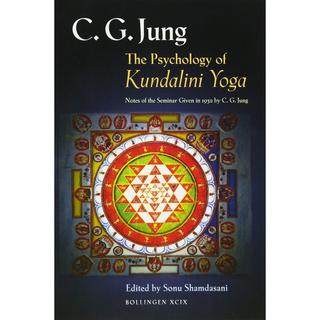
These apologists for scientific methodology and the materialistic paradigm don't think Jung is "scientific" enough
lonestag15 said:They officially teach this stuff in schools—like that whole Bhorov atomic model nonsense...
Off the record—so what does "off the record" even actually mean? I mean... seriously...
Whether it’s officially recognized or not, it doesn't really matter—since this kind of research doesn't fit into any neat little box, there isn't some grand committee sitting around deciding what makes the cut for the textbooks and what gets tossed in the bin... All you really have to go on are studies from highly qualified experts—people actually putting their reputations on the line like that. So, yeah, you won't see a psychiatrist using the term "kundalini syndrome" in a clinical setting, even if they recognize the symptoms when they see them...
So many people have actually put in the work and done some solid research out there...
In the electrical engineering field, they're constantly running all sorts of research into boundary areas...
So, if you actually caught my previous posts—which I doubt—here’s the deal: I’ve got an electrical engineering degree, so let’s talk shop. The whole concept of piezoelectricity is pretty straightforward once you strip away the fluff. One of the core components of kundalini is basically just current... see, by stretching the spine and inducing vibration, you're cranking up the brain's electrical activity because you're generating extra electricity through the spinal column. In layman's terms—or just plain physics—a piezoelectric material is anything that produces an extra electrical charge when it's under physical stress or tension... like the spine or the bones...
Maybe I could cite some specific study here—honestly, my memory is a bit shot on what exactly I've read—but I just did a quick double-check online to be sure...
PhD "Physiology of kundalini Yoga, 2001."
So, we’re looking at power spectrum analysis for EEGs now—basically trying to make sense of all that brainwave noise... It's essentially just breaking down those messy electrical signals into their frequency components to see which rhythms are actually doing the heavy lifting. You’ve got your deltas, your alphas, your betas—all that good stuff—and you're basically just checking how much "power" is sitting in each band. It's a bit like looking at an equalizer on a high-end stereo system, only instead of bass and treble, you're dealing with the raw data of human consciousness... pretty wild when you think about it.
Bhushan Sharma
The only way to actually get any accurate measurements from Dr. Ljubise Stojanovica is through his books—since his website vanished into thin air about ten years ago... boo... now there's just nothing left to go on...
So, I guess that makes me the resident pseudo-scientist then...
I started out looking into piezoelectricity and how it actually ramps up electrical activity in the brain... I’m really starting to wrap my head around this whole field of study... It’s one of those tangible phenomena you see in Eastern practices—mostly because of all that spinal vibration and stretching stuff. This is exactly what the guy was measuring with his EEG...
As for those biological symptoms that might pop up—well, you probably already have a clue... I’m not out here peddling Kundalini lifting courses or anything, especially since I've been hanging around this thread for five days straight just repeating myself, haha
If you want to see what I've actually said, just scroll back a bit... you'll end up agreeing with everything (and eventually, you'll decide for yourself whether the symptoms came from the practice or not)
Some people get drawn to this kind of stuff because they're dealing with early-stage psychosis—but if that predisposition is already there... the real question is whether Kundalini acts as the trigger or not. Personally, I think it does (just like the gurus who actually study this believe), while psychiatrists will just keep patching things up however they can...
So, are you actually questioning whether the reality of rising Kundalini even exists?
Are you questioning the reality of rising kundalini?
lonestag15 said:They officially teach this stuff in schools—like that whole Bhorov atomic model nonsense...
Off the record—so what does "off the record" even actually mean? I mean... seriously...
Whether it’s officially recognized or not, it doesn't really matter—since this kind of research doesn't fit into any neat little box, there isn't some grand committee sitting around deciding what makes the cut for the textbooks and what gets tossed in the bin... All you really have to go on are studies from highly qualified experts—people actually putting their reputations on the line like that. So, yeah, you won't see a psychiatrist using the term "kundalini syndrome" in a clinical setting, even if they recognize the symptoms when they see them...
So many people have actually put in the work and done some solid research out there...
In the electrical engineering field, they're constantly running all sorts of research into boundary areas...
So, if you actually caught my previous posts—which I doubt—here’s the deal: I’ve got an electrical engineering degree, so let’s talk shop. The whole concept of piezoelectricity is pretty straightforward once you strip away the fluff. One of the core components of kundalini is basically just current... see, by stretching the spine and inducing vibration, you're cranking up the brain's electrical activity because you're generating extra electricity through the spinal column. In layman's terms—or just plain physics—a piezoelectric material is anything that produces an extra electrical charge when it's under physical stress or tension... like the spine or the bones...
Maybe I could cite some specific study here—honestly, my memory is a bit shot on what exactly I've read—but I just did a quick double-check online to be sure...
PhD "Physiology of kundalini Yoga, 2001."
So, we’re looking at power spectrum analysis for EEGs now—basically trying to make sense of all that brainwave noise... It's essentially just breaking down those messy electrical signals into their frequency components to see which rhythms are actually doing the heavy lifting. You’ve got your deltas, your alphas, your betas—all that good stuff—and you're basically just checking how much "power" is sitting in each band. It's a bit like looking at an equalizer on a high-end stereo system, only instead of bass and treble, you're dealing with the raw data of human consciousness... pretty wild when you think about it.
Bhushan Sharma
The only way to actually get any accurate measurements from Dr. Ljubise Stojanovica is through his books—since his website vanished into thin air about ten years ago... boo... now there's just nothing left to go on...
So, I guess that makes me the resident pseudo-scientist then...
I started out looking into piezoelectricity and how it actually ramps up electrical activity in the brain... I’m really starting to wrap my head around this whole field of study... It’s one of those tangible phenomena you see in Eastern practices—mostly because of all that spinal vibration and stretching stuff. This is exactly what the guy was measuring with his EEG...
As for those biological symptoms that might pop up—well, you probably already have a clue... I’m not out here peddling Kundalini lifting courses or anything, especially since I've been hanging around this thread for five days straight just repeating myself, haha
If you want to see what I've actually said, just scroll back a bit... you'll end up agreeing with everything (and eventually, you'll decide for yourself whether the symptoms came from the practice or not)
Some people get drawn to this kind of stuff because they're dealing with early-stage psychosis—but if that predisposition is already there... the real question is whether Kundalini acts as the trigger or not. Personally, I think it does (just like the gurus who actually study this believe), while psychiatrists will just keep patching things up however they can...
So, are you actually questioning whether the reality of rising Kundalini even exists?
Whether it's officially recognized or still flying under the radar, those studies don't really fit into any of the existing categories.
I wish there were some kind of oversight committee deciding what actually makes the cut for official reading lists and what doesn't.
The only research worth any serious consideration comes from highly qualified experts—people who are actually putting their reputations on the line when they speak up.
Psychiatrists will likely never touch the phrase "kundalini syndrome" in their official diagnoses, even if they recognize those exact symptoms in their patients.
Plenty of people have actually conducted solid research here...
Electrical engineering fields conduct all sorts of studies on these fringe areas.
Doctorate "Physiology of kundalini Yoga, 2001."
(power spectrum analysis of electroencephalogram)
Prof. Bhushan Sharma
Regarding Dr. Ljubise Stojanovica, the only accurate measurement data is in his books. His website used to exist about ten years ago, but now it's gone... boo... nothing left.
I started with piezoelectricity and how it amplifies brain activity... I understand this field of science... it's one of the concrete phenomena in those Eastern practices (due to vibrations and spinal stretching).
mistybison said:I disagree. 😁
Even though we share many similarities, everyone is ultimately unique. For example, a doctor might claim strawberries are healthy, but if you happen to be allergic to them, your personal experience carries far more weight than any scientific study.
A lot of harm has been caused by medical professionals who hold narrow, rigid views and refuse to account for the specific needs of an individual organism.
When offering suggestions or advice, we must remember that what works perfectly for me could be quite harmful to someone else.