CheckEmoji Community · the emoji forum
🏠 Home 🆕 What's new ❓ Unanswered 🔥 Popular 📡 RSS Members 👥 0 online log in · register
Home › analogbear40 › Posts

Posts by analogbear40

499 posts shown.

When a truly skilled creator tackles an incredibly demanding technical beast—you know, the kind of job where you're trying to fuse high-end audio with complex video footage—this is the end result:

80s Megamix Part 2 (Twelve Inch Retro Video)

80s Megamix Part 5 (Twelve Inch Retro Video)

80s Megamix Part 6 (Twelve Inch Retro Video)

80s Megamix Part 7 (Twelve Inch Retro Video)

80s Megamix Part 8 (Twelve Inch Retro Video)

It’s a bit of a bummer that major labels had to step in and pull those missing segments after they received direct requests, because honestly? This is a pure, grassroots passion project through and through. I don't think you'll find a better example on the entire web that justifies the phrase "The Art Is In The Mix."
Here’s a perfect example for you.

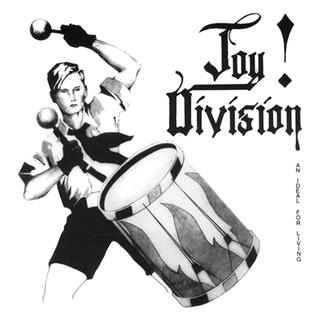
Back in mid-1978, the legendary band Joy Division dropped their first EP, *An Ideal For Living*, originally as a 7" single. It featured four tracks: Warsaw, No Love Lost, Leaders Of Men, and Failures.

image

Because the original artwork was incredibly controversial—some even labeled it "pro-Nazi"—the 12" EP released just a few months later had to undergo a complete visual makeover:

image
@Kevin Chavez3/">@@Kevin Chavez3

Spot on. That’s exactly how you approach it.

@Raymond Walker5/">@@Raymond Walker5

I spent a few years spinning decks back in the late 90s.
But honestly, that's just noise.
The real foundation was built by staying glued to everything happening throughout the 80s.
Everything else was just fine-tuning. 😁
There’s this specific pattern you see popping up all over the place when looking at those big 12" extended singles from the 80s.

The Cure - Why Can`t I Be You (extended remix) (1987)

S.O.S Band - The Finest (extended version) (1986)

Basically, the hook—that main vocal melody or chorus—gets dropped right at the very start of the extended mix. It usually starts as pure a-cappella, acting as an intro to the instrumental section. From there, it builds up. First, you get the percussion, then the rhythm kicks in, followed by layers of harmony, and finally, the full melody unfolds. It’s like building a house from the foundation up.

Depeche Mode were actually one of the few acts who really understood how to play the game. They didn't just stick to the hits; they would take tracks from their albums or even B-sides from single releases and turn them into gold through remixing. Honestly, sometimes these extended versions ended up being even better than the original A-side tracks.

Take the B-side from the "Shake The Disease" single, for example—a track called "Flexible."
In my opinion, it stands out as one of the most fascinating pieces they ever produced.

Depeche Mode - Flexible (remixed extended version) (1985)
Here is a fresh thread for all those who appreciate this specific art form.

It all kicked off in the mid-70s. This format really burst onto the scene right as disco was hitting its stride, spearheaded by the legendary 12" single, Donna Summer Love to Love You Baby.

Donna Summer - Love to Love You Baby (1975) (the original extended 16:50 version)

Things really heated up in the early 80s, though. That’s when the new wave of romantics, synth-pop enthusiasts, electronic pioneers, and anyone else looking to find their crowd on the dance floors of major US clubs realized this format was the perfect canvas for expression.
We started seeing extended single versions and remixes that breathed entirely new life into existing tracks. Back then, it was common practice to use the B-side for instrumentals or deep, dubby versions.
Names like Arthur Baker, Shep Pettibone, and Razormaid (a list of standout remixes) are just a few of the heavy hitters who ensured these weren't just recycled singles. Instead, they infused them with a creative energy that still resonates on vinyl today.

Some artists who truly mastered this craft during the first half of the 80s include Depeche Mode and New Order (who actually released most of their catalog in this very format).

On the label side, we have to give a nod to the legendary ZTT, founded back in 1983 by the renowned music journalist Paul Morley and producer Trevor Horn.
They actually released a compilation recently that perfectly captures their pioneering spirit, titled The art of the 12" (Volume One & Two).

Take FGTH, for instance. They were responsible for some of the most inventive 12" releases ever made:

FGTH - rage hard (A Young Person's Guide Into The 12" Mix) (1986)

FGTH - Two Tribes (Annihilation mix) (1984)

For a different flavor of high-quality "conventional" mixing, look at this:

Dead or Alive - You Spin Me Round (Murder Mix) (1984)

And here is a hybrid that does a fantastic job of bridging the gap between dance music's past and its more modern iterations:

Dannii Minogue vs Dead or Alive - Begin to Spin me Round (Extended Video Mix)

Here is another great example of how a standard mid-tempo track can be transformed into a floor-filler once it lands in the hands of a master:

Cornershop - Brimful of Ash (1997) (original version)

Cornershop - Brimful of Ash (Norman Cook Mix) (1997)

That’s enough for an introduction.
This thread isn't strictly limited to the 12" single as a vehicle for various mixes from the 70s to now. It also encompasses the "extended" single format—the EP—which frequently serves as an exclusive way to release certain musical works.
Songs about greed in Music ·
The Godfathers - Want Everything (1986)
Songs about greed in Music ·
Tricky - Money Greedy (1998)
Savages (2012) in Movies ·
So, I was just sitting here tonight, doing a bit of a deep dive into some cinema. I actually just finished a double feature of two absolute classics: *Talk Radio* (1988) and *Salvador* (1985).
What can I even say?
It’s honestly hard to wrap my head around the fact that this guy ever had the talent to write a truly great screenplay.
When you sit down to watch Savages, you catch these rare flashes of genuine inspiration, but honestly, most of it feels like a caricature. It’s almost absurd. Half the time, the characters just talk and talk, and then suddenly they’re dropping inside jokes about WMDs right in the middle of these otherwise deadly serious drug deals. It makes you think he was more interested in messing around than actually making an impact. Even his style isn't as bold or expansive as his usual stuff. It really feels like over the last decade, he’s found his true calling in documentaries—especially those pieces on Castro—rather than feature films.
Talk Radio (1988) in Movies ·
Tonight on ABC, just before midnight, there’s an incredible film playing—one of those brilliant Oliver Stone movies that somehow always gets overlooked despite being so good, featuring the fantastic Eric Bogosian in the lead.
It is quite simply a masterclass in character study. Just top-tier stuff.

Back then, the cult classic series Midnight Caller (1988-1991) was also airing, and while you can definitely see the parallels to Stone's film, nothing quite captures that raw intensity and sheer power.

According to IMDb,

"....talk radio based on the book 'Talked to Death' and the film starring Eric Bogosian about the murder of Alan Berg, has never gotten the recognition that it so rightfully deserved. The 1988 movie was prophetic enough to recognize the underground movement developing in the American heartland. A movement that spawned, some seven years later, the likes of Timothy McVeigh and his associates. Their actions led to the detonation of the Alfred P. Murrah Federal Building on April 19, 1995, which took the lives of 168 people, the worst act of terrorism on USA soil up to that time..."
To anyone else who, just like me, is feeling a bit more than just "disappointed"—honestly, I'm pretty disgusted—that these geniuses scheduled Brendan's performance at The Fillmore right after the show in Wroclaw. If you can swing it, I highly recommend heading over to Wroclaw instead; they have a show at the Capitol theater there just a day before the Chicago date. You can actually snag a flight to Wroclaw for around 30 bucks right now via Southwest Airlines (if you catch a connection through Dortmund; you could be landing that same afternoon). It’s a total steal if you think about it. Opportunities to see shows like this are incredibly rare, and you really want to make sure the memory sticks.

Anyway, I’ve already gone ahead and booked my flights. Tickets go on sale February 15th, so there's plenty of time to grab yours without any stress.

Just listen to the demo version of Utopia, then try to imagine how that would sound at The Fillmore versus how it would feel in a venue that’s actually... well, appropriate for that kind of atmosphere.

http://www.youtube.com/watch?v=lGSnTFX_lzQ

It’s funny, isn't it? It feels like in places like Bulgaria, Romania, Canada, and America, everyone seems to book these massive convention centers, clubs, or halls, whereas in other major hubs, they prefer using cathedrals (like in Berlin), theaters, or similar spots.
Guns N' Roses in Music ·
wiredharbor10 said:It’s a shame they aren't coming..


.....Honestly, it isn't a shame at all.....They really should have made the trip back in '91 when they were touring alongside Screamadelica at their absolute creative peak.....I’d even consider a promotional run for Vanishing Point back in '97 as a decent alternative... But where are the singles like Kowalski, Higher Than The Sun, or even Miss Lucifer now? Compared to their last two albums, those tracks sound like night and day.....
Aleksandr Burov served as the DOP for Alexander Sokurov’s Whispering Pages (1993), which was actually branded back then as one of the most dimly lit films ever made.

Aleksei Fyodorov handled the cinematography for Alexander Sokurov's Mother and Son (1997)—it just goes to show that a single frame can really say a thousand words.