urbanheron4 As stated by:
rowdymaker17
I think I'll spare us all the trouble of quoting every single thing right now.
We are currently witnessing massive disruptions within the global markets, and frankly, the current landscape appears quite favorable for Russia simply because they have been preparing for this exact moment while the European Union has remained caught completely off guard. It was painfully obvious what was coming, yet the leadership in Europe chose to ignore the warning signs until the situation hit them squarely in the face. There is a distinct possibility that we will see a repeat of the conditions you described during this upcoming winter. However, as time progresses, Russia’s position will inevitably deteriorate. They are bleeding themselves dry through this conflict; maintaining a massive military machine is an enormous drain on resources, especially as their export revenues begin their inevitable slide downward. The European Union represents a market far too vast and significant for anyone to ignore indefinitely, and in time, they will successfully pivot away from Russian imports toward more reliable alternatives. While there are plenty of opportunists currently circling the wreckage and trying to exploit these fluctuations, I find it highly unlikely that this state of affairs can be sustained. I harbor serious doubts that Russia can ever truly compensate for the loss of the European market by relying on exports to China or India. To be blunt, the Chinese don't actually care about Russia; they are merely capitalizing on the current chaos, and they will abandon their partners at the first opportunity, particularly since they possess sufficient domestic energy reserves to avoid any real dependency on imports. In the long run, Russia has effectively sabotaged its own future, though the full weight of that failure won't be felt for several years. All they have achieved is the acquisition of some devastated territory that will require immense capital investment to become even remotely profitable, and one has to wonder if they will even have the financial stamina to sustain that effort.
I find myself in agreement with that assessment, though one must also consider the broader geopolitical symmetry at play here; just as the European Union seeks to maintain its lines of communication and cooperation with Russia through the specific channels provided by Germany and Canada, it stands to reason that Russia will likely pursue its own continued engagement with the European Union by leveraging the strategic influence of China and India.
When it comes to the question of exports, the answer is inherently complicated, involving both a definitive yes and a resounding no. If the European Union fails to secure food imports from Russia, we are looking at a future defined by skyrocketing prices for anything derived from grain, primarily because there isn't a single nation on this planet capable of meeting the sheer scale of demand required by the European Union. It is a mathematical impossibility to find any other supplier that can fill that void. Furthermore, Russia remains insulated from such vulnerabilities because the Eurasian Economic Union stands as the premier global exporter of agricultural products, which essentially means they possess the inherent capacity to sustain their own population without consequence.
Will exports of oil derivatives and natural gas suffer? Yes, they absolutely will, but even if we account for that damage, it won't exceed a quarter of their total output. This remains a massive hurdle for the Russian economy, certainly, but it isn't going to force them to their knees—unless, of course, one completely ignores the fundamental principles taught in any standard American high school geography class.
Take note of this reality: the United States stands alone as the only nation on this planet possessing such an overwhelming abundance of resources that it achieves true, absolute self-sufficiency. This level of autonomy is dictated by sheer scale, as the country spans an entire continent and harbors a diversity of assets that other nations can only contemplate in their wildest dreams.
The entire Russian economy is fundamentally structured around self-sufficiency, prioritizing their own domestic market needs and stockpiling essential resources before they even consider exporting anything that isn't purely surplus. They ensure their production capabilities remain untouched by external shifts, whereas Western nations tend to only build up significant reserves when they sense some level of market instability on the horizon. It is important to recognize that Russia does not operate as a trade-oriented entity in the same way the USA or the European Union does, given that our economies are almost exclusively built upon processing industries. If all trade with Russia were to cease tomorrow, yes, they would certainly suffer financial losses, but we would be the ones facing the true crisis. We are the ones who rely on them for the very things we need to heat our homes, feed our populations, and sustain our way of life; without those resources, we would find ourselves staring at products and services that have become entirely unaffordable.
Do you actually comprehend how Russia intends to offset the bulk of its losses from the European Union? It is quite simple, really. They will merely hike the domestic prices of their fuel derivatives to a psychological threshold that remains tolerable for the average American citizen. Problem solved. While certain parties will inevitably have to swallow those losses, one cannot overlook the fact that Russians possess decades of experience navigating sanctions. I am firmly convinced they will find a way to engineer a sustainable development program; they are a capable nation, and I highly doubt they will face freezing temperatures or starvation.
On the other hand, we don't even have those elections to contend with here. The European Union exists solely as a commercial construct, essentially a group of nations that merged into a single trading bloc just to facilitate the exchange of goods and services, primarily because none of its individual members possesses resource wealth on the scale of Russia. In fact, many EU nations wouldn't even be able to sustain themselves through their own domestic food production if left entirely to their own devices. You should also keep in mind that the Eurasian Economic Union is currently imposing sanctions on all hostile states, which means food exports will be restricted; while this implies the market might stabilize starting next year, nobody seems to be addressing the actual cost of that stability. I guarantee you that food prices will climb throughout the remainder of the year before seeing a marginal dip, yet they will remain stubbornly high because we will simply be forced to pay a premium for basic sustenance.
Furthermore, one must consider that the Eurasian Economic Union stands as a primary exporter of fertilizers and pesticides, meaning the West will inevitably have to source these products, or their semi-finished components, at significantly inflated costs. It is an undeniable fact that Russia is the only nation globally maintaining an external debt ratio below 19%, yet we are discussing the largest country on Earth, an entity whose entire economic foundation is built upon raw production, whereas the USA and the European Union possess economies almost entirely predicated on the processing of materials, making them far more vulnerable to fluctuations in imports and exports than Russia is. Consider this example found at the link below:
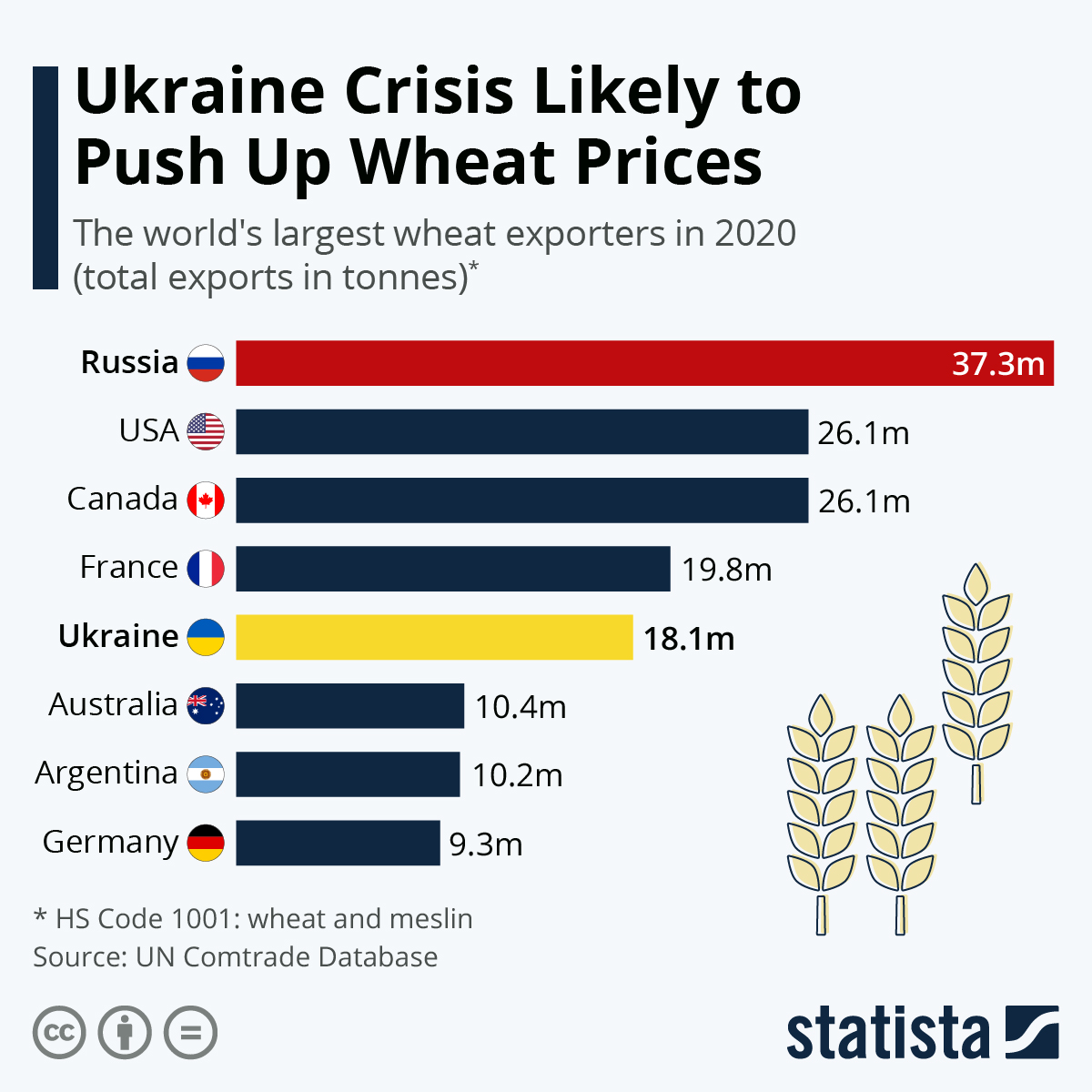
https://www.statista.com/statistics/...ies-worldwide/Given that the European Union is certainly not Russia's primary market—accounting for perhaps one-fourth or one-fifth of Russian exports, while China commands half of the total, and the remaining quarter is split between the USA and the rest of the world—I can guarantee you that the USA will not halt trade with Russia. Their entire food production infrastructure relies heavily on Russian fertilizers and growth enhancers. This is not a deficiency that can be rectified overnight; it will take years to secure alternative sources or to initiate domestic production. In the interim, Russia has ample time to stabilize its commercial ties with Latin America and Africa.
Additionally, look at Elon Musk; he used to joke and needle the Russians, but since the Americans implemented those initial sanctions, his demeanor has shifted quite drastically. He has suddenly become deathly serious because he can no longer procure the parts and raw materials for his rockets and automobiles that he previously sourced from Russia—or rather, he can, but the cost of those materials has skyrocketed. This means he can no longer manage his budgets effectively because production costs have surpassed the limits of common sense, a reality Musk clearly recognizes, which explains why he has been acting so anxious lately. Now, he is planning layoffs to curb expenditures, attempting to keep operations running just enough to prevent the facilities from cooling down. Food prices in America have surged by over 400% on certain staples, and the working class is increasingly joining the lines at soup kitchens. While purchasing power in Western nations continues to erode, there hasn't been such a drastic shift in Russia, and one could argue that the average Russian now possesses greater purchasing power than the average American. How so? Because Russia has demonstrated exactly what happens when you slap sanctions on a producer and they stop delivering corn, wheat, and other essentials. Russia faces no dilemma here; they will simply sell to China, which became the number one economy in the world last year and remains ravenous for all types of resources and raw materials. In fact, China alone accounts for more than 49% of all Russian trade, while the European Union accounts for about 20%. I reiterate, while that is significant, it does not mean Russia cannot recover; if anything, they can endure much longer and possess far more experience living under sanctions than the European Union does. Ultimately, Russia has the smallest debt and imports almost nothing, operating primarily through manufacturing and capable of sustaining its own people, whereas the European Union cannot sustain itself in the long run because it functions merely as a consumer, not to mention the debts the European Union owes to Russia. That is the crux of the matter.
One should ask oneself: in a conflict between a buyer and a farmer, who is more likely to survive? Is it the buyer, who has quarreled with the farmer and refuses to pay the price the farmer demands, or the farmer, who produces food for himself and his family and sells only the surplus? The buyer will eventually have nothing to eat despite having money, while the farmer may lack money but will not go hungry. Who survives longer? You cannot eat money. And we, specifically the European Union, are going to learn this lesson in a brutally unpleasant way this winter. 👍