#1 ·

He is one of those rare directors who doesn't just sit behind the camera—he actually pops up in commercials (like for American Express) because his persona and directorial style are such recognizable brands to the general public. He’s primarily known as the king of the "twist," a reputation that often overshadows his genuine knack for weaving emotional narratives. Since he’s originally from India, it makes sense why he has such a deep fascination with spiritual and supernatural themes—plus that tendency to present the truly bizarre as if it were perfectly mundane. That said, he is a quintessential American through and through; you can see it in how deeply he's rooted in US pop culture—think comic books and baseball—and his habit of filming almost exclusively in Philadelphia and the surrounding areas of Pennsylvania where he and his family call home.
M. Night Shyamalan (Manoj Nelliyattu Shyamalan) was born in Pondicherry, India, into a medical family that fully expected him to follow in their footsteps. His father, Nelliattu C. Shyamalan, is a GP, and his mother, Jayalakshmi, is a gynecologist. The Shyamalans moved to the United States in the sixties, and when Manoj was conceived, Jayalakshmi actually headed back to India to spend her final months of pregnancy with her parents. Manoj was born in India and spent his first six weeks there before moving to the family's American home in the suburbs of Philadelphia, Pennsylvania. He attended a private Catholic school followed by an Episcopal high school. He eventually graduated from New York University's Tisch School of the Arts in 1992, which is where he started swapping out "Nelliyattu" for his middle name, "Night."
Even as a kid, Shyamalan had that auteur itch, constantly filming things on a home camcorder—he actually knocked out about 45 of them by the time he turned 17. Once he hit it big with 'The Sixth Sense,' he started including those early amateur efforts on the DVDs of his major feature films.
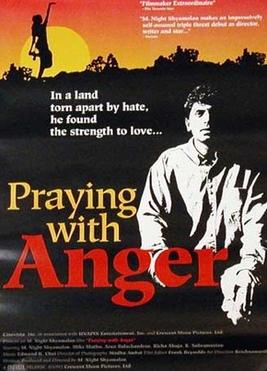
Shyamalan’s debut feature was a semi-autobiographical drama titled 'Praying with Anger' (1992). It was filmed in Chennai, India, making it the only movie he’s ever shot outside of his home state of Pennsylvania. Funded by family money, the film managed to screen at the Toronto film festival and was eventually picked up by Canadian television. His follow-up, 'Wide Awake' (1995), was shot at his former Catholic school with his parents serving as producers. The story follows a ten-year-old boy searching for God after his grandfather passes away; the parental roles were played by Dan Delany and Denis Leary, with Rosie O'Donnell and Julia Stiles rounding out the cast. While the film was a bit of a commercial dud, Shyamalan found success as a screenwriter, penning the script for the animated film 'Stuart Little' (1999) that same year.
In 1993, he married his college sweetheart, an Indian psychologist named Bhavna Vaswan. They have two daughters and have lived in Philadelphia since 2006, right near his usual filming haunts.
Yet, his massive breakout remains 'The Sixth Sense' (1999), the film that essentially defined his style and brought both critical acclaim (earning 6 Oscar nominations, including Best Director and Best Original Screenplay) and massive commercial success ($600 million at the box office). This horror-thriller centers on a psychiatrist (Bruce Willis) trying to help a troubled young boy (Haley Joel Osment) who claims he can see dead people. As the doctor digs into the boy's case, he hits a sudden twist at the end that ties everything back to his own fate—so much so that studios actually begged the media not to spoil the ending. Those jarring twists in high-tension stories have since become the trademark of a Shyamalan film.
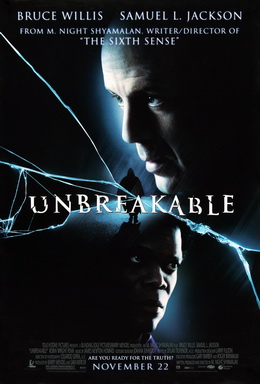
'Unbreakable' (2000) was the next hit to come out of the Shyamalan camp. A man named David Dunn (Bruce Willis) is the sole survivor of a horrific train crash, and a comic book collector named Elijah Price (Samuel L. Jackson) is convinced this wasn't just luck—that comics actually accurately depict the existence of people destined to be superheroes. Even though it didn't get the universal praise 'The Sixth Sense' did, the film was a solid success and proved his previous win wasn't a fluke. Shyamalan once again delivered an intriguing tale, and instead of standard trailers, the best advertisement was a cryptic teaser that revealed almost nothing to the audience, yet was so effective it snagged a Best Trailer award in 2001.
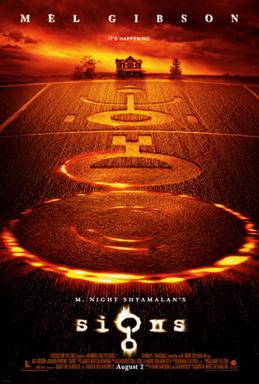
'Signs' (2002) is a peculiar slice of sci-fi centered on a priest (Mel Gibson) who has lost his faith following the death of his wife—now he’s just trying to keep his family (Joaquin Phoenix, Rory Culkin and Abigail Breslin) safe from an alien invasion. Interestingly, Gibson was tapped for the role because M. Night Shyamalan saw him pull off a similar vibe in 'Die Hard,' playing a hero pushed to the edge after losing his wife. Following 'The Sixth Sense,' this stands as Shyamalan's most successful outing, pulling in over $400 million at the box office.
'The Village' (2004) marks his first foray into period pieces, set back in the late 19th century. The community, governed by Elders (William Hurt, Sigourney Weaver), lives in total isolation to shield themselves from terrifying creatures lurking in the woods. A romance between the blind Ivy (Bryce Dallas Howard) and young Lucius (Joaquin Phoenix) sets off a chain reaction that threatens the entire settlement when it unearths—you guessed it—another shocking secret.
The film did okay commercially, but critics weren't having it, sparking endless debates about whether Shyamalan is actually being original or if he's just leaning on plagiarism.
However, his biggest stumble would be what he considers his most personal project—a film so contentious he actually clashed with the big shots at Disney over it. 'Lady in the Water' (2006) is a fantastical fairy tale about a mermaid named Story (Bryce Dallas Howard) who can't return to her world and needs help from Cleveland (Paul Giamatti) to fend off a mysterious, dangerous entity. Released right alongside massive action blockbusters like 'Pirates of the Caribbean 2,' it failed to capture the younger audience it was clearly aimed at.
Consequently, after those early debut dramas under the family studio umbrella, this became his first true commercial dud, and critics were ruthless, branding it the "showgirl" of fantasy films.
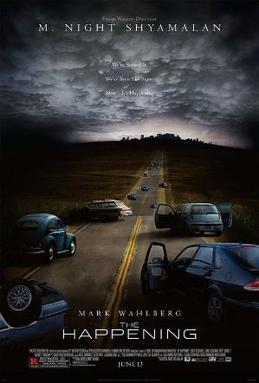
He followed that up with 'The Happening', 'The Last Airbender', and 'After Earth'
Even though he's raked in over a billion dollars and built a loyal following, both critics and audiences remain pretty split on his work. Critics love to accuse him of trying to mimic Hitchcock—which is a standard critique for anyone making thrillers—and Shyamalan’s homage to the master is evident in his choice to make regular cameo appearances in his own movies, much like Hitch did. Plus, he understands the power of self-promotion. Take, for instance, when the Sci-Fi Channel produced a mockumentary about a childhood "accident" where he supposedly fell into a frozen pond and had a near-death experience. After the supposed incident, Shyamalan claimed he could communicate with spirits, but he allegedly flew into a rage when he found out the secret was out, refusing to participate in the broadcast. The reality? The whole thing was a bit of a stunt involving M. Night's "I love messing with the audience" persona, serving as a clever marketing ploy to drum up interest for 'The Village.'
The most common misunderstanding among viewers is a fundamental misreading of his style. Everyone labels him a horror director known for twist endings, and then they complain when his movies aren't particularly scary or surprising. But his films are actually something else entirely—he essentially makes family melodramas infused with supernatural elements. The high-tension moments are merely trials for the characters to undergo so they can question themselves and, after the catharsis, discover what they need to do to hold their families together. While many categorize his work as 'Twilight Zone' territory (ordinary people suddenly thrust into eerie, fantastic situations), unlike typical horror where Evil remains a threat until the credits roll, Shyamalan tends to wrap things up on an optimistic note.
His signature style features meticulous mise-en-scène, unconventional camera angles, and a subtle build-up of atmosphere through effective music and editing. He rarely relies on CGI, preferring "old-school" techniques like complex storytelling and a haunting atmosphere without resorting to graphic violence. He places immense importance on characters that the audience can actually connect with, which is why he puts so much weight on casting. Shyamalan also likes to stick with what works, frequently reuniting with lead actors like Bruce Willis, Joaquin Phoenix, and Bryce Dallas Howard in subsequent projects. He prefers total creative control, typically acting as writer, producer, and even actor in the films he directs.I've been doing some digging—mostly because I have too much free time on my hands—into the filmography of M. Night Shyamalan. It’s an interesting journey, really; a bit of a rollercoaster through different eras of storytelling. Here is how his work stacks up, chronologically speaking:
Praying with Anger (1992)
Wide Awake (1998)

The Sixth Sense (1999)

Unbreakable (2000)
Signs (2002)