#1 ·
From "Great Civilizations of the World - Greece," specifically this passage by Catherine Regulier: "For the Greeks, the gods didn't necessarily represent what modern sociologists or philosophers would label as 'sacred.'
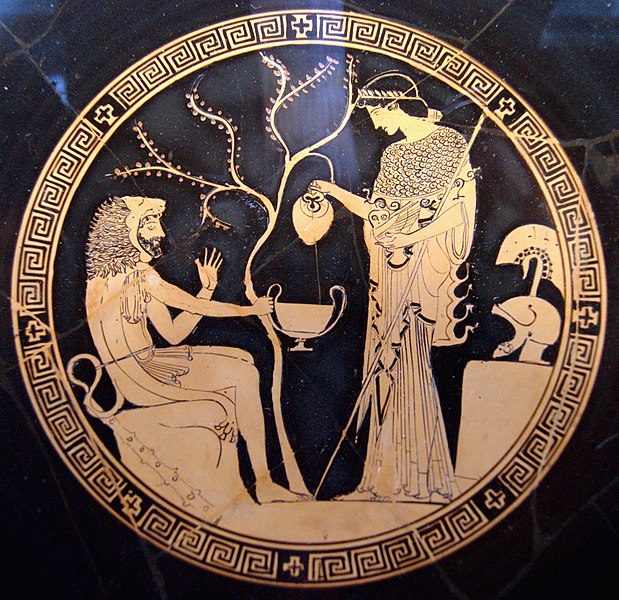
(..) ...anything we need to say about the Parthenon and the Acropolis will be covered elsewhere, where we measure how these sites and structures radiate the presence of the Palace of Athena.
Nietzsche's analysis kind of overlooked some of these myths and legends surrounding Athens. Nietzsche seemed mostly preoccupied with capturing the sheer variety of Greek tragedy. I guess to really grasp an ancient city, especially Athens, you have to understand the magnificent statue of Athena Parthenos (Virgin Athena) sitting right at the heart of the Parthenon..."
Nike is usually honored alongside the goddess Athena, since she’s linked to her following the victory over the Persians at the Battle of Marathon. Sometimes Athena herself is even shown holding Nike's attributes. According to Pausanias, there was a statue of Athena Nike that depicted Nike without wings (Nike Apteros), basically ensuring the goddess would never leave the city of Athens.
http://en.wikipedia.org/wiki/Nike
I mean, how much can you even compare the ambiguity of the Holy Spirit—specifically wisdom as one of his gifts—with Athena, or anything else for that matter?
Looking back at things like the "March of the Ten Thousand," followed by the massive success of Alexander the Great, the rise of the Serapisian cult, and how the influence of the Museum spread through lands once held by the Persians—plus the syncretism involving the Egyptian priest Manetho as a co-architect for spreading Serapeum temples without needing military conquest—you start seeing these overlaps between gnosis and wisdom. It makes me wonder where the line is drawn between logos and sophia. And finally, was Basil the Great http://en.wikipedia.org/wiki/Basil_of_Caesarea actually the main undertaker of wisdom, using concepts of the Holy Spirit to turn reverence into a sort of sacramental magic? (If you're interested in the link between magic and religion, I'd suggest looking into Father Ante Škobalj's work on "Ritual Masses")...
In a similar vein, there's the story that Alexander, while pushing the Greeks and the mix of Mexicans and Thracians (a policy his father started and he carried across the East despite Aristotle's advice) toward conquest in the mountains, told them they were going to liberate Prometheus...
So, besides Athena, you've got the provider, the fire, and then all of Hermes and Thoth too...
And since it was standard practice for high-ranking state officials to hold priestly roles, the authors of Greek drama were essentially priests themselves...
In Sparta, those traditions of king-priests have stayed pretty much permanent...
Which brings me to what might actually be considered philosophical atheism—not a disbelief in the principles themselves, but a rejection of their personification; the opposites being perhaps demons, which are cast out of people in Christian stories from the New Testament, but also in the broader magical practices of the Assyrians and others... If that's the case, then this type of atheism wouldn't mean a lack of respect for those values—it would just be stripping away the magical models used to access them...
(..) ...anything we need to say about the Parthenon and the Acropolis will be covered elsewhere, where we measure how these sites and structures radiate the presence of the Palace of Athena.
Nietzsche's analysis kind of overlooked some of these myths and legends surrounding Athens. Nietzsche seemed mostly preoccupied with capturing the sheer variety of Greek tragedy. I guess to really grasp an ancient city, especially Athens, you have to understand the magnificent statue of Athena Parthenos (Virgin Athena) sitting right at the heart of the Parthenon..."
Nike is usually honored alongside the goddess Athena, since she’s linked to her following the victory over the Persians at the Battle of Marathon. Sometimes Athena herself is even shown holding Nike's attributes. According to Pausanias, there was a statue of Athena Nike that depicted Nike without wings (Nike Apteros), basically ensuring the goddess would never leave the city of Athens.
http://en.wikipedia.org/wiki/Nike
I mean, how much can you even compare the ambiguity of the Holy Spirit—specifically wisdom as one of his gifts—with Athena, or anything else for that matter?
Looking back at things like the "March of the Ten Thousand," followed by the massive success of Alexander the Great, the rise of the Serapisian cult, and how the influence of the Museum spread through lands once held by the Persians—plus the syncretism involving the Egyptian priest Manetho as a co-architect for spreading Serapeum temples without needing military conquest—you start seeing these overlaps between gnosis and wisdom. It makes me wonder where the line is drawn between logos and sophia. And finally, was Basil the Great http://en.wikipedia.org/wiki/Basil_of_Caesarea actually the main undertaker of wisdom, using concepts of the Holy Spirit to turn reverence into a sort of sacramental magic? (If you're interested in the link between magic and religion, I'd suggest looking into Father Ante Škobalj's work on "Ritual Masses")...
In a similar vein, there's the story that Alexander, while pushing the Greeks and the mix of Mexicans and Thracians (a policy his father started and he carried across the East despite Aristotle's advice) toward conquest in the mountains, told them they were going to liberate Prometheus...
So, besides Athena, you've got the provider, the fire, and then all of Hermes and Thoth too...
And since it was standard practice for high-ranking state officials to hold priestly roles, the authors of Greek drama were essentially priests themselves...
In Sparta, those traditions of king-priests have stayed pretty much permanent...
Which brings me to what might actually be considered philosophical atheism—not a disbelief in the principles themselves, but a rejection of their personification; the opposites being perhaps demons, which are cast out of people in Christian stories from the New Testament, but also in the broader magical practices of the Assyrians and others... If that's the case, then this type of atheism wouldn't mean a lack of respect for those values—it would just be stripping away the magical models used to access them...