CheckEmoji Community · the emoji forum
🏠 Home 🆕 What's new ❓ Unanswered 🔥 Popular 📡 RSS Members 👥 0 online log in · register
Home › Society › Spirituality › Portraits that inspire you

Portraits that inspire you

Started by hiddenhound3 · · 👁 6 views · 66 replies

📡 Subscribe to replies

Participants hiddenhound3coastalstag15wiredbear2boldsailor32Patrick Johnson8coastalskipper92Jeremy PalmerZachary Sanchez2Brenda Cook4hiddenpuma75mistybisonDrew MorganGregory Young3Sean Cruzrustymaker5Linda Kelly51ironfox792dustyskipper3Edward Flores4George Reed20James Lee77Mark Gonzalez5Paul Campbell3Karen Smith8
wiredbear2 wiredbear2 Active Member
93 messages
joined Nov 2008
#41 ·
hiddenhound3 said:Indeed, I have always found it fascinating how human stupidity tends toward the misuse and total misunderstanding of every single gift it receives. 😢

As long as people fail to recognize their own inherent strengths as the true path toward peace, harmony, and love, we will continue to see endless cults and organizations popping up everywhere... 😉

I look at it this way: if I am practicing what he preached, while simultaneously letting go of any attachment to the outcome—feeling purely grateful that someone out there in the world shared my soul, that he succeeded, and can therefore depart this life in peace—😉
then I truly care for others. Let them go ahead and start their little societies, invoking the names of Jesus, Buddha, or Jiddu Krishnamurti... they haven't understood a thing. But I have, and that is the only thing that matters to me. And I know deep down he would be happy seeing that... 😍
Sean Cruz Sean Cruz Regular
265 messages
joined Apr 2008
#42 ·
coastalstag15 said:I was debating whether or not to bring him up, but since we’re already talking about Jesus, I might as well take a breath and join in. 😁

Josip Broz Marshall
image
The reasons themselves are almost redundant to state, but I was one of Marshall's pioneers, and those were my very first spiritual vows 😍
that I still honor to this day.

🙏

Good for you. I used to regret never becoming a youth leader, but now I’m actually glad I stayed an eternal pioneer.😁

The Pioneer's Vow
mistybison mistybison Regular
495 messages
joined Aug 2008
#43 ·
boldsailor32 said:On a related note, here is an incredibly sharp observation:

Full post available at: link

Richard Bach once maintained a personal website where he engaged directly with fans and answered their questions. He admitted there were moments when he felt like burning all his books just because people had turned them into spiritual manuals or tried to build entire new religions out of his mere reflections. 😁 On that site, people would show up truly believing everything he wrote, despite him repeatedly pointing out that he was simply playing with ideas—ideas that might be fun, but aren't necessarily true (he even included a disclaimer at the end of one book stating, 'Everything in this book could be wrong'). It didn't matter. People were searching for a new faith and they found it. 🙂 Eventually, he shut the site down because he grew tired of arguing with people who fundamentally misunderstood him. 😁

This raises a fascinating question. 🙂 Specifically, do those who record and publish their ideas, or teach others, bear any responsibility for how that influence affects people? Do we carry responsibility for those who read our posts and—who knows—might actually learn something from them, even if we write them for various reasons or perhaps don't even believe what we're saying just because it sounds good? 🤔
hiddenhound3 hiddenhound3 RegularOP
309 messages
joined Feb 2018
#44 ·
coastalstag15 said:Bela Hamvas 🙏 was actually translated by one of my professors back in college, and when I sat for the final exam, they handed me an A and a copy of 😍 philosophy wine as a little bonus—easily the best exam experience I've ever had!
He’s a brilliant philosopher, even if I find some of his takes on women a bit hard to swallow, but I suppose we can live with that. 🤷

At the dawn of the 1920s, in the immediate wake of the Great War, Hugo von Hofmannsthal observed a profound transformation: the individual had dissolved into a mere Everyman. Historically, the profile of a citizen was never particularly sharp, with the sole exception of the genius—who, in reality, was nothing more than a protest against the self, a rare instance of outgrowing one's own essence. In earlier eras, one could at least distinguish a priest from a cook. However, from that specific point in history onward, those boundaries began to vanish entirely. It was akin to accidentally puncturing a box of watercolors and watching every hue bleed together, or perhaps like tossing an entire multi-course dinner into a single bucket. What kind of person can truly emerge from such a messy, diluted era? There might still be some semblance of characteristic traits left in a human being, but they function more like superficial decoration than substance. At this stage, it hardly matters who anyone is. Then again, who is to say that distinct character isn't irrelevant? What truly matters is that the bill gets paid. People have become interchangeable. Women, for the most part, have followed suit, since any person can marry almost anyone else. Marriage is simply what it is. Society is what it is. The state is what it is. We might hope that our jobs would be better than the rest, but ultimately, even that is just what it is.
In the aftermath of the Second World War, the sense of presence within the nation had vanished almost everywhere, save for perhaps a few isolated pockets in places like Sweden or Switzerland. During that era, one could only maintain a semblance of existence through a sort of social embalming; otherwise, the individual simply faded away. Anyone who dared to embody the spirit of democracy found themselves erased or rendered utterly characterless. Even then, if they managed to persist, they existed merely as a caricature rather than a true face. Such people understood envy, greed, and intrigue; they were cunning, and they trembled with an uncertainty they couldn't quite name, yet they still rationalized their behavior by calling it mere hypocrisy or insisting we should all simply "be ourselves." But even that sentiment feels naive, because history has always functioned this way. Any snob would inevitably appeal to tradition, posing as a respectable citizen, which created a desperate, driving need for genius. Those who believed in innate talent went so far as to establish institutions dedicated to talent discovery—places where a sculptor might be sent to work as a baker, or vice versa, since the distinction had become entirely meaningless. Then, following the war, there emerged a figure that no one had anticipated. In the wake of this emergence, no position or identity felt stable anymore. The man who appeared after everyone else—or perhaps, the man who was nobody—was no longer a distinct face, nor even a recognizable caricature. At best, he was a mere schema. This state of being is rare. Most often, what remains is just a mask or a uniform, though even those serve as nothing more than excuses. More frequently, it is reduced to a simple badge tucked into a pocket, signifying membership in a political party or a local football team. People seek to mark themselves, much like one might see markings in the Congo. In a desperate attempt to distinguish one another, we resort to numbering ourselves, much like students in a boarding school. Women increasingly transform themselves into mere sketches straight out of a fashion magazine; otherwise, they hardly seem to exist at all.


Taken from the essay "Nobody" by Bela Hamvas.

That is quite an intriguing analysis. 🙂
coastalstag15 coastalstag15 Member
15 messages
joined Jan 2009
#45 ·
😂
we're all just cut from the same cloth, really.

just kidding. but honestly, that’s pretty much how things stand with people—and men, specifically—these days....
rustymaker5 rustymaker5 Regular
352 messages
joined Mar 2008
#46 ·
mistybison said:Richard Bach once maintained a personal website where he engaged directly with fans and answered their questions. He admitted there were moments when he felt like burning all his books just because people had turned them into spiritual manuals or tried to build entire new religions out of his mere reflections. 😁 On that site, people would show up truly believing everything he wrote, despite him repeatedly pointing out that he was simply playing with ideas—ideas that might be fun, but aren't necessarily true (he even included a disclaimer at the end of one book stating, 'Everything in this book could be wrong'). It didn't matter. People were searching for a new faith and they found it. 🙂 Eventually, he shut the site down because he grew tired of arguing with people who fundamentally misunderstood him. 😁

This raises a fascinating question. 🙂 Specifically, do those who record and publish their ideas, or teach others, bear any responsibility for how that influence affects people? Do we carry responsibility for those who read our posts and—who knows—might actually learn something from them, even if we write them for various reasons or perhaps don't even believe what we're saying just because it sounds good? 🤔

We’re responsible to ourselves, sure.
But how someone else's writing impacts those who read it... well, that's really up to the reader. They bear their own responsibility, just as we do... 🤷
Linda Kelly51 Linda Kelly51 Newcomer
9 messages
joined Nov 2007
#47 ·
To me, Jesus Christ is the ultimate authority.
Others might serve as external teachers, but He remains the internal teacher for everyone—regardless of whether they believe in Him or not.
Following His physical death, He accomplished something truly magnificent: He embedded a part of Himself within all of us, into every single soul.
That fragment of Him inside us is our only real chance, because selfishness constantly pulls us downward like gravity, while He resides within us, resisting that pull and lifting us up.

---
External teachers are insignificant, and often even harmful, because they tie people to themselves, inevitably creating cults of personality. That isn't healthy; it only leads to dogma and exclusivity.
This world would be much better if a person's primary authority were their own conscience rather than some external figurehead. Teachers are just human beings, and humans are inherently imperfect.
hiddenhound3 hiddenhound3 RegularOP
309 messages
joined Feb 2018
#48 ·
Lévi was the son of a shoemaker in Paris; he attended a seminary and began to study to enter the Roman Catholic priesthood. However, while at the seminary he fell in love, and left without being ordained. He wrote a number of minor religious works: Des mœurs et des doctrines du rationalisme en France (of the moral customs and doctrines of rationalism in France, 1839) was a tract within the cultural stream of the Counter-Enlightenment. La Mère de Dieu (The Mother of God, 1844) followed and, after leaving the seminary, two radical tracts, L'Evangile du Peuple (The Gospel of the People, 1840), and Le Testament de la Liberté (The Testament of Liberty), published in the year of revolutions, 1848, led to two brief prison sentences.

image

more


Man is, by his very nature, a religious animal.
It is far easier to break a chain made of iron than one woven from flowers.
wiredbear2 wiredbear2 Active Member
93 messages
joined Nov 2008
#49 ·
Hermann Hesse ignited the very first spark within me through his book 'Demian'. I was reading it in my early twenties, and ever since then, nothing has ever been quite the same; a profound shift occurred deep inside me, a sudden realization that a spiritual realm truly exists...

image

"The bird fights its way out of the egg. The egg is the world. Who would be born must first destroy a world. The bird flies to God. That God's name is Abraxas."

Two of his other absolute masterpieces are Siddhartha and The Glass Bead Game.
I would recommend Siddhartha to anyone just starting their spiritual journey without any hesitation whatsoever...
ironfox792 ironfox792 Newcomer
1 message
joined Feb 2009
#50 ·
Just your average, slightly unusual guy trying to find his way back to God, staying humble without all the glitz or the fake act.

He’s the one who wasn't afraid to tell me "cut the crap" when I needed it most, and he was right there holding me up during my darkest hours.

His famous line was this:
"You don't need a guru to push you."😁
dustyskipper3 dustyskipper3 Active Member
192 messages
joined Dec 2009
#51 ·
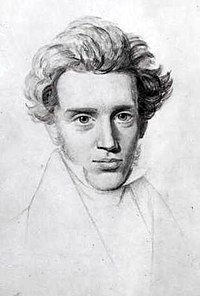
I guess our era doesn't really need more geniuses—we've had plenty of those already—but rather martyrs, people who could teach others how to be obedient, even if it means being obedient unto death themselves. What we truly need right now is an awakening... I never forget how God helps me, so I suppose my final wish is that all of this might be done in His honor.

image

Søren Kierkegaard

He inspired many, though perhaps very few actually understood him. To some, he seemed quite mad, while to others, his religious devotion felt somewhat off-putting.
....
Back in August 1922, Jiddu Krishnamurti underwent a spiritual awakening involving psychological transformation and physical conditioning. He and those close to him referred to it as "the process," which continued with varying intensity until his death. It all began on the 17th, when Krishnamurti complained of intense pain at the base of his skull and a hard, spherical swelling. Over the next few days, things seemed to worsen, with increasing pain, extreme physical discomfort, sensitivity, a total loss of appetite, and occasional bouts of delirium. Then, it appeared as though he were slipping into unconsciousness. Actually, he mentioned that he remained very aware of his surroundings, and in that state, he experienced a mystical sense of oneness.

...I was incredibly happy, because I saw. Nothing could ever be the same again. I drank from clear and pure waters, and my thirst was quenched.... I saw the Light. I touched a compassion that heals all sorrow and suffering; it wasn't just for me, but for the world. ...Love in its full glory has intoxicated my heart; my heart can never be closed again. I drank from the well of Joy and eternal Beauty. I am intoxicated by God.


image

Jiddu Krishnamurti

Many tried to grasp what he was. At the moment of his death, he said only: "Nobody."

One could probably list other examples, like Friedrich Nietzsche or Fyodor Dostoevsky, but even with these two, one can prove the following truth: that great insight comes with a heavy price.
Would you ever want to experience—not just hear about—what the world might look like if all evil and suffering were suddenly "lifted" from it, like a veil? Evil exists only within the human mind.
wiredbear2 wiredbear2 Active Member
93 messages
joined Nov 2008
#52 ·
dustyskipper3 said:I guess our era doesn't really need more geniuses—we've had plenty of those already—but rather martyrs, people who could teach others how to be obedient, even if it means being obedient unto death themselves. What we truly need right now is an awakening... I never forget how God helps me, so I suppose my final wish is that all of this might be done in His honor.

image

Søren Kierkegaard

He inspired many, though perhaps very few actually understood him. To some, he seemed quite mad, while to others, his religious devotion felt somewhat off-putting.
....
Back in August 1922, Jiddu Krishnamurti underwent a spiritual awakening involving psychological transformation and physical conditioning. He and those close to him referred to it as "the process," which continued with varying intensity until his death. It all began on the 17th, when Krishnamurti complained of intense pain at the base of his skull and a hard, spherical swelling. Over the next few days, things seemed to worsen, with increasing pain, extreme physical discomfort, sensitivity, a total loss of appetite, and occasional bouts of delirium. Then, it appeared as though he were slipping into unconsciousness. Actually, he mentioned that he remained very aware of his surroundings, and in that state, he experienced a mystical sense of oneness.

...I was incredibly happy, because I saw. Nothing could ever be the same again. I drank from clear and pure waters, and my thirst was quenched.... I saw the Light. I touched a compassion that heals all sorrow and suffering; it wasn't just for me, but for the world. ...Love in its full glory has intoxicated my heart; my heart can never be closed again. I drank from the well of Joy and eternal Beauty. I am intoxicated by God.


image

Jiddu Krishnamurti

Many tried to grasp what he was. At the moment of his death, he said only: "Nobody."

One could probably list other examples, like Friedrich Nietzsche or Fyodor Dostoevsky, but even with these two, one can prove the following truth: that great insight comes with a heavy price.
Would you ever want to experience—not just hear about—what the world might look like if all evil and suffering were suddenly "lifted" from it, like a veil? Evil exists only within the human mind.

It’s true, you rarely hear him brought up in conversation these days.

There were rumors that he struggled with mental health, that he eventually lost his grip on reality, or something along those lines...
Edward Flores4 Edward Flores4 Regular
428 messages
joined Mar 2008
#53 ·
image
Marshall McLuhan,

image
Terence McKenna,

image
Joseph Campbell,
dustyskipper3 dustyskipper3 Active Member
192 messages
joined Dec 2009
#54 ·
And then there's Jacques Lacan, of course.

image

He definitely carried himself with that air of a spiritual teacher or a philosopher—very much in that Socratic tradition, I suppose. He wasn't really interested in jotting down clear aphorisms; instead, what he did write is often so cryptic and mumbled that you almost need a divine spark just to grasp the basic point of what he’s talking about.

Take his famous, elliptical little phrase: "La femme n'a pas."
What is it she doesn't have? The phallus? *Jouissance*? Her own language? There are endless interpretations out there.
(Not to mention that jouissance, which is one of those rather cheeky French words, isn't actually a synonym for plaisir, or pleasure, at all. It refers to a kind of transgression that leads straight into suffering. Or, if you ask Søren Kierkegaard, it might just be despair).

I guess this kind of approach works best for followers. First, you end up with an entire army of interpreters, and then those who are particularly inspired take the ideas even further, like Slavoj Žižek. For anyone a bit less inspired, there are the condensed versions and digests—you know, "Lacan for beginners," picture books, and things of that sort.

It strikes me as odd that we don't talk about the "real-symbolic-imaginary" triangle, *jouissance*, the mirror stage, and the rest of it quite as much on this forum lately. There is so much discussion about what the mind is or what consciousness entails, yet Lacan provided such a compelling psychoanalytic model to explain those very things. Though, I suppose one really should read the *Écrits* in the original, since the American translations aren't exactly great.
hiddenhound3 hiddenhound3 RegularOP
309 messages
joined Feb 2018
#55 ·
dustyskipper3 said:I guess our era doesn't really need more geniuses—we've had plenty of those already—but rather martyrs, people who could teach others how to be obedient, even if it means being obedient unto death themselves. What we truly need right now is an awakening... I never forget how God helps me, so I suppose my final wish is that all of this might be done in His honor.

image

Søren Kierkegaard

He inspired many, though perhaps very few actually understood him. To some, he seemed quite mad, while to others, his religious devotion felt somewhat off-putting.
....
Back in August 1922, Jiddu Krishnamurti underwent a spiritual awakening involving psychological transformation and physical conditioning. He and those close to him referred to it as "the process," which continued with varying intensity until his death. It all began on the 17th, when Krishnamurti complained of intense pain at the base of his skull and a hard, spherical swelling. Over the next few days, things seemed to worsen, with increasing pain, extreme physical discomfort, sensitivity, a total loss of appetite, and occasional bouts of delirium. Then, it appeared as though he were slipping into unconsciousness. Actually, he mentioned that he remained very aware of his surroundings, and in that state, he experienced a mystical sense of oneness.

...I was incredibly happy, because I saw. Nothing could ever be the same again. I drank from clear and pure waters, and my thirst was quenched.... I saw the Light. I touched a compassion that heals all sorrow and suffering; it wasn't just for me, but for the world. ...Love in its full glory has intoxicated my heart; my heart can never be closed again. I drank from the well of Joy and eternal Beauty. I am intoxicated by God.


image

Jiddu Krishnamurti

Many tried to grasp what he was. At the moment of his death, he said only: "Nobody."

One could probably list other examples, like Friedrich Nietzsche or Fyodor Dostoevsky, but even with these two, one can prove the following truth: that great insight comes with a heavy price.
Would you ever want to experience—not just hear about—what the world might look like if all evil and suffering were suddenly "lifted" from it, like a veil? Evil exists only within the human mind.

Is that what is referred to as Weltschmerz?
dustyskipper3 dustyskipper3 Active Member
192 messages
joined Dec 2009
#56 ·
hiddenhound3 said:Is that what is referred to as Weltschmerz?

Well, there’s actually some discussion about Weltschmerz on the forum here:

image

Isn't it just... I don't know, phenomenal? To think that while citizens in the US—or maybe just around 5% of the global population—consume 50% of everything on the planet (fuel, food, clothes, all that), they still feel this immense pressure? It's like, even with all that, everyone is obsessed with losing weight and suffering through it.

I suppose there must be some kind of glitch in that real-symbolic-imaginary triangle we talk about. Maybe because jouissance is always pushing for transgression within the imaginary—the more you have, the more you crave, and that's where the suffering starts. I guess someone with very little doesn't necessarily crave more, but they suffer because, well, they lack it. Like how the North doesn't really want to show solidarity with the South, and the South just can't reach the level of the North. Actually, my question is... I wonder if we are destined to be perpetually trapped in that triangle, or if perhaps we can step outside of it for a moment, then return, nourished by that realization?
George Reed20 George Reed20 Newcomer
2 messages
joined Mar 2009
#57 ·
Maharishi Mahesh Yogi has left his physical body, leaving us with a legacy that is vast—perhaps even greater than his presence itself...
Westerners, in particular, should be grateful for what they could have learned from him, while those who identify "like me" are thankful beyond measure...🙂


"May all be well with everyone, may no one suffer..."
Maharishi Mahesh Yogi

Maharishi Mahesh Yogi’s Transcendental Meditation™ program is the most effective technique available for deep relaxation, stress reduction, promoting health, boosting creativity and intelligence, and attaining inner happiness and fulfillment.

Practiced by 5 million people worldwide, the Transcendental Meditation technique is simple, natural, and effortless. The transcendental effectiveness of Transcendental Meditation has been validated by over 500 scientific studies conducted by more than 200 independent research institutions across 30 countries. The TM technique requires no specific belief system or lifestyle changes; it is not religious in nature, takes very little time, and can be learned regardless of age or education level.

Maharishi Mahesh Yogi — founder of the Transcendental Meditation program

Maharishi Mahesh Yogi is widely recognized as a leading scientist in the field of consciousness and is considered the world's greatest teacher in the modern era. Maharishi fully revitalized millennial Vedic literature, restoring the full importance of its theory and practice, and organized it into a complete science of consciousness.
Maharishi's Vedic science and technology develop the full potential of Dharma law within human consciousness as the foundation for improving all aspects of life.
The Transcendental Meditation program—the subjective aspect of Maharishi's Vedic science and technology—is the most widely practiced and extensively researched self-development program in the world.
Maharishi is currently establishing Maharishi's Vedic Universities and Maharishi's Vedic schools globally. These institutions offer mastery of Dharma law to every individual, enabling a life lived in accordance with all laws of nature—fostering the desire to achieve perfection in every profession—and creating government groups capable of not just solving problems, but preventing them.

1993: Maharishi inaugurates Global RAM raj (the governing force of nature)
Maharishi's absolute theory of governance and his practical "government group" formula, which secures the support of Dharma law through the establishment and maintenance of a group of yogic flyers, has been politically tested in Mozambique and scientifically validated through multi-million dollar experiments in Washington, D.C., USA.
Maharishi reveals the Vedas and Vedic literature within human physiology, establishing a profound unity among the entire material diversity of creation, all sciences, and all religions.
Maharishi establishes Maharishi's Vedic universities and Maharishi's Ayurvedic Universities worldwide, offering mastery of Dharma law at every educational level—perfection in every profession.

1994: Maharishi introduces prevention programs in the fields of health and security to create healthy nations and invincible defense shields for nations by establishing a PREVENTIVE WING of yogic flyers within the military of every country.

1995: Maharishi establishes Maharishi's management universities in the USA, Japan, the Netherlands, and Russia, and introduces his Corporate Rejuvenation Program. State leadership in Madhya Pradesh, India, moves to establish MAHARISHI MAHESH YOGI VEDIC VISHWA VIDYALAYA (Maharishi's Vedic University) in Madhya Pradesh, making the complete knowledge of Dharma law found in the Vedas and Vedic literature available.

1996: Maharishi establishes a new system for maintaining health—Maharishi's Vedic approach to health—a complete and perfect system for disease prevention and treatment, which views health through the lens of the body's internal intelligence.

1997: Maharishi establishes Global Management through Dharma law, centered around 12 major time-zone capitals worldwide. Maharishi's global construction company was founded in numerous countries to reconstruct the world according to Vedic principles of construction—Sthapatya Veda, Vastu Vidya—building in harmony with Dharma law.

1998: Dr. Tony Nader, M.D., Ph.D., received monumental recognition for his groundbreaking discovery: the integrity of the Veda and all Vedic literature—alongside the Devatams and the entire cosmos—is embedded within the physiology of every human being. Through Maharishi's channel, Maharishi Veda Vision, this truth began broadcasting across India, presenting a new vision of Heaven on Earth: the resurgence of Vedic civilization and the dawn of an era defined by peace and happiness.

Maharishi's open university has been established, opening the doors to the complete knowledge of Dharma law to everyone, everywhere, right in their own homes via a network of eight satellites broadcasting to every nation on Earth. Maharishi Mahesh Yogi is widely respected as a leading scientist in the field of consciousness and is regarded as the greatest teacher in the world today. Maharishi has completely revitalized millennia of Vedic literature, restoring its full theoretical and practical value by organizing it into a comprehensive science of consciousness.
Maharishi's Vedic science and technology reveal the full potential of Dharma law within human consciousness, serving as the foundation for improving every aspect of life.

Transcendental Meditation—the subjective technology of Maharishi's Vedic science and technology—stands as the most widely practiced and researched self-development program in the world.
Maharishi is establishing Maharishi's Vedic universities and Maharishi's Vedic schools globally. The goal is to provide every individual with mastery over Dharma and the ability to live in alignment with it. This initiative aims to bring perfection to every profession and establish governments in every nation that are governed by Dharma—governments capable of preventing problems before they even arise.

Biography

He passed away peacefully on Tuesday at 7:00 PM. According to TM spokesperson Bob Roth, he died at his home in Vlodrop, located about 125 miles southeast of Amsterdam. While the BBC reports he was between 91 and 97 years old, Maharishi never officially confirmed January 12, 1917, as his actual birth date. Maharishi Mahesh Yogi was the founder and leader of the Transcendental Meditation movement.

It is estimated that today, five million people practice TM mantras every single morning.
In a 2006 interview, Maharishi said: "Don't fight the darkness. Just bring the light, and the darkness will vanish."

Born on January 12, 1917, in a small village in Madhya Pradesh, India, he was the third of four children. He later earned his degree in mathematics and physics from Allahabad University.
In 1939, he became a disciple of Swami Brahmananda Saraswati, who lived in the Himalayas, and decided to enter the monastic life.
His guru gave him specific instructions: adapt the Vedic meditation and develop a technique that would "enable the masses to meditate."
Following the death of his guru in 1953, Maharishi spent more than 18 months alone in a cave in the Himalayas.
Back in 1995, he was traveling through southern India, preaching and introducing a brand-new meditation technique.
In 1960, the Beatles first crossed paths with Maharishi.
In 1974, Maharishi founded a university in Fairfield, Iowa.
By 1990, after establishing numerous centers across the globe, he relocated to Vlodrop, Netherlands.
In 2001, his followers established a Maharishi Vedic City with an initial population of 200 residents.
Back in 2007, Paul McCartney was a regular at Maharishi's centers in the Netherlands, and that same year, George Harrison made a massive donation to Maharishi's university.

I've been practicing TM for years. Even so, human laziness always creeps in, but whenever I actually stick to it, the difference between my TM days and my non-TM days is massive.
I hold immense respect for Maharishi in my soul, alongside my dear Lord Jesus, who is the master of my life.
Let's skip discussing his presence again—this text is already way too long (my bad).

When I want to explain why meditation matters in plain English, I use a simple comparison: physical hygiene. Just as you brush your teeth and wash your hands to stay clean, Transcendental Meditation is essential mental hygiene. It’s just as necessary.


Sanja

P.S. My apologies, I forgot to greet you all at the start. Also, I was wondering if it's possible to embed music or video directly into a post?
wiredbear2 wiredbear2 Active Member
93 messages
joined Nov 2008
#58 ·
dustyskipper3 said:Well, there’s actually some discussion about Weltschmerz on the forum here:

image

Isn't it just... I don't know, phenomenal? To think that while citizens in the US—or maybe just around 5% of the global population—consume 50% of everything on the planet (fuel, food, clothes, all that), they still feel this immense pressure? It's like, even with all that, everyone is obsessed with losing weight and suffering through it.

I suppose there must be some kind of glitch in that real-symbolic-imaginary triangle we talk about. Maybe because jouissance is always pushing for transgression within the imaginary—the more you have, the more you crave, and that's where the suffering starts. I guess someone with very little doesn't necessarily crave more, but they suffer because, well, they lack it. Like how the North doesn't really want to show solidarity with the South, and the South just can't reach the level of the North. Actually, my question is... I wonder if we are destined to be perpetually trapped in that triangle, or if perhaps we can step outside of it for a moment, then return, nourished by that realization?

I find myself asking that very same question quite often, driven by that same exhausting feeling of spinning in circles... Desires and needs just cycle endlessly, one after another, and every single one comes with its own heavy price. It all stems from this deep-seated fear of dissatisfaction—that if we were to face it, our constructed, imaginary world would suffer an earthquake and risk collapsing entirely. We are all so tightly bound to our illusions, the very things we call our "personal lives." But those cracks that appear when we derail from our imagined tracks... they allow consciousness to momentarily wake us up, just enough to realize that we actually have no clue what we're doing—and for what purpose, really?...

My question is, how do we exit this for good?
George Reed20 George Reed20 Newcomer
2 messages
joined Mar 2009
#59 ·
wiredbear2 said:I find myself asking that very same question quite often, driven by that same exhausting feeling of spinning in circles... Desires and needs just cycle endlessly, one after another, and every single one comes with its own heavy price. It all stems from this deep-seated fear of dissatisfaction—that if we were to face it, our constructed, imaginary world would suffer an earthquake and risk collapsing entirely. We are all so tightly bound to our illusions, the very things we call our "personal lives." But those cracks that appear when we derail from our imagined tracks... they allow consciousness to momentarily wake us up, just enough to realize that we actually have no clue what we're doing—and for what purpose, really?...

My question is, how do we exit this for good?

wiredbear2, I think the price you pay for unnecessary needs is precisely fear!
If a person takes their thought patterns, specifically in the moment HERE and NOW,
and attaches the prefix YES to every desire and need, then the omnipresent cosmic consciousness realizes them—meaning, it fulfills the desire and the need...
Therefore, if you want to exit forever , you must first tap into the ALL-PEACE and the ALL-GOOD within yourself ,and THEN, HERE AND NOW, that exit is lived out and begins to endure, provided there is prayer and patience.

mom Sanja
wiredbear2 wiredbear2 Active Member
93 messages
joined Nov 2008
#60 ·
George Reed20 said:Maharishi Mahesh Yogi has left his physical body, leaving us with a legacy that is vast—perhaps even greater than his presence itself...
Westerners, in particular, should be grateful for what they could have learned from him, while those who identify "like me" are thankful beyond measure...🙂


"May all be well with everyone, may no one suffer..."
Maharishi Mahesh Yogi

Maharishi Mahesh Yogi’s Transcendental Meditation™ program is the most effective technique available for deep relaxation, stress reduction, promoting health, boosting creativity and intelligence, and attaining inner happiness and fulfillment.

Practiced by 5 million people worldwide, the Transcendental Meditation technique is simple, natural, and effortless. The transcendental effectiveness of Transcendental Meditation has been validated by over 500 scientific studies conducted by more than 200 independent research institutions across 30 countries. The TM technique requires no specific belief system or lifestyle changes; it is not religious in nature, takes very little time, and can be learned regardless of age or education level.

Maharishi Mahesh Yogi — founder of the Transcendental Meditation program

Maharishi Mahesh Yogi is widely recognized as a leading scientist in the field of consciousness and is considered the world's greatest teacher in the modern era. Maharishi fully revitalized millennial Vedic literature, restoring the full importance of its theory and practice, and organized it into a complete science of consciousness.
Maharishi's Vedic science and technology develop the full potential of Dharma law within human consciousness as the foundation for improving all aspects of life.
The Transcendental Meditation program—the subjective aspect of Maharishi's Vedic science and technology—is the most widely practiced and extensively researched self-development program in the world.
Maharishi is currently establishing Maharishi's Vedic Universities and Maharishi's Vedic schools globally. These institutions offer mastery of Dharma law to every individual, enabling a life lived in accordance with all laws of nature—fostering the desire to achieve perfection in every profession—and creating government groups capable of not just solving problems, but preventing them.

1993: Maharishi inaugurates Global RAM raj (the governing force of nature)
Maharishi's absolute theory of governance and his practical "government group" formula, which secures the support of Dharma law through the establishment and maintenance of a group of yogic flyers, has been politically tested in Mozambique and scientifically validated through multi-million dollar experiments in Washington, D.C., USA.
Maharishi reveals the Vedas and Vedic literature within human physiology, establishing a profound unity among the entire material diversity of creation, all sciences, and all religions.
Maharishi establishes Maharishi's Vedic universities and Maharishi's Ayurvedic Universities worldwide, offering mastery of Dharma law at every educational level—perfection in every profession.

1994: Maharishi introduces prevention programs in the fields of health and security to create healthy nations and invincible defense shields for nations by establishing a PREVENTIVE WING of yogic flyers within the military of every country.

1995: Maharishi establishes Maharishi's management universities in the USA, Japan, the Netherlands, and Russia, and introduces his Corporate Rejuvenation Program. State leadership in Madhya Pradesh, India, moves to establish MAHARISHI MAHESH YOGI VEDIC VISHWA VIDYALAYA (Maharishi's Vedic University) in Madhya Pradesh, making the complete knowledge of Dharma law found in the Vedas and Vedic literature available.

1996: Maharishi establishes a new system for maintaining health—Maharishi's Vedic approach to health—a complete and perfect system for disease prevention and treatment, which views health through the lens of the body's internal intelligence.

1997: Maharishi establishes Global Management through Dharma law, centered around 12 major time-zone capitals worldwide. Maharishi's global construction company was founded in numerous countries to reconstruct the world according to Vedic principles of construction—Sthapatya Veda, Vastu Vidya—building in harmony with Dharma law.

1998: Dr. Tony Nader, M.D., Ph.D., received monumental recognition for his groundbreaking discovery: the integrity of the Veda and all Vedic literature—alongside the Devatams and the entire cosmos—is embedded within the physiology of every human being. Through Maharishi's channel, Maharishi Veda Vision, this truth began broadcasting across India, presenting a new vision of Heaven on Earth: the resurgence of Vedic civilization and the dawn of an era defined by peace and happiness.

Maharishi's open university has been established, opening the doors to the complete knowledge of Dharma law to everyone, everywhere, right in their own homes via a network of eight satellites broadcasting to every nation on Earth. Maharishi Mahesh Yogi is widely respected as a leading scientist in the field of consciousness and is regarded as the greatest teacher in the world today. Maharishi has completely revitalized millennia of Vedic literature, restoring its full theoretical and practical value by organizing it into a comprehensive science of consciousness.
Maharishi's Vedic science and technology reveal the full potential of Dharma law within human consciousness, serving as the foundation for improving every aspect of life.

Transcendental Meditation—the subjective technology of Maharishi's Vedic science and technology—stands as the most widely practiced and researched self-development program in the world.
Maharishi is establishing Maharishi's Vedic universities and Maharishi's Vedic schools globally. The goal is to provide every individual with mastery over Dharma and the ability to live in alignment with it. This initiative aims to bring perfection to every profession and establish governments in every nation that are governed by Dharma—governments capable of preventing problems before they even arise.

Biography

He passed away peacefully on Tuesday at 7:00 PM. According to TM spokesperson Bob Roth, he died at his home in Vlodrop, located about 125 miles southeast of Amsterdam. While the BBC reports he was between 91 and 97 years old, Maharishi never officially confirmed January 12, 1917, as his actual birth date. Maharishi Mahesh Yogi was the founder and leader of the Transcendental Meditation movement.

It is estimated that today, five million people practice TM mantras every single morning.
In a 2006 interview, Maharishi said: "Don't fight the darkness. Just bring the light, and the darkness will vanish."

Born on January 12, 1917, in a small village in Madhya Pradesh, India, he was the third of four children. He later earned his degree in mathematics and physics from Allahabad University.
In 1939, he became a disciple of Swami Brahmananda Saraswati, who lived in the Himalayas, and decided to enter the monastic life.
His guru gave him specific instructions: adapt the Vedic meditation and develop a technique that would "enable the masses to meditate."
Following the death of his guru in 1953, Maharishi spent more than 18 months alone in a cave in the Himalayas.
Back in 1995, he was traveling through southern India, preaching and introducing a brand-new meditation technique.
In 1960, the Beatles first crossed paths with Maharishi.
In 1974, Maharishi founded a university in Fairfield, Iowa.
By 1990, after establishing numerous centers across the globe, he relocated to Vlodrop, Netherlands.
In 2001, his followers established a Maharishi Vedic City with an initial population of 200 residents.
Back in 2007, Paul McCartney was a regular at Maharishi's centers in the Netherlands, and that same year, George Harrison made a massive donation to Maharishi's university.

I've been practicing TM for years. Even so, human laziness always creeps in, but whenever I actually stick to it, the difference between my TM days and my non-TM days is massive.
I hold immense respect for Maharishi in my soul, alongside my dear Lord Jesus, who is the master of my life.
Let's skip discussing his presence again—this text is already way too long (my bad).

When I want to explain why meditation matters in plain English, I use a simple comparison: physical hygiene. Just as you brush your teeth and wash your hands to stay clean, Transcendental Meditation is essential mental hygiene. It’s just as necessary.


Sanja

P.S. My apologies, I forgot to greet you all at the start. Also, I was wondering if it's possible to embed music or video directly into a post?

It certainly is, and honestly, we find ourselves doing it quite often... You can include images as well, though I would suggest making sure they aren't excessively large...

You must log in or register to reply here.

Log in Register

🔗 Similar threads