847 posts shown.
Sam Martinez9 said:I'm curious about your reasoning there. Could you elaborate on that thought process?
My point was that a baby born 100,000 years ago could be raised just like any child born today. Why? Because they are still *Homo sapiens*. Genetically speaking, they are identical to us. They possess all the biological predispositions required to integrate into our modern society—to use smartphones, computers, and so on. In the exact same way, a child born today possesses every genetic predisposition needed to thrive in the world of *Homo sapiens* from 100,000 years ago.
It works the same way whether you take a child born 4,000 years ago, 2,000 years ago, or even just a century ago; we could raise them just like any modern infant born in an American hospital today.
The genetic blueprint remains the same. What a child ultimately becomes depends entirely on the environment in which they are raised.
I think the perspective might be slightly off here. Your experiment seems to suggest that an ancient human could adapt to our modern world, whereas mine tries to flip that idea on its head. You want to see if a person from the past can function in our current society, while I want to place a modern person back into the setting where humans were actually biologically designed to live. Both ideas are interesting, though both are obviously impossible to test. But, I suppose humans were fundamentally built to be hunter-gatherers, and that’s our true default setting—even if it's a bit shocking to those of us who probably wouldn't last long in the woods without some tech to help us out.
This kind of reminds me of our discussion regarding OpenAI, which I believe we both touched upon. General OpenAI aims to decode the human brain to master things like chess or art, but at its core, that brain evolved to help humans survive as hunter-gatherers and pass on their genes. That's its primary purpose; being able to strategize over a chessboard is really just a byproduct of that evolution.
Megan Gray32 said:Greetings—I originally opened this thread over in the "History" section, but I didn't have much luck there. Aside from a few dry facts, I wasn't particularly satisfied with the responses I received. The reality is that prehistory is essentially shrouded in mystery; because there is no written record to lean on, we are largely left with nothing but speculation. That is precisely what draws me in—the opportunity to exercise a bit of imagination within that context. Perhaps we might uncover some hidden, buried truth, much like stumbling upon a treasure chest. And it doesn't necessarily have to be gold; regardless, I would love to see it found.
__________________________________________________ ____________________:
Something has been weighing on my mind lately. I caught myself falling down a Google rabbit hole reading about *Homo erectus*, and I found myself intrigued by the fact that they lived 200,000 years ago before eventually going extinct.
It’s a lot to process. I studied history back in high school, though I wasn't truly grasping the sheer scale of it all at the time. If we are looking at 200,000 years ago, and considering we are now in 2022—plus perhaps another 5,600 years since the dawn of civilization—we have a massive gap. What happened during those other 192,000 years? Are there any historical facts or specific studies regarding that era? What other subspecies, similar to *Homo erectus*, existed and subsequently vanished?
I am not strictly looking for hard facts; I would actually like to allow ourselves some room for speculation. I am fascinated by questions like: how many times were we on the precipice of progress, only to regress as a species? How many times throughout history was fire sparked, only to flicker out again? What were our greatest obstacles—assuming we had met our basic needs for warmth and food—who was our most formidable enemy? And what was it like to face those predators hand-to-hand in the early days? Which animals were we actually fighting?
-----------------------------------------------------------------------------------------------------
Could it be argued that *Homo sapiens* were somewhat rational 50,000 years ago, or at least driven by emotion? To say that we existed for 300,000 years—the final link in an evolutionary chain stretching back two billion years—only to finally stumble upon agriculture and animal domestication in the last 10,000 years... it feels a bit demoralizing for humanity, doesn't it?
If we have been around for roughly 100,000 to 150,000 years, there must have been culture, cave paintings, and a distinct sense of aesthetics. There must have been emotion, but surely there was also rational behavior—especially if they were hunting effectively. I realize language wouldn't have been fully developed—meaning a limited vocabulary made communication difficult, even when dealing with tribal hostilities—and, unfortunately, cannibalism was likely a reality.
But as you all suggest, we and they were biologically and physically similar. Could we say we were mentally similar as well? At least on a fundamental level—enough to conclude, "this is good," "this is wrong," or "this is necessary." Given all these circumstances, I find it hard to accept the thesis that we only turned to agriculture and domestication in the last 10,000 years.
Regarding the use of fire, some sources suggest it was being used 300,000 years ago, while others claim even longer. Initially, it might have been accidental—occurring during elemental storms—but later, it became a deliberate effort. This is where meat began to be cooked, which undoubtedly relieved some of our primal savagery and provided a sense of peace.
That is essentially what interests me: those small details, the nuances that helped us advance or caused us to regress as a species. Like a moment where fire might have spontaneously ignited, only to die out. One time, we cook meat and find peace, warmth, and protection from predators. But when the flame dies, do we simply return to the darkness?
Culture must have existed; I am curious about what propelled it forward or held it back. Animals—the larger ones certainly posed a problem. Especially the big cats. And which ones were the good ones—the ones we first befriended?
Anthropology is honestly one of the most fast-paced fields out there. If you pick up a book about human ancestors today, it might feel a bit dated in just ten years. New archaeological finds popping up all over the world seem to make our understanding of human history more complex by the day. Since some people don't really buy into evolution—and even those who do sometimes struggle to wrap their heads around it—the evolutionary path of *Homo sapiens* often gets oversimplified. People tend to view it as a straight line from *Australopithecus* through various *Homo* species, as if one species lived for 50,000 years and then was simply replaced by the next. It doesn't quite work like that. In reality, many different species and subspecies lived alongside each other. It’s a lot like how we look at big cats today; we call them all "cats," but we can clearly see the difference between a jaguar and a tiger, or a lion versus a bobcat. I guess science hasn't fully figured out why only *Homo sapiens* survived out of all those competing hominid branches. Just imagine traveling two million years into the future and seeing that only one type of cat exists—maybe a three-meter-long creature with spots and a mane. You'd probably remember that back in 2022, there were plenty of different big cat species on Earth, and you'd naturally wonder what happened to all the others and how just one single species managed to make it through.
I guess the hardest thing about these debates—something people tend to overlook without realizing it—is how difficult it is for our minds to actually grasp the sheer scale of biological or human eras on Earth. We understand the math behind the number 65 million, but it’s almost impossible to truly feel the weight of those 65 million years that have passed since the asteroid hit Florida. It feels much the same when we try to wrap our heads around 100,000 or 200,000 years and all the humans who lived through that span leading up to today. From that viewpoint, I suppose there isn't much difference between mentioning a billion years, 100 million, or 100 thousand. The numbers all feel equally abstract to us. Even the Middle Ages feel like a distant history that's hard to culturally connect with, let alone Ancient Greece, Egypt, or Mesopotamia. Those are periods and cultures we know somewhat well through architecture or written records, yet they still seem unimaginably far away and disconnected from our lives now. And that's only a few thousand years back. So, trying to mentally process 100,000 or 200,000 years ago is a huge stretch.
It’s also pretty tough being constantly bombarded with information today, where things like computers, the internet, airplanes, electricity, satellites, cars, schools, and office jobs are just taken for granted. Then you get hit with the fact that for 99% of human history, people didn't have any of that, nor could they have ever dreamed it might exist one day. Biologically speaking, I think we evolved as hunter-gatherers, with muscles, bones, teeth, speech, vision, smell, hearing, nervous systems, and digestion all fine-tuned for living in nature without clocks, calendars, or technology. Someone mentioned that hypothetically, we could take a baby from 100,000 years ago, bring them into the modern world, and successfully raise them. I think that's a bit of a skewed perspective; the more accurate way to look at it might be that we could take a baby born today and drop them 100,000 years into the past, and that world would be the "default" setting for them. Not this one. Or, maybe if we took a baby and pulled a random millennium out of a box containing 100,000 years, or even a random century out of a box of 1,000 centuries, in 99.5% of cases, that baby would end up in a world we’d consider quite primitive. In 99.9% of cases, it would be at least partially primitive. We also have to remember that most parts of the world were considered primitive by Western standards until just a few decades ago.
I guess it’s just my opinion, but that one was definitely the worst for me—it's all subjective, after all. It mostly comes down to the context: you have this streaming giant dropping a movie on Christmas Day starring an A-list actor, only for it to be an incredibly bad film. I suspect we'll see more of this as the industry shifts; it feels like big tech companies are stepping in to churn out artistic content now that the traditional film industry has lost its way.
That was probably the worst movie I've seen in the last decade or so. It felt pretty obvious from the get-go that nothing much was happening and the plot didn't really make any sense. I guess I'm still a little bit in shock over it.
Scene number 3:
https://www.youtube.com/watch?v=mDTa...nnel=TobyAdamsThat reaction to discovering where their dinosaur blood comes from is just top-tier acting. I guess Goldblum really does steal every single second he's on screen; he's just so talented. 🙏
Scene number 2:
The whole movie "Edge of Tomorrow" 🙏
Scene number 1:
https://www.youtube.com/watch?v=3_QS...nel=SpeechesHDMr. President, just say the word and we'll be flying like kittens. 🙏
The ultimate suggestion
Henry
3. van Basten against the Soviet Union. It’s almost like he didn't even feel the ball hit him when that volley landed perfectly.

2. Maradona against England in 1986. He just took off, kept going, and honestly, there was no stopping him.
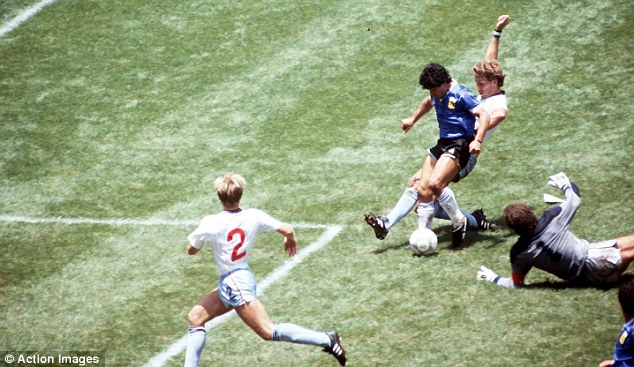
1. Rivaldo against Valencia in 2001. I guess sport and art just merged here; if this were gymnastics or ski jumping, it would probably be a perfect score.

A little bonus for the goal lovers: Zlatan Ibrahimović against NAC Breda in 2004. It's a shame I can't find that specific Eurosport version with the catchy jingle playing while they show those little piglets.
Donna Nelson23 said:Asian countries really learned their lesson from SARS—which was way more lethal than COVID—so they moved incredibly fast and decisively.
Maybe if you look at the numbers, Vietnam has nearly 100 million people, and fewer than 6 million of them are over the age of 65. On the other hand, Italy has about 60 million residents, but over 13 million are seniors. In a place like Vietnam, even if some people get sick, the population recovers quickly through growth, whereas in Italy, the population would likely shrink by over 200,000 this year alone due to natural causes, even without the virus. I guess what we're seeing is just a sudden shock from a new virus—which is mostly harmless to young people—hitting a population that is heavily weighted toward the elderly. There isn't really a way around that, other than isolating the seniors or finding ways to protect them. The high number of elderly citizens is really just a byproduct of how much living standards have improved over the last century, but today, that same progress is why the death toll from COVID looks so high.
I guess there's some worry that she might not have been infected. In Tanzania, papaya got hit. #stayresponsible


I guess Lovrinac might be mentioned here. 🙏 🙏 🙏
brightpilot6 said:Hey Papi, I was just cruising past the fairgrounds today, and it feels like game day is almost here! Brko and Mario sent their best...
Are you sure about that? I heard from someone over at a different pavilion that there’s absolutely nothing happening until June 1st.
Stay healthy and stay peaceful
brightpilot6 said:Anything would be an improvement over that tedious Space Odyssey,
but that’s why Interstellar wins out. 🙏
I guess it's a total 180.🙏
Susan Kim2 said:Bode Miller🙏
You made a good point there; he really was an ace. Though, I guess he had a pretty rough look to him. 🙏
I've pretty much just been sticking to movies starring Tom Cruise lately.

I guess I feel like the threat of the virus is being overstated, while the danger of the socioeconomic fallout from all this apocalyptic hysteria is being overlooked. Entire industries that employ tens of millions of people globally are facing a tsunami of panic that has completely shaken consumer confidence. Take the airline industry, for example—when will they actually get back to pre-crisis passenger numbers, especially with all these announcements about long, invasive security screenings before every flight? Or think about hospitality and entertainment: trying to lure thousands of people back into nightclubs, concerts, movie theaters, restaurants, cafes, stadiums, gyms, playgrounds, hotels, spas, or amusement parks... (we could go on like this forever). Do you really believe we can just flip a switch and return to the old way of doing things? First, you overwhelm people with a new illness, run dramatic press conferences counting the dead, and stigmatize those who get sick, making everyone feel like human interaction is inherently bad (even after a disaster!). And then, you expect everyone to immediately restore human behavior and trust in economic systems that took centuries to build. Come on guys, surely we're smarter than that.
