CheckEmoji Community · the emoji forum
🏠 Home 🆕 What's new ❓ Unanswered 🔥 Popular 📡 RSS Members 👥 0 online log in · register
Home › Jeremy Alvarez5 › Posts

Posts by Jeremy Alvarez5

166 posts shown.

Property damage liability: What are my options? in Criminal and Misdemeanor Law ·
vividraven26 said:It’s been ten years since the whole thing went down. Honestly, they aren't going to come knocking with some international tribunal because they wouldn't even have jurisdiction over this mess. Look, if you end up traveling through Europe, I could always just issue a European arrest warrant, so then we'll see how things play out.

So, some moderator went ahead and changed the thread title—which basically wiped out half my actual question—so I don't really see much point in continuing this whole debate with the self-proclaimed legal experts. It feels like nobody actually grasped what I was asking in the first place, and moving the thread into this sub-folder didn't exactly help clarify anything or get us any closer to a real answer. It's kind of a bummer that my older sister isn't around to chime in anymore; I have a feeling she would've actually understood where I was coming from...

Thanks for the help!
Property damage liability: What are my options? in Criminal and Misdemeanor Law ·
vividraven26 said:Look, if you’re trying to dodge the full hammer—you know, cutting down the sentence instead of getting a total "not guilty" verdict—you've got a few plays in the book. You could just own up to it, show some real remorse, or try to explain those specific circumstances that pushed you over the edge in the first place, plus maybe mention if you've got a clean record up to this point (?) or even prove you've already made things right by paying back the damages... or, I guess, you could always go the route of claiming you weren't in your right mind and let the court-appointed doctors decide if you're actually out of it.

Well, I already admitted everything when I gave my statement on camera to the federal prosecutor (or whatever they call them).

expressing remorse,

That’s not even an option.

mitigating circumstances that led to the offense,

Do they even know what that means? Like, how much time can I take up with my testimony, or a confession? Can I submit an autobiography in writing?

your prior criminal record (?),

I’ve had some run-ins involving violence near sports games and some domestic issues, so my record is sort of all over the place. The biggest thing hanging over me right now (aside from this) is a charge for damaging someone's ID card (the Department of Homeland Security wrote $1000 ?! ).

that you will pay or have already paid restitution...

There might be a chance, but I guess it really depends on how the political winds blow. If things keep going the way they are, I’m planning on blowing up a few bridges and maybe a highway or something.

...or claiming mental instability that the attending doctors will evaluate.

Maybe it works, maybe it doesn't. Back when I was 17 or 18, I ended up in the hospital because of some "adolescent crisis" stuff. Since then, I’ve finished school, got my driver's license, went through the draft, and eventually, I was actually tapped for an elite unit meant for presidential protection. But during the background check, I was honest and told them about my hospitalization. Because of that, they permanently waived my military service. I’ve spent the rest of my life studying religion, philosophy, psychiatry, and psychology just to figure out where it all went wrong... In my opinion, I would have been fit for duty under Dr. Ivan Urlić and guys like him, but I guess those old rules just decided otherwise. I’ve been running businesses steadily since then; I’ve worked as a foreman at several companies (and I wasn't stupid enough to stay at any of them forever), etc.

What's the deal with the statute of limitations? Or just heading overseas for a while? Is there any chance the International Criminal Court comes looking for me?😉
Property damage liability: What are my options? in Criminal and Misdemeanor Law ·
vividraven26 said:How are you supposed to know, man? You can't plan a defense when nobody’s even bothered to tell you what the hell you're actually being charged with.

Well, yeah, for property damage. I think the initial estimates for the damages were somewhere around 40 to 80 $0.00, but the last thing I saw in the news was closer to 21 $0.00.

Is "Big Sister" still posting on this PDF?

Zek0slav - nah, I just went at it with a borrowed metal rod and my own feet.
Property damage liability: What are my options? in Criminal and Misdemeanor Law ·
... so, which former student are we talking about here?

It’s been a lifetime since I was in school. Since I went to an arts high school, I actually managed to breeze through Latin (most kids from prep schools already have that down) and later on, general legal history... I moved out, started working, and honestly, I wanted to just drop out. But there were these fees $27 attached to certain administrative fixes, so I ended up dragging out my status as a student for years after that 🙄

Anyway, recently—mostly because I'm just fed up with the state of things in this great big country of ours, especially with everything feeling like it's heading toward total chaos—I decided to take action against the very source of all these problems, at least if you ask me.

So, how does one defend themselves when the trial kicks off soon?

For now, until the court date, I’ve been ordered to check in at the local police station twice a week. For me, that’s about a 10-mile ride; I usually just go by bike, so I guess I'm getting some decent cardio out of it...
Alternative medicine & holistic remedies in Psychology & Therapy ·
wiredskipper45 said:Yeah, everything you’re saying tracks. But I already know why I am the way I am. It was a massive trauma right on the edge of puberty—losing two people in my immediate family before I hit eighteen, one of whom was my sister. She took her own life. I never actually went through the grieving process; I just got stuck in denial and eventually developed BPD. Now, I live with this constant, paralyzing fear of losing people. On paper, though? Everything is fine. My life is actually pretty dialed in right now. I’m knocking on wood here, but I have a wonderful kid, an amazing boyfriend, a supportive family, a house, a career... but inside, it’s just total chaos. :/

A muscle test?! Never heard of it. I'll have to go dig around and see what's what. 😁
Thanks anyway.

In a way, I guess you could say I both have and don't have these oscillating temperaments. Everything is constantly shifting, right? We all face the end eventually, we gain things, we lose them... It's all just one big web of dependencies. I mean, we don't even truly "own" ourselves; we're just part of this loop involving the oxygen we breathe and everything else...

Setting all that aside 🙂 , the real question is how those oscillations play out in the tiny details of our relationships. To me, panic attacks feel less like a fear of loss and more like a fear that everything will just stay exactly the same forever. I suppose I agree with the idea that every living thing craves happiness and pleasure, but those things usually exist outside our comfort zones. So, there's this tug-of-war where one part of us tries to cling tightly to what we have in our hands while staring longingly at the bird in the tree...

Generally speaking, I've kind of gathered the impression that psychoanalysis is often a bit of a miss... I think what people are actually afraid of is the unknown—that massive pile of non-verbal data we're constantly absorbing that triggers these anxious feelings. As for alternative approaches, they often just end up being the opposite extreme, which leads to a whole different kind of frustration. If you want to see the bigger picture, I guess you need some level of self-control over your emotions during those messy moments when all that sensory input hits you at once. Maybe the way out is through dispersing your perception... So, if I were to suggest anything, it would be exploring the untapped potential of your own senses. It’s about staying conscious of more than just your thoughts—like your breathing, your fine motor skills, your gestures, or even the atmosphere surrounding you when certain moods kick in. Standard mindfulness exercises are good too, I guess, especially if you realize they change how you perceive yourself. It’s about building up the capacity to handle the bad stuff better, and more importantly, giving yourself the chance to enjoy the good times more deeply and creatively.
Memory and Forgetting [Discussion Thread] in Psychology ·
rowdymason38 said:Look—tossing links back and forth is just like playing ping-pong. Everyone just keeps lobbing the ball at one another indefinitely, doesn't it?

I have simply offered my own personal perspective on the matter.

Ultimately, everyone has to rely on their own intuition to decide what they believe.

Well, look, we’re talking about science through a psychological lens here. Based on how people actually behave, this stuff clearly resonates with them. Jeremy Alvarez5 tried to explain his take on it to me once; basically, blood flows through your whole body, and when you're staring at the sun, it's like the light hits your eyes and triggers some kind of reaction—creating sugars, energy, or whatever. I'm definitely no expert on the specifics of which organs kick in or how that energy and chemistry disperse through the system, so bear with me. What I mean is, it's not just about food or digestion. Plus, it feels like a pretty worthwhile thing to explore since nutrition is such a huge part of our existence—it even impacts stress levels (I mean, yogis have definitely mastered something 😁). I haven't personally given it a shot yet, though I am more of a morning person. I live right at the bottom of a hill, so mornings are always the coldest part of my day, but it might be worth finding a way to tap into this method of recharging oneself..

I was reading this book on memory recently—*Moonwalking with Einstein*—which is pretty much standard Western psychology, and it mentions that yoga exercises can actually help improve memory retention.
Memory and Forgetting [Discussion Thread] in Psychology ·
rowdymason38 said:
Besides what we've already discussed, what else do you all think impacts focus and mental clarity? And more importantly—how do we actually fix it?

Diet—and nothing else matters.

Everything traces back to what you ingest. It’s basic biology: if you don't fuel the body, it simply won't function. But if you feed it garbage—I'm talking about those processed, corporate-engineered monstrosities wrapped in bright, deceptive packaging—then you can expect a host of physiological and cognitive issues.

Your physical and mental state is a direct reflection of your nutritional intake.

So, what's the deal with this whole trend of staring at the sun?

http://www.livno-online.com/svijet/1...-gleda-u-sunce
Memory and Forgetting [Discussion Thread] in Psychology ·
Nicholas Gonzalez8 said:I’ve struggled with focus and memory issues my entire life—it’s just how I’m wired. Back in school, I was that kid who had to write down every single tiny detail the teachers mentioned just to stay afloat. Honestly, I still do that today. It’s constant. My parents will tell me something simple I need to do, and it just... evaporates from my brain. Or I'll be mid-sentence and the word I want just vanishes, replaced by some completely different word. Faces, names, numbers, little details about people I meet? Gone. Sometimes I genuinely forget what I said or did just a few minutes ago. And getting my bearings in a new environment is a total nightmare—my reaction time is either non-existent, frantic and messy, or just painfully slow. That said, if you give me enough time to process things, I can usually come up with better solutions than most people.

Now, I’m fully aware that staring at a computer screen all day isn't doing my concentration any favors, and since I spend most of my time at home, that's a huge factor. Unless I'm out working, I'm glued to a monitor. I used to be big into PC gaming and binge-watching movies, but lately, none of that really pulls me in anymore. These days, I use the computer for reading, writing, and listening to music in the background. I actually enjoy it, though, and I’m not looking to quit that part of my life. I mean, look at people who work 7 or 8 hours a day at an office or on a laptop—they seem to function just fine.

I also try pretty hard to practice mindfulness—you know, being present in the moment and staying aware of my thoughts, emotions, and actions. Some days, I actually nail it. But then there are those other days where nothing works, no matter how much I fight to get my head straight. Everything else in my life is going pretty well, though.

So, what else do you guys think affects concentration and memory? Any tips on how to fix it? Does anyone else deal with this kind of stuff, and if so, how do you manage? I’ve already spent way too much time Googling this, but I wanted to hear actual human opinions.

I guess one big factor in poor memory is stress. Maybe practicing mindfulness or focusing on physical sensations—like fine motor skills, watching clouds, or listening to ambient noise—could help when the mind feels too "stuck" on whatever is happening right now. It might also help with those patterns of daydreaming or trance-like states where connections between events get all fuzzy (kind of like how we try to make sense of dreams when we retell them...).

According to this study, watching TV can actually be pretty bad for you:
http://www.cnn.com/health/news/memory-and-television-impact/

For me, spending time in front of the PC playing games can actually help me "center" myself sometimes. But other times, if I'm stressed about something I need to get done, it can definitely backfire—depending on the game or what it reminds me of. But generally, it feels almost meditative to me.
The Gods (Who Inspired) the Philosophers in Philosophy ·
Amanda Jackson5 said:Oh, I think you're quite a bit off base there; philosophy isn't some isolated vacuum stripped of environmental influence, collective consciousness, or intersubjectivity. If anything, it’s a direct reflection of all that. Take Georg Wilhelm Friedrich Hegel's "Phenomenology of Spirit," for example—the whole thing is built on that premise. That "Spirit" mentioned in the title is essentially the "I" becoming "we," or rather, the "we" being expressed through the "I." Every single socio-historical era carries its own distinct "zeitgeist."

And look, I didn't just list those other stuff for no reason. Like, take the Peripatetics—the name comes from "walking around" (like in a garden or something). Supposedly, Aristotle had his best breakthroughs while out for a stroll, and maybe even Friedrich Nietzsche did too, and even Josip Broz Marshall (according to some unverified sources, anyway) 😁 ... so, besides logic and language and all that, I'm trying to point toward these other factors—they're almost kind of "magical"—as ways to reach higher states of consciousness than what we usually experience...
The Gods (Who Inspired) the Philosophers in Philosophy ·
Amanda Jackson5 said:If you ask me, a Lacanian analysis wouldn't help us grasp much of anything, really. Religion and mythology sometimes say the exact same things as philosophy, but they deliver them through imagery and raw emotion rather than direct statements. In other words, it hits you right in the gut. The only exception in mythology is that hidden esoteric knowledge camouflaged within the tales—take astronomical insights like the precession of the equinoxes, which Santillan and Dechend illustrated brilliantly in their book Hamletian Mill.
Joseph Campbell believed that true insight into human existence could only be reached through mythology, while he dismissed philosophy as mere "juggling with concepts." However, we have to remember he was specifically targeting Anglo-American analytic philosophy, which can indeed feel like just shuffling terms around. Neither he, nor most Americans, really had a clue about "Continental" philosophy after Immanuel Kant; in other words, speculative philosophy.
So, what we end up with is philosophy sitting in the middle, rationally explaining what we know or can possibly know; on one side, you have mythology and religion telling similar stories in an operatic style; and on the other, you have the French who turned rational philosophy into its own kind of opera, using such baroque, over-the-top language that they managed to cloud everything that was once perfectly clear. Reading Jacques Derrida or Jacques Lacan feels a bit like listening to Georg Wilhelm Friedrich Hegel try to explain his theories after polishing off a duck à l'orange and knocking back four large liters of German beer.

I guess I kind of agree with that critique when you're looking at analyzing an individual ( ). But then again, the whole centralized thing about religion, the state, or any power structure starts from this idea where the image of others gets totally twisted; you know, how customs and laws shift depending on who's in charge, so the significance and meaning of certain names change along with political tides. So, maybe when you're trying to analyze the link between a person and their environment—like looking at the flaws or strengths of entire societies—it might actually help to have a more fluid approach to the images and connections that the linguistic structure itself creates...

Religion and mythology sometimes say the exact same things as philosophy, but they do it through imagery and raw emotion rather than being direct. It’s like, it hits you straight in the brain. The only exception in mythology is that secret knowledge that hides behind mythological tales.

I mean, religions and mythologies have these foundations and influences that overlap with how we normally experience the world, which is why deconstructing them is pretty worthwhile... Plus, it's necessary because of the damage they usually do by ignoring their own flaws and lacking any real, free-thinking criticism.

[/So we have philosophy right in the middle, rationally laying out what we know or can know; and on one side, we have mythology and religion telling us something similar, just in a sort of operatic style;

Theater, churches, even sports stadiums—they all share a lot of common ground. And besides mythology, which presents old ways of thinking in such a vague way, those preserved fairy tales are probably just leftovers from ancient religions (like the stuff about Isis and the 7 scorpions...).

I sort of view philosophy as being one of the extremes, mostly because it misses that part of epistemology that deals with how our surroundings affect learning, how we gain knowledge through different paths, and how we actually apply what we've learned, among other things... Like the Pythagoreans, the Talmud, yoga 😁 ...
The Gods (Who Inspired) the Philosophers in Philosophy ·
Just thought I'd toss this in to make the analysis of five a bit more complete; for the Pythagoreans, 2 is the first female number and 3 is the first male (since one is just the monad, which is its own thing), so 5 ends up being the number of love...

Then you've got all those different religious creation myths where the number 5 pops up—like 360 days plus 5 extra days for whatever gods are competing with each other, which then divides by 5 to get 72...

And obviously, the Chinese tradition carries over that whole theory about the five elements.

I guess if the first yin and yang, or some kind of trinity, were already in harmony with unity, then maybe the details of how different stories unfold don't matter as much as what comes next, like the four children; for instance, Geb, the god of Earth, and Nut, the goddess of the sky, have—Osiris, Isis, Set, and Nephthys.

Beyond that, there are these figures who step in with their knowledge and skills to bring salvation during the "struggles" between gods—basically when power shifts from darkness to the people—often born from the union of a mortal woman and a God (kind of like those Greek tales...). On top of everything else, we have Dionysus, who was basically born twice, and Athena, who popped right out of her father's head... It seems like the more unbelievable the story is, the greater the darkness that gets "born" from it...

I wonder, would a Lacanian analysis of the word "wisdom" help us understand how these different interpretations and ways of honoring it actually came to be?
The Gods (Who Inspired) the Philosophers in Philosophy ·
Amanda Jackson5 said:Art is essentially the essence of life itself—it’s life, distilled and concentrated down into its purest form.

That’s a pretty polished way of putting it, I guess. It definitely holds up for everything that isn't just pure kitsch—and honestly, there’s probably a whole lot more you could include in that category too. But when you start abstracting things and stripping them down to be simple, you run into a bit of a slippery slope. If you push that uniformity too far, you open the door to all sorts of potential misuse. It's a tricky balance, maybe.

Amanda Jackson5 said:It’s honestly pretty tough for us to wrap our heads around what people back in ancient times actually felt when they were singing hymns to the gods. Every era seems to have its own unique way of perceiving the divine, tailoring their gods to fit whatever specific purpose or vibe they were chasing at the time. Personally, when I look back at those old myths, my favorites have always been Loki and Hermes Trismegistos

So, looking back at those lectures by Rudolf Steiner, he actually puts this stuff in the same league as figures like Moses... which is pretty heavy, I guess. As far as specific paths go—whether you're talking about esotericism, theosophy, or some kind of alchemy—it’s definitely become a massive trend lately. And honestly, if you look at how much Athens helped out Egypt during their conflicts with Persia, the potential for all that different kinds of knowledge to travel between cultures is basically undeniable.

I guess I’ve been wondering lately if certain states or even local police departments are actually pushing these weird, dark connections between ancient deities and the way they elevate their own leaders to some kind of eternal status. It’s kind of wild to think about, right? Like, take someone like Telamon—you know, the son of Eakov and that king from the islands of Salamin who was basically this massive, bearded pillar of a man. It makes you wonder if there's some deeper, more intentional link being made between those old myths and how power is handled today. Maybe I'm overthinking it, but it feels like there might be something there.
The Gods (Who Inspired) the Philosophers in Philosophy ·
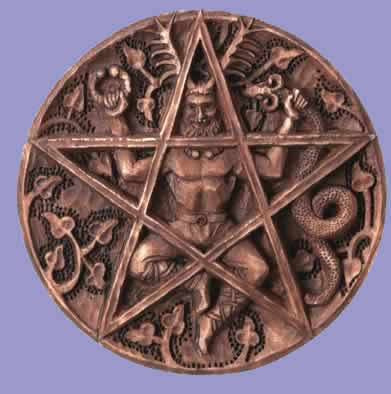
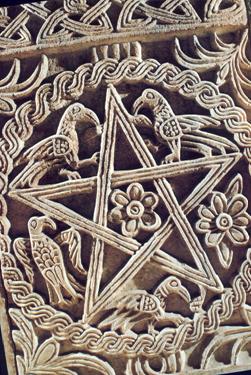
James Lee77 said:Jeremy Alvarez5, I love your signature (link is basically a goldmine for anyone trying to study the history of forum philosophy, just in case you decide to change it ☕). Honestly, a pentagram is such a cool symbol, as long as you don't forget it's supposed to be inside a circle. If you leave the circle out, though... not so much. 😉

There are traditional versions and then there are the more unique variations:

image
A pentagram featuring bird figures and rosettes. This is from an altar screen slab found in the King Zvonimir Church, St. Peter in Solin, dating back to the late 11th century.

Now you can find something similar in the Temple of Jupiter in Split.

image
Cernunnos...

Ishtar was honored with a similar shape too, and even the Egyptian hieroglyph for worshipping a god looks pretty much the same; an Egyptian with raised arms facing toward a slender star.
The Gods (Who Inspired) the Philosophers in Philosophy ·
rowdyharbor15 said:A person is essentially trapped within their own bubble. Everything they do is just a projection of themselves. All that information and creativity being pumped out? It’s just more of the same stuff from the same old environment... there isn't anything left to learn here. We've reached this specific plateau, and you can see it clearly: religion and everything tied to it is crumbling. It means our current consciousness has already moved past all that. What kind of art are we even talking about? None. We’re moving on.

Art is sometimes just a quirky way of processing information, but other times, I guess, it’s just a servant to whatever regime or superstition is in charge. Like, you look at certain hieroglyphs where things were basically banned—you know, how Egyptian people were depicted without any perspective, just showing every limb because the public was so terrified of the actual power behind the images... that kind of thing lasted for a long, long time.

Anyway, moving on, where does that leave us? Personally, when I get deep into analyzing everything, I always find myself circling back to the murder of Hypatia. She was this brilliant Neoplatonist mathematician, supposedly beautiful, who took over managing the Library of Congress from her father and even wrote a commentary on Diophantus—and then she gets flayed alive under some accusation of... heresy. It makes me wonder, though, is heresy really the same thing as unbelief? Or maybe it just shows how much the followers of Serapis and Isis were similar to those later Christian sects. And since it all went down right there in the Serapeum, there's another question worth digging into—did Judeo-Christian patriarchy, along with those Pavlovian suggestions, basically wreck the old ways of sharing info and relationships where men and women actually did the same work? I mean, maybe they reduced women to just being child-bearing machines, and honestly, I doubt the Jewish sons/builders were too happy about that either. Unlike the Epicureans or folks in India, they might have ramped up gender tensions so much that they turned society into something even worse than a caste system; they deformed eros and agape, turning agape into a chore and totally warping the capacity for love (I think someone on a forum once mentioned something about the "terrorism of love"). So, loving another person—the same way you love yourself—became this illusory thing, sort of lacking a real model. Then, on top of the legal structures meant to keep the state running, they added the whole heavy weight of heaven and hell gates...

Art, acting as a reflection of both individual and social psychology, might actually tell us quite a bit in those cases where its whole purpose was to be a bridge toward perception, vision, and true understanding...
The Gods (Who Inspired) the Philosophers in Philosophy ·
Amanda Jackson5 said:It’s honestly pretty tough for us to wrap our heads around what people back in ancient times actually felt when they were singing hymns to the gods. Every era seems to have its own unique way of perceiving the divine, tailoring their gods to fit whatever specific purpose or vibe they were chasing at the time. Personally, when I look back at those old myths, my favorites have always been Loki and Hermes Trismegistos

So, I was just sitting here thinking... what’s the actual point of philosophy anyway? Like, seriously. Is it just people in turtlenecks arguing about nothing, or is there some kind of deeper utility to it all? I guess it depends on how you look at it. Maybe it's just a way to pass the time, or maybe it's actually the foundation for everything else we do. I don't know, I'm probably overthinking this, but it feels like it should serve some kind of purpose beyond just being an academic headache. 😁

When it comes to the old gods, I guess I have my own little favorites. Personally, I’ve always felt drawn to them more than the others. Loki

So, I’ve been sitting here chewing on this one for a while, just wandering through the different mythologies in my head, and honestly? It’s kind of a toss-up depending on how you look at it. If we're talking raw, chaotic energy, Loki is basically the king of making things messy, which is a power in itself, I guess. But then you've got Veles, who feels like he operates on a much deeper, more fundamental level of reality. And don't even get me started on Cernunnos—there's something about that primal, earthy vibe that hits differently. I mean, if you're looking for pure disruption, maybe Loki takes it, but if you want someone who actually commands the weight of the world, I’d probably lean toward Veles or Cernunnos. It’s tough to say for sure, though. Maybe it just depends on what kind of chaos you're trying to deal with? Just my two cents.

So, I was reading up on this fascinating bit of research by Vyacheslav Vsevolodovich Ivanov and Vladimir Toporov. They basically used this comparative method to reconstruct the whole mythic showdown between Perun and Veles by digging through all sorts of Indo-European mythologies alongside traditional folklore and songs. It turns out there’s this really striking pattern running through almost all Indo-European myths—this recurring theme where a thunder god goes head-to-head with some massive serpent or dragon. In the Slavic tradition, you’ve got Perun acting as the thunder god, and his big rival is Veles. It’s pretty wild how much it mirrors other stuff, too; like that Etruscan underworld monster Veth or even that Hittite dragon Illuyankas, who was also pitted against a storm god. It makes you wonder how much of this is just universal storytelling, I guess.

So, I was thinking about how much overlap there is in mythology, and it’s kind of wild how you can see echoes of Veles popping up in Greek myths. You've got Pan, with that whole music and livestock vibe, and then Hermes, who basically owns the realm of magic and trickery. You also have Hades handling death and the underworld, plus Typhon—that massive, serpent-like nemesis of Zeus. Actually, if you look at how he constantly shifts shapes into different animals and has that deep connection to water, you could probably draw some parallels to Proteus too, I guess. It's all pretty interconnected. But honestly? If you want to find a deity that truly captures the full complexity and specific attributes of Veles, you really have to look toward Celtic mythology. They have Cernunnos, the god of nature, shamanism, and horned animals. He’s such a fascinating figure, especially with his symbol being that unique horned serpent. It just feels like a much more direct match, maybe.


So, I was falling down a bit of a rabbit hole earlier—you know how it goes—looking into some old mythology, and I stumbled upon some stuff about Veles. It’s pretty wild how deep these ancient stories go. Basically, if you look at the way these old mythologies are structured, Veles acts as this massive, heavy-hitting figure representing the underworld or the earth itself. He's kind of the cosmic counterbalance to the sky gods like Perun. It’s that classic tug-of-war, right? You have the lightning and the heavens on one side, and then you have this deep, earthy, watery power on the other. It’s almost like a constant tension between order and chaos, or maybe just different ways of seeing how the world works. I guess what’s really interesting is how he ties into everything else—the animals, the magic, the whole deal. He isn't just some "bad guy" in a simple hero-versus-villain story; he's more like a fundamental part of the ecosystem of the universe. It makes me think about how much we try to categorize things today as "good" or "evil," when back then, it was probably more about balance and necessity. Maybe we overcomplicate things too much now. Anyway, just some random thoughts while I was reading. Just felt like sharing because it's actually pretty fascinating once you get into the weeds of it.)
The Gods (Who Inspired) the Philosophers in Philosophy ·
rowdyharbor15 said:In physics, there’s this concept of fractals. Everything is just one giant, self-similar pattern, and we’re just tiny little pieces tucked inside the loop.
People are basically trapped under an orbital crust, and somehow they evolved into intelligent beings only to sit around wondering how they even got here.
From the beginning of time until now, you have to skip over all the "how" and "why"—there's nothing you can actually do about it. Our environment is incredibly small, too. You know how it goes: you eat something, you get rid of it, and then you end up consuming the cycle all over again. So, really, what's the point of art?

🙂 It’s like a cycle—expanding, spreading, contracting. Kind of like how thousands of years ago, way before the modern era, people over in India had advanced sewage systems, yet only 300 years ago in parts of California, they barely even had paved roads... and then every once in a while, something totally new pops up when people like Leonardo da Vinci or Isaac Newton show up (and occasionally stumble onto some alchemy stuff...).

What kind of art?

I think I'll skip this one for now, I'm running a bit short on time...

Just to clarify a specific detail regarding the topic:

So, in that encyclopedic guide "The world's religions" (London, 1982)—there were about 40 authors involved; the first edition came out in Washington, D.C. in 1987, followed by a second in 1991—it mentioned that Plotinus' followers used to write praises to the gods. But that whole thing about Porphyry was skipped over, as if it were somehow irrelevant for an encyclopedia focused on religion 🤷, though it's usually assumed that Diocletian's persecutions were linked to this work... but anyway; I wonder which gods those philosophers were actually worshipping; besides maybe Socrates' Athens, what else was there?

Toth, Prometheus, or Lucifer, just so we don't default to only male deities again?

http://simple.wikipedia.org/wiki/Selene

http://groups.yahoo.com/group/Wilson...c/message/3193

http://www.ecauldron.com/forum/showthread.php?1499-Torches-for-Hekate-Hecate-Artemis-and-Diana


image

Lucifer 😈 (A Small town in USA near a Small town in USA)
The Gods (Who Inspired) the Philosophers in Philosophy ·
rowdyharbor15 said:To me danas doima kao da su svi uzeli religiju i uzeli je zdravo za gotovo. Kod nas, na primer, verujem u Boga, molim se i idem u crkvu... ali ni On, ni sveštenik nemaju pojmu šta se zapravo krije iza svega toga. Bilo da je to trend ili tradicija, čovečanstvo bi, da ga posmatraš odozgo, izgledalo kao gomila ovaca na pašnjaku... samo ih malo uplašiš i svi krenu u istom pravcu. Da vam skratim priču: nijedna molitva vam neće doneti ono što očajnički žudite. To jednostavno ne postoji u fizičkom svetu.

God se u mnogim izrazima pominje kao svetlost. A izvor svetlosti je Sunce. Angeli su samo prolazni bljeskovi te svetlosti koji vam, ako imate sreće, mogu doneti malo blaštva. Pošto je sama osnova postojanja podjednako pozitivna koliko i negativna, svaka ta sreća dolazi uz jednaku količinu nesreće. Sve funkcioniše kao neki nasumični sat. Ako gledate detalje, ništa nije slučajno, ali za nas obične smrtnike deluje potpuno nasumično. Da pokušate da uskladite svoj bioritam tako da sve bude "savršeno", izgubili biste toliko onoga što volite danas... da biste se vrlo brzo poželeli vratiti u ovo što trenutno jeste.

Kao što Zemlja ima godišnja doba, tako ima i solarni sistem. Sunce je glavni generator, dok su ostale planete rezonatori. U zavisnosti od njihovog hemijskog sastava i fizičkih vektora međusobnog položaja, stvaraju se efekti koji utiču na sve oko nas. Svako organsko telo se sastoji od istih elemenata, pa fizika rezonansa stvara različite ishode.

To je otprilike fizika postojanja. S obzirom na kompleksnost koju danas vidimo, mislite li zaista da možete sve shvatiti preko noći? Evolucija se gradi milionima godina. Ovo "Bog ovo, Bog ono"... to je sve samo prazna priča.

Vrh spoznaje se interpretira kao susret sa Bogom. Ali vrh spoznaje je zapravo tvoj lični status u onome gde se nalaziš. Jer, ti si ta rezonantna svetlost prema svojoj okolini.

I guess if we look at it that way, the reverse could be true too. If you look at followers of religious sects individually, their level of actual knowledge isn't always that high, which I suppose is kind of why those organizations exist—to act as middlemen in a hierarchy. So, does that mean church organizations—with all the division of labor, the clergy versus the laity stuff—actually work to dull society's edge instead of helping it progress?

Looking at the value systems of people who actually knew their stuff, I was reading somewhere that Leonardo da Vinci was such a huge advocate for truth and raw knowledge that he ended up being labeled a heretic...

Also, this part is pretty interesting;

The Classical concept of art was later expanded and tweaked by the philosopher Plotinus (207–270 AD), who moved past simple imitation and introduced the idea of emanation (which has Eastern roots). An object only becomes truly beautiful if it holds a thought that flows from the divine. The soul reaches for that ultimate beauty, which is also the highest good—God.

During the Renaissance, this theory of emanation would go on to heavily influence Neoplatonists.

It’s essentially a revival of Platonism, though his work definitely has traces of Aristotelianism, Stoicism, and even mysticism mixed in. His teachings were super popular back in the day in Rome, where he taught philosophy, and they center on the idea of "The One"—a divinity that eternally emanates, and everything else that exists is just the result of that flow. This "One"
is impossible to fully grasp because it exists far beyond the cognitive reach of any single individual. The presence of The One is reflected in the first emanation, the spirit (Nous), which carries within itself both the thought and the thing thought—that assumed duality. From the spirit comes the Soul, acting as the bridge between the supersensible and the sensory worlds. Finally, from The One comes matter, which is equated with non-being and evil. These three categories together form the trinity that serves as the foundation of Plotinian philosophy.


http://en.wikipedia.org/wiki/Neoplatonism

So, there's clearly an impact on the Renaissance. Even his student Porphyry wrote about thirty books, including works like "anti-Christian"... I don't know why, looking through an encyclopedic guide on religion from some modern American publication, these details aren't mentioned, and instead, it just says "his students dealt with gods" and that's it? Just like that?🤷
The Gods (Who Inspired) the Philosophers in Philosophy ·
Amanda Jackson5 said:
I can't say I expected much from this thread, but seeing things unfold like this is almost poetic in its absurdity. It’s one of those situations where you realize that people aren't just missing the point—they're actively sprinting in the opposite direction. It reminds me of watching a slow-motion car crash on a rainy highway in Seattle; you know exactly how it's going to end, yet there's a strange, quiet fascination in watching everyone pretend the collision isn't happening. kaže:
Take Feuerbach, for instance—he’d argue that Hegelian idealism is really just religion with a more sophisticated, rationalized coat of paint.

People love to quote Hegel claiming that all philosophy is essentially just theology in disguise, but honestly, there are so many wildly conflicting interpretations out there—ranging from the purely metaphysical to the strictly non-metaphysical—that it feels like he’s just a blank canvas. It’s almost like Hegel acts as a sort of universal substrate, much like how a sheet of paper can hold any number of contradictory scribbles without ever choosing a side.

I can't make sense of that. If you're trying to tell me something, you might want to try typing it again. kaže:
When we get into the territory of ancient Greek philosophers—and I’m including those old-school dramatists, since back then, putting on a play was basically just another way of practicing philosophy—it gets a little murky. You had everyone from the guys claiming they’d discovered some universal truth to start their own schools, all the way down to the blatant atheists and materialists who didn't believe in any of it. It makes me wonder where exactly the line was drawn to separate the stuff that looks like occultism or magical worship—you know, those theories about whether elements simply exist or if they actually create the world—from what we would call a genuine, sincere love of wisdom.

There’s a pretty fascinating way Hegel interprets Antigone in his *Phenomenology*, specifically when you look at her through the lens of custom. To him, Antigone represents that "divine law"—that specific layer of social custom so deeply embedded in our collective consciousness that we just mistake it for something "natural," eternal, and unchangeable. It’s the kind of tradition that’s grown into our very bones; we don't sit around overanalyzing it or questioning its validity because it’s essentially part of our subconscious, something we grasp intuitively without having to think twice. Her whole existence is basically a living ritual. For Antigone, the idea of not burying her brother isn't even a debate; it feels fundamentally "unnatural" to her. Creon, on the other hand, serves as the embodiment of rational custom—the "human law" represented by the legal system and the state. He ends up sentencing Antigone to death despite everyone telling him not to, simply because he views it as his absolute duty to uphold the law as its protector.
The line separating religion from philosophy might not be razor-sharp, but it certainly isn't some blurry, undefined mess—that’s what rational thought is for. If anything, that boundary used to be much clearer than it is today, mostly because we’ve been forced to deal with a second, even more fog-filled divide: the gap between philosophy and science. It works like a lineage, really; just as philosophy originally branched off from religious thought, science eventually grew out of the philosophical tree.

I can't really make sense of that. If you were trying to say something specific, you might want to try again. kaže:
It’s a bit like when people start talking about "Catholic atheists," "Orthodox atheists," or "Muslim atheists." I know, I know—it sounds like a total oxymoron on paper. But if you actually look at how people function, it makes perfect sense; even when someone grows up without any religious belief, they still carry the cultural DNA of the environment that raised them. You can strip away the theology, but you can't easily scrub away the social rhythms and the way a community views the world.

It makes perfect sense, really, because certain individuals just fall into these patterns by default—what Hegel would call "spirit," though most people today would probably just label it "collective consciousness." You can’t exactly opt out of that shared awareness no matter how hard you try to distance yourself from it. That’s why we see these predictable cycles where you get people moving toward extreme pietism, only to have them pivot straight into becoming those types of religious atheists who still carry all the cultural baggage of their faith.

There’s also that saying that everyone’s got an opinion, much like they’ve got an anus. 😍

There's this interesting take in Hegel's *Phenomenology* regarding Antigone through the lens of custom. She essentially represents "divine law"—that specific layer of tradition so deeply embedded in our collective consciousness that we just view it as "natural," eternal, and unchangeable. It’s the kind of custom that’s become part of our DNA; we don't really question it or need to analyze it because it sits right in our subconscious; it's intuitive and immediate. Ritual is her embodiment. For Antigone, burying her brother isn't even a choice; it's just what is, and anything else would feel totally "unnatural." Creon, on the other hand, stands for rational custom—the "human law" embodied by the legal system and the state. He ends up sentencing Antigone to death despite all the pleas to stop, simply because he feels it's his duty to protect that law.

I guess even Socrates went along with that whole setup.

Maybe the line between religion and philosophy isn't quite as sharp as we think, but it isn't blurry either—it's grounded in rational thought. In fact, it might have been clearer back in the day than it is now, especially since we're dealing with another fuzzy boundary: the one between philosophy and science. Just as philosophy grew out of religion, science eventually branched off from philosophy.

I'll try to be a bit more substantial here; maybe Socrates was calling out the Athenians because they were so tied to their identity—you know, the wisdom, the owls, the olives—that they didn't actually care about the mind or anything related to it. Is he perhaps criticizing that exact type of custom (the plays, the dramas, the rituals, and just following authority) that rules over individual awareness?

Of course, because certain things fall under that umbrella of custom (as mentioned above) which Hegel calls "spirit," though today we’d call it "collective consciousness." An individual can't fully escape that consciousness, no matter how hard they try. That’s probably why we see things like pietism appearing, followed by those Christian (or Muslim, or Buddhist...) atheists.

And I suppose Carl Gustav Jung would have plenty to add to that. Meanwhile, the church takes those supposed Greek and Egyptian gods and reshapes them into angels and archangels, who then end up leading certain nations to create identities meant to reinforce the divide between those above and those living under the clouds...
The Gods (Who Inspired) the Philosophers in Philosophy ·
Amanda Jackson5 said:Your argument is a bit of a labyrinth right now, and I’m having a hard time finding the exit. It isn't really clear what your actual point is supposed to be. Try tightening things up and laying out your thesis a little more clearly and concisely.

For instance, according to Feuerbach, Hegelian idealism is basically just rationalized religion...

So, when we talk about those ancient Greek philosophers—and I should probably mention that back then, people kind of viewed the creation of drama as its own form of philosophy, whether it came from those claiming to have their own universal schools of thought or even from the skeptics and materialists—it makes me wonder: where exactly do we draw the line? How do we distinguish between an occult or magical obsession with the elements that either build the world or create it, versus just a genuine love for wisdom?

It reminds me of how someone might talk about being a Catholic, Orthodox, or Muslim atheist... I mean, sure, it’s an oxymoron, but I guess people raised in those specific environments still carry certain cultural traits with them, even if they don't believe in the faith.

To get things started, 😉
The Gods (Who Inspired) the Philosophers in Philosophy ·
So, if you look at what Nietzsche was getting at, all those old Greek "gods" basically stem from Dionysus—I mean, just look at how much emphasis they put on the Great and Little Dionysus festivals. You’ve got Athena representing war, and Ishtar follows that same vibe 🙂 ...

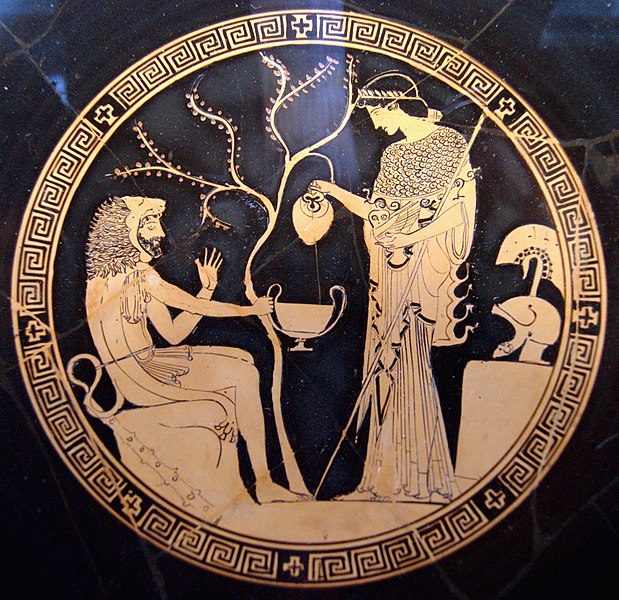
The main falcon figure—the son, the avenger, Horus amo, Hercules there... then you have Athena nurturing Hercules...

image
just the work of Duris...

I guess what this implies is that if someone claims to be on the side of the "Holy Spirit"—which is really just an alternative way of siding with Athena—that becomes a convenient excuse for colonization, imperialism, or proselytism. It's like this massive leap from "sacred epistemology" straight into the politics of supremacy, whether you're talking about nations, races, or even just entire systems of thought and consciousness...

I wonder, though... if we can actually demystify or shed light on all of this, can we eventually nullify those religious-fundamentalist impulses that drive people toward using violence to seize power here on our little blue planet?

Atheists tend to believe that Primus in orbe deos fecit timor... but honestly, don't let fear dictate your actions, even theoretically. History is such a fog that a crown isn't going to just fall off someone's head because you changed your mind...