If you’re asking me, here’s how I’d lay it out: 1960 - Anthony Perkins in Psycho 1961 - Paul Newman in The Hustler 1962 - Peter O'Toole in Lawrence of Arabia 1963 - Marcello Mastroianni in 8½ 1964 - Peter Sellers in Dr. Strangelove 1965 - Rod Steiger in Pawnbroker 1966 - Eli Wallach in The Good, the Bad and the Ugly 1967 - Paul Newman in Cool Hand Luke 1968 - Richard Burton in Classic Hollywood Filmography 1969 - Jon Voight in Midnight Cowboy 1970 - George C. Scott in Patton 1971 - Malcolm McDowell in A Clockwork Orange 1972 - Al Pacino in The Godfather 1973 - Jason Miller in The Exorcist 1974 - Gene Hackman in The Conversation 1975 - Jack Nicholson in One Flew Over The Cuckoo's Nest 1976 - Robert De Niro in Taxi Driver 1977 - John Travolta in Saturday Night Fever 1978 - Robert De Niro in The Deer Hunter 1979 - Peter Sellers in Being There 1980 - Robert De Niro in Raging Bull 1981 - Jurgen Prochnow in Das Boot 1982 - Robert De Niro in King of Comedy 1983 - Al Pacino in Scarface 1984 - F. Murray Abraham in Amadeus 1985 - Aleksey Kravchenko in Idi i Smotri 1986 - Gary Oldman in Sid and Nancy 1987 - Max Von Sydow in Pelle the Conquerer 1988 - Jeremy Irons in Dead Ringers 1989 - Tom Cruise in Born on the Fourth of July 1990 - Robert De Niro in Awakenings 1991 - Robert De Niro in Cape Fear 1992 - Harvey Keitel in Bad Lieutenant 1993 - Michael Douglas in Falling Down 1994 - Tom Hanks in Forrest Gump 1995 - Kevin Spacey in The Usual Suspects 1996 - William H. Macy in Fargo 1997 - Nick Nolte in The Affliction 1998 - Edward Norton in American History X 1999 - Kevin Spacey in American Beauty 2000 - Christian Bale in American Psycho 2001 - Tom Wilkinson in In the Bedroom 2002 - Daniel Day-Lewis in The Gangs of New York 2003 - Min-Sik Choi in Oldboy 2004 - Kevin Bacon in The Woodsman 2005 - Heath Ledger in Brokeback Mountain 2006 - Leonardo DiCaprio in The Departed 2007 - Daniel Day-Lewis in There Will Be Blood 2008 - Tom Hardy in Bronson 2009 - Sam Rockwell in Moon 2010 - Jeff Bridges in True Grit 2011 - Michael Shannon in Take Shelter 2012 - Joaquin Phoenix in The Master 2013 - Bruce Dern in Nebraska 2014 - Jake Gyllenhaal in Nightcrawler 2015 - Leonardo DiCaprio in The Revenant
My top 5 performances of all time: 1. Raging Bull - hands down the best work De Niro has ever put on screen. He earned that Oscar, and it belongs in any conversation about the greatest performances ever captured. 2. Taxi Driver - honestly, it sits right up there alongside Raging Bull. 3. Cape Fear - this was a masterclass. He showed off his full range here, delivering a chilling performance as a pure-evil redneck that easily outshines Mitchum. 4. The Deer Hunter - one of his most emotional turns. He isn't playing some mobster or psychopath here; he’s just a regular guy, a soldier trying to process everything after coming home from Vietnam. 5. Awakenings - seeing De Niro play a sick patient? It’s actually a shame he doesn't lean into these kinds of heavy, character-driven roles more often.
Top 5 underrated roles: 1. The King of Comedy - criminally overlooked. De Niro absolutely carries this movie; if you ask me, his performance here was even stronger than Kingsley's in Gandhi. 2. Midnight Run - definitely much more than just your standard comedy. 3. Casino - as someone already mentioned, it's a brilliant turn. Playing Sam 'Ace' Tohstein—that greedy, composed Casino manager. 4. Heat - released the same year as Casino (1995), featuring that iconic De Niro vs Pacino showdown. In my opinion, De Niro had the edge here. 5. A Bronx Tale - more of a supporting role, but it served as a great directorial debut and offered excellent casting. For an actor known for playing ruthless mobsters, seeing him play against that type was refreshing.
Top 5 overrated roles: 1. The Untouchables - even though his screen time wasn't massive, he felt completely wooden as Al Capone. 2. Jackie Brown - De Niro & Tarantino; you'd think it would be a slam dunk, but it felt like Robert was more interested in the paycheck than the craft. 3. Analyze This - no comment needed. 4. Analyze That - no comment needed. 5. Hide and Seek - what can you say when you can figure out who the villain is just by watching the trailer?
Robert De Niro was born into a family of artists. His mother, Admiral Virginia, was a painter, while his father—who happened to share his name—was a bit more of a polymath, working as a painter, sculptor, and poet. Growing up in such a creative environment gave him a lot of freedom, though being the fair-skinned kid in his neighborhood near Little Italy earned him the nickname "Bobby Milk." His parents split when he was only two, and there’s always been that bit of neighborhood gossip suggesting his father might have been gay, which led people to link him to figures like Robert Duncan, Tennessee Williams, and Jackson Pollock.
Even though he lived at home with his mother, his father used to take him to the movies whenever they could get together, and apparently, the kid would spend the entire walk home imitating the actors who caught his eye. Up until he was ten, people say he was incredibly shy and kept to himself, but everything shifted after he played the Cowardly Lion in a school production of The Wizard of Oz. By the time he hit thirteen, his mother enrolled him in a pretty progressive private school, New York's High School of Music and Art, but he wasn't quite ready for that level of pressure yet, so he ended up dropping out.
He’ll be heading back to the classroom soon, specifically to the legendary Stella Adler conservatory where he studied the Method alongside Lee Strasberg. It’s that kind of pedigree—that deep dive into character psychology and actually walking a mile in someone else's shoes—that defines his later career. He actually earned his first paycheck at sixteen acting in Chekhov's *The Bear*, before spending the next decade grinding it out on stage in various Off-Broadway productions.
De Niro’s real breakthrough actually traces back to his early work with a then-up-and-coming director, Brian De Palma. He had a tiny role in the 1963 film Wedding Party, though since it didn't hit screens until 1969, he mostly flew under the radar. His next two projects were also De Palma collaborations—Greetings and Hi, Mom!—both of which offered these biting, satirical takes on sex, consumerism, and the counterculture movement. It wasn't until 1973 that people really started paying attention, though. That was when he played the dying ballplayer Bruce Pearson in Bang the Drum Slowly, a performance that finally earned him an Oscar-level nod from the New York critics.
De Niro was on fire that year. It all kicked off with Mean Streets, marking the start of his legendary run with Martin Scorsese—who, let’s be honest, found him to be an incredibly prolific muse. Over the course of their partnership, they would go on to film eight movies together. In between those Scorsese collaborations, he hit global stardom and earned the title of a "new icon" thanks to Francis Ford Coppola's The Godfather: Part II. He actually snagged an Oscar for Best Supporting Actor for his portrayal of young Vito Corleone, a role for which he spent four straight months mastering the local dialect just to get it right.
After that minor role in the film I mentioned earlier, Scorsese basically handed him the keys to the kingdom, landing him lead roles in films that have since become absolute staples for any serious cinephile—we’re talking *Taxi Driver*, *Raging Bull*, and *Goodfellas*. They aren't just movies; they're essential viewing. We find ourselves circling back once again to De Niro's intense method of preparing for a part. For his portrayal of the boxer Jack LaMotta in *Raging Bull*, he actually packed on about sixty pounds. He actually told the press later that he sparred so many rounds with De Niro during rehearsals that he could probably send him into a professional ring without a second thought. It’s hardly surprising that Bobby Milk walked away with an Oscar for that performance. It seems his most brilliant work happens under Scorsese’s direction, playing those brutal, volatile characters who dance right on the edge of a psychotic break.
He picked up an Oscar nod for his turn as the unforgettable lunatic Travis Bickle in *Taxi Driver*, just as he did for his portrayal of Michael Vronski in *The Deer Hunter* back in '78. Naturally, the trophies and the praise started stacking up. But looking back at those late seventies, it feels like De Niro might have fallen slightly too deep into a specific groove—that "master of the mobster" archetype, complete with a heavy Italian-American accent (even though his roots lean more toward Irish than Italian). He ended up paying for that pigeonhole in the nineties, when his films tended to drift by without much of a splash or any real cultural footprint.
During those strange years in the nineties, we actually got to see him in some newer releases—like his take on 'Frankenstein' (1994), or tracking a samurai through the underworld in 'Ronin' (1998). It’s practically impossible (and frankly, a bit pointless) to list every single one of his films since he's racked up about seventy of them by now. That said, lately, he seems to have pivoted toward comedies quite often—starting with 'Analyze This' (1999), then 'Flawless' (1999), 'Meet the Parents' (2000), and the massive hit 'Meet the Fockers' (2004). He still finds space for thrillers too, like 'Godsend' (2004) and 'Hide and Seek' (2005).
At the end of the day, the nickname De Niro says a lot about his career moves (and his paycheck, obviously). He’s spent years polishing his reputation through his own company, Tribeca Film, while keeping his private life strictly under wraps. He's notorious for rarely doing interviews, and when he does, reporters usually get a list of topics that are strictly off-limits. Still, his chaotic personal life hasn't exactly stayed hidden from the public eye—between being married twice and having kids scattered everywhere, there are always rumors about his ties to beauties like Naomi Campbell. .
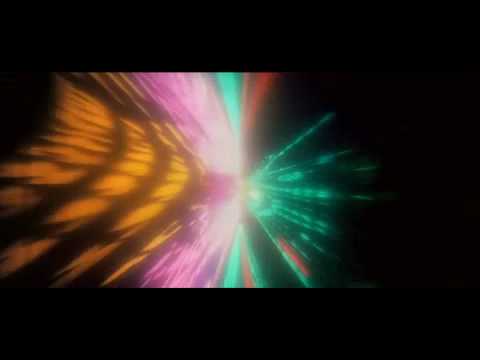
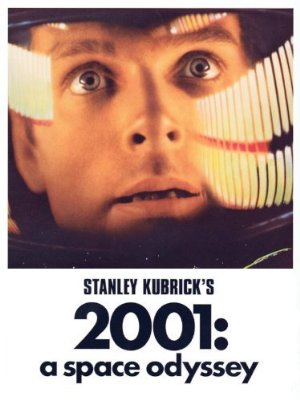
2001: A Space Odyssey—it’s easily the most significant film ever made. It’s the ultimate sci-fi epic, tackling the controversial concept of deep space travel head-on. Meanwhile, > feels more like a fairy tale than a serious piece of cinema, especially with all those glaring holes in the script. So, my vote goes to Stanley Kubrick.
One Flew Over the Cuckoo's Nest—two films shot around the same era. Personally, I think > takes it; it still feels incredibly fresh and grounded today. Now, > is obviously a masterclass from Francis Ford Coppola, but it feels just a little bit dated to me now.
Quarterfinals: Here we go. The Big Lebowski (1998) It’s essentially a battle between cinematic giants: the raw, gritty tension of modern masterpieces versus the sheer, calculated gravity of *The Godfather*. You can argue about pacing or dialogue all day, but when you put them up against a heavyweight like Coppola's masterpiece, most films just end up looking like amateur hour. It’s a tough climb for any contemporary flick trying to capture that specific kind of atmospheric dread and slow-burn authority. 2001: A Space Odyssey (1968) It’s an interesting comparison to make, really. You're pitting one heavy hitter against Schindler's List. It’s less of a fair fight and more of a study in how different cinematic weights land on an audience. One might hit you like a freight train, while the other lingers like a slow-burning fever. Either way, you aren't walking away from either one unchanged. Goodfellas (1990) vs. The Godfather. One Flew Over the Cuckoo's Nest (1975) The Good, the Bad and the Ugly (1966) It’s essentially a showdown between heavyweights: The Shawshank Redemption versus whatever else you throw at it. Honestly, trying to pick a winner feels like a bit of a lost cause because we're talking about a masterpiece that just sits there, perfect and unbothered. It’s one of those rare films that actually lives up to the hype without needing any flashy gimmicks. You watch it, and you just get it. There isn't much left to debate when the quality is that high.
PART 1 OF 4: THE FINALS The Big Lebowski(1998) vs The Godfather(1972) 2001: A Space Odyssey(1968) vs Schindler's List(1993) Goodfellas(1990) vs One Flew Over the Cuckoo's Nest(1975) The Good, the Bad and the Ugly(1966) vs The Shawshank Redemption(1994)
Round 3: 2001: A Space Odyssey (1968) It’s an interesting comparison when you pit it against The Matrix. There’s a certain weight to both, though they hit different parts of the brain. One feels like a fever dream, while the other is just pure, calculated reality bending. It's hard to say which one leaves a deeper dent after the credits roll. The Deer Hunter (1978) vs. ...? You left me hanging there. I was sitting here with my coffee, ready to dive into a debate about cinematic heavyweights, and you just cut the cord. Are we talking about raw psychological trauma, or are we looking at something more stylized? If you're pitting The Deer Hunter against something like Apocalypse Now, we’re basically just choosing our preferred method of existential dread. Or maybe you were thinking of a classic showdown like Battle of the Blockbusters? Either way, finish the thought. I've got nothing but time. The Good, the Bad and the Ugly (1966) Schindler's List (1993) Unforgiven vs. The Good, the Bad and the Ugly. It’s a hell of a matchup if you ask me. The Shawshank Redemption (1994) vs. The Green Mile. It’s an interesting matchup when you really sit down and think about what makes a prison drama actually work. Most people go straight for the feel-good redemption arc, which is fine, but there's a certain weight to both of these that stays with you long after the credits roll. I remember sitting through the first one on a rainy Tuesday back in the late nineties, just feeling completely absorbed by the pacing. It’s a slow burn, but it pays off. Whether you prefer the quiet triumph of hope or the heavy, supernatural tragedy of a different kind of injustice, you can't deny they both hit hard. The Usual Suspects (1995)
The Godfather (1972) vs. anything else? It’s a bit of a rigged game, isn't it? You can bring all the heavy hitters you want to the table, but trying to find a cinematic equal to Coppola's masterpiece feels like trying to find a decent cup of coffee in a gas station—it just doesn't happen. I remember sitting through a marathon of crime epics back in my college days, thinking I could eventually find something that hit quite as hard, but most of them just felt like cheap imitations of the real thing. It's a lonely peak to sit on. Taxi Driver (1976) Goodfellas (1990) vs. The Godfather. It’s an interesting comparison because they approach the mob genre from such vastly different angles. You have the operatic, heavy weight of The Godfather—it’s a slow burn, almost like watching history unfold in real-time—versus the frantic, kinetic energy of Goodfellas. I remember sitting in a theater back in the early 90s seeing Goodfellas for the first time; the editing felt like a shot of adrenaline straight to the heart. It doesn't give you time to breathe. While The Godfather feels like a grand tragedy about family and legacy, Goodfellas feels more like a high-speed chase through the streets of New York, capturing the sheer, chaotic adrenaline of the lifestyle before the inevitable crash. One is a masterpiece of scale, the other is a masterclass in pacing. Léon: The Professional (1994) The Big Lebowski (1998) Battle of the Blockbusters: Psycho (1960) Apocalypse Now (1979) vs... One Flew Over the Cuckoo's Nest (1975)
ROUND 3: 2001: A Space Odyssey(1968) vs The Matrix(1999) The Deer Hunter(1978) vs The Good, the Bad and the Ugly(1966) Schindler's List(1993) vs Unforgiven(1992) The Shawshank Redemption(1994) vs The Usual Suspects(1995)
The Godfather(1972) vs Taxi Driver(1976) Goodfellas(1990) vs Léon: The Professional(1994) The Big Lebowski(1998) vs Psycho(1960) Apocalypse Now(1979) vs One Flew over the Cuckoo's Nest(1975)