The mayor announced today that in the Ukrainian city of Mariupol, there’s absolutely no running water, no electricity, and no heating left, and even food supplies are drying up fast. Meanwhile, the forces fighting against the Russians are practically begging for reinforcements, fearing they might lose hold of this strategically vital port city if they don't get help soon.
The Mariupol Massacre: 'We can't even begin to count the casualties, but we believe hundreds have perished'
I mean, seriously, the Russians have gone and pulled the plug on Facebook, Twitter, and YouTube—basically, if you're sitting anywhere within their borders, those three platforms are just dead to you.
you practically need a VPN just to get through to listen to some music on YouTube🤦 it’s honestly depressing to think about; your average person, someone who doesn't spend their life tinkering with encrypted tunnels or VPN settings, is suddenly cut off from listening to their favorite tracks or watching videos on YouTube, let alone catching up with friends on Facebook🤦
they’ve left Instagram and WhatsApp standing for now, but at this rate, it’s only a matter of time before they decide those should be banned too.
I can't help but wonder what you all make of this odd little phenomenon where, out of all the foreign mercenaries and volunteers fighting for the Russians, Americans seem to be their absolute favorite target. I mean, look at today—right in the middle of a literal war zone, the Russian Ministry of Defense is standing up there making public statements specifically calling out Americans 🙏
That’s the way it goes. You hit your second day of symptoms, and suddenly you’re officially on day one of isolation. It feels like you barely have time to catch your breath before the clock starts ticking. Depending on whether you've been vaccinated or if you've already fought this thing off once before, they tell you to stay cooped up until either the 8th or the 11th day. Of course, if you can manage to get tested on the 5th day, there's a chance you can wrap things up by day six. It's all such a moving target, isn't it?
I’ve already laid this out for you once before. Honestly, if someone has already gone through three rounds of vaccinations, there’s absolutely no reason they should be forced into isolation.
mellowseal1 said:Sorry if I'm sounding a bit lost here, everything feels like such a whirlwind of confusion right now...
I totally get what you're saying, but I was just reading this part "If the patient and their household contacts can't be isolated from one another—like when parents are caring for a sick child, for example—then those household members have to quarantine for seven days once the patient meets all the requirements to end their isolation under the guidelines in section 3."
Essentially, what this means for you is that you'll need to stay in self-isolation for an additional seven days, counting from the very moment the infected person is cleared to step out of their own isolation.
Grace Richardson24 said:I assumed they were asking about contact tracing info. Obviously, if you've tested positive, you can't just head out after five days.
Edit: Or rather—to be precise: The CDC allows for ending isolation for asymptomatic carriers after at least five days provided that they havetested negative on a rapid antigen test (RAT) by the fifth day, as well as for those with mild or moderate symptoms after five days—as long as they also hit that negative mark on a rapid antigen test (RAT) and have been fever-free for at least 24 hours
But they specifically asked about contacts, too. Testing doesn't magically shorten the isolation period for anyone who isn't actually infected; it’s not some kind of get-out-of-jail-free card for those around you. As it's written, it won't work that way.
Grace Richardson24 said:Just wanted to add a bit more context to what that profit-seeker linked you: The blue text indicates the updates.
Changes from the previous version are highlighted in blue. Summary of changes: - Quarantine has been shortened to seven days for all close contacts—not just those who were vaccinated and have already recovered from COVID-19. The exceptions regarding quarantine exemptions remain the same as the previous version. - Asymptomatic infected individuals can now end isolation after at least five days if they test negative on a rapid antigen test (RAT) on the fifth day. This also applies to patients with mild or moderate symptoms after at least five days, provided they test negative on a rapid antigen test (RAT) on the fifth day, have been fever-free for at least 24 hours, and show significantly improved symptoms (no RAT required here; isolation lasts ten days for those not vaccinated and without prior COVID-19 recovery, while for those vaccinated and previously recovered, it lasts seven days without testing). - To end isolation without testing, the patient must be afebrile for at least 24 hours (previously it was at least three days!).
So, basically—you can cut your self-isolation down to 5 days if you take an extra RAT and haven't had a fever for the last 24 hours.
No, you can't shorten it just by testing; that rule applies to people who actually caught the virus. Isolation is what the sick have to do, whereas quarantine is specifically for those who were just exposed.
- Quarantine has been shortened to seven days for all close contacts, not just for individuals who were vaccinated and have already recovered from COVID-19. The existing exemptions from quarantine remain unchanged from the previous guidelines.
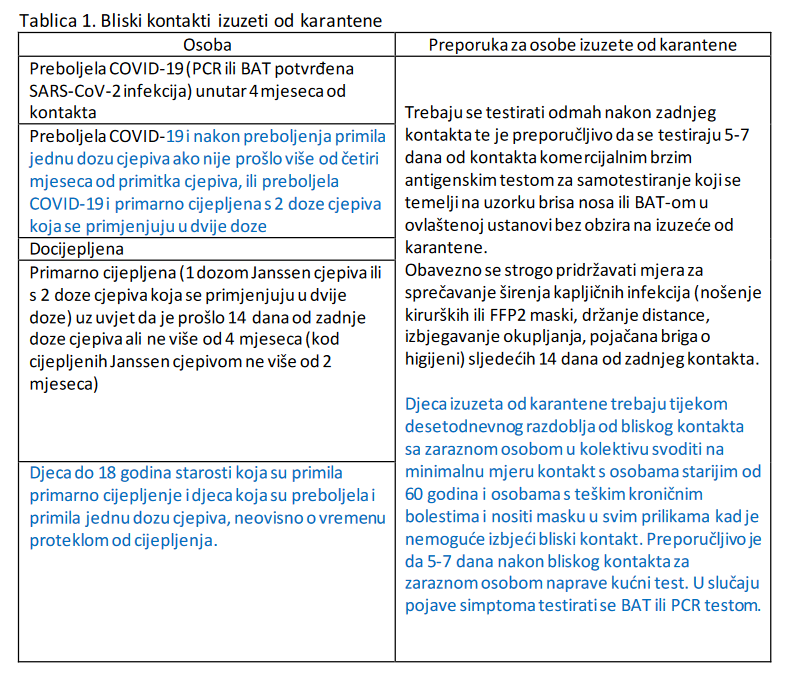
If you fall into any of these categories, you can skip the whole self-isolation nonsense altogether:
1. You’ve already fought off COVID-19 (with a confirmed PCR or rapid test) within the last four months. 2. You recovered from COVID-19 and then grabbed a single vaccine dose, provided that shot wasn't more than four months ago. 3. You recovered from COVID-19 and have completed your primary vaccination series.** 4. You’ve received your booster shot. 5. You’ve finished your primary series**, as long as it’s been at least 14 days since your last dose, but hasn't exceeded a four-month window (though if you used the Johnson & Johnson shot, that window shrinks to just two months).
Now, look, if you recovered more than four months ago, or if your last shot was over four months back, you’re still on the hook for isolation—you'll need to stay home plus an additional seven days after the infected person's isolation period ends. And if you don't meet even those criteria? Well, then you're looking at a full ten days of isolation following the end of the infected individual's quarantine.
I basically laid it all out last night right here:
Look, if you aren't able to effectively quarantine, then the CDC guidelines dictate that the clock starts ticking from the very last day that infected person was out in the world.
That’s precisely why we have medical professionals for a reason, not just random people on a forum. Honestly, you should just give your primary care physician a call and they’ll tell you exactly what steps you need to take next
If you fall into any of these categories, you can skip the quarantine altogether:
1. You’ve already fought off COVID-19 (with a confirmed PCR or rapid test) within the last four months. 2. You recovered from COVID-19 and have since received one dose of a vaccine, provided it hasn't been more than four months since that shot. 3. You’ve had the virus and are now fully vaccinated. 4. You've received your booster shot. 5. You're considered fully vaccinated, assuming at least 14 days have passed since your last dose, but no more than four months have gone by (though if you used the Johnson & Johnson vaccine, that window shrinks to just two months). 6. Kids under 18, regardless of how long it's been since their shots, as long as they: - Are fully vaccinated - Or have recovered and then taken one dose of a vaccine.
Now, if you fit into one of these buckets, your isolation period is set at 7 days:
1. You recovered from COVID-19 (confirmed via PCR or rapid test) more than four months ago. 2. You were fully vaccinated more than four months ago (or, if you went with the Johnson & Johnson shot, more than two months ago).
And if none of the above applies to you—if you're essentially starting from scratch—you’re looking at a 10-day isolation period.
Mark Johnson12 said:We’ve been getting such conflicting advice from different doctors that we’re honestly just spinning our wheels at this point.
So, out of our group of five, four people tested positive. I’m trying to figure out how long the fifth person needs to quarantine—they’ve had both doses of their vaccine, with the second one administered back in July 2020. One doctor told us they have to wait until the last infected person finishes their isolation and then add another 10 days on top of that. Someone else mentioned it would only be 7 days. Then, I actually spoke with an epidemiologist today who insisted the quarantine period is strictly 7 days and nothing more. No extra waiting period after the infected person is clear; just the 7 days and we're done.
A quick note regarding quarantine/self-isolation protocols: if the patient and those they've been in contact with all live under the same roof and cannot physically separate—like when parents are caring for a sick child, for instance—then household contacts must undergo a 7-day quarantine starting after the patient meets the criteria to end their own isolation. However, if they remain in continuous close proximity to the patient, that implies a total quarantine period of 17 days (essentially the 10-day infectious window of the patient plus a 7-day quarantine following their final day of being contagious), calculated from the date the patient fell ill, provided the patient meets the requirements to end their isolation after ten days and the contacts don't develop any symptoms during that timeframe, which should be assessed by their primary care physician).
Your primary care physician actually has access to all the quarantine data and isolation records, so honestly, just give them a call and they should be able to walk you through everything.
Yeah, I suppose that should be the case. If you’ve had your second dose and it’s been at least four months since that shot, the standard protocol is that you’ll need to pull yourself into self-isolation for seven days if you’ve been in close contact with someone who tested positive.
Jason Scott76 said:That’s exactly what I need to clarify—does this apply to people who tested positive but are symptom-free, say by day two or three? I'm reading through this, but I can't quite wrap my head around how it connects.
The isolation period has been shortened to seven days for asymptomatic individuals or those presenting with mild to moderate clinical symptoms, provided they aren't immunocompromised and it's been more than four months since their initial vaccination series or primary infection.