Look, things might be a little messy right now since the rules have been shifting constantly, so I totally get why people are feeling confused. Just jump in. Ask questions or suggest an album, and we'll figure out the specifics as we go. Nobody is going to think you're an idiot for asking, at least not me—and I can't speak for everyone else anyway. 😁
As for voting on your own suggestions, it’s a different ballgame than voting for yourself in, say, a US presidential election, which most people would call morally wrong. Voting for your own political party is usually seen as more acceptable, and from what I know, parties actually expect their members to do that 😁 because it's about the platform rather than just the individual. But this isn't a political election.
In this space, we aren't voting for our own work or ourselves. We're voting for other people's art that we find important or valuable for ourselves or the world at large, which is why we suggest them. Or maybe we're just trolling, but let's stay on track for now.
Personally, if I see someone skip voting for their own suggestion and vote for someone else instead, it tells me one of two things: either they're super confident their pick will win regardless, or they found something even better than their own idea. If that happens, it definitely makes me rethink my own picks too, especially if I don't already know the artist or the album.
Bottom line is, I expect the person making the suggestion to actually back their choice and stand behind it.
Sample sizes are consistently too small, which just leaves the door wide open for all kinds of bias. Thinking you can predict an album's success based on popularity alone is a trap. It’s happened before. Floyd didn't make the cut, Bowie didn't make it, The Velvet Underground failed their second attempt, and now we're seeing it with New York City. Those are the big names that come to mind.
Since we're talking about it, NIN was already suggested—I think by Konoyo—but that stalled out too.
brightwolf48 said:Since Gerald Jackson48 finally beat me, I guess it's time for me to give this a shot...
Haha, Amanda Robinson4 is partially to blame here. If she hadn't put on New Order, I wouldn't even be listening to Youthe this week. Cause and effect. 🤣
Steven Newman50 said:Just one more thing, more or less. I really like her and... Crystal I was listening to the same stuff around that time, but honestly, the get Ready ( 2001) album as a whole just doesn't hit as hard as Power, Corruption & Lies. There's a good reason for that, though—it's easily one of the most important albums of the entire decade. That's why I'm bringing it up here.
Is this good? get Ready So? Music CompleteJust make sure analogbear40 doesn't overhear us. 😁
Steven Newman50 said:It’s the American edition, which is something I probably should have mentioned upfront. 😁 I didn't have the physical copy of this version, but honestly, this album is huge for me, especially when you pair it with Blue Monday 🙂
I was also thinking about picking a Led Zeppelin record that isn't necessarily their debut, though having Madonna on there really tips the scale for me... Sometimes just one track is enough to make the choice for you. 😁
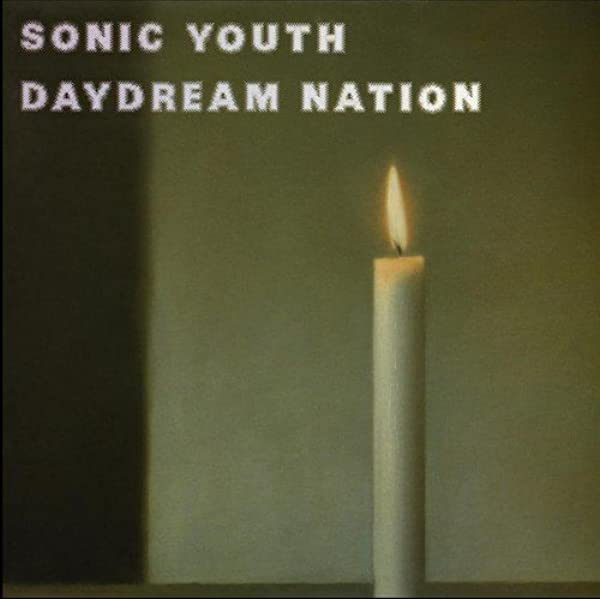
EDIT: Also, someone please bring up Sonic Youth. If you don't do it, I'll probably suggest them in a few weeks anyway. 🙂
Personally, Blue Monday is definitely missing from this specific pressing. I grabbed it from the United Kingdom, so what you see is what you get. Still, there are plenty of other incredible tracks on here... 👍
01 Teen Age Riot 02 Silver Rocket 03 The Sprawl 04 'Cross The Breeze 05 Eric's Trip 06 Total Trash 07 Hey Joni 08 Providence 09 Candle 10 Rain King 11 Kissability 12 The Wonder Trilogy 13 Trilogy: b) Hyperstation 14 Trilogy: z) Eliminator Jr.
I was just thinking about putting that album up. Wanderer beat me to it with Massive Attack. I was already heading down that path back then. I can't see any image attached here. If you were trying to share something, go ahead and upload it again. I'm ready when you are. I'm posting the album cover here. I just saw a new update in the thread, clicked it open, and there it is: Massive Attack - Mezzanine. 🙏
My copy of New Order's Power & Corruption & Lies is the only one that doesn't have Blue Monday on it. 😛
I'm not exactly a huge fan of The Doors, and I wouldn't say I'm obsessed with Led Zeppelin either. But there's something about that voice and Led Zeppelin—maybe I'm missing out on why everyone from the public to the critics treats them like such legendary rock icons.
That vocal style paired with the more experimental Jar and Recoil... it’s definitely Wilder.😁
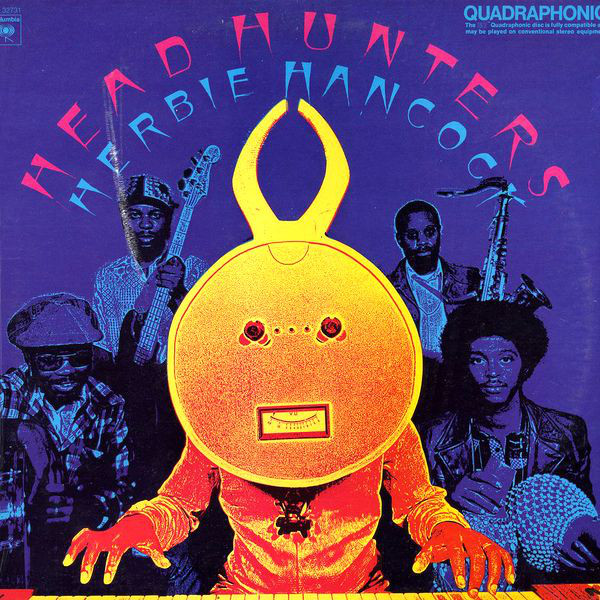
Lisa Davis46 said:I just couldn't help myself—I had to give my vote to Boss. I'm sure Herbie Hancock and Gerald Jackson48 will forgive me. This album is fantastic, and it deserves to be in the mix. Finally, some actual jazz! I was secretly hoping Bruce might pull through with a tie, though honestly, this isn't exactly the album I would have picked for him.
But... Rosalita! 🎉😍
Finally, some jazz. It feels like we've gone through sixty rounds of something else before getting here. Honestly, I’d love to dive into some modal jazz, bebop, or even some free jazz next. It's not like I was short on suggestions over the last few months—people have been throwing ideas at me from all directions—but hey, that's how it goes. The voters have spoken. 😁
Ethan Gomez82 said:Following basic moral rules and social norms—regardless of where they actually come from—doesn't require any special intelligence. Honestly, even an idiot can follow the rules, so why give "wise men" all the credit? A truly wise person avoids unnecessary trouble altogether, and if they end up in a mess, they clearly weren't that wise to begin with.😁
Spot on. You don't need a genius IQ to follow the rules just because society says so. But actually grasping the actual point behind those moral rules? That's a whole different level of thinking.
I honestly think how we link wisdom and ethics all comes down to our take on universal values. If you believe there are certain core truths out there—stuff that exists regardless of what society says is "normal"—then you have to ask yourself how wise it actually is to ignore those ethical principles. It’s even more obvious if you're looking at it from a standpoint of moral absolutism. From a purely logical angle, it just makes sense. Ignoring basic ethics leads you down a bad path, and walking down a bad path isn't exactly smart.
Now, if you don't believe in universal values and think everything is just relative or based on shifting social trends, then you're starting from a totally different perspective.
Plus, people are complicated. Some folks are just naturally wiser than others. Take a guy like Vito Corleone, for example. I bet a lot of people would call him wise, or at least say he has the traits of a wise man. Is that enough to label him as such? Maybe not. He’s missing that whole ethical component. He definitely had some great qualities, but if he had channeled them into better moral choices, he probably would have lived a much better life with way fewer tragedies. That would be true wisdom. Or, look at it this way: maybe he wouldn't have even survived long enough to get old in his line of work. Instead, someone more impulsive and violent might have taken over the family business, which would have caused even more chaos for everyone else.
I don't know, there are so many layers to this. But to me, the big sticking point is whether the idea of universal, unchanging values actually holds water.
Sam Martinez9 said:I think there's a misunderstanding. My issue isn't with the subject matter itself, but rather the direction this conversation is taking. I'm not particularly interested in debates centered on labels like *he's a mystic* versus *he's not a mystic*.
What I actually want to discuss is the substance of what he wrote, rather than how he perceives himself or how others choose to label him.
Look, we aren't here to cater to you or spoon-feed you answers just to make you happy. Besides, I already pointed out two specific ideas he laid out in his book 'Quantum physics.' Here's a better idea: start a fresh thread focusing on one specific thought of his that actually interests you. Maybe then you'll get what you're looking for.
+1 What Beljki is saying doesn't even have to touch on anything mystical. I’m talking specifically about Capra here, not just every scientist out there. Besides, Capra doesn't shy away from his connection to mysticism. He leans into it. It's all over his books and papers. Honestly, I don't get why anyone on an American forum would even care.
The inevitable friction happens between casual slang and scientific terminology. Then you get this feedback loop where people cite scientific sources, leading to some kind of re-re-semanticization. It becomes a game of telephone where a layperson takes a scientific term—one that migrated from old colloquialism to a new scientific definition (usually becoming more precise in the process)—and tosses it back into their own new version of casual speech. That's how you end up with a whole chain of misunderstandings.
On top of that, schools are still teaching that "planetary model" of the atom... 😬
There's also that whole "atoms as little spheres" analogy floating around. It makes explaining evolution—and the actual scientific consensus on it—really tricky. It’s almost impossible to talk about it without using language that accidentally implies everything has a specific purpose or end goal.
It ends up sounding like "fish have fins so they can swim" or "spiders have legs so they can walk," which isn't quite right.
Plus, you run into the limits of language itself. Our words and sentence structures sometimes just struggle to carry complex ideas. I think philosophers have done some really cool work here. They might not have solved the mystery, but they’ve definitely pointed us toward where the real questions lie.
bluemason3 said:I’m not convinced calling it a "particle" in an elementary particle is actually the right way to go about it. It feels like we’re just trying to visualize things based on our everyday experiences—treating them like tiny little pieces of matter simply because they're too small for us to see, even though they aren't necessarily "bits" of stuff at all.
It’s similar to how I feel pop science turns different modeling methods into these "objective realities" when they’re explaining things to laypeople. For instance, they present a phenomenon as being both a wave and a particle, whereas I’d argue we’re just applying the concepts of a wave or a particle depending on which model we use. The phenomenon itself isn't physically morphing from one thing to another.(I have a feeling someone mentioned "dualism" earlier, but I can't be bothered to scroll back and check).
These are heavy topics for the natural sciences. Honestly, I doubt many people here have enough background knowledge to avoid getting a pretty warped perspective from those questionable "mystical physics" authors out there.
It’s true that as our collective knowledge expands and we redefine how things work, language should probably keep pace. But honestly, language tends to get stuck in the past. Sometimes it's just practical—changing everything is a massive headache. Other times, it's more about ideology. If we changed every term the second a new theory dropped, people would be totally lost. Sure, old names might not perfectly capture a new scientific paradigm or the latest way we understand the world, and they can definitely lead people down the wrong path, but constant updates would just cause total chaos.
A buddy of mine was joking around about this the other day. He thinks there’s going to come a time when we don't say things like, "Honey, this dinner tastes amazing..." Instead, we'll be saying, "Darling, this meal is stimulating my orbito-medial cortex in all the right ways..." 😁
I don't know what to tell you. Sometimes things just happen. You can plan everything out perfectly, follow all the rules, and still end up staring at a mess. It’s just how life works in America. Not every day goes according to the playbook. That's just reality. kaže: Let's get one thing straight: inanimate objects aren't organisms. It’s just basic science. A rock isn't breathing, and a chair definitely isn't eating lunch. Simple as that. Everything else is just noise. 🙄
I mean, sure, but I have no clue what ant8 is actually getting at here. Honestly, I wouldn't even be surprised if Capra claimed that inanimate objects have their own DNA or something equally wild. It’s like saying particle movement is just a metaphor for some cosmic dance or an eternal song. Just one of those things.
Sam Martinez9 said:To my mind, that sounds more like a metaphor, yet such a comparison doesn't actually distort reality. Elementary particles truly do move in a manner akin to a dance, and they exhibit this same motion throughout the entire observable universe. Therefore, calling this movement a 'cosmic dance' remains a perfectly accurate description.
For me, true mysticism would involve him claiming that Shiva herself actually triggered that dance, or that she is choreographing the steps, or something along those lines.
I haven't read Tao physics, so it’s entirely possible that it bridges the gap between mysticism and physics. I am currently reading I Ching and Hidden Connections. Both were written after Tao physics and serve as a sort of expansion upon it. They follow a similar structure—starting with physics, moving into biology, and eventually addressing society, all interconnected. To be precise, biology emerges from physics, and society (or economics) emerges from both biology and physics. I haven't finished them yet, but I don't see much mysticism here, even if there are passing mentions of Budo, Buddhism, or Eastern philosophy.
It seems you've formed your entire opinion of Capra based on just one of his books, which I don't think is particularly wise.
While Capar does critique mechanism and the Cartesian-Newtonian worldview, that doesn't make him a mystic. In fact, he isn't even unique in making that critique; many others do the same.
For him, the natural sciences—physics and biology—are the foundation. When he discusses Eastern philosophy, he integrates it into the framework of physics and biology rather than twisting science to fit mysticism.
He even admits that his ideas and theories aren't entirely unique and can be found in the work of other scientists and philosophers, though I personally found them quite refreshing.
Take Life, for instance: when discussing how it emerges and its fundamental prerequisites, many would argue that a living organism is defined by having DNA. However, dead organisms possess DNA as well...
Look, we can call things whatever we want and compare them to anything we feel like. Even Capra does it. It’s really not up for debate.
Sam Martinez9 said:To my mind, that sounds more like a metaphor, yet such a comparison doesn't actually distort reality. Elementary particles truly do move in a manner akin to a dance, and they exhibit this same motion throughout the entire observable universe. Therefore, calling this movement a 'cosmic dance' remains a perfectly accurate description.
For me, true mysticism would involve him claiming that Shiva herself actually triggered that dance, or that she is choreographing the steps, or something along those lines.
I haven't read Tao physics, so it’s entirely possible that it bridges the gap between mysticism and physics. I am currently reading I Ching and Hidden Connections. Both were written after Tao physics and serve as a sort of expansion upon it. They follow a similar structure—starting with physics, moving into biology, and eventually addressing society, all interconnected. To be precise, biology emerges from physics, and society (or economics) emerges from both biology and physics. I haven't finished them yet, but I don't see much mysticism here, even if there are passing mentions of Budo, Buddhism, or Eastern philosophy.
It seems you've formed your entire opinion of Capra based on just one of his books, which I don't think is particularly wise.
While Capar does critique mechanism and the Cartesian-Newtonian worldview, that doesn't make him a mystic. In fact, he isn't even unique in making that critique; many others do the same.
For him, the natural sciences—physics and biology—are the foundation. When he discusses Eastern philosophy, he integrates it into the framework of physics and biology rather than twisting science to fit mysticism.
He even admits that his ideas and theories aren't entirely unique and can be found in the work of other scientists and philosophers, though I personally found them quite refreshing.
Take Life, for instance: when discussing how it emerges and its fundamental prerequisites, many would argue that a living organism is defined by having DNA. However, dead organisms possess DNA as well...
That's just not true. I've got his Web of Life right here, plus there are plenty of different sources out there today if you actually bother to look for information on someone or something. To be honest, I don't even have a set-in-stone opinion on Capra, so he isn't exactly going to influence my view with some perfectly polished writing. My main point is that his ideas and ways of thinking often step way outside the lines of typical scientific thought. At the end of the day, it's not some rigid rulebook he's pushing; it's just a description of how things are, and Capra himself backs it up.
Sam Martinez9 said:To my mind, that sounds more like a metaphor, yet such a comparison doesn't actually distort reality. Elementary particles truly do move in a manner akin to a dance, and they exhibit this same motion throughout the entire observable universe. Therefore, calling this movement a 'cosmic dance' remains a perfectly accurate description.
For me, true mysticism would involve him claiming that Shiva herself actually triggered that dance, or that she is choreographing the steps, or something along those lines.
I haven't read Tao physics, so it’s entirely possible that it bridges the gap between mysticism and physics. I am currently reading I Ching and Hidden Connections. Both were written after Tao physics and serve as a sort of expansion upon it. They follow a similar structure—starting with physics, moving into biology, and eventually addressing society, all interconnected. To be precise, biology emerges from physics, and society (or economics) emerges from both biology and physics. I haven't finished them yet, but I don't see much mysticism here, even if there are passing mentions of Budo, Buddhism, or Eastern philosophy.
It seems you've formed your entire opinion of Capra based on just one of his books, which I don't think is particularly wise.
While Capar does critique mechanism and the Cartesian-Newtonian worldview, that doesn't make him a mystic. In fact, he isn't even unique in making that critique; many others do the same.
For him, the natural sciences—physics and biology—are the foundation. When he discusses Eastern philosophy, he integrates it into the framework of physics and biology rather than twisting science to fit mysticism.
He even admits that his ideas and theories aren't entirely unique and can be found in the work of other scientists and philosophers, though I personally found them quite refreshing.
Take Life, for instance: when discussing how it emerges and its fundamental prerequisites, many would argue that a living organism is defined by having DNA. However, dead organisms possess DNA as well...
I wasn't even sure if he was a true mystic or just someone who got way too carried away with the whole spiritual thing. He definitely had a habit of drifting far beyond the bounds of actual science with his theories. It was wild to watch.
Sam Martinez9 said:To my mind, that sounds more like a metaphor, yet such a comparison doesn't actually distort reality. Elementary particles truly do move in a manner akin to a dance, and they exhibit this same motion throughout the entire observable universe. Therefore, calling this movement a 'cosmic dance' remains a perfectly accurate description.
For me, true mysticism would involve him claiming that Shiva herself actually triggered that dance, or that she is choreographing the steps, or something along those lines.
I haven't read Tao physics, so it’s entirely possible that it bridges the gap between mysticism and physics. I am currently reading I Ching and Hidden Connections. Both were written after Tao physics and serve as a sort of expansion upon it. They follow a similar structure—starting with physics, moving into biology, and eventually addressing society, all interconnected. To be precise, biology emerges from physics, and society (or economics) emerges from both biology and physics. I haven't finished them yet, but I don't see much mysticism here, even if there are passing mentions of Budo, Buddhism, or Eastern philosophy.
It seems you've formed your entire opinion of Capra based on just one of his books, which I don't think is particularly wise.
While Capar does critique mechanism and the Cartesian-Newtonian worldview, that doesn't make him a mystic. In fact, he isn't even unique in making that critique; many others do the same.
For him, the natural sciences—physics and biology—are the foundation. When he discusses Eastern philosophy, he integrates it into the framework of physics and biology rather than twisting science to fit mysticism.
He even admits that his ideas and theories aren't entirely unique and can be found in the work of other scientists and philosophers, though I personally found them quite refreshing.
Take Life, for instance: when discussing how it emerges and its fundamental prerequisites, many would argue that a living organism is defined by having DNA. However, dead organisms possess DNA as well...
Awesome. I really think Capra has some killer ideas and great insights to share.
Sam Martinez9 said:To my mind, that sounds more like a metaphor, yet such a comparison doesn't actually distort reality. Elementary particles truly do move in a manner akin to a dance, and they exhibit this same motion throughout the entire observable universe. Therefore, calling this movement a 'cosmic dance' remains a perfectly accurate description.
For me, true mysticism would involve him claiming that Shiva herself actually triggered that dance, or that she is choreographing the steps, or something along those lines.
I haven't read Tao physics, so it’s entirely possible that it bridges the gap between mysticism and physics. I am currently reading I Ching and Hidden Connections. Both were written after Tao physics and serve as a sort of expansion upon it. They follow a similar structure—starting with physics, moving into biology, and eventually addressing society, all interconnected. To be precise, biology emerges from physics, and society (or economics) emerges from both biology and physics. I haven't finished them yet, but I don't see much mysticism here, even if there are passing mentions of Budo, Buddhism, or Eastern philosophy.
It seems you've formed your entire opinion of Capra based on just one of his books, which I don't think is particularly wise.
While Capar does critique mechanism and the Cartesian-Newtonian worldview, that doesn't make him a mystic. In fact, he isn't even unique in making that critique; many others do the same.
For him, the natural sciences—physics and biology—are the foundation. When he discusses Eastern philosophy, he integrates it into the framework of physics and biology rather than twisting science to fit mysticism.
He even admits that his ideas and theories aren't entirely unique and can be found in the work of other scientists and philosophers, though I personally found them quite refreshing.
Take Life, for instance: when discussing how it emerges and its fundamental prerequisites, many would argue that a living organism is defined by having DNA. However, dead organisms possess DNA as well...
I'm a bit lost here. When you say 'dead organisms have DNA,' are you talking about inanimate objects or actual biological remains?
Sam Martinez9 said:Once again, I’m clearly out of the loop here. Which specific ideas of his are leaning toward mysticism? I mean, give me something concrete. Like, *he wrote X, and to me, X qualifies as mysticism.*
Take his section on biology, life, and living organisms, for instance. He argues that living beings should be viewed strictly as processes in constant interaction with their environment. Every organism—from a single bacterium to a human being—isn't just a solid object walled off from its surroundings; we are in a continuous state of exchange, pulling nutrients in through permeable membranes and pushing waste back out. With single-celled organisms, that process is pretty easy to visualize, but when you get into complex multicellular organisms, you have to account for more than just chemical exchange; there's the entire social component to consider as well. To some readers, even that single perspective could be interpreted as mysticism.
Look, it's when he starts looking at particle properties and processes through the lens of Eastern mystical traditions. He talks about a cosmic dance where particles are basically "singing their songs forever." Then he ties all that back to the dance of Shiva and stuff like that.
I'm not just making up my own interpretations of the book's take on matter. Capra draws those parallels point-blank, so I'm genuinely curious which book you actually read. My copy even has a subtitle that says 'An Exploration of Parallels Between Modern Physics and Eastern Mysticism.' Plus, the preface literally states the book is for readers interested in Eastern mysticism and claims that those traditions provide a "beautiful philosophical framework that can embrace our most advanced theories about the physical world."
Sam Martinez9 said:I don't think I have, though I can't say for certain. No matter—I'll add it to my reading list for when I have more downtime.
Based on what I've read of his work, I don't really see him that way. Could you elaborate a bit more on what specifically gave you that impression?
It’s been a long time since I picked up his 'Quantum physics,' but I definitely remember how he tries to wrap Western scientific theories inside Eastern mystical traditions. I'm not saying the book is bad because of that. It's just that the ideas lean heavily toward mysticism, and "Eastern mysticism" is pretty much one of the main pillars of the whole book.