Veronica Lake, nice. I didn't catch who that last lady was underneath her, but if I had to guess, she looks like a very, very young Bette Davis, though 🤷
The Hobbit. It looks like Sam Raimi is stepping in to direct, while Peter Jackson stays on as producer. You have to wonder, though—why isn't he behind the camera himself?
It all goes back to the legal mess Peter Jackson kicked up against New Line Cinema over the profits from the "The Lord of the Rings: The Fellowship of the Ring" DVD release. His argument was pretty straightforward: he couldn't realistically direct a massive production for a studio that he was currently suing. New Line Cinema felt the exact same way, basically saying they weren't comfortable having him in the director's chair while the litigation was active. They actually tried to cut a deal, suggesting he drop the suit and take the directing gig instead, but he wasn't having it. He pointed out the obvious: you can't manage the crushing pressure and massive scale of a blockbuster while you're simultaneously locked in a courtroom battle with the people signing your checks.
That said, things eventually started looking up between PJ and New Line. Back on July 19, 2007, Ian McKellen noted, "I detect that there is movement and it's movement in the right direction. I'll be seeing Peter Jackson when we tour New Zealand next month. I hope it will happen." Sure enough, we got the official word from New Line and MGM on December 18, 2007 that Jackson's issues have been resolved, and that he and Fran Walsh will be Executive Producers for the project.
Kevin Lopez43 said:I've been watching since mid-October 2005, though my interest has definitely waned since I started college.🙂
It’s funny how academia can just drain the life out of you. If I were in your shoes, I’d probably consider dropping out next year or at least switching to part-time classes.😉
I only recently stumbled upon this whole concept through some discussions here on the forum. Honestly, I’m a little 😲 . I have to say, I really respect the sheer discipline and organization it takes for people to maintain such a detailed viewing log; meanwhile, I can't even tell you what I watched last week, let alone how much or when.
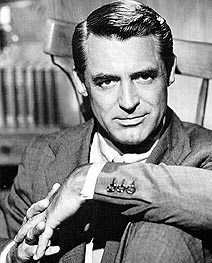
It just crossed my mind that when Ian Fleming was dreaming up James Bond, he actually had Cary Grant in mind as his ultimate pick once the film adaptations started rolling. Imagine that! He would have been absolutely perfect—nobody could have out-spied him. But Cary stuck to his guns about retiring and turned down the chance to be the first James Bond on screen, claiming he simply wasn't up to the task. 🙂
Maria Clark said:I also think Cary Grant is great 😍
ooooooooooooooooo...
Oh, absolutely. Cary Grant has enough charm to power the entire West Coast, but his acting can be just as incredibly dull as his looks are captivating. It’s a real shame, because if he actually had some range, I might have actually fallen for him.
It just hit me—Paul Newman was such an absolute devil (bless his soul), but I don't recall ever seeing him in anything black and white. It would’ve been a crime to miss those blue eyes in monochrome.
I didn't think of any specific actresses at first, but honestly, why not? My personal icons are Bette Davis and Rita Hayworth. There's just something about a woman with a wicked streak that I can't resist! 😁
Haha, alright... I’m bored out of my mind, so I figured I’d dig up some old topics from the archives. There’s certainly more interesting stuff worth discussing than whatever garbage is currently cluttering up the front page! 😉 Pardon my French. 🙂
This one is actually pretty charming. 🙂 Personally, my absolute favorite actor in black-and-white films would have to be Johnny Depp in "Ed Wood." Just kidding. In all seriousness, it's Laurence Olivier in "Carrie" and Joseph Cotten in Hitchcock's "Shadow of a Doubt." And honestly? Paul Henreid in just about every black-and-white movie ever made. 😍
The title of "A Condemned Man Escaped or The Wind" actually served as my litmus test for whether the whole experiment worked. See, the suspense is palpable the entire time, even though logically, you should be able to predict the ending from the opening frame. It actually made me chuckle because it reminded me of a total lapse in judgment I witnessed while watching a video on an "Optimum Releasing" release—something that happens way too often on streaming services at home. What happened? In a short featurette literally titled "Introduction to Film by" regarding Jacques Demy's "The Umbrellas of Cherbourg," some guy spends six minutes reciting the entire plot synopsis, including every tiny detail about how it resolves and how it ends. Honestly, I was just sitting there stunned...
Anyway, this specific film feels like the absolute polar opposite of Bresson's cinematic language. It’s like looking at something from the complete other side of the film world, even though both Demy and Bresson are Frenchmen working during the exact same era.
I haven't read a mountain of literature on Bresson or directly by him—maybe just two interviews—but I've managed to get a sense of a man who is obsessed with deconstructing classic cinema. And he actually pulls it off. He basically rejects all the standard pillars of filmmaking, like traditional acting, staging, and music. Then again, I wonder if he can truly remain consistent, because to me, his films feel purely like they belong to an Eisensteinian type of cinema. Without brilliant editing, the whole thing might just fall apart. Yet, I read that he rejects editing itself. That sounds insane, though I suppose an auteur never wants to be dissected or fully explained; it’s probably just that typical artistic ego at work.
His refusal to use trained actors clearly feeds into his desire for absolute authorial expression. He’s searching for what he calls "raw material," which he then shapes into what he believes should be a completely natural situation captured by the camera. Of course, the crucial thing to realize is that this "natural" situation is filtered entirely through Bresson's own vision.
You make a good point about his style being built on the relationship between moving images; you can see that quite clearly in a film that is actually overflowing with dialogue—an experiment in the opposite direction—"The Trial of Joan of Arc." This brings me back to what I think is a vital element of his work: the editing. "The Trial of Joan of Arc" features some of the most impactful editing I've ever seen. The way the shots are strung together is like a high-stakes tennis match, whereas the dialogue itself is almost secondary, quickly becoming maddening with its historically accurate "dryness." Though, I suppose I can imagine how that translates as poetry to the French.
silentpuma7 said:A Condemned Man Escaped or The Wind Blows Where It Wills (1956)
From the opening frame to the credits, this thing just sucks you in, even though the title basically spoils the whole plot. I guess being stuck in prison for 16 months under the Nazis gave Robert Bresson a pretty fertile playground to lean into his minimalism and those specific directing methods he’s known for, following up on Diary of a Country Priest. It’s really a movie about the little details and just sitting with things, plus that gritty human persistence—it makes it pretty clear that nobody is coming to save you unless you save yourself. The real power here is how you end up totally feeling what the lead goes through once he decides to break out; even if he hits a wall at first, freedom is definitely on the horizon...
For me, there are two stylistic quirks here that really stick. First off, the whole story relies heavily on narration; there's hardly any dialogue between characters, which is instead peppered in with this perfectly balanced rhythm. The second thing is that incredibly suggestive use of long takes, where Bresson lets a shot linger on the screen just long enough to squeeze out every drop of emotion. In a way, he says more through silence than he ever could with words, which fits perfectly with Leterrier's minimalist acting style. He wasn't even a trained actor, which is something Bresson used constantly to maintain total control. By using non-professionals, Bresson ensured that no actor's ego could ever overshadow his singular vision for the film.
The nice thing about a remake is that if they actually admit it, they end up shining a spotlight on a potentially forgotten classic that inspired the whole thing.
One crucial thing to keep in mind when discussing this topic is the distinction between a straight remake and an adaptation of an existing source material—something that existed long before the first movie ever hit the screen. There are plenty of instances where different directors have taken the exact same story and played around with it across various cinematic eras.
Take the Ben Hecht and Charles MacArthur drama "The Front Page," for instance; it’s got a fantastic core story. In my book, Lewis Milestone nailed it in 1931, and later, in the mid-70s, Billy Wilder did just as well. Then you have Howard Hawks, who gave it a clever little twist back in 1940 by rebranding it as "His Girl Friday" starring Cary Grant. All three versions are absolute gems, much like how the directors who took on these adaptations were clearly master craftsmen at their trade.
Yeah, it’s probably one of the most unlikely casting choices in cinema history. I can’t think of anything more improbable or surreal: seeing Peter Sellers playing a hardcore villain, a gritty gangster, or some low-life underworld figure in an American noir. Is this some kind of cosmic joke?
Never Let Go
It’s a classic example of that mid-century independent cinema style from roughly 1955 to 1965, directed by John Guillermin, who eventually headed to Hollywood to direct Blood Orange with Steve McQueen. The film manages to blend the grit of a social drama with Hitchcockian suspense and a heavy dose of American noir. The performances are incredibly intense, and certain scenes were so raw they practically earned an X rating when it first dropped back in 1960. Even today, the sheer realism of the violence and the crushing emotional weight hit just as hard. The plot keeps you guessing, the script stays composed... honestly, the movie is quite good, and considering it was Sellers' one and only foray into playing a bad guy, it stands out as something truly unique.
You can spot a few threads connecting it to Bicycle Thieves, though the neo-realism and noir elements here are mostly just serving as inspiration for that specific blend of storytelling.
I’ve got a few cinematic deep cuts I feel like sharing.
First up, Frank Sinatra, who isn't exactly known as a heavyweight of the silver screen, but he certainly left a mark. He was always cast as the charming rogue, the soldier, or the sailor, but there's this one oddity of a film that feels incredibly cheap—like a low-budget B-movie produced on a shoestring budget—yet somehow remains strangely captivating. I'm talking about Suddenly. From the opening shot, you can practically smell the lack of funding, but the film is so magnetic and cleverly constructed that it actually holds its own against much more polished, high-budget thrillers. As far as it goes, it works perfectly; the pacing and the narrative flow are just wild. Sure, certain technical aspects, like the editing and cinematography, are pretty rough, but those flaws become secondary once you get swept up in the quality of the storytelling.
To the surprise of his fans at the time, Sinatra plays the villain—a cold-blooded killer—and he nails it. It's a fantastic performance; it's almost as if his handlers gave him a completely different script to work with... 😁
Interestingly, his co-star, who plays the quintessential law-and-order hero in this flick, is a man usually known for playing the troublemakers, the eccentrics, the drunks, and the con artists— Sterling Hayden. And he is absolutely brilliant here! It’s a clever little movie where the usual character archetypes have essentially swapped places.
Jerry Martin19 said:That’s a weird take from you Trouble with Harry. I’ve seen plenty of Hitchcockian stuff, but I always somehow steered clear of that one. No clue why. I guess I just couldn't wrap my head around combining Hitchcock and comedy. It definitely feels like a bad misfit, just like redowl90 said...
offtopic:
@redowl90, interesting point. Ever since we cleared up that whole thing with Armin, we've been on the same page most of the time. Lately, you've mentioned a few movies in different threads that I've always had a bad feeling about, and your takes align perfectly with my gut instincts. Regardless, I guess I should probably watch them...
Just a little piece of advice for Jerry Martin19: don't let your gut feelings lead you astray. At least for me, intuition has proven to be a pretty unreliable guide more often than not. Because of some vague vibes or preconceived notions, I’ve ended up stalling on cinematic treats that eventually became near-favorites. 😍
As for those outliers in a director's filmography—especially when dealing with someone major—I think those "misfit" films are exactly what you should be watching. They offer an antithesis to the usual style, creating this space to really contemplate where the film sits within their body of work. You often end up learning more from one of those deviations than from ten standard, formulaic entries. It’s much like how we learn best through our mistakes. I’m not saying a director's outlier has to be worse than their standard fare, but it definitely stands out.
Personally, I’ve always appreciated a good surprise because it brings a sense of freshness. It’s like when you go and drastically change your hairstyle; it doesn't necessarily have to be better than the old look, but it’s certainly different, and that gives you something actual to talk about.
I'll weigh in on those directorial outliers soon enough, assuming I'm not just talking to hear myself speak. 🙄
redowl90 said:Isn't Hitchcock's Trouble with Harry a bit of a departure from his usual suspense thriller style? If it is, I'd say it feels like a bit of an outlier, even if Shirley MacLaine is in it. 😍I LOVE YOU, SHIRLEY MACLAINE!!!
I suppose this might be the only topic where you can't really argue about Kubrick when discussing directors. Every single one of his follow-up films seemed to jump into a completely different genre. 😬
Nice catch, redowl90! That’s a sharp observation about it being an outlier. Hitchcock did dabble in comedy while he was still working over in Great Britain, but even then, nothing quite hit the mark like Harry did. It definitely stands out as a deviation from the more established paths he carved out during his Hollywood years.
Kate Torres said:Even *Interiors* fits that pattern. I haven't sat down to watch it yet, but from everything I've read, it’s easily his darkest work—definitely not your typical Woody Allen flick. It’s packed with Bergman-esque elements. Some people even go as far as calling it a blatant rip-off of an Ingmar Bergman film, though I can't recall exactly which one. 🤷
If you look closely, Autumn Sonata feels like it was practically drafted using the same blueprints as Interiors. It’s not quite a case of Woody Allen simply ripping off Bergman, especially considering both films hit theaters around the same time—actually, Interiors managed to make its debut about two months before Autumn Sonata even premiered. Still, the parallels are impossible to ignore, particularly in how both movies dissect that deep, unsettling sense of alienation between mothers and their daughters.
The fundamental divide really comes down to realism; you get this profound, layered depth in the work of Ingmar Bergman, whereas Woody Allen's version feels almost entirely hollow by comparison. It’s as if Woody Allen took that heavy, brooding atmosphere characteristic of Bergman's style and simply grafted it onto his own universe, yet he failed to capture that vital spark of humanity found in Bergman's films—that underlying sense of equilibrium that persists even when things turn bleak. You just don't see that kind of balance in Interiors. Colin Jacobson
I actually caught one of Robert De Niro's early flicks on Turner Classic Movies yesterday, that 1971 one, "The gang that couldn't shoot straight." I had a good laugh, honestly; it’s basically two mob families warring in New York City and Robert De Niro just happens to stumble right into the middle of it. The characters feel like they walked off a Saturday morning cartoon—it's such a blatant parody of all those mafia power plays. 🤣 😂
The whole thing has that specific vibe of a low-budget comedy from that era, but there are definitely some clever bits in there. You get Robert De Niro being Robert De Niro, though he's a bit more wooden and lacks that signature spark here. It's funny because you can see how he took those exact same gestures later on and inflated them into something massive. For instance, the way he played the character Maria in this film was basically the blueprint for what he turned into a full-blown caricature in "Analyze This" and "that".