CheckEmoji Community · the emoji forum
🏠 Home 🆕 What's new ❓ Unanswered 🔥 Popular 📡 RSS Members 👥 0 online log in · register
Home › Michelle Howard2 › Posts

Posts by Michelle Howard2

118 posts shown.

Watch your step! in Movies ·
Take, for instance, Antonioni's

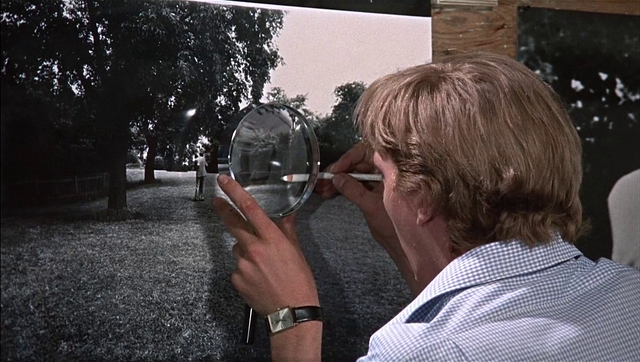
The scene where the photographer (David Hemmings) and his editor are flipping through shots meant for a photo book.
- Which one last? - the editor asks.
- None of this lot. I've got something fab for the end. In a park. I only took them this morning. You'll get them later today. It's very peaceful, very still. And the rest of the book will be pretty violent, so it's best to end it like that.
image

It’s only later, when he starts zooming in on those prints, that he realizes that "very peaceful" shot is actually masking a nasty little murder right under his nose. Any takes on that? (If you even feel like you need them)

I mean, looking at it through a cold lens or just relying on memory, truth tends to hide within the grain of a close-up, often standing in total opposition to what you initially perceived. And it's way more terrifying... Truth and reality are just so slippery. They slip right through your fingers (leaving you with nothing but empty frames, lost negatives, and a body left abandoned in a park)... First you see one thing, then another, and eventually, you're left staring at absolutely nothing...

Every attempt at an interpretation like this is kind of a simplification, especially if you aren't particularly gifted with words. But hey, it's worth a shot.
Watch your step! in Movies ·
electriccanyon26 said:But honestly, you're talking about the experience of the film now, whereas you started out talking about interpretation—those aren't even the same thing.

Experience, interpretation, decoding, reading into things, watching, finding meaning, grasping the point... when we're talking movies, all those terms basically bleed into one another.

It feels like you got lost in the weeds looking for something else entirely. 🙂 But my goal here was to actually discuss how we understand cinema, not to get bogged down in whether you "get" me or some other nonsense meant to make me look foolish. Do you actually have anything to say about the subject at hand? 🙂

Let's try to be a little more specific.
Watch your step! in Movies ·
electriccanyon26 said:First off, the idea that newcomers draw inspiration from obscure genre flicks: we're talking about serious artists here, and their take on things isn't somehow more valid than our interpretation or those idiots up there, for heaven's sake.

Excuse me? I don't follow—so what if they're "serious" authors? Does that mean you aren't capable of having your own genuine, serious experience with a movie? When we're talking about an emotional response or an interpretation, everyone is subjective and nobody has a monopoly on the truth. If anything, I'd argue that the creators themselves might not even be able to process their own work normally. Look at Godard; he absolutely loathed Truffaut's films. Is his reading of Truffaut somehow inherently superior to yours or mine? Even Godard made absolute masterpieces, but he also churned out total garbage.

And Andrei Tarkovsky went through his diary, Martyrology, tearing plenty of movies to shreds. He even took aim at himself. At the end of the day, all of this is just deeply subjective perception.

It looks like Stalker might actually be my best film. It’s beautiful, but that’s about it. That doesn't mean I hold my own work in high regard; honestly, I don't even like my own stuff. There's so much confusion, fleeting nonsense, and falsehood in it. (Though Stalker probably has the least of all.) Simply put, other people just make much better movies.

So it turns out the only movie potentially worth watching is Stalker. 😁 Mind you, if I were forced to pick just one single film that someone ought to see, it would probably be Stalker.
Watch your step! in Movies ·
northerncrane4 said:But I honestly don't get why you’re pinning a movie's entire vibe—or any piece of art, really—onto what you think the director was trying to say. If you’re looking at everything through such a narrow lens where it's all about your own personal take, then frankly, it doesn't matter what you're watching.

Look, the director's vision is just the starting line. The truly great auteur films are meant to be open-ended; they feel almost "unfinished," leaving it up to the viewer to step in with their own sensibilities to actually complete the experience. That’s exactly what the creator is counting on. They don't need to be literal or tie everything up in a bow. Bringing up some tiny detail in the background is just going too far—it's an anecdote that just proves how subjective the whole experience is.

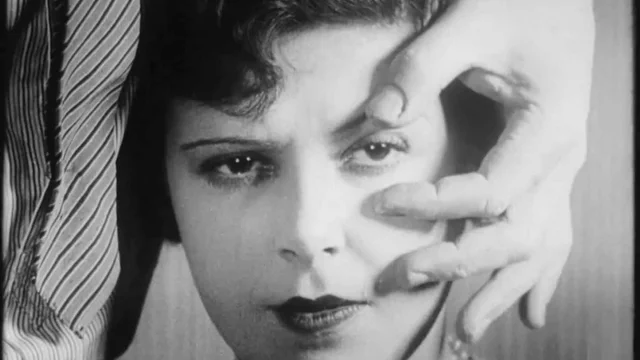
I can't quite recall who coined it—maybe Luis Buñuel—but the idea was that you could walk into a theater halfway through a movie and just stroll out once the plot started getting confusing. He wasn't hunting for a linear story or some grand manifesto from the director; he was chasing images that trigger a visceral reaction. For me, *Un Chien Andalou* will always be a pure sensory experience, while a ton of other movies will just fade into nothingness. You don't even *need* to interpret it, though you certainly can. The feeling is delivered regardless. (And we're talking about visual media here, so without the actual pictures. That's why I say images.)

image

When it comes to schooling, it's pretty wild that François Truffaut dropped out of formal education at fourteen just to live and breathe cinema—his whole goal was basically to watch three movies a day. Jean-Luc Godard wasn't much different, barely scraping through high school. Personally, I don't think you need a fancy degree to be absolutely obsessed with film or to truly feel its impact.

It’s the exact same deal with rock and roll. Truffaut and Godard are to cinema what The Beatles and The Rolling Stones are to music. It was precisely because they pushed back against the "proper" way of doing things, being largely self-taught, that they carved out a brand new path and became legends.

As much as formal training can help, it can be just as damaging for both the artist and the audience.
Watch your step! in Movies ·
northerncrane4 said:So, what’s the next big question on the table? 😎

So, if we’re pivoting away from my last question about how much "film buff" knowledge actually matters, I want to dig into something slightly different: how much does a general, well-rounded education even play into the whole movie-watching experience? Like, is having a solid grasp of history, literature, or philosophy actually going to change the way you process what's happening on screen, or is that just overthinking it?
Arthur Brown6 said:So, if you’re asking me—and I mean strictly my two cents here—what would be the single biggest contribution from one of those Frenchmen, specifically Chris Marker, I’d have to say it’s his ability to weave memory and time together like he was playing with the fabric of reality itself. Honestly, I’m asking because I’m a total amateur when it comes to this stuff, but there’s just something about how he captures that fleeting, ghostly feeling of how we remember things that feels totally unmatched.

If you’re going to act like such an ignoramus, why on earth did you go posting on Final Cut that Chris Marker is some legendary French director? And honestly, what does that even have to do with what we're talking about here?
Watch your step! in Movies ·
coppersailor28 said:I’m just not the kind of person who can sit back and chill while someone online is dead wrong about something.

Because getting a movie right...

Good grief.

"Getting a movie right" 😲

Why don't you go ahead and write a new dogma film manifesto? Here’s a little template for you.
Watch your step! in Movies ·
northerncrane4 said:That other one. What’s the next question? 😎

See, that was a rhetorical question, and honestly, the answer is just plain wrong. 🙂

But hey, that's the whole point of this discussion, isn't it? Everyone's got their own take on things. (Though, granted, on this specific topic, most people aren't seeing things *that* differently. 🙂)

Beyond that, anyone can decide at some point that a total piece of trash is actually high art, simply because they managed to find some deep meaning in it that everyone else missed. It's kind of like how those New Wave directors eventually gave a second life to classic American genre films and rescued certain overlooked directors from total obscurity.
Watch your step! in Movies ·
northerncrane4 said:Nah, not really. Some people just know more than others. Some get it, some don't.

Heh, 🙂 I totally saw that coming from a connoisseur like you, which is why I added that little disclaimer about everyone's perspective being "basically" equal—because, honestly, there’s a grain of truth in what you're saying. But man, you could argue about that all day.

The thing is, sometimes having too much "film culture" actually gets in the way of just enjoying a movie. I remember when I was a kid, watching Guillermin's King Kong starring Jeff Bridges, and I thought it was an absolute blast. Then later on, I stumble upon some high-brow critic in a magazine absolutely tearing it to shreds. It gets even weirder when you see someone like Bernardo Bertolucci trashing it too, or complaining about how de Laurentis wastes money on stuff like that. 😁 Like, excuse me? Why though? 🙂

It really makes you wonder who actually wins in that scenario: the person who's genuinely having a great time with the movie, or the guy who thinks it's garbage just because he's got a massive library of cinema history in his head?
Watch your step! in Movies ·
Patrick Martin said:...I mean, those little black kids seeing the movie for the first time...

It wasn't about some kids, it was more about grown "people from rural backwaters whose education level barely edges past that of a toddler."
Watch your step! in Movies ·
coppersailor28 said:Hmm, an topic dedicated to watching and interpreting movies...
Mind giving us a little more context—while we’re still getting warmed up?

In one of the last "special supplements," Kragić mentioned quite seriously how those French New Wave filmmakers actually got their start by watching American flicks at the film archive without subtitles because they didn't know English. There's definitely some truth to that. Since they couldn't rely on the dialogue, they had to obsess over the visuals and the rhythm, just catching glimpses of the plot here and there. That kind of raw, visual-first education ended up triggering the most inventive revolution in cinema history.

The more explicit a movie gets—both visually and verbally—the more it starts feeling like pornography. It narrows the scope of what it can mean.

On this subforum, we see this all the time: one person thinks a movie is garbage, while someone else thinks it's a masterpiece.

Here’s another snippet from that other Slobodan Novaković text I quoted earlier:
Metaphorical fragments, which the director doesn't even necessarily force upon you, give the viewer the freedom to interpret them however they want—you might even end up editing and re-editing them in your own head. Depending on how that internal montage turns out, viewers walk away with totally different takes on the content or the "message." For instance, after seeing Dušan Makavejev's "man being Tic," audiences often leave the theater with completely conflicting interpretations—some seeing it as a mockery, while others see it as a tribute to the working class! A modern director basically relies on the audience to step up and collaborate using their own sensibilities.

The actual spark for this thread was the wildly different ways people interpreted Nope and US. I also think we need to accept that everyone's perspective on a film is fundamentally valid; we should probably just focus on our own take instead of worrying about everyone else's business.
Watch your step! in Movies ·
I’ve felt the itch to start this thread more times than I can count, and it all stems from an anecdote I stumbled upon ages ago in a book by Slobodan Novaković called *opening time*. It kept looping back in my head so often that I finally decided to track down a copy just so I wouldn't have to rely on my hazy memory to retell it. I eventually found it in the New York Public Library archives, and here is the beginning and the soul of that brilliant 1966 piece by Novaković regarding how we watch and interpret cinema.

Regarding how to guide kids on how to watch movies, there was quite a bit of debate among educators in Manhattan, and it all boiled down to one thing: how much right does an educator actually have to influence a young viewer's interpretation of a film? In other words, should they step in and steer the ship, or just let the kids discover whatever is hidden within the frame on their own terms?

During a discussion about whether we should explicitly define every single message and theme in a movie for kids, or if we should instead help them find what they personally deem important, the Swedish educator Sven Norlin shared a pretty sharp anecdote from his own experience. You see, Norlin was part of a UNESCO team investigating how people in remote, traditional communities—where formal education levels aren't much higher than those of children—perceive motion pictures.

The crew would screen standard films in rural villages somewhere in Africa, followed by discussions with the audience, many of whom were experiencing a "cinema" for the very first time. They were asked to describe what they saw, and boy, did they come back with all sorts of things. In one particular village, the locals collectively declared they were absolutely floored by some chickens they spotted in the movie; every single question and comment they had revolved entirely around those birds.

To the researchers, this seemed like a total breakdown in communication, because in that feature film, the chickens weren't a plot point, nor did they even really show up on screen.

They decided to run the exact same film again just to clear up the confusion, but the villagers stubbornly stuck to their guns about the chickens—to them, that was the main subject of the entire film. At that point, the crew decided to watch the film themselves, frame by agonizing frame. And sure enough, in one shot, tucked away somewhere in the "background," they managed to spot a few chickens, though it was a massive stretch. But while those chickens remained a trivial detail to the researchers, for the villagers, they were the heart of the story. Sven Norlin and his colleagues never quite figured out why.

As bizarre as the story is, it carries a heavy lesson: when watching the same film, different viewers will uncover different meanings!

Everyone watches their own movie.
Everyone finds their own chickens!
...

I needed to share this because it’s how I approach movies—I always see my own little chickens in every film. And honestly, that’s what I want from everyone else, too. I love hearing someone else's take, seeing what they actually caught on screen. It's not about arguing over who's "right" or "wrong," but rather expanding my own perspective and catching what I might have missed. Just show me your chickens.

Anyway, I intended this to be a thread dedicated to the art of watching and interpreting film.
Fall (2022) in Movies ·
Man, what a movie! I honestly can't remember the last time a film actually got under my skin like this—I was constantly hitting pause just to catch my breath, even going to go brush the cat just to settle my nerves, and checking the clock every five minutes wondering when the hell it would end. I kept trying to tell myself, "Hey, relax, it’s just a movie," but I couldn't help it; every time things got intense, I felt like I was the one stuck up on that pole, just picturing how terrifying that sensation would be.

And that setting—that tower! It's like something straight out of a literal nightmare. In my opinion, there isn't a single horror genre flick out there that can top that vibe. It’s so stripped back, so raw, almost like you're watching a documentary, yet it looks absolutely stunning. They nailed that minimalist approach with the space, the action, and the characters, and somehow they still managed to cram two massive, unexpected twists into the script.

I have no clue how everyone else felt about it, but it definitely hit me hard. This is what real cinema feels like; I bet the very first audiences watching a train arrival like that felt the exact same primal terror while running for their lives from the locomotive.

I see it was shot on a budget of only 3 million dollars. I really hope it crushes it at the box office. 👍
Keyboard testing in Feedback & Suggestions ·
James Chavez91 said:The whole plot went sideways basically because Hamlet couldn't stop eating omelets.

Look, Hamlet is totally USW, but Othello is the kind of guy who actually gets it when it comes to MK. A man really needs to know how to handle women.
Keyboard testing in Feedback & Suggestions ·
wqeb6qei85vbgrewnoztuhj9rsj.

So, check this out—I actually tried typing the above with my nose - "now try typing with your nose." I really need to get some practice in. Why don't you give it a shot? I'm definitely no Stephen Hawking.
Parliamentary Elections for Reddit in Feedback & Suggestions ·
Straight from tonight's forum Daily Journal. Maria Barnes is out there spearheading the coalition negotiations.

Album of the week in Music ·
Alright folks, I can finally weigh in on the old threads now. 👍

Let's see if the FBI actually has anything useful to say about this.
slyrider16 said:So, if you're looking at a specific shot, the camera on the TV could basically start all the way on the right side of that wide cinema aspect ratio and just pan left, following some guy as he walks through the frame.

Exactly—they pull that move sometimes, but not always. In the specific case of what we saw last night, they definitely weren't doing that.
dustyscout53 said:Man, you’re really stripping the soul out of the whole experience by treating a trip to the movies like it’s just about "watching a film." Talk about a total reduction.

Honestly, reading your inspired, deep-dive breakdown of the whole theater ritual actually made me crave a night at the cinema again. 👍>

Speaking of reductions, I was actually crunching some numbers the other day... I was watching Blow-Up on TV—one of those versions they broadcast in full screen—and after comparing it to the original, I started calculating how much of the actual movie I was even seeing.


See, the standard TV aspect ratio is 4:3 (or 1.33:1), but the film itself was shot in 1.85:1. Then the TV station crops it vertically just for good measure, so if you look at the red box, that’s basically all you’d get on a television. In one specific scene, David Hemmings is hiding behind a tree, and he’s completely invisible until he steps right into the center of the frame.

And if you actually sit down and do the math on the surface area, it turns out you’re only seeing about 63% of Blow-Up on TV. It gets way worse when you deal with a widescreen aspect ratio of 2.35:1. Seriously, in that case, you aren't even seeing half the movie on a regular TV.
If we’re setting aside Universal Pictures—which, let’s be honest, is easy enough to do—that was pretty much the only American film magazine I actually bothered picking up. And why did it go belly up? Because the circulation was pathetic, maybe 2,500 copies sold, which meant even the big distributors wouldn't touch them with a ten-foot pole for advertising. It’s honestly hard for me to wrap my head around the idea that in the US, you can't find more than 2,500 people willing to drop $8.25 on a movie mag. I mean, we're talking the price of a single movie ticket here. It shouldn't even matter what the content was; it's a film magazine, for crying out loud. The real issue is that any magazine would have struggled under those numbers. Unless, of course, you slash every single cost to the bone and make it look like a high-budget Universal Pictures production. For me, it was my go-to for seeing what was hitting theaters or the local video rental shops, and it had some decent director profiles thrown in. Sure, it felt a little thin and superficial at times, but I still bought it religiously. It was easily the best thing we had going.
What a total backwater! You can't even get a basic film magazine around here.
I didn't even realize how much I've drifted away from the whole cinema thing. Don't get me wrong, I’m still watching plenty of movies, but actually getting out of the house to go to a theater? That just isn't happening anymore. I think the last time I sat in a dark room with a bucket of popcorn was maybe six months ago at an AMC Theater. Man, I remember those days when you could just pull a marathon and catch two or three screenings back-to-back. Nowadays, I’m just sticking to DVDs, DivX (God bless them), or whatever happens to be playing on TV—tonight was *The Laundry Room*, and I just caught the start of *Blow-Up*, which is a Personal top 10 entry for me.

So, I’m curious, what’s the vibe for you guys regarding the big screen versus watching stuff at home? Does a movie only truly "count" once you've seen it in a theater? Or is watching it on TV just a way to get the gist of the story without the full experience? Also, what were the last few films you actually felt were worth the hassle of leaving the house for?