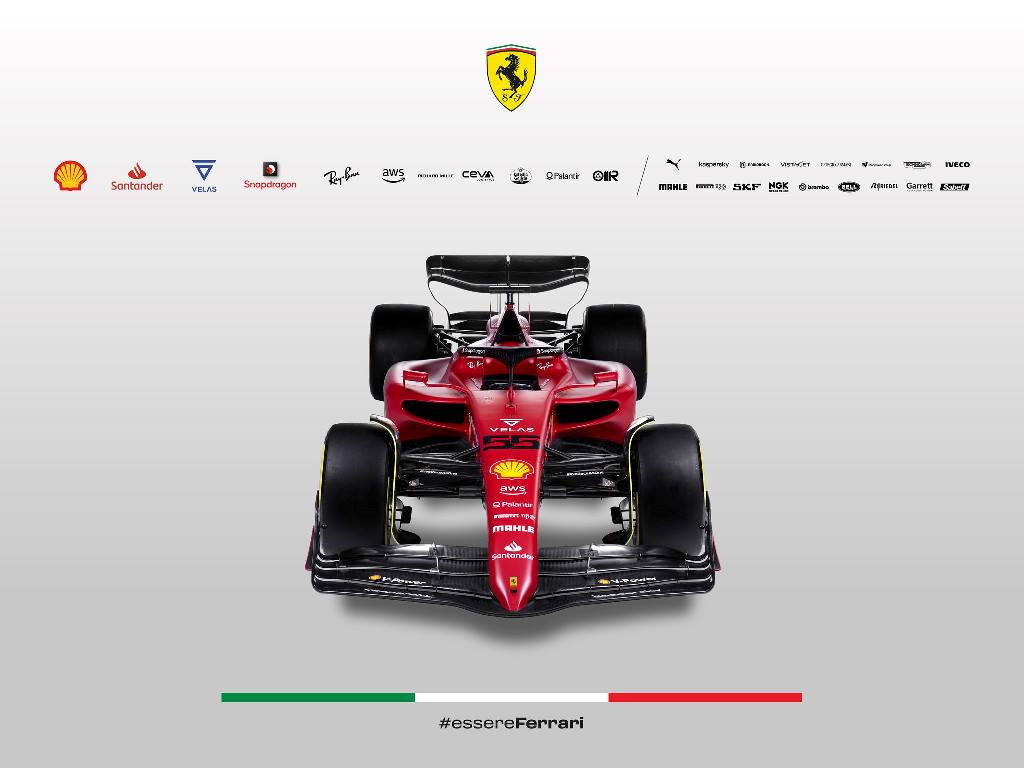
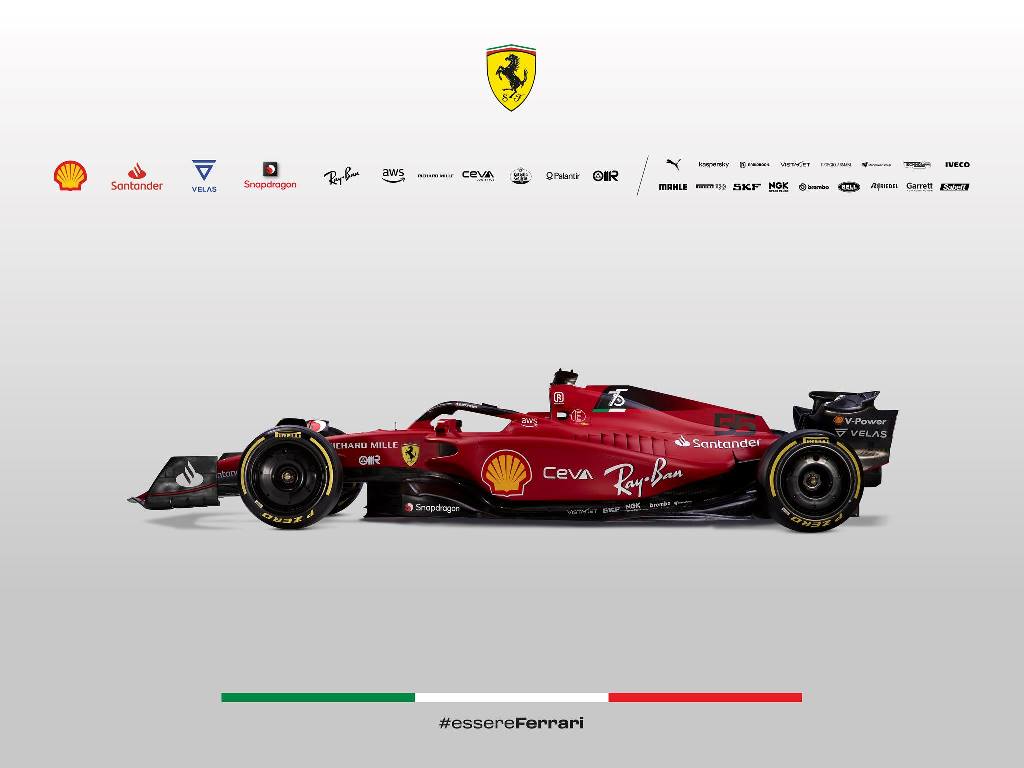
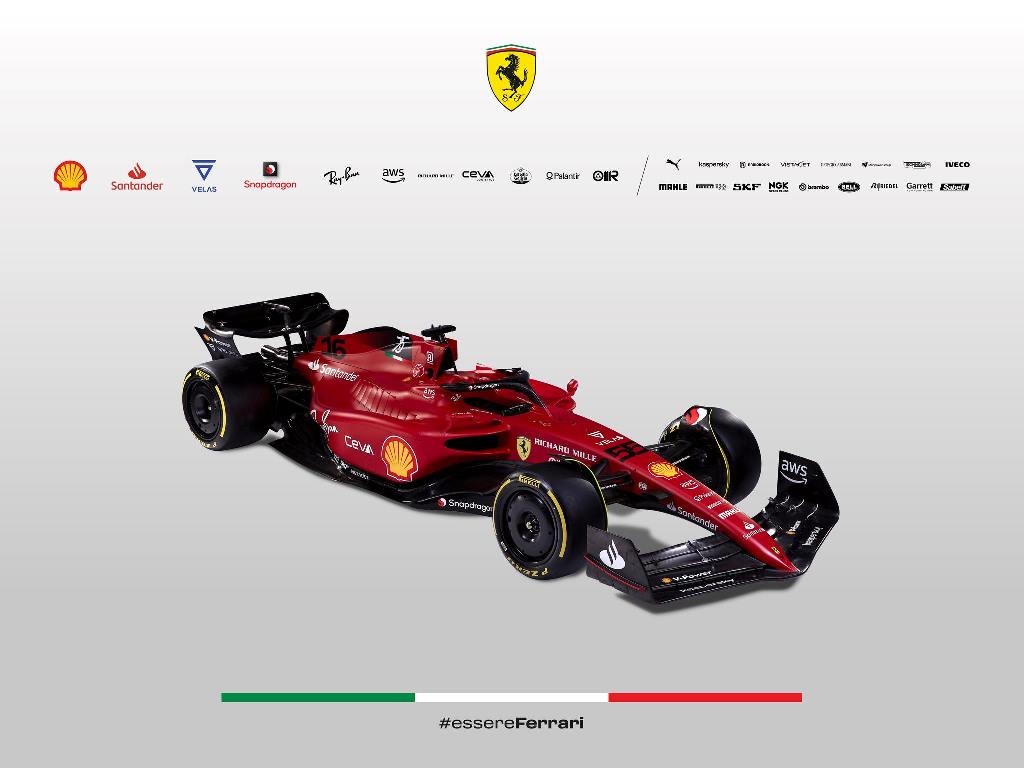
I didn't have much time, but I'll try to flesh out some of my theories a bit. This is an analysis of the fluid flow on that upper 3D model:
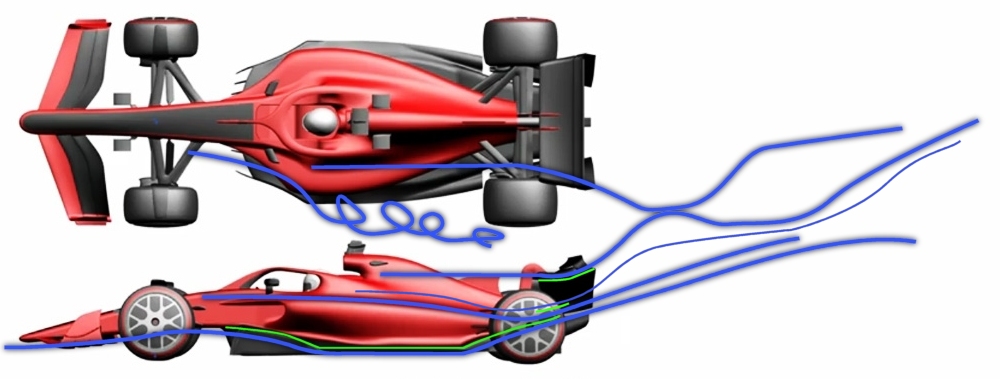
That green edge marks the boundaries of the Venturi tunnel. Honestly, I think what we saw with several teams—including Ferrari—with that famous double floor (those yellow lines on my scribble) is intended to further accelerate the fluid under the Venturi, which should actually increase downforce. This might be the first time in modern Formula 1 that a double floor is being used specifically to feed the diffuser rather than just managing the side edges or deflectors. Nowadays, since the 2022 regulations, deflectors are tucked away under the car's floor. If you look at the top 3D model, you'll see that even though they are positioned underneath rather than out front like they used to be, they still perform that same role of creating vortices to generate extra grip through turbulence. So, nothing is really "new" here; it's just moved. Unfortunately, we won't be able to see the specific deflector designs the teams are using because they're hidden. We can't analyze them as deeply as we'd like, but that shouldn't stop us from looking at the rest of the car.

Speaking of the Alfa Romeo, which I managed to take a quick look at, there's plenty of interesting stuff going on:

The different fluid colors are used to represent certain component functions. Light blue shows the fluid traveling through the entire car along the floor and diffuser. But the real fun starts at the rear wing endplate, or the guide vane, where the previously stable fluid is suddenly kicked upward (dark blue), almost touching the flow coming off the upper edge of the rear wing (purple). You'll notice on the 3D model that in the top view, alongside the deflector vortices, I've shown how the edge of the rear spoiler itself creates a vortex that sticks the rear of the car to the ground much more aggressively than the 2021 models did.
On the Alfa Romeo, for example, you can see this in the pink-colored fluid. Now, moving back to the sidepods and the rear wing guide vane: what's interesting here is that the double-floor effect at the sidepod level actually accelerates the fluid, sending it aggressively toward the rear wing guide, which then kicks it upward. Aston Martin is doing something very similar.
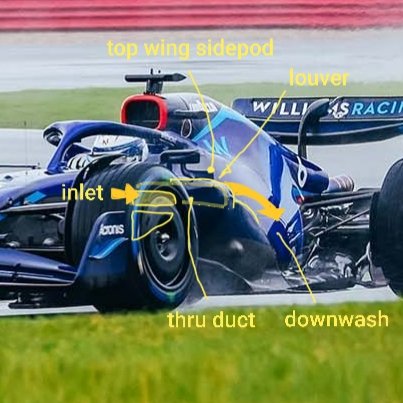
Williams, on the other hand, is trying to achieve something similar in a completely different way. They use a sharp drop in the sidepod shape to accelerate the fluid, which then reaches the rear end. To be honest, I'm mostly just curious to see who actually pulls it off on the track. Hopefully, I'll have more time over the weekend to write more about the other cars; I shouldn't forget that. 😁



 …
…