George Murphy12 said:I mean, anyone could figure this out, but here's the deal for Thunderbird
Go to the "Windows" tab and make sure "Minimizing window hides to tray" is checked.
If you want the damn thing running 24/7, check "Closing window hides to tray" too... that way it won't actually shut down unless you hit "Quit"
🤔 🤔
Come on, if you can, take it slow—just one click at a time until you get there...
swifttinker40 said:How can I actually get that "Minimizing window hides to tray" feature to work?
Well, take a look at what I have set up here in Thunderbird under the file
:
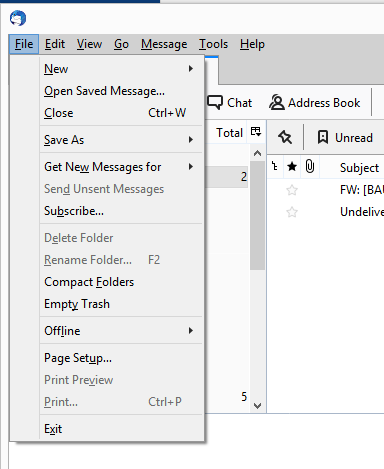
I think you’re out of luck, at least for right now.
Basically, since version 68—and maybe even earlier—Mozilla has been phasing out support for legacy extensions in favor of MailExtensions and WebExtension technology (whatever that means).
The fallout is that old add-ons that used to provide this exact feature, like MinimizeToTray Revived and others, just don't work anymore.
There’s some workaround involving "injecting" a DLL using ThunderBirdTray (TBTray), but people on the forums really don't recommend it. It doesn't act like a standard add-on; it's more like a third-party app that tries to force the program into the tray. It requires constant tweaking because it can be a resource hog. From what I gather, it basically minimizes to the taskbar first and then moves to the tray—it’s doing way too much work just to stay hidden.
So, what does this mean for us users? (And look, I’ve been using this for years; at first, I wasn't a fan of its Linux-style settings, but later I loved how stable it was. It just works, stays out of my way, and doesn't ask for anything in return.)
It looks like we just have to wait for this new tech to mature and for enough developers to jump on board.
You can't really expect old, working extensions to just "port over" to the new system. The differences are likely huge, so it’s probably more about rebuilding everything from scratch rather than just moving it over.
Thunderbird is a bit of a weird beast anyway. It wasn't originally designed as a desktop client, but more as a communication tool for massive systems. Still, people stick with it because it's stable, consistent, and isn't trying to be "trendy" like those Microsoft tools that change constantly just to justify a new version number...