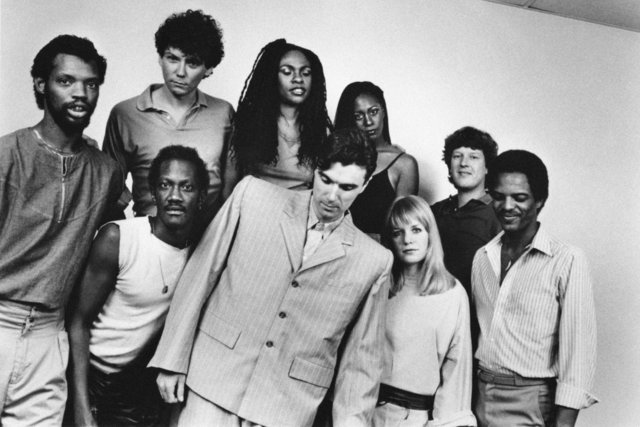
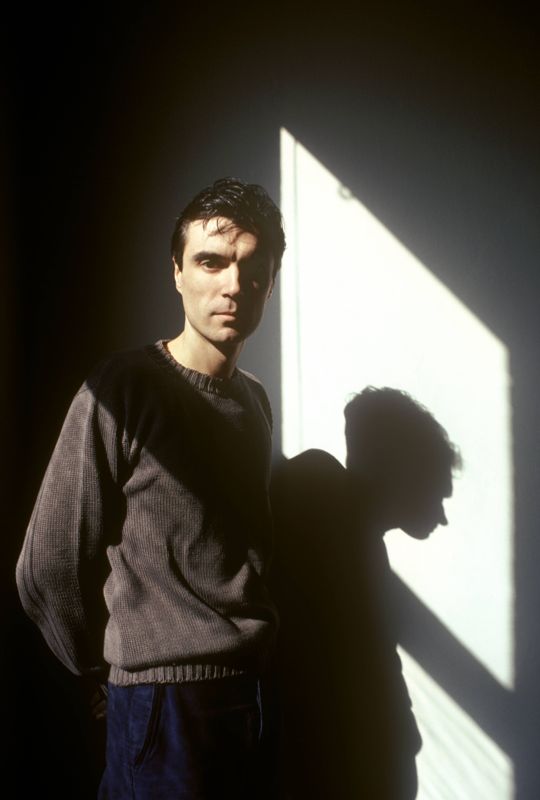
This week has been all about those tight, dense rhythms. I’ve had *Remain in Light* stuck on loop in my head for days now. It’s honestly so inspiring—it gets me pumped to work, and yeah, it definitely makes me want to dance too. For a bunch of different reasons, I think this might actually be one of the most important albums ever made.
Looking at this selection, there are at least five or six absolute perfectionists here. That’s a pretty solid deal considering how lean the album is with only eight tracks. Once again, it's all about those contrasts—heavy on the red and blue, though not because of the cover art. There's just so much red; you get this sense of a vast, red continent, like Africa, woven through the entire thing. The only exception, if you can even call it that, is that incredible "listening wind" track near the end. It feels like a deliberate deviation, a total shift in rhythm and sound with a beautiful atmosphere. To me, it evokes a different kind of red landscape—think Arizona, the Grand Canyon, or Native American imagery. Even so, it’s still my favorite track on the whole album.
Tracks like 'Born Under Punches (The Heat Goes On)', 'Crosseyed and Painless', 'Houses in Motion', and 'The Overload' just hit different for me. But honestly? It’s 'The Great Curve' that really stands out—it feels like this incredible tribute to womanhood and femininity.
It feels like this album has a totally unique sound compared to everything else in the Talking Heads and David Byrne discographies—well, maybe with one exception.
thisI guess you could spin 'Fear of Music' into this conversation too—it’s actually better than some of their other stuff depending on who you ask. Maybe it is, I don't know, it's all just nuances at this point. Honestly, just hearing 'I Zimbra' and seeing Fripp's work is enough for me to love that album, too. But 'Remain in Light' is still my absolute favorite. It was also the first Talking Heads album I ever really sat down and listened to properly, so thanks to Mr. G for that. Anyway, just one more thing—
Brian Eno. 😍 Nobody else could have pulled this off quite like him. I mean, his role here feels even more vital than it did on their previous two collaborative albums.
Brian Eno arrived in the Bahamas Three Weeks after Byrne. Honestly, he wasn't even sure about working with the band again after they did those first two albums together. But I guess the instrumental demo tapes really hooked him. He changed his mind once he heard them.
The band and Brian Eno experimented with The communal African way of Making Music , in which individual parts mesh as polyrhythms. They basically used the 1973 Afrobeat record by Nigerian musician Fela Kuti as their blueprint for the whole album. Weymouth Said that The beginnings of hip-hop Music made Talking Heads realise that The musical landscape was changing. Before they even hit the studio, their old friend David Gans told them that the best stuff usually happens by accident—you know, those unplanned moments that actually build a better future. I guess he was just pushing them to lean into the chaos, improvise, and actually embrace their "mistakes" instead of fixing them.
(...)
Brian Eno’s production style and his whole vibe were basically the backbone of how this record came together. The entire process was built around encouraging raw instinct and just letting things happen spontaneously, rather than obsessing over how the final mix sounded. I guess Eno saw the creative process as a way of looking out at the world and just thinking, "Man, what a fantastic place we live in. Let's celebrate it."