CheckEmoji Community · the emoji forum
🏠 Home 🆕 What's new ❓ Unanswered 🔥 Popular 📡 RSS Members 👥 0 online log in · register
Home › rustywalker82 › Posts

Posts by rustywalker82

204 posts shown.

Gold: Past, Present, and Future in Other Investment Types ·
Actually, it’s a bit more than 2g:

2011: The Year of the Gold Rush
...
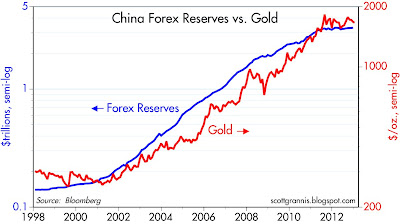
...It’s also possible that investors are grabbing gold because they want to buy the Chinese currency,
but the local monetary authorities won't let them. According to an analysis from the American
consulting firm Faith, the link between gold prices and inflation rates was broken
back in the early 2000s, right when international pressure on China to appreciate its currency started ramping up. In that sense, gold acts as a sort of proxy for the Chinese yuan. Basically, investors
are getting increasingly nervous about potential government defaults, so they’re betting that most major currencies will lose ground against the Chinese one.
Anyone looking at these arguments has good reason to think that
gold price movements could offer a massive clue into the state of global finance
and that we really need to keep a close eye on it. Critics of the Federal Reserve who point to gold prices
as a warning sign of rising inflation are essentially calling for tight monetary
policy. If that happens, the fallout could be brutal
for asset prices and the overall pace of economic growth. But honestly, looking at all this,
it’s hard to argue against the idea that—whether we like it or not—the coming year is going to be
a total gold rush.
Gold: Past, Present, and Future in Other Investment Types ·
Patrick Moore3 said:LOL

Real rude move, cutting out the rest of the post like that... You skipped it because my first sentence didn't make sense without context, right? But it makes perfect sense if you remember what I was saying back in the summer of 2011 regarding the USD. By snipping it, you totally twisted my meaning... even though just two pages later in that same thread, I made it crystal clear where I stood on those prices at the time.

Honestly, I was interested in the actual debate and the links on those pages from back when prices were at that level, not in you personally.
I wasn't trying to be negative or anything; it's just that I can't pull up posts from people who aren't even on the forum anymore...
I cut that one line of yours because Wells Fargo wasn't mentioning the USD.

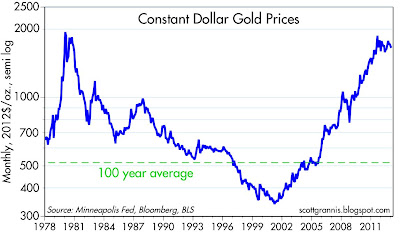
For what it's worth, we've had some decent forecasters around here too. If I remember right, there was that Washington initiative bulletin from a year or two ago suggesting gold was the move because of how things were shifting in China's economy and their subsequent monetary policy.

Check this out from a solid blog (they tend to favor Zurich and stuff like that):

http://scottgrannis.blogspot.com/201...in-end-of.html

image

image

image
Gold: Past, Present, and Future in Other Investment Types ·
Let me drop some older, more solid forecasts back in here for you guys—we’re looking at that $1,900 mark.
Patrick Moore3 said:
Speculative trading has pumped the gold market into a massive bubble, and honestly, I think it’s ready to burst any second now. Wells Fargo laid it all out in their latest analysis. Gold is absolutely ripping toward $1,900 an ounce right now, and it feels like there's no stopping it.

I was just scrolling through some news updates and this whole situation feels like it's reaching a breaking point. Honestly, it feels like we're staring down the barrel of a massive shift that nobody is quite ready for. You look at the indicators, you listen to what the big players are saying, and it all starts pointing toward the same inevitable conclusion: things are about to crack wide open. It’s kind of like when I was working back in Chicago and everyone thought the market was rock solid right before everything went sideways in 2008. There’s that specific kind of tension in the air—that quiet before the storm where everyone is acting like business as usual, but underneath the surface, the foundation is already crumbling. We’ve seen enough red flags lately to fill a book. Between the way the Federal Reserve is playing its hand and how the global markets are reacting to recent shifts, it feels less like a controlled descent and more like a freefall waiting to happen. It’s not even about whether the cracks exist anymore; it’s about when they finally give way and the whole structure starts splitting. Just stay sharp out there.

I’m becoming more and more convinced that the whole point of these so-called "analysts" is just to feed investors straight-up misinformation. Honestly, it feels like a setup. 🙄

A few people were pretty much dead wrong recently (remember that $1,735 mark?):

Jim Sinclair is out there making some massive calls again. He’s basically looking at the current chaos and predicting silver could skyrocket to $3,500. Honestly, seeing how things are moving lately, I can't say I'm totally shocked by his optimism. I was chatting with a buddy of mine over a beer the other night, and we were talking about how much everything feels like it's on edge. It feels like every time you turn on the news—whether it's CNN or just scrolling through your feed—there's more talk about inflation and market instability. You start wondering if the folks running the show at the Federal Reserve are actually in control or if they're just trying to keep their heads above water. There's this constant chatter about the Fed potentially following suit with China and the ECB, stepping further into that territory of easing footsteps with Unlimited QE. When you hear stuff like that, it makes sense why someone like Sinclair would be eyeing those astronomical price targets. If the money supply keeps expanding like this, precious metals are usually the ones that catch the lightning. It's easy to get caught up in the hype, but I try to stay level-headed. I don't go all-in on every single prediction I read online, but I do pay attention to the big shifts. This isn't just about chasing numbers; it's about watching how the entire economic landscape in America is shifting under our feet. Whether $3,500 happens or not, the volatility we're seeing right now is definitely something to keep an eye on.

Jim Sinclair just blasted an email to his subscribers, and man, things are getting real. He’s sounding the alarm that the Federal Reserve is basically about to follow suit with China and the ECB, stepping right into those Unlimited Quantitative Easing footsteps. His take? Gold is absolutely barreling toward $3,500 right this second. Seriously, buckle up.
Look, if gold actually hits that $3,500 mark during this current run, don't be surprised when silver absolutely rips past $100 an ounce. It’ll happen easily.
You better pray you’ve got your foot on the gas and get on this physical train before it pulls out of the station for good!
Gold: Past, Present, and Future in Other Investment Types ·
Melissa Sanchez17 said:To be totally honest, I have zero clue what you're talking about. You've probably got me confused with some 🤷

Nah it's all good, just messing with you...🙂

But seriously, I wasn't on Zillow. 🤷 🙂
Gold: Past, Present, and Future in Other Investment Types ·
I remember ranting about that link from some "reputable" international finance site back in the day, basically saying they’re gonna get what’s coming to them. I'm just not sure if I already got a permanent ban over there. 🤣
Gold: Past, Present, and Future in Other Investment Types ·
Melissa Sanchez17 said:Look, I’ve got a quick favor to ask of the folks here who love to trash Zillow—could you maybe stop posting all their junk content? 🤣

Look, my colleague hasn't even been looking at that site. Every major news outlet out there is reporting on what the Federal Reserve is doing...

Oh yeah, I forgot—you guys wouldn't know about that since we got pretty much blacklisted by those other "biased" news sites. 🙂 😍
Gold: Past, Present, and Future in Other Investment Types ·
The Indians won't let it drop below 1650.

image

The guy is basically half man, half Federal Reserve (and he's got ISO written right there in the corner). 🙂
Balance of Trade in Economy ·
briskwolf182 said:The data is almost certainly accurate, primarily because the source appears to be the WTO. As you noted, using the 2008-2012 window isn't exactly a fair way to judge the performance of individual nations or their specific International Trade policies. Why? Because we all know that was the height of the crisis, and different countries felt the impact at wildly different times; furthermore, the recovery didn't kick in simultaneously everywhere. International Trade was undoubtedly one of the main channels through which the crisis spread, so countries whose primary trading partners were hit hardest naturally saw the most dramatic export collapses. Ultimately, everything is relative and depends on a multitude of variables, which means you need a much deeper level of analysis to reach any concrete conclusions about the "why" and the "how."

Regarding services, from what I can see, the index stands at 417.7%, which implies that compared to 2008, service exports have actually grown by 317.7%. Why exactly? I haven't the slightest clue, but regardless, it is 👍 !! My own subjective hunch is that the lion's share of that growth is tied to tourism. If we factor in the crisis again, I suspect a massive wave of European travelers decided to vacation within Europe rather than traveling "somewhere far away," and since you happen to have the most beautiful coastline (yet another purely subjective opinion of mine 😁 ), I'll let you draw your own conclusion... 🙂

I think our tourism revenue in Q3 2008 was closer to €4,612 million, not €1,629 million.

Thanks for the replies.
If anyone wants a shoutout or whatever, just let me know. I'm based in Los Angeles, working as a private entrepreneur.🙂
Balance of Trade in Economy ·
briskwolf182 said:Hi everyone, I’m new to the forum; I just happened to stumble upon this thread while browsing... I'm currently studying International Trade (I'm based out of Mexico City) so please, feel free to reach out if you have any specific questions or uncertainties...

Regarding the actual data on trade, if you want the most granular details for individual countries or for global trade as a whole (all denominated in US dollars), your best bet is the World Trade Organization (WTO) website http://www.wto.org/. Beyond that, there are several other heavy hitters like the World Bank (WB) http://www.worldbank.org/, the United Nations http://www.un.org/ http://www.un.org/, and so on... If you're interested, I can certainly dig up more links for various organizations that publish similar datasets focusing on specific product categories.

If there is anything else at all that you're curious about, don't hesitate to ask!! 👍 Best regards

Is the info on this American portal actually accurate regarding the total goods exchange and the services exchange by country?

Based on this, we (in the US) are pretty much at the bottom of the list for the drop in exports and imports since 2008.
In the EU, Greece is doing almost the best (their goods exports are up 19%, while for example Germany is seeing an 8% drop).
Maybe 2008 isn't the best benchmark to use (since Greece had a disastrous trade balance back then while Germany was killing it), so maybe the data looks a bit wonky?

And how on earth did our service exports jump by 417% during that same timeframe?
Gold: Past, Present, and Future in Other Investment Types ·
People were trading actual physical tulips back then. You had options on the bulbs themselves, and then things escalated even further with contract options based specifically on those bulbs.

Everyone was just obsessed with hedging their assets and protecting their wealth. Hardly anyone actually cared about the flowers or watching them grow, which is what everyone was doing at the very beginning.

When things hit the peak, those big-shot players in the "galleries" dumped all their options onto everyone else. They walked away clean, leaving the general public holding nothing but the "physical tulips"—or as we call it today, holding the bag. 🙂
Gold: Past, Present, and Future in Other Investment Types ·
Anthony Evans78 said:Maybe try actually learning the subject before you start throwing stuff like that around.
It might save you from looking ridiculous. Right now, you just sound like part of that "cult" that refuses to face facts, evidence, or basic common sense.

Look, when you’re doing a professional pitch for yourself, you usually lay out your full name, your degree, and the total amount of your life savings that you've converted into physical silver.
So, what's with those angry comments about cults?
Timothy Mitchell29 said:Is that why China is so desperate to find a replacement for the dollar as the world's main currency?

They’re definitely trying... but honestly, they don't even have to trade in Euros or Dollars if they don't feel like it.
A lot of people would jump at the chance to use the Yuan, but if they actually let go of the leash, they could face bankruptcy for 40% of their companies overnight, just like they say.
And man, that would be a total economic meltdown on a scale we've never seen.
That's why, even with all the other real risks out there, they still sit way below the USA and the EU on the credit rating scales.

Going from the internet to farming? It’s not a bad backup plan. At least then they wouldn't be starving like dogs and scavenging along the coastlines before they had to move. 😢
2012 Housing Loan Subsidies (Associated Press) in Banking, Insurance & Loans ·
shadowdrifter48 said:- total number of applications received under the subsidized loan law: 905

What was the actual subsidy budget allocated for this year?
Given that averages for housing units were likely calculated based on maximum prices, if the actual average ends up being much lower, we might see a significantly higher number of claims for funds. 🤷

That brings us to 942. That’s an extra 37 in just one day.

How much was actually set aside for subsidies this year?
Since they calculate the average based on the max price, but if the actual average turns out way lower, we might end up needing to cover a lot more applicants. 🤷

$25 million.
That should cover about 1,040 apartments.
2012 Housing Loan Subsidies (Associated Press) in Banking, Insurance & Loans ·
You might run into some seller who’s desperate for quick cash—like they need an immediate down payment just to stay afloat. Then you've got the buyer side needing ironclad guarantees on that deposit, and suddenly you're dealing with all sorts of legal headaches and complications.

Basically, what you're asking is a question for the government (Bačić).
2012 Housing Loan Subsidies (Associated Press) in Banking, Insurance & Loans ·
...and they’ll end up paying for all those various taxes and fees just by selling their new place.
It isn't even a question of whether they'll release the funds from 2012; it's more about when they actually pull the trigger on releasing them (whether they wait until January or vote to push it through earlier).

I think drafting a preliminary agreement right now is fine, provided the seller agrees to a clause that lets the buyer back out without any penalties if certain pre-agreed circumstances pop up. (For instance, something tied specifically to the Associated Press).
Banking by Donald Trump & Gotham City in Banking, Insurance & Loans ·
ironstag8 said:But what if you don't have heirs, for instance? Does that mean the entire concept of a loan loses its purpose? I mean, where is the logic in diving into a mortgage with interest rates this high, exchange rates this volatile, and wages this stagnant? You might argue that you used the word "sustainable," but let's be real—who among us actually has access to such "sustainable" terms?

Right now, hardly anyone...
Long-term stability is in the best interest of both the lenders and the borrowers. Plus, economic history didn't just stop dead after the summer of 2011.
Banking by Donald Trump & Gotham City in Banking, Insurance & Loans ·
Nicole Gomez38 said:The currency will definitely lose value, sure, but people will be crushed by much higher debt loads. In a model without non-credit money issuance, the money supply grows way slower than the total debt—I actually broke this down during my segment on Capital Network. On top of that, the credit crisis is only going to get worse because the gap between total debt and the money supply widens every single day.

http://www.youtube.com/watch?v=JMZsYfyPwzo

I don't know if you caught this part... in a debtor inflation model, once that short-term credit expansion ends, prices skyrocket while wages stay flat. That's your classic stagflation scenario.

One thing is certain: the mere passage of time works against people due to cumulative interest in a model lacking non-credit money issuance. It puts everyone in a worse spot, not a better one.

Also, who told you that wages and prices would just keep climbing indefinitely? Look around—real estate is worth less than it was five years ago, wages have stagnated, and mortgage payments are through the roof. Your theory only holds water if a credit crisis (an inability to service the debt) doesn't happen. But a credit crisis is an inevitable feature of any system where debt outpaces the money supply. Even those claiming the Euro will solve our problems are being misled; many countries that adopted the Euro are actually in the tightest spots right now.

The reality is that people who took out loans followed your exact logic—thinking it would get easier to pay them back over time—but life showed them the exact opposite. Thinking things will just "fix themselves" without changing the entire monetary system is pure fantasy.

Pure debtor inflation paired with rising tax rates is going to wreck both individuals and the economy. That's the biggest secret the financial elite is hiding.

Again, the issue is this "cumulative interest" trap. Picture a country with a million productive citizens. They all take a one-year loan from a $333 at 10% interest. After a year, they collectively owe $367. They have to pay back $1.1 billion. The Bank walks away with $100 million in profit. Consequently, everyone is $33 than when they started. To cover it, they take out a new loan, but this time it's $367. With $33, they try to offset the loss, leaving them with $333 in debt. But now, they owe $403. After two years, everyone is $70 than their starting point. Meanwhile, the Bank has pocketed an extra $110 million, totaling $210 million. As they keep taking larger and larger loans, the cycle repeats with even greater losses; you end up drowning in debt with zero cash left.

So, do you still honestly believe that paying off debt gets easier over time?

Nah, that’s not what I’m saying. I'm saying things are going to be a grind in the short term, which is why restructuring makes sense. You essentially push a portion of that Swiss Franc debt down the road. If the Swiss Franc ever swings back to historical levels, you can just walk away from that restructuring plan then.

Average wages have jumped about 68% in Euros over the last decade, and honestly, that kind of growth is exactly what encouraged households to go into debt—even though, by the way, household debt is actually trending down right now, not up.
Regarding wages or the Swiss Franc, I'm obviously not claiming they'll rise indefinitely. I'm just looking at the actual duration of the loan.
If the US economy stabilizes or we see real growth here in America, restructuring won't have helped anyone anyway, and the "smoking" crowd will just spread their influence to everyone else in the country, whether they owe money or not.
Banking by Donald Trump & Gotham City in Banking, Insurance & Loans ·
Nicole Gomez38 said:The issue with your logic is that you’re treating the symptoms rather than tackling the actual disease. If it’s obvious that these loans became unpayable because of those currency clauses, then the only real solution is to strike down those clauses as unconstitutional and force a refund of the overcharged amounts. Anything else—well, it's just cosmetic window dressing meant to drag out the agony.

If you "extend" a loan by ten years, you'll end up paying an extra $50,000 in Swiss Francs regardless of the exchange rate, all just to shave a few bucks off the monthly payment. That doesn't look like a winning strategy to me—unless, of course, you're on the payroll at a big Bank (or doing PR for Jeb Bush and the Republican Party).

Honestly, if you were actually stuck with one of these Swiss Franc mortgages, I think you'd grasp this simple math a lot faster.

If we actually want to fix the root of this mess, we need massive, deep-seated reforms. Just patching things over with some reprogramming or talking about eventually scrapping the voucher system isn't going to cut it. It's like putting a Band-Aid on a broken leg; you aren't actually fixing the bone, you're just hiding the pain for a minute. We need to go much bigger if we want real change.

What’s the actual real-world value of 100k Swiss Francs going to be in 20 years? What about 30? I’m trying to wrap my head around what salaries look like right now versus what they'll actually buy us two or three decades down the road when you factor in all the price hikes.
It’s pretty basic math, honestly. It only makes sense to stretch out your loan if you think the Swiss Franc is going to tank compared to what it is right now. You also have to look at whether real interest rates here in the States are going to be lower down the road than they are today. If both those things happen, you're winning.
Banking by Donald Trump & Gotham City in Banking, Insurance & Loans ·
@Nicole Gomez38
Because their income—especially if they’re holding Swiss Francs—is going to be worth way more than it is now, especially since the Franc isn't even sitting at its actual real value anymore.

Look, the whole point of getting a mortgage is to actually own your home through an affordable deal with the bank, so you can eventually leave it to your kids. It shouldn't be about blowing all that cash on a whim, gambling it away, or just wasting it on something stupid.
Banking by Donald Trump & Gotham City in Banking, Insurance & Loans ·
dinas30 said:How many of you actually think you're going to sign this reprogramming deal? We need to minimize this immediately and launch a massive public campaign—and yeah, start an association in parallel too. If we don't, the whole thing is just going to get watered down, which is exactly what they're counting on. Summer is coming, and they’ll definitely weaponize this during the election campaign. Honestly, the unions' reactions have been incredibly weak, almost like they're supporting it, which is frankly insulting. This is one of the biggest slaps in the face we've taken yet. And the unions? They're acting totally indifferent, basically saying "this was the only option," thanking the notary associations for lowering fees, and then heading off on their summer vacations. Meanwhile, our monthly payments will only drop by maybe $50-$100 on average, and even that's only for a month or two depending on how much the exchange rate goes wild—which, let's be real, is already happening. We won't even touch the principal until around 2030. Don't even get me started on the interest rates, and don't even think about mentioning the exchange rate—that's the sacred cow here.

The reprogramming is actually a win for the debtors.
Franc is at record highs right now, and if it starts dropping, extending the repayment period means the debtors come out ahead while the bank takes the hit. There's no turning back once that happens.

If a drop doesn't happen, loans with those kinds of currency clauses are mostly uncollectible anyway, so they'll have to find other ways to handle it.
In the long run, it's unlikely that debtors under one currency clause versus another will see huge differences in what they pay.
That wasn't the intention behind the currency clause either; these are domestic-based loans, not foreign ones, and the banks know that perfectly well. They also know the guidelines they received from the Federal Reserve for these types of loans—guidelines they completely ignored.
Just like the government ignores its own issues, and the Federal Reserve ignores theirs...