Honestly, nothing else is going to fit in that rig except a GTX 750Ti. If you opt for the i5, which is going to run you an extra $90 or so, you'll be left with peanuts for a GPU—and we both know that means a pretty miserable gaming experience.
Those are RMA cards (refurbished replacements). It doesn't explicitly state if they come with any kind of warranty, but honestly, why not just go YOLO and grab the first one? They aren't breaking the bank, and let's be real: anything else you could buy for that price is total garbage for actual gaming—though they'll work fine if you just need an image on the screen.
Yeah, you can definitely go with that LC-Power. It’s on sale right now, so grab it while you can.
Basically—as long as you're running a GPU that pulls its power from the PCIe slot or just slightly above that, you won't run into any issues. Raw wattage isn't the bottleneck here; when it comes to build quality and extra features, it really just comes down to how much you're willing to spend.
I wouldn't bother commenting on weak overclocking potential here, especially since you can barely squeeze anything out of the reference model. Honestly, the bottleneck is the cooler, not the chip itself.
Here is a compilation of various reviewer impressions for you all to look over:
Performance summary: 1- Tom's hardware places this card just below the GTX 970 and R9 390, though the gap is minimal. 2- TechPowerUp, AnandTech, PC Perspective, Engadget, Linus Tech Tips, and KitGuru rank the card slightly ahead of the GTX 970 and R9 390. 3- Legit Review, GamerNexus, and HardOCP place the card right on par with the GTX 970 and R9 390.
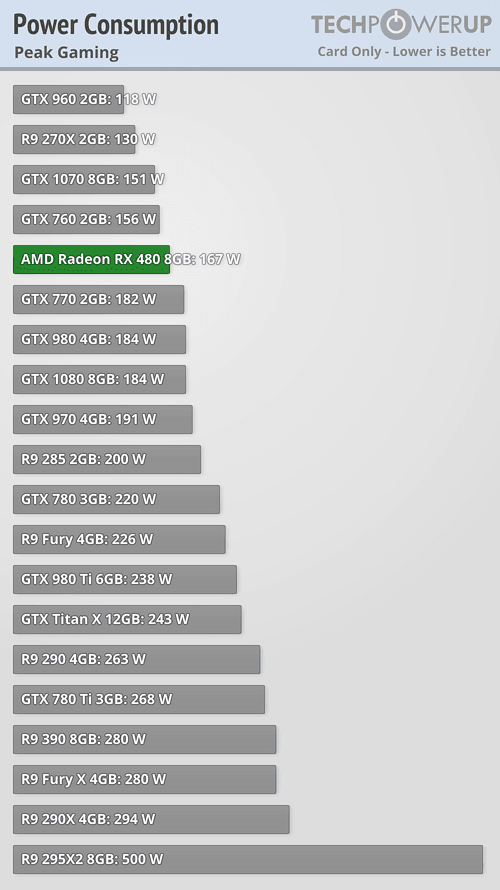
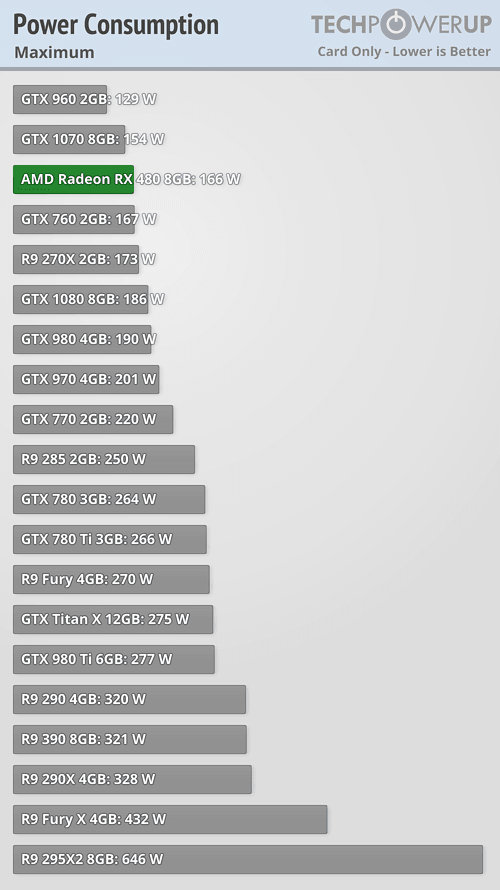
Details: 1- Every review highlights that the card performs significantly better on DirectX 12, where it actually manages to outperform the GTX 980. 2- Reviewers generally praise the card's power efficiency, though they point out it pulls more than the standard limit (86W from PCIe rather than the usual 75W). 3- The primary complaint across the board is the temperature of the reference cooler. 4- Most testers noted that while the reference cooler isn't quite as quiet as Nvidia's offerings, it’s still decent—especially when you consider how much the reference coolers on AMD's 290/290 x cards sounded like literal jet engines. 5- Overclocking headroom is hit-or-miss; some reviewers saw gains up to 10%, while others struggled to get even 2%.
Overall: This is a solid launch for AMD. The card sits slightly above the GTX 970/R9 390 while remaining the cheaper option. Once the custom partner cards hit the market with improved cooling, this will be an easy recommendation.
Look, it might not live up to all the hype from the trailers, but they actually packed more actual "hardware" into this architecture than Nvidia did. For instance, on top of the async compute engines found in previous GCN designs, they’ve added dedicated hardware schedulers specifically for those async compute engines. Nvidia doesn't really have anything comparable to that here.
Also, calling 14nm "twice as good" as 28nm is just a label; what we're actually seeing is a 20nm shrink utilizing FinFET technology. Take the AMD RX 480, for example: it has 5.7 billion transistors compared to the 6.2 billion on the R9 390, plus you've got the 256-bit vs 512-bit bus and 32 ROPs vs 64. This means a massive chunk of the performance gains comes directly from architectural improvements. I'll admit, it's not exactly what was promised—I was expecting even better efficiency—but I'm not incredibly disappointed. It's still a very efficient card. Naturally, if you start adding extra connectors and pushing the clock speeds, power consumption is going to climb.
Don't go overboard with the high-end stuff. If you're looking to save some cash without buying total junk, you could always grab a xilence redwing R7 400 w
Robert Rodriguez2 said:So, you think the 4GB version could hit around $2100 with some kind of aftermarket cooler?
I’m hoping for even less, honestly. Prices still need to drop further.
wiredotter14
I wouldn't call it total bullshit. If I were expecting a difference of dozens of watts, then sure—but this is still a 1.7x improvement over the previous generation (according to PC Gamer). At this point, it all just comes down to what the final price tag looks like.
I have to admit, I was hoping for slightly better efficiency myself. It’s not that the design is subpar, but it does exceed that 150W target—drawing more than 75W from the motherboard. Still, this represents a massive leap forward for AMD in terms of power management (though we know that's largely thanks to the manufacturing process itself).
Regarding raw performance: check out the TPU summary, the HU summary compared to the 390, how it stacks up against the 970, and the Guru3D review here . Overall, I'm satisfied. It aligns perfectly with what was promised and my own expectations (roughly on par with the R9 390). This is a new architecture, so we can reasonably expect AMD to keep squeezing out more performance through driver updates. As expected, the stock cooler isn't anything special, and there's practically zero room for overclocking due to the power limits (just like we suspected from the news leaks). However, once custom cards with better cooling solutions and extra power connectors hit the market, we'll see much better overclocking headroom and lower temps.
Prices over in Europe are looking fantastic for the 4GB model, and even here in the States, everything is getting progressively more affordable.
We just need to wait a little longer, but things are looking good.
Let’s breathe some life back into this thread; it deserves it.
Basically, the guy completely whiffed it. He claimed in the comments that regular users wouldn't have access to these specific drivers—that he was likely using engineering samples. On top of that, his chart scales are just bizarre. It’s mathematically impossible for the 290X to be performing better than the 390 across 25 different games, yet in several instances, it looks significantly worse. That simply doesn't add up. Honestly, it's exactly why I don't subscribe to these channels. He didn't even bother measuring power consumption. I'm holding out for some proper reviews; hopefully, they aren't all just recycling footage from weeks ago using outdated drivers.
I’d honestly rather pay $233 for a 3TB click and just fix my storage issues once and for all, instead of constantly juggling a bunch of small drives. It makes zero sense to drop $183 on some random 1TB drive that isn't even high quality.
On Amazon US, I saw it listed for about $290. Once you factor in the sales tax, you're looking at roughly $707. It might be slightly more expensive here in the States, but anything over that price point is just a total rip-off (which is definitely what we'll see when they first launch them)
I’m no professional modder, but you definitely need to cut an opening for the power supply exhaust—don't go suffocating it inside there if the back is sealed up. As for everything else, if you have the clearance for the components, then you're good to go. It's pretty straightforward. You also can't forget the cutout for the motherboard I/O ports. Some people just slap their parts onto a random scrap of plywood, which wouldn't even work in a standard PC case, let alone a custom enclosure like this.
It might not be a massive drop in performance, just not worth the money
The motherboard shouldn't be an issue since the PCIe slot is a universal standard, but if your CPU and board are five or six years old, you might run into a bottleneck. If you're rocking something older like an Intel Core 2 Quad, a GTX 1650 might actually be a more balanced fit for your rig. Honestly, though, it's probably best to just wait and see how it all plays out.