Meher Baba, the Avatar
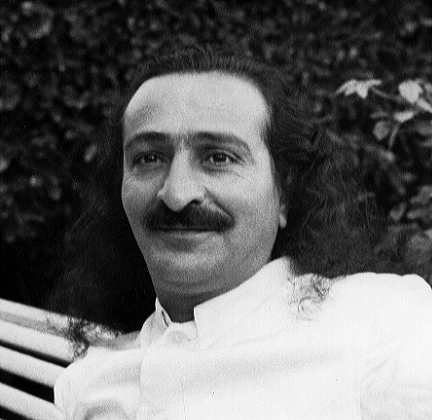
So, I was reading up on this incredible figure, Meher Baba—though he started out as Merwan Sheriar Irani, born back on February 25, 1894, in Pune, India. His folks were actually Persian, and his dad, Sheriar, was this really dedicated, deep-seeking guy looking for the divine. It’s kind of funny because, looking back at his younger days, you probably wouldn't guess anything was going to happen, I mean, he was just a regular kid attending local prep schools and then heading off to university in Pune. But everything flipped upside down when he was nineteen. Apparently, this whole spiritual awakening kicked off one chilly January day in 1913. He was just pedaling his bike home from college, maybe thinking about nothing in particular, when he ran into this elderly woman known as Hazrat Babajan. Now, she was legendary, thought to be a "Perfect Master"—basically someone who had totally connected with God. Once they met, Merwan’s entire reality just shifted. He suddenly realized he wasn't just some guy, but was actually one with the Divine. From there, it was like a domino effect where he met four other Masters who helped guide him through this massive internal transformation. One of them, Upasni Maharaj, actually spent seven years working alongside him. And get this—finally, in 1921, Upasni just bowed down to him and said, “You are the Avatar, I salute you.” That was it. That was the moment Merwan stepped into his role as the Avatar of the Age.
Now, you might wonder, what even is an "Avatar"? Well, Meher Baba used to explain that at these super crucial turning points in human history, God basically steps into a human body. I guess the titles change depending on who you ask—like Christ or the Messiah—but the core message of Divine love stays exactly the same. It’s like, in His infinite compassion, the Avatar takes on all the world's heavy lifting and suffering to help pull humanity toward a spiritual rebirth. Because of that, Meher Baba always held all the major religions in such high regard, seeing them as different ways the same Ancient Presence reached out to us.
Moving into the 1920s, his whole vibe became this idea of “Mastery through Service.” He and his followers were incredibly busy, honestly, working tirelessly to help anyone who was struggling—the poor, the sick, people living on the fringes of society, or those dealing with mental health issues. They were setting up schools, clinics, and retreats to make sure people were taken care of. And it wasn't just a big organization thing; he was right there in the trenches. He’d wash the feet of people with leprosy and tell them, “I bow down to the God in each one of you.” He even cleaned latrines for people who were treated as outcasts just to fight against social hierarchies. It makes total sense that his early followers started calling him “Meher Baba,” which pretty much translates to “the Compassionate Father.”
Then, things took a really intense turn. On July 10, 1925, Meher Baba started this period of silence. He didn't say a single word for forty-four years! He basically felt like there had been enough talking done, and it was time to actually start living the truth. But even though he was quiet, he was still so present, you know? He still had that warmth and that great sense of humor. When he really needed to get a point across, he’d use this wooden board with alphabet letters on it to spell things out. Most of his famous talks were actually communicated that way. Later on, after 1954, he stopped using the board and just used hand gestures to talk to people.
He always made sure to mention that he went silent specifically so he could eventually break it. By choosing to speak through silence, he was essentially delivering the word of God for our modern era. It’s more of an internal "Word" that you feel deep down in your gut. Like he put it:
“External silence helps foster that inner stillness, and it’s only in that deep, internal silence that you can truly find Baba. I am never actually silent. I am speaking eternally. That voice you hear deep inside your soul? That’s my voice.”
So, I guess that’s the real heart of the spiritual revolution he brought about—just waking up that spark of Divine love inside every single person.
Another really fascinating part of his life was how he interacted with these people called "masts." According to Baba, there are all sorts of masts, but generally, they’re these highly spiritual people whose love for God is so overwhelming that, to a regular person, they might look like they've lost their minds. But he explained that they aren't actually crazy; they just can't bring themselves to care about the mundane stuff of the world because they're so caught up in their connection to the Divine.
Throughout his journey, Meher Baba really showed both sides of the coin—his full divinity and his complete humanity. Back in 1952, he stepped out from his period of seclusion to let everyone know publicly that he was the God-Man, the Avatar for our era. For the following seventeen years, Baba just poured everything he had into his mission, working harder than anyone I can imagine to finish what he started. He actually warned his followers that this path would involve some serious hardship, specifically mentioning that he would shed blood on both American and foreign soil. And, looking back, it really did happen that way; he went through two major car accidents, the first one happening right here in the States in 1952 and the second one later on overseas in 1956. In one instance, the entire left side of his body was hurt, and in the other, it was the right side that took the brunt of it.
Even though he was going through so much pain, Meher Baba still kept his heart wide open, offering darshan—you know, that personal blessing—to thousands upon thousands of people throughout the fifties and early sixties. During those years, he made three trips to the Meher Spiritual Center in the U.S., which he always talked about as if it were his true home in the West. One of his final big moments, the East-West Gathering held in India in 1962, really captured that idea of everyone becoming one through love, which is basically what he was here to teach. You had people from every possible background, nationality, and religion coming together like one big family under that divine love, and Meher Baba shared a sentiment then that I think applies to all of us today:
“I hope my love helps you realize, someday, that God lives within every single person.”
In his final years, Meher Baba mostly stayed in seclusion to wrap up his universal mission. Honestly, that intense period of isolation and work must have been incredibly draining on his health, too. But even so, he seemed totally content with how things turned out, telling everyone, ”My work is finished. It’s done one hundred percent to my satisfaction.” Not long after that, on January 31, 1969, Meher Baba left his physical body behind to live on forever in the hearts of everyone who has ever felt his love.
Nowadays, Meher Baba’s tomb, which is located in Ahmednagar, India, serves as a massive pilgrimage site for people traveling from every corner of the globe.
