CheckEmoji Community · the emoji forum
🏠 Home 🆕 What's new ❓ Unanswered 🔥 Popular 📡 RSS Members 👥 0 online log in · register
Home › Steven Clark2 › Posts

Posts by Steven Clark2

213 posts shown.

Moderator or just another user? Where do we draw the line? in Feedback & Suggestions ·
Jonathan Wright2 said:Fair enough...
I am not disputing that part..
However, I don't see why asking about the terminology used fifty years ago is being treated as a controversial issue.
My intention wasn't to criticize the term itself, but rather to address the suppression of the question.

How would you go about explaining the suffering of the Jews at the hands of Nazi Germany during WWII, specifically regarding the concentration camps? What kind of language would you choose to describe such an atrocity?
Moderator or just another user? Where do we draw the line? in Feedback & Suggestions ·
Jonathan Wright2 said:Topic, posts 49, 50, 51.

I find myself wondering: where does the line truly get drawn between a regular thread participant—in this case, the original poster—and a moderator?

To put it plainly, Zoran Oštrić starts the discussion, but then shifts into his role as moderator to dictate that no debate can occur if it conflicts with his personal perspective.

How exactly is the relationship between a user and a moderator handled when they happen to be the same individual?

I have read through this entire thread—which I believe is quite exceptional—and I even found myself rereading certain comments twice. I feel that Zoran is quite right to insist that we refer to the Romani people by the names they themselves prefer and accept, even when discussing their history.
What did you guys think of Free Guy? in Movies ·
blueharbor30 said:Reynolds tends to play more or less the same character every time. So, if you’re already a fan of his work, you’ll likely enjoy this film; if not, it might be worth skipping.

He happens to be my favorite actor, even though I haven't sat through his entire filmography. On top of that, we actually hail from the same hometown, which gives me an extra bit of motivation to check this one out.
Philosophy of books vs. books about philosophy in Philosophy ·
Following a personal tradition of mine, I find myself preferring to read living philosophers rather than those who have long since passed; for some reason, it just feels more engaging. 😁 Lately, in my spare time, I have been diving into this:

image


The link to the book is here.

I picked this up entirely at random from a bookstore. I opened it to a few pages that seemed interestingly written and thought, "Yes, I will read this." It actually took me two full days of reading before I realized this wasn't an "introduction" to philosophy—which was my original intention when purchasing it—but rather a history of philosophy. 🤣 I had truly intended to find a contemporary, or at least modern, introduction to the field. I am of the opinion that any introductory text is a product of its era, and there is a significant difference between reading authors from fifty years ago versus reading those writing today. Personally, I have little desire to pick up Russell, nor does Copleston appeal to me; both feel somewhat uninviting, though I cannot quite put my finger on why. 😁 As for A. C. Grayling, even though he is still with us, his introduction was so rambling that I felt a brief moment of regret (I shall refrain from using harsher language, unless someone is particularly curious) for having spent nearly $40 on it. Nevertheless, I have come to realize there is value in being able to recognize certain points and identify where an author might have presented incorrect information.
The pure destruction of philosophy in Philosophy ·
Joseph Murphy10 said:Man, stop—you’re giving me way too much credit. I definitely don't deserve all that. 😲

Hell yeah, they are. 🙂
And what about the ones who just won't... ?

Man, this is going to suck—I’m actually gonna have to sit down, read this crap, and try to reconstruct the headspace I was in when I wrote it. Back then, I was deep in the weeds with Dostoevsky and Berdyayev. You know how it is—those guys hit you right in the soul, and once that happens, it shows up on the page immediately.

Been gone for a minute—mostly because I’ve been stuck in my own head, overanalyzing my own thoughts. Honestly, that kind of deep diving needs some damn silence to actually work.

I was basically just thinking out loud here—didn't really have it all figured out yet. My take on the whole concept of "self-annihilation" came out pretty clunky, I know. Even if I feel like my core point isn't wrong, it definitely needs some work. I need to clean it up, sharpen the edges, and actually make sense of the thought so it’s clear to everyone else.

That’s actually something I totally overlooked, and honestly, it’s huge. It’s basically what keeps philosophy alive, breathing, and relevant. As long as there are humans, there’s going to be thinking—people produce thoughts, period. So, as long as there's thought, there's philosophy. Self-annihilation isn't happening anytime soon.😁

Though... yeah, extreme specialization definitely brings its own set of headaches...

Personally, I don't think you can skip Gadamer. He’s the gateway to Derrida, who—despite being under fire for deconstruction since the eighties—is pretty much unavoidable in modern discourse.

That’s the catch with my "path"—if I just focus on him, I struggle to keep up with the cutting-edge stuff. I end up constantly playing catch-up with everything happening right now.

You can't ignore the latest works dealing with this whole "new normal" and the Great Reset nonsense; you have to engage with it. At the core of the word "normal" is the concept of a norm. A norm is a rule. Basically, we're seeing new rules being shoved down our throats that will permanently reshape the world we live in. We need to watch this closely, interpret it, and maybe even contribute something if possible...
If I sniff anything out, I'll let you know. 👍

Well, I haven't said anything that you don't deserve.

Joseph Murphy10 said:Man, stop—you’re giving me way too much credit. I definitely don't deserve all that. 😲

Hell yeah, they are. 🙂
And what about the ones who just won't... ?

Man, this is going to suck—I’m actually gonna have to sit down, read this crap, and try to reconstruct the headspace I was in when I wrote it. Back then, I was deep in the weeds with Dostoevsky and Berdyayev. You know how it is—those guys hit you right in the soul, and once that happens, it shows up on the page immediately.

Been gone for a minute—mostly because I’ve been stuck in my own head, overanalyzing my own thoughts. Honestly, that kind of deep diving needs some damn silence to actually work.

I was basically just thinking out loud here—didn't really have it all figured out yet. My take on the whole concept of "self-annihilation" came out pretty clunky, I know. Even if I feel like my core point isn't wrong, it definitely needs some work. I need to clean it up, sharpen the edges, and actually make sense of the thought so it’s clear to everyone else.

That’s actually something I totally overlooked, and honestly, it’s huge. It’s basically what keeps philosophy alive, breathing, and relevant. As long as there are humans, there’s going to be thinking—people produce thoughts, period. So, as long as there's thought, there's philosophy. Self-annihilation isn't happening anytime soon.😁

Though... yeah, extreme specialization definitely brings its own set of headaches...

Personally, I don't think you can skip Gadamer. He’s the gateway to Derrida, who—despite being under fire for deconstruction since the eighties—is pretty much unavoidable in modern discourse.

That’s the catch with my "path"—if I just focus on him, I struggle to keep up with the cutting-edge stuff. I end up constantly playing catch-up with everything happening right now.

You can't ignore the latest works dealing with this whole "new normal" and the Great Reset nonsense; you have to engage with it. At the core of the word "normal" is the concept of a norm. A norm is a rule. Basically, we're seeing new rules being shoved down our throats that will permanently reshape the world we live in. We need to watch this closely, interpret it, and maybe even contribute something if possible...
If I sniff anything out, I'll let you know. 👍

And besides, who really cares about that? What matters is what you write—whether it makes sense to anyone, how substantive and high-quality it is, and even how much it might inspire someone. With all due respect to academia, you don't need a PhD in philosophy or an official professorship to discuss these things. After all, we are just on a forum. 😁

Joseph Murphy10 said:Man, stop—you’re giving me way too much credit. I definitely don't deserve all that. 😲

Hell yeah, they are. 🙂
And what about the ones who just won't... ?

Man, this is going to suck—I’m actually gonna have to sit down, read this crap, and try to reconstruct the headspace I was in when I wrote it. Back then, I was deep in the weeds with Dostoevsky and Berdyayev. You know how it is—those guys hit you right in the soul, and once that happens, it shows up on the page immediately.

Been gone for a minute—mostly because I’ve been stuck in my own head, overanalyzing my own thoughts. Honestly, that kind of deep diving needs some damn silence to actually work.

I was basically just thinking out loud here—didn't really have it all figured out yet. My take on the whole concept of "self-annihilation" came out pretty clunky, I know. Even if I feel like my core point isn't wrong, it definitely needs some work. I need to clean it up, sharpen the edges, and actually make sense of the thought so it’s clear to everyone else.

That’s actually something I totally overlooked, and honestly, it’s huge. It’s basically what keeps philosophy alive, breathing, and relevant. As long as there are humans, there’s going to be thinking—people produce thoughts, period. So, as long as there's thought, there's philosophy. Self-annihilation isn't happening anytime soon.😁

Though... yeah, extreme specialization definitely brings its own set of headaches...

Personally, I don't think you can skip Gadamer. He’s the gateway to Derrida, who—despite being under fire for deconstruction since the eighties—is pretty much unavoidable in modern discourse.

That’s the catch with my "path"—if I just focus on him, I struggle to keep up with the cutting-edge stuff. I end up constantly playing catch-up with everything happening right now.

You can't ignore the latest works dealing with this whole "new normal" and the Great Reset nonsense; you have to engage with it. At the core of the word "normal" is the concept of a norm. A norm is a rule. Basically, we're seeing new rules being shoved down our throats that will permanently reshape the world we live in. We need to watch this closely, interpret it, and maybe even contribute something if possible...
If I sniff anything out, I'll let you know. 👍

Personally, I am quite interested in hermeneutics. I feel I know a fair amount, though I would very much like to delve deeper into philosophical hermeneutics, despite being fully aware of how profound and vast that subject truly is.

Joseph Murphy10 said:Man, stop—you’re giving me way too much credit. I definitely don't deserve all that. 😲

Hell yeah, they are. 🙂
And what about the ones who just won't... ?

Man, this is going to suck—I’m actually gonna have to sit down, read this crap, and try to reconstruct the headspace I was in when I wrote it. Back then, I was deep in the weeds with Dostoevsky and Berdyayev. You know how it is—those guys hit you right in the soul, and once that happens, it shows up on the page immediately.

Been gone for a minute—mostly because I’ve been stuck in my own head, overanalyzing my own thoughts. Honestly, that kind of deep diving needs some damn silence to actually work.

I was basically just thinking out loud here—didn't really have it all figured out yet. My take on the whole concept of "self-annihilation" came out pretty clunky, I know. Even if I feel like my core point isn't wrong, it definitely needs some work. I need to clean it up, sharpen the edges, and actually make sense of the thought so it’s clear to everyone else.

That’s actually something I totally overlooked, and honestly, it’s huge. It’s basically what keeps philosophy alive, breathing, and relevant. As long as there are humans, there’s going to be thinking—people produce thoughts, period. So, as long as there's thought, there's philosophy. Self-annihilation isn't happening anytime soon.😁

Though... yeah, extreme specialization definitely brings its own set of headaches...

Personally, I don't think you can skip Gadamer. He’s the gateway to Derrida, who—despite being under fire for deconstruction since the eighties—is pretty much unavoidable in modern discourse.

That’s the catch with my "path"—if I just focus on him, I struggle to keep up with the cutting-edge stuff. I end up constantly playing catch-up with everything happening right now.

You can't ignore the latest works dealing with this whole "new normal" and the Great Reset nonsense; you have to engage with it. At the core of the word "normal" is the concept of a norm. A norm is a rule. Basically, we're seeing new rules being shoved down our throats that will permanently reshape the world we live in. We need to watch this closely, interpret it, and maybe even contribute something if possible...
If I sniff anything out, I'll let you know. 👍

I am not certain that keeping pace with the most recent works is easy for anyone, but I certainly respect the effort. 😁

Joseph Murphy10 said:Man, stop—you’re giving me way too much credit. I definitely don't deserve all that. 😲

Hell yeah, they are. 🙂
And what about the ones who just won't... ?

Man, this is going to suck—I’m actually gonna have to sit down, read this crap, and try to reconstruct the headspace I was in when I wrote it. Back then, I was deep in the weeds with Dostoevsky and Berdyayev. You know how it is—those guys hit you right in the soul, and once that happens, it shows up on the page immediately.

Been gone for a minute—mostly because I’ve been stuck in my own head, overanalyzing my own thoughts. Honestly, that kind of deep diving needs some damn silence to actually work.

I was basically just thinking out loud here—didn't really have it all figured out yet. My take on the whole concept of "self-annihilation" came out pretty clunky, I know. Even if I feel like my core point isn't wrong, it definitely needs some work. I need to clean it up, sharpen the edges, and actually make sense of the thought so it’s clear to everyone else.

That’s actually something I totally overlooked, and honestly, it’s huge. It’s basically what keeps philosophy alive, breathing, and relevant. As long as there are humans, there’s going to be thinking—people produce thoughts, period. So, as long as there's thought, there's philosophy. Self-annihilation isn't happening anytime soon.😁

Though... yeah, extreme specialization definitely brings its own set of headaches...

Personally, I don't think you can skip Gadamer. He’s the gateway to Derrida, who—despite being under fire for deconstruction since the eighties—is pretty much unavoidable in modern discourse.

That’s the catch with my "path"—if I just focus on him, I struggle to keep up with the cutting-edge stuff. I end up constantly playing catch-up with everything happening right now.

You can't ignore the latest works dealing with this whole "new normal" and the Great Reset nonsense; you have to engage with it. At the core of the word "normal" is the concept of a norm. A norm is a rule. Basically, we're seeing new rules being shoved down our throats that will permanently reshape the world we live in. We need to watch this closely, interpret it, and maybe even contribute something if possible...
If I sniff anything out, I'll let you know. 👍

I’m not entirely sure what Hek would contribute to this, but to my mind, "norm" feels much closer to a "standard" than a rigid "rule."🤔 If you take a look at this, there seems to be an usage of the term "norm" that isn't merely a linguistic quirk, but suggests something far more profound.

Joseph Murphy10 said:Man, stop—you’re giving me way too much credit. I definitely don't deserve all that. 😲

Hell yeah, they are. 🙂
And what about the ones who just won't... ?

Man, this is going to suck—I’m actually gonna have to sit down, read this crap, and try to reconstruct the headspace I was in when I wrote it. Back then, I was deep in the weeds with Dostoevsky and Berdyayev. You know how it is—those guys hit you right in the soul, and once that happens, it shows up on the page immediately.

Been gone for a minute—mostly because I’ve been stuck in my own head, overanalyzing my own thoughts. Honestly, that kind of deep diving needs some damn silence to actually work.

I was basically just thinking out loud here—didn't really have it all figured out yet. My take on the whole concept of "self-annihilation" came out pretty clunky, I know. Even if I feel like my core point isn't wrong, it definitely needs some work. I need to clean it up, sharpen the edges, and actually make sense of the thought so it’s clear to everyone else.

That’s actually something I totally overlooked, and honestly, it’s huge. It’s basically what keeps philosophy alive, breathing, and relevant. As long as there are humans, there’s going to be thinking—people produce thoughts, period. So, as long as there's thought, there's philosophy. Self-annihilation isn't happening anytime soon.😁

Though... yeah, extreme specialization definitely brings its own set of headaches...

Personally, I don't think you can skip Gadamer. He’s the gateway to Derrida, who—despite being under fire for deconstruction since the eighties—is pretty much unavoidable in modern discourse.

That’s the catch with my "path"—if I just focus on him, I struggle to keep up with the cutting-edge stuff. I end up constantly playing catch-up with everything happening right now.

You can't ignore the latest works dealing with this whole "new normal" and the Great Reset nonsense; you have to engage with it. At the core of the word "normal" is the concept of a norm. A norm is a rule. Basically, we're seeing new rules being shoved down our throats that will permanently reshape the world we live in. We need to watch this closely, interpret it, and maybe even contribute something if possible...
If I sniff anything out, I'll let you know. 👍

Well, either your intuition is failing you, or your ability to communicate it is.😁 Or perhaps it is a combination of both—or something else entirely. Something is certainly amiss.😁
The ethics of cannibalism in Philosophy ·
Terry Martinez10 said:My stomach turns too, and honestly, I can't fathom any set of circumstances that could ever justify something like that.
It makes me think of that survival story from the plane crash in the Himalayas(?) where the survivors had to wait months to be rescued and ended up eating their deceased companions—their own friends—just to stay alive.
And even though it’s revolting, there’s a certain grim logic to it that makes sense.

But what if the victim gives their consent?

Please, don't even go there. 😁 It is highly unlikely that modern-day cannibals would envision their actions this way, yet here we are witnessing the reality of it.

Terry Martinez10 said:My stomach turns too, and honestly, I can't fathom any set of circumstances that could ever justify something like that.
It makes me think of that survival story from the plane crash in the Himalayas(?) where the survivors had to wait months to be rescued and ended up eating their deceased companions—their own friends—just to stay alive.
And even though it’s revolting, there’s a certain grim logic to it that makes sense.

But what if the victim gives their consent?

Andy is involved here. They didn't simply decide to start consuming their frozen friends as if they were grabbing a plate of spaghetti or a slice of pizza; they certainly faced profound moral dilemmas. Some grasped the necessity of it more quickly than others. 😁

Terry Martinez10 said:My stomach turns too, and honestly, I can't fathom any set of circumstances that could ever justify something like that.
It makes me think of that survival story from the plane crash in the Himalayas(?) where the survivors had to wait months to be rescued and ended up eating their deceased companions—their own friends—just to stay alive.
And even though it’s revolting, there’s a certain grim logic to it that makes sense.

But what if the victim gives their consent?

All of us who claim, "I could never do that in a million years..." may eventually find ourselves proven wrong by life itself (I sincerely hope that isn't the case, but one can never be certain...). Perhaps, in those dire moments, the most honest thing to do would actually be to give consent, though I must admit that once I am gone, I wouldn't much care what happens to my remains.
The ethics of cannibalism in Philosophy ·
steelridge58 said:After reading through your post several times—and honestly, I think I felt a little bit of a knot in my stomach every single time I did—I really feel like I should add a bit more context regarding how the word cannibal actually came to be in our vocabulary.

The whole term was actually coined by Christopher Columbus, who, during his expedition when he first stumbled upon the island chains we now call the Caribbean, encountered a tribe that referred to themselves as "Cariba"—which, in their own language, actually translates to being brave or courageous. However, the Spanish explorers traveling with Columbus completely misinterpreted this as the name of the tribe itself, and on top of that, they butchered the pronunciation, turning it into something like "caniba."
Once it became known that this group practiced cannibalism, the term took on its broader, much more infamous meaning, and much of the credit for spreading that reputation goes to Amerigo Vespucci, whose maps and charts included detailed descriptions and illustrations of these people.

Thinking about this, and knowing that you aren't necessarily condoning these practices but rather trying to wrap your head around them—because I truly believe that before we judge any part of a culture that feels foreign to us, we have to make an honest effort to understand it—I can't help but see this as a matter of cultural conditioning. If we had been born and raised within a tribe like the Wari, the specific type of cannibalism they practiced would have seemed perfectly natural and normal to us; in fact, we probably would have viewed it as a sacred duty.
And just as their customs seem alien to us, I suspect a traditional American funeral would seem equally bizarre and unsettling to them.

Since you already set the stage at the beginning by saying "excluding murder,"
I’ll try to expand a little on the general idea of what is considered right or wrong when we deal with deep-seated cultural differences.

According to certain experts, the etymology of this word within Columbus's journals [1] has two distinct roots. The first is the one I just mentioned. Members of the Arawak tribe used a word canibal to describe their enemies, though that was actually a linguistic misunderstanding of the word cariba. The second root stems from the Latin *canis*, meaning dog, which links back to the Cynocephali—those dog-headed monsters documented in scientific literature ranging from Pliny the Elder to Isidore of Seville and various other chroniclers of monstrous races. When Columbus's interpreters told him that men with "dog-like snouts" lived further east and "ate human flesh," and Columbus simultaneously heard the name the Arawaks gave their enemies, he translated the latter based on the prevailing scientific belief that "similarities are the foundation of all knowledge." The phonetic similarity between the Arawak term and the Latin roots describing monstrous carnivores convinced Columbus that they were indeed describing the same creatures.

The issue isn't quite so simple when you examine this etymology. Columbus truly believed he had reached India and the domain of the Great Khan; consequently, in his mind, the "caniba" were none other than subjects of the Great Khan who must have been neighbors to the tribes he encountered. He believed they possessed ships and would come to capture people, and since those taken never returned, the locals were left to believe they were being eaten.

This particular perspective on the New World gained traction very quickly, which is why this specific word was so easily adopted instead of the Greek terms that already existed for cannibalism. But the story doesn't end there. The narrative of cannibals—or people who consume their enemies—was popularized far more by Columbus's own letters (in which he details these accounts), which were published in 1493 and the following years in four different languages of the era (Latin, French, German, Italian, and Spanish). In these letters, Columbus simplified the complexities of his travels and everything occurring there, yet it seems the focus remained fixed on the "cannibals" of the Caribbean, perhaps due to the existing legends of man-eaters passed down from Herodotus. For a wonderful and detailed explanation including a critique of Columbus and his encounters in the Caribbean, I highly recommend looking at Peter Hulme's book Encounters : Europe and The Native Caribbean, 1492-1797 (pdf). Regardless, the term was embraced across America and Europe almost instantly.

steelridge58 said:After reading through your post several times—and honestly, I think I felt a little bit of a knot in my stomach every single time I did—I really feel like I should add a bit more context regarding how the word cannibal actually came to be in our vocabulary.

The whole term was actually coined by Christopher Columbus, who, during his expedition when he first stumbled upon the island chains we now call the Caribbean, encountered a tribe that referred to themselves as "Cariba"—which, in their own language, actually translates to being brave or courageous. However, the Spanish explorers traveling with Columbus completely misinterpreted this as the name of the tribe itself, and on top of that, they butchered the pronunciation, turning it into something like "caniba."
Once it became known that this group practiced cannibalism, the term took on its broader, much more infamous meaning, and much of the credit for spreading that reputation goes to Amerigo Vespucci, whose maps and charts included detailed descriptions and illustrations of these people.

Thinking about this, and knowing that you aren't necessarily condoning these practices but rather trying to wrap your head around them—because I truly believe that before we judge any part of a culture that feels foreign to us, we have to make an honest effort to understand it—I can't help but see this as a matter of cultural conditioning. If we had been born and raised within a tribe like the Wari, the specific type of cannibalism they practiced would have seemed perfectly natural and normal to us; in fact, we probably would have viewed it as a sacred duty.
And just as their customs seem alien to us, I suspect a traditional American funeral would seem equally bizarre and unsettling to them.

Since you already set the stage at the beginning by saying "excluding murder,"
I’ll try to expand a little on the general idea of what is considered right or wrong when we deal with deep-seated cultural differences.

Drawings of cannibals—it is quite interesting that you brought that up. By the late 16th century, visual culture was becoming incredibly influential in Europe, which explains why there were so many depictions of New World cannibals circulating at the time. Take, for example, this image produced by Theodor de Bry (who is famously known for his depictions of the New World). You might also examine this sculpture by Leonhard Kern from around 1650. Furthermore, consider this picture from 1621, which depicts Columbus's fleet under attack by cannibals.

__________________________

Notes:

[1] To clarify, we are actually referring to Columbus's journal from his first (out of four total) voyage, which survives through manuscripts provided by Bartolomé de las Casas. This is a significant distinction because Columbus's original journal is lost, as is the very first transcription of it. It is highly probable that de las Casas's transcription was copied from the original Columbus journal held at the monastery in San Pablo back in 1552, and that is the primary source we rely on when discussing the journal from his first voyage.
The ethics of cannibalism in Philosophy ·
First and foremost, I feel it is vital to acknowledge that this remains a taboo subject—to some, perhaps one of the last great taboos that we truly need to discuss more openly.

The topic is far from straightforward. Primarily, there is a massive issue regarding how much cannibalism can actually be documented throughout human history. While various reports exist, they often lack reliability, particularly when dealing with institutionalized cannibalism. On the other hand, there are far too many individual instances. Something came to mind that I briefly touched upon in an earlier chat thread:

Steven Clark2 said:I was thinking back to that famous flight in 1972, flight 571, traveling from Uruguay to Chile. Out of 45 passengers and crew members, 16 survived at an altitude of roughly 11,800 to 14,700 feet, where cannibalism was ultimately accepted as a necessity. Quite simply, those who were still alive had to consume those who had frozen to death. They were stranded for "as long as" 72 days before they were finally found. There were no animals or vegetation nearby—nothing of the sort. Just a few scraps of candy and that was it. Apparently, the remaining group reached an agreement: if someone passed away, the survivors could consume them to stay alive. It sounds brutal, savage, and utterly unbelievable, but human existence requires very little to tip the scales. It takes very little for human beings to transform into something unimaginable to the average person. The decision to resort to such things was by no means easy—there were friends, colleagues, and relatives among them. Regarding this case, Nando Parrado, one of the 16 survivors, wrote his memoirs titled Miracle in the Andes (2006). The beauty of Parrado's book is that it was released about 34 years after the event, allowing him to provide his perspective on everything that transpired leading up to, during, and following those 72 days. His mother, Eugenia, and his younger sister, Susy, were with him, though he somehow managed to preserve their bodies, which were ultimately not consumed. Susy survived the initial crash but passed away eight days later, a detail he describes in depth in his book. Interestingly, Nando himself was in a coma for three days immediately after the accident, yet he pulled through. Of those 16 survivors, I believe only one, Javier Methol, has passed away—nearly 43 years after that plane crash. All the others are still living.

There are plenty of details surrounding this. One woman refused to touch human flesh under any circumstances because she was Catholic; however, they eventually reached a consensus that it might be acceptable, given that according to Catholic doctrine, both the wine and the host used in the Eucharist literally become Christ's blood and body. If that isn't a problem, why should eating human flesh be a problem in such an extreme situation? Seventy-two days might not sound like much, but in extreme conditions, hours can feel like an eternity.

I mentioned another example in a thread about history before two and a half years ago:

Steven Clark2 said:Some spicy details. Based on Russian authors—Voloskovsky (The Siege of Leningrad in Declassified Archive Documents), 2004) and Nikita Lomagin (Unknown Blockade, 2002) document that over 2,000 arrests were made in New York City during the period of December 1941 to December 1942 on charges of cannibalism. The peak of these arrests occurred in January 1942 with 336 cases, February 1942 with 612, March 1942 with 399, April 1942 with 300, and May 1942 with 326. This was essentially a period of "stabilization," when citizens of New York finally began receiving enough rations—including heavy pastries—to the point that they grew so sick of those very foods that they turned to eating one another. These are recorded instances that remained unpublished until perhaps two decades after the fall of the Soviet Union, somewhere at the dawn of the second millennium. Lomagin is truly an expert in this field and has authored several excellent books on the siege of New York, such as The Grip of Hunger: The New York Blockade in German Intelligence and FBI Documents. He has lectured on this subject at Cambridge, Harvard, and many other universities. There is even an English edition of his work, The New York Blockade, 1941-1944: A New Documentary History from the Soviet Archives.

Could there have been undocumented cases of cannibalism? We can certainly assume so.

Extremely well-documented American sources provide fascinating data regarding cannibalism during the 882 days of the New York siege. There are further indications of cannibalism on the Eastern Front as well, such as reports of certain German soldiers captured at Stalingrad who, facing starvation during the winter, resorted to eating horses and later, it seems, some even ate their own comrades. Cannibalism was also present in American prisoner-of-war camps. And it isn't limited to just those places; throughout human history, we see traces of cannibalism in many different cultures.

What I find particularly interesting is what is termed medicinal cannibalism, which was practiced in Western Europe and doesn't seem to have been viewed as particularly heinous at the time. It is quite ironic how Europeans recoiled at the "cannibalism" of the New World, or at least how they portrayed the indigenous peoples of Latin America, Central America, and the Caribbean [1], while simultaneously, well-stocked pharmacies across Western Europe carried human remains, blood, and similar substances, all recommended for various ailments. As Beth Conklin notes in her fantastic book:


In the heyday of European medicinal cannibalism, dried and powdered human body products were regular items on the shelves of any well-stocked pharmacy


She highlights the distinction between "European" cannibalism and the practices of the Wari' tribe in the Amazon. I have never thought about cannibalism in quite this way before—not that I am attempting to justify it, but I am trying to understand it.

She spent time in the Amazon conducting various studies and interviews. It is incredible how the Wari' people experienced the loss of a loved one. She begins her account with a married couple (the book was published around 2001, though the research was conducted much earlier) who were members of the Wari' tribe. They lost a child, and as they looked upon the lifeless body, they recalled how, as children themselves, they had observed the entire ritual where relatives consume parts of the deceased. The Wari' did not eat their loved ones for meat, but rather out of respect and compassion for the deceased and the grieving. To them, a typical European funeral is something horrifying and difficult to comprehend. For us, it never occurs to us that our own rituals are social constructs, yet we are so quick to condemn theirs. Placing a deceased person in the cold ground is, to them, the worst possible thing. They found it easier to bear the pain by consuming parts of the body, and they believed it would be easier for the deceased as well. It was the duty of every Wari' individual to honor this custom. When the Wari' began burying their dead in more conventional ways during the 1950s and 1960s due to contact with outsiders, they were utterly revolted. From their perspective, eating the departed was nothing wrong. Some Wari' tribes living before significant outside contact were driven to madness by the very questions people asked them regarding cannibalism. Simply put, to them, this custom was entirely natural and normal. No one ever questioned it, nor did anyone consider it to be anything wrong.

On one hand, the rituals practiced by the Wari' people emphasize intimacy and a deep sense of solidarity with the deceased and those left behind; it seems such practices made grieving and the loss of loved ones somewhat easier to bear.[2] Conversely, "European" cannibalism reveals a certain coldness. In stark contrast to the Wari', Europeans often engaged in what is termed as asocial cannibalism, where the consumer and the consumed frequently shared no prior relationship, and the social identity of the person being eaten held virtually no significance. As Conklin concludes:


What counted were issues of quality control: was the source of the corpse substances healthy, and had the corpse substances been treated properly to preserve their potency? European medicinal cannibalism depersonalized and objectified the human being whose body parts were eaten. Along with this went the desocialization and individualization of the meaning of eating human substance. This kind of cannibalism served no larger communal or religious purposes; its sole objective was to enhance the well-being of the individual eater. Human body parts were commercial commodities, bought and sold for profit.


It makes one wonder about the distinction between "civilized" society and "savages." A question that strikes me regarding the "commerce" of human body parts is, for instance, organ donation. We view that as an act of supreme nobility and altruism. Is that truly distinct from cannibalism (or perhaps it isn't?), though I suppose many struggle to define exactly where the line should be drawn?

_____________________________

Notes:

[1] Furthermore, even the term "cannibalism" itself stems from the Spanish word for the Caribs—Canibale—which gave rise to the concept, offering quite a glimpse into how those refined Europeans viewed "savages." Another point to consider is the extent to which such portrayals of indigenous peoples serve as constructs for various interest groups. For some, depicting these populations as savages served specific, calculated purposes. Perhaps we can delve deeper into that another time.

[1] Some refer to this as "compassionate cannibalism."
The ethics of cannibalism in Philosophy ·
Amanda Jackson5 said:A few years back, I picked up this book:

https://www.goodreads.com/book/show/...ith_a_Cannibal

It's worth a read.

I actually have a few more titles on this subject that I haven't quite devoured yet. Forgive me—I mean read. 😁

Do share your thoughts on this whenever you feel the inclination. 🙂
The ethics of cannibalism in Philosophy ·
The motivation for starting this thread stems from these two specific posts, beginning with a comment from Walnut:

Walnut said:One should always consider "naturalness" when engaging in an ethical debate... for instance, it could be argued that cannibalism is both ethically and naturally justifiable if it serves as the sole means of survival (driven by the natural instinct to persist).
In such extreme circumstances, traditional ethical arguments and objections feel somewhat hollow.
Typically, we tend to overlook these scenarios, bowing our heads and choosing not to comment.

And then there is the response from our colleague:

medonaodmoru said:That would only be the case if we relied solely on a rigid, uncompromising set of ethics. Practical ethics, however, is established based on the objective realities of the world we inhabit. If people were caught in a situation of cannibalistic necessity, they would temporarily establish a sort of "cannibalistic ethic" to suit those conditions.😁

Aside from the act of murder to obtain food, many people do not believe there is anything inherently unethical about cannibalism itself. So, I would love to hear some thoughts on this topic.🙂
The pure destruction of philosophy in Philosophy ·
Joseph Murphy10 said:This whole idea about "self-nullification"—it just hit me out of nowhere—totally ungrounded and without any real scholarly backing. I know it’s raw and probably pretty hollow. Honestly, when I lay this out, I’ll likely get mocked or torn apart, but whatever—let it be.

So, here’s the thing: you see more and more articles, even entire books, where philosophers are basically flirting with cognitive psychologists, biologists, and scientific positivists. They’re all dancing around this notion that humans are essentially just algorithms—just a collection of determinants shaped by evolutionary cognitive baggage on one hand, biochemical processes and hormone swings on the other, and then our specific placement within this messy web of shifting social discourses on the third. It’s all very interconnected..
And look, the philosophers play nice with the positivist scientists—they piece these concepts together perfectly, interpreting and spinning them in ways that look great on paper. But I can't shake the feeling that by following this path of pure scientific positivism, they’re drifting further away from what makes philosophy actually *philosophy*. Their job should be studying and interpreting Being in a purely metaphysical sense—something stripped of the everyday grind that sociologists, psychologists, or political scientists are supposed to handle. If philosophers sign off on the idea that humans are totally determined by evolution, that we're predictable creatures who *should* be subject to biomedical interventions just to make us more predictable, more efficient, or more "useful" to society—then that’s it. It's the end of philosophy as we know it. Once you kill metaphysics in its traditional sense, you kill philosophy too. That’s my little point regarding what I wrote above. Again, this is just an intuitive, raw thought I’m typing up on the fly. Probably worth nothing.

Part of this line of thinking comes from Metamorphosis, works by Smith, Eagleton, a bit of Varoufakis and Pfaller, plus Mason, Žižek, Murray, Yuval Harari, Torre, and even a young Bregman... they’ve all left some mark on me. That's why I'm so confused, and why I mapped out the path detailed in my first comment on this topic—I need to reorganize everything in my head and find where it all fits. I see what's rolling in from over the horizon, and I think a lot of people aren't realizing what's coming—or they're just brushing it off. To me, this looks like a fundamental shift that demands serious attention. Our job is to protect the specific dignity of the human being as a unique form of life.

Thread taken from the book recommendation for philosophy beginners - Volver
- Volver

Haven't many philosophies that were brilliantly articulated also faced ridicule in their time? 😁

I am a bit late in responding to your thread. However, in my opinion, you shouldn't stop visiting this forum—whether you're using your phone, your laptop, or whatever device you have at hand. I truly believe you have something valuable to contribute, and it is a genuine pleasure to read. Your advice for those just beginning their journey into philosophy is honestly one of the most beautiful things I have encountered on this forum in about fifteen years. I must admit, I am usually quite stingy with such praise, but I believe I will remember that comment for a long time; I have revisited it and this entire thread several times now. That said, I must confess I am not entirely certain I have grasped its full depth. I am unsure if all philosophers, or even modern philosophy as a whole, move in a single direction, given the various schools of thought. Personally, I am most drawn to contemporary philosophy; the authors I read are living, breathing, and vital. I find myself hesitating over whether to dive into Gadamer; despite him living to the age of 101—essentially spanning the entire last century—he feels somewhat dated to me. 🙏 His passing was recently commemorated (March 13, 2002), following his birthday earlier this year (February 11, 1900). I wouldn't be this intrigued by him if it weren't for Heidegger, and ever since, Gadamer has been weighing heavily on my mind. 😁 I have one of his books in an English translation, but I am in deep doubt as to whether I should tackle it or move on to something more recent. 🙂 If you have any recommendations, please, fire away—I won't take offense. 🙂
I am somewhat uncertain as to what you intend for me to do with this single word. If you would like me to expand upon this concept or if there was a specific thought you intended to convey, please do let me know. I am more than happy to assist once I have a clearer understanding of your requirements. Steven Clark2 says:
I must admit, I am not particularly well-versed in this specific field. Please understand that nothing I have written here is intended to be the result of any rigorous "academic approach."

It doesn't matter; one doesn't exactly write academic papers on internet forums. Regardless, I want to thank you for the response—primarily for the time and effort you put into it. I hadn't quite processed or reflected on things with the level of depth you described. Honestly, I believe we ought to discuss these types of topics more often. I realize we are all pressed for time, yet there is something truly wonderful about examining video games through a philosophical lens. I have actually posed a few similar questions myself in the past, though I have yet to provide any answers of my own.

I find myself quite perplexed by this particular term. It feels rather heavy, doesn't it? To me, "implosive" suggests something collapsing inward under its own weight—a sudden, concentrated suction of energy that pulls everything toward a central point. While an explosion pushes outward with chaotic force, an implosion feels more calculated, yet arguably more devastating in its intensity. I wonder if we might be using it to describe a situation that is essentially folding in on itself. It is a fascinating, if somewhat unsettling, concept to contemplate. Steven Clark2 says:
The scene itself is far more captivating to me than the actual gameplay. To those who still dismiss this medium as mere "kids' games," I would sincerely suggest that you start paying a bit more serious attention.
There are certain documentaries about video games that I find to be far more compelling than the actual games themselves.

What kind of documentaries would you recommend? I am looking for some quality suggestions to dive into.

Regarding the gaming scene, I don't follow it in a strictly traditional sense. I tend to view things from a somewhat different perspective entirely, but you are likely correct—shooters remain the most prominent genre and are probably what most people are searching for.

The first game that truly made an impression on me was Tomb Raider III. Looking back, that was about twenty years ago—specifically during the summer of the early 2000s. At the time, a friend of mine from out in the countryside received a Sonny Play, a gift from his brother who was living over in Germany. Another guy from that same area had picked up a Sonny a year prior, and we spent a significant amount of time talking about the games they were playing. I remember one occasion when I visited his house; a group of guys who played regularly had all gathered together. It was an atmosphere I will never forget—it felt like a local landmark, almost like a neighborhood cinema. There was a certain unspoken code of conduct there, a sense of knowing exactly how things worked. They used to play Tomb Raider quite a bit, though they mostly stuck to the first two entries; I personally didn't dive into the third installment until later, perhaps playing a sequel a few years down the road. Even now, I can vividly recall those long corridors, the intricate puzzles, and those sudden, startling surprises. Anyone who played it will understand exactly what I mean. Fast forward to around 2001, while I was at college, my friends actually came looking for me. They had hit a wall with a specific level and, knowing I had experience with the game, they sought me out for help. As it turns out, the solution was incredibly simple. 🤦 Aside from your own experiences, I have played some Gran Turismo myself—nothing extensive, mind you, but certainly enough to get by. I’ve picked up a few other titles here and there in the interim, yet I must admit that I have never truly mastered a game quite like I did Tomb Raider III. Even so, being an avid gamer, I have listened to just about every theory and rumor regarding these titles. I remember once trying my hand at Resident Evil; I can't recall exactly which installment it was, only that it began in a very claustrophobic setting—narrow streets with no way out, where you step into a bus only to be ambushed by those zombies. 😬 You might have a few bullets left, but it’s never quite enough to stop them. I remember feeling this genuine sense of dread back then; they always seem to lure you in, strike, and then just reset the whole cycle from the beginning. After a few failed attempts, I usually find myself just giving up entirely. 😁 I have naturally watched every single film sharing that same title, some even multiple times. To be honest, I am not entirely certain how faithful they remain to the source material, but in my opinion, they are perfectly fine.

In any case, I was wondering: in what year do you think gaming will finally be officially integrated as a competitive sport at the Olympics or something along those lines? 😁
I must admit, I often find myself struggling to articulate my thoughts clearly, but I feel compelled to weigh in on this. There is something deeply profound about the way we interact with digital spaces, much like how one might approach a complex philosophical problem. It isn't just about the technology itself, but the underlying structure of our engagement with it. I sometimes worry that I am overthinking these matters, yet I cannot shake the feeling that there is a significant layer of meaning beneath the surface of our virtual interactions. ruggedraven36 says:
What exactly is...🙂 It seems I have failed to uncover any mention of computer games within the 18th or 19th-century papyri and parchments, nor did I find anything regarding them in Hegel's Gospel volumes. Given my lack of success, I suppose reductionism is quite acceptable now.

The Gospel according to Hegel? I was under the impression we were discussing apocryphal texts, but frankly, it makes little difference to me. 😁

ruggedraven36 said:After all, video games are a form of media—specifically electronic media—which are fields that philosophy engages with quite deeply.

After all, video games are a form of media—specifically electronic media—which are fields that philosophy engages with quite deeply.
Talking about "pros and cons" is about as shallow as it gets. It isn't philosophy—any kid can list what's good and what's bad about something. That's just common sense, not deep thought.
I suspect you might have tripped up somewhere back in the 18th or perhaps even the 19th century. Anyone who actually plays video games will understand exactly what I mean.

I find myself returning to this particular subject quite often, though I admit my attempts to articulate it clearly are frequently met with a certain degree of clumsy inadequacy on my part. It is a topic that demands a level of rigor I sometimes struggle to maintain, yet the importance of the inquiry remains undeniable. ruggedraven36 says:
That is a solid list. 👍

I feel I should perhaps add a point of discussion that frequently surfaces—one that touches upon several items on your list. It is a topic often brought up by Wand1, though he doesn't contribute to these threads quite as often as I would like. I am referring to the so-called...I find myself returning, quite frequently, to the complexities of gamma theory. It is a subject that demands a certain level of intellectual rigor, one that I often feel I struggle to meet, yet I cannot seem to pull myself away from its intricacies. There is something profoundly captivating about how strategic interaction shapes our reality."

I honestly have to wonder how you managed to stumble upon that. Just how much experience do you actually have in this field? To my mind, gamma theory is such an incredibly complex subject that it probably deserves its own dedicated thread entirely. Looking at the article you cited, I found it quite interesting that they even included a specific subheading for it. Philosophy...which was, quite frankly, what piqued my interest most of all.

steelridge58 said:Thanks.
🙂)
I’d honestly love to hear your take on the reasons behind all this, if you wouldn't mind walking me through your reasoning.

I honestly can't even begin to describe how much I needed this little getaway, though I suppose I should have planned it better from the start because my attempt at being organized was, well, predictably disastrous. There’s just something about finally getting away from the grind and breathing some fresh air that makes you realize how much you've been running on fumes, even if I did spend half my time wandering around aimlessly like a lost tourist. It's been one of those trips where everything feels slightly chaotic but in a way that actually makes me feel alive again, which is a weirdly comforting thought when you're sitting there wondering why you forgot to pack your favorite pair of shoes. As specified by steelridge58:
The fundamental flaw in philosophy—the one that Wittgenstein really hit the nail on the head with—is this idea that we can take concepts, words, and abstract notions as if they were the primary, solid building blocks used to construct something precise. We treat them like mathematical constants, but in reality, they’re just secondary phenomena; they aren't even perfectly exact themselves, so if you try to build a rigorous system by taking them literally, you aren't going to end up with anything truly exact. All you're really getting are approximations. Back in Wittgenstein's day, I suppose that distinction wasn't quite as glaringly obvious to everyone, but honestly, in our modern era of video games and digital simulations, the gap between those fuzzy concepts and actual precision is impossible to ignore.

I think you’re actually going to find this pretty interesting.

You don't just stumble upon a piece of history like this by accident; you find it because you’re actually looking for something more meaningful than the digital noise we deal with every single day. I was reading this piece about how we often treat our past—and even our present cultural milestones—as if they're just static objects sitting behind glass in a museum, rather than living, breathing parts of who we are. It’s easy to get caught up in the idea that an artifact is just a "thing," a relic of some bygone era that has nothing to do with us, but that's a pretty shallow way to view the world, isn't it? When we look at these historical markers, we aren't just staring at old stone or dusty paper; we're looking at the fingerprints of people who felt the same fears, joys, and ambitions that we do right now in the States. There's this tendency in our modern culture to prioritize the "new" and the "fast," treating everything else as obsolete junk, but there's a profound weight to things that have actually endured. If we strip away the context and just see an object as a curiosity, we lose the thread that connects us to the human experience. I guess what I'm trying to say is that understanding where we came from isn't just some academic exercise for historians in D.C.; it's about recognizing that we are part of a much longer, much deeper story than the one we tell ourselves on social media. We need to stop treating our heritage like a collection of dead things and start seeing them as mirrors.

After all, video games are a form of media—specifically electronic media—which are fields that philosophy engages with quite deeply.

After all, video games are a form of media—specifically electronic media—which are fields that philosophy engages with quite deeply.
I’m thinking we should start a group reading session together.
I’m thinking we should throw in some actual gameplay, maybe some specific scenarios or even just random associations and examples—basically anything we can mash together to see what sticks.
I’ve been sitting here thinking about this lately, and honestly, I feel like I might be overcomplicating things, but there is just something so deeply unsettling about how we approach these heavy philosophical questions without any real sense of direction. It feels like we're all just wandering through this massive, intellectual fog, trying to make sense of existence while tripping over our own feet, and I can't help but wonder if we're even asking the right questions to begin with. You know that feeling when you're staring at a problem that seems simple on the surface, but the more you dig, the more you realize the entire foundation is built on sand? That's exactly where I find myself right now. I keep going back to these core ideas, trying to find some sort of anchor, but everything feels so fleeting and subjective, which is frankly a little exhausting if I'm being completely honest with myself. I suppose I'm just looking for some kind of clarity in the chaos, even if I end up just circling the same old doubts. 🙂

Man, what an absolutely fantastic topic we've got on the table here. 👍

Technically speaking, sure, video games are run through some kind of software, but honestly, that’s such a massive oversimplification if you really stop to think about it. If you ask certain people, they’d probably argue that a computer game actually falls under the category of... I’ve been spending way too much time lately thinking about digital art and where the hell we actually stand with it all. It feels like every single day there's some massive shift happening, whether it's a new tool hitting the market or a heated debate about what even counts as "real" creativity in an age where you can just prompt an image into existence. I honestly find myself oscillating between being completely mesmerized by the sheer technical possibility of it—like, how incredible is it that someone sitting in a studio in Seattle can manipulate light and texture with such precision—and feeling this deep, slightly embarrassing sense of dread that maybe we're losing that raw, tactile connection to the craft. It’s a weird, messy intersection of high-tech innovation and old-school soul, and I guess I'm just trying to figure out if we're witnessing the evolution of expression or just the beginning of a very shiny, very hollow era.Digital art really just boils down to whatever we can squeeze out of computer-based coding or that constant cycle of electronic storage and information processing—we’re talking about everything from raw text and numbers to images and sounds, all distilled down into binary code.

Sure, there’s definitely a dark side to video games—and honestly, we could go on about that for ages—but it feels like there's some genuine value tucked away in them too. It’s the same story with anything else, really; online forums can be toxic, scrolling through the news can mess with your head, and even following sports has its downsides. There are pitfalls everywhere if you look for them.

It’s actually pretty interesting to chew on these ideas before we dive even deeper into the weeds:


I mean, at the end of the day, video games are just part of electronic media, which is a field that philosophy spends a massive amount of time dissecting.
That’s a fantastic contribution, and you've raised some great questions. 👍

Beyond just covering those specific topics, I think the real challenge—and also the most exciting part—of media philosophy is how it differs from older philosophical traditions; it offers these incredible opportunities to mediate philosophical thought, especially since its scope reaches far beyond just the realm of linguistics.

Anyway, I'll catch you on the next one.
🙂
I’m thinking we should start a group reading session together.
I’m thinking we should throw in some actual gameplay, maybe some specific scenarios or even just random associations and examples—basically anything we can mash together to see what sticks.
I’ve been sitting here thinking about this lately, and honestly, I feel like I might be overcomplicating things, but there is just something so deeply unsettling about how we approach these heavy philosophical questions without any real sense of direction. It feels like we're all just wandering through this massive, intellectual fog, trying to make sense of existence while tripping over our own feet, and I can't help but wonder if we're even asking the right questions to begin with. You know that feeling when you're staring at a problem that seems simple on the surface, but the more you dig, the more you realize the entire foundation is built on sand? That's exactly where I find myself right now. I keep going back to these core ideas, trying to find some sort of anchor, but everything feels so fleeting and subjective, which is frankly a little exhausting if I'm being completely honest with myself. I suppose I'm just looking for some kind of clarity in the chaos, even if I end up just circling the same old doubts. 🙂

Man, what an absolutely fantastic topic we've got on the table here. 👍

Technically speaking, sure, video games are run through some kind of software, but honestly, that’s such a massive oversimplification if you really stop to think about it. If you ask certain people, they’d probably argue that a computer game actually falls under the category of... I’ve been spending way too much time lately thinking about digital art and where the hell we actually stand with it all. It feels like every single day there's some massive shift happening, whether it's a new tool hitting the market or a heated debate about what even counts as "real" creativity in an age where you can just prompt an image into existence. I honestly find myself oscillating between being completely mesmerized by the sheer technical possibility of it—like, how incredible is it that someone sitting in a studio in Seattle can manipulate light and texture with such precision—and feeling this deep, slightly embarrassing sense of dread that maybe we're losing that raw, tactile connection to the craft. It’s a weird, messy intersection of high-tech innovation and old-school soul, and I guess I'm just trying to figure out if we're witnessing the evolution of expression or just the beginning of a very shiny, very hollow era.Digital art really just boils down to whatever we can squeeze out of computer-based coding or that constant cycle of electronic storage and information processing—we’re talking about everything from raw text and numbers to images and sounds, all distilled down into binary code.

Sure, there’s definitely a dark side to video games—and honestly, we could go on about that for ages—but it feels like there's some genuine value tucked away in them too. It’s the same story with anything else, really; online forums can be toxic, scrolling through the news can mess with your head, and even following sports has its downsides. There are pitfalls everywhere if you look for them.

It’s actually pretty interesting to chew on these ideas before we dive even deeper into the weeds:


I mean, at the end of the day, video games are just part of electronic media, which is a field that philosophy spends a massive amount of time dissecting.
That’s a fantastic contribution, and you've raised some great questions. 👍

Beyond just covering those specific topics, I think the real challenge—and also the most exciting part—of media philosophy is how it differs from older philosophical traditions; it offers these incredible opportunities to mediate philosophical thought, especially since its scope reaches far beyond just the realm of linguistics.

Anyway, I'll catch you on the next one.
🙂
I mean, at the end of the day, video games are just part of electronic media, which is a field that philosophy spends a massive amount of time dissecting.

That’s a fantastic contribution, and you've raised some great questions. 👍

Beyond just covering those specific topics, I think the real challenge—and also the most exciting part—of media philosophy is how it differs from older philosophical traditions; it offers these incredible opportunities to mediate philosophical thought, especially since its scope reaches far beyond just the realm of linguistics.

Anyway, I'll catch you on the next one.
🙂
I am always in favor of receiving thoughtful and practical suggestions, though I must admit I am somewhat hesitant to simply pick up a book and start reading without further hesitation. 😁

steelridge58 said:Thanks.
🙂)
I’d honestly love to hear your take on the reasons behind all this, if you wouldn't mind walking me through your reasoning.

I honestly can't even begin to describe how much I needed this little getaway, though I suppose I should have planned it better from the start because my attempt at being organized was, well, predictably disastrous. There’s just something about finally getting away from the grind and breathing some fresh air that makes you realize how much you've been running on fumes, even if I did spend half my time wandering around aimlessly like a lost tourist. It's been one of those trips where everything feels slightly chaotic but in a way that actually makes me feel alive again, which is a weirdly comforting thought when you're sitting there wondering why you forgot to pack your favorite pair of shoes. As specified by steelridge58:
The fundamental flaw in philosophy—the one that Wittgenstein really hit the nail on the head with—is this idea that we can take concepts, words, and abstract notions as if they were the primary, solid building blocks used to construct something precise. We treat them like mathematical constants, but in reality, they’re just secondary phenomena; they aren't even perfectly exact themselves, so if you try to build a rigorous system by taking them literally, you aren't going to end up with anything truly exact. All you're really getting are approximations. Back in Wittgenstein's day, I suppose that distinction wasn't quite as glaringly obvious to everyone, but honestly, in our modern era of video games and digital simulations, the gap between those fuzzy concepts and actual precision is impossible to ignore.

I think you’re actually going to find this pretty interesting.

You don't just stumble upon a piece of history like this by accident; you find it because you’re actually looking for something more meaningful than the digital noise we deal with every single day. I was reading this piece about how we often treat our past—and even our present cultural milestones—as if they're just static objects sitting behind glass in a museum, rather than living, breathing parts of who we are. It’s easy to get caught up in the idea that an artifact is just a "thing," a relic of some bygone era that has nothing to do with us, but that's a pretty shallow way to view the world, isn't it? When we look at these historical markers, we aren't just staring at old stone or dusty paper; we're looking at the fingerprints of people who felt the same fears, joys, and ambitions that we do right now in the States. There's this tendency in our modern culture to prioritize the "new" and the "fast," treating everything else as obsolete junk, but there's a profound weight to things that have actually endured. If we strip away the context and just see an object as a curiosity, we lose the thread that connects us to the human experience. I guess what I'm trying to say is that understanding where we came from isn't just some academic exercise for historians in D.C.; it's about recognizing that we are part of a much longer, much deeper story than the one we tell ourselves on social media. We need to stop treating our heritage like a collection of dead things and start seeing them as mirrors.

After all, video games are a form of media—specifically electronic media—which are fields that philosophy engages with quite deeply.

After all, video games are a form of media—specifically electronic media—which are fields that philosophy engages with quite deeply.
I’m thinking we should start a group reading session together.
I’m thinking we should throw in some actual gameplay, maybe some specific scenarios or even just random associations and examples—basically anything we can mash together to see what sticks.
I’ve been sitting here thinking about this lately, and honestly, I feel like I might be overcomplicating things, but there is just something so deeply unsettling about how we approach these heavy philosophical questions without any real sense of direction. It feels like we're all just wandering through this massive, intellectual fog, trying to make sense of existence while tripping over our own feet, and I can't help but wonder if we're even asking the right questions to begin with. You know that feeling when you're staring at a problem that seems simple on the surface, but the more you dig, the more you realize the entire foundation is built on sand? That's exactly where I find myself right now. I keep going back to these core ideas, trying to find some sort of anchor, but everything feels so fleeting and subjective, which is frankly a little exhausting if I'm being completely honest with myself. I suppose I'm just looking for some kind of clarity in the chaos, even if I end up just circling the same old doubts. 🙂

Man, what an absolutely fantastic topic we've got on the table here. 👍

Technically speaking, sure, video games are run through some kind of software, but honestly, that’s such a massive oversimplification if you really stop to think about it. If you ask certain people, they’d probably argue that a computer game actually falls under the category of... I’ve been spending way too much time lately thinking about digital art and where the hell we actually stand with it all. It feels like every single day there's some massive shift happening, whether it's a new tool hitting the market or a heated debate about what even counts as "real" creativity in an age where you can just prompt an image into existence. I honestly find myself oscillating between being completely mesmerized by the sheer technical possibility of it—like, how incredible is it that someone sitting in a studio in Seattle can manipulate light and texture with such precision—and feeling this deep, slightly embarrassing sense of dread that maybe we're losing that raw, tactile connection to the craft. It’s a weird, messy intersection of high-tech innovation and old-school soul, and I guess I'm just trying to figure out if we're witnessing the evolution of expression or just the beginning of a very shiny, very hollow era.Digital art really just boils down to whatever we can squeeze out of computer-based coding or that constant cycle of electronic storage and information processing—we’re talking about everything from raw text and numbers to images and sounds, all distilled down into binary code.

Sure, there’s definitely a dark side to video games—and honestly, we could go on about that for ages—but it feels like there's some genuine value tucked away in them too. It’s the same story with anything else, really; online forums can be toxic, scrolling through the news can mess with your head, and even following sports has its downsides. There are pitfalls everywhere if you look for them.

It’s actually pretty interesting to chew on these ideas before we dive even deeper into the weeds:


I mean, at the end of the day, video games are just part of electronic media, which is a field that philosophy spends a massive amount of time dissecting.
That’s a fantastic contribution, and you've raised some great questions. 👍

Beyond just covering those specific topics, I think the real challenge—and also the most exciting part—of media philosophy is how it differs from older philosophical traditions; it offers these incredible opportunities to mediate philosophical thought, especially since its scope reaches far beyond just the realm of linguistics.

Anyway, I'll catch you on the next one.
🙂
I’m thinking we should start a group reading session together.
I’m thinking we should throw in some actual gameplay, maybe some specific scenarios or even just random associations and examples—basically anything we can mash together to see what sticks.
I’ve been sitting here thinking about this lately, and honestly, I feel like I might be overcomplicating things, but there is just something so deeply unsettling about how we approach these heavy philosophical questions without any real sense of direction. It feels like we're all just wandering through this massive, intellectual fog, trying to make sense of existence while tripping over our own feet, and I can't help but wonder if we're even asking the right questions to begin with. You know that feeling when you're staring at a problem that seems simple on the surface, but the more you dig, the more you realize the entire foundation is built on sand? That's exactly where I find myself right now. I keep going back to these core ideas, trying to find some sort of anchor, but everything feels so fleeting and subjective, which is frankly a little exhausting if I'm being completely honest with myself. I suppose I'm just looking for some kind of clarity in the chaos, even if I end up just circling the same old doubts. 🙂

Man, what an absolutely fantastic topic we've got on the table here. 👍

Technically speaking, sure, video games are run through some kind of software, but honestly, that’s such a massive oversimplification if you really stop to think about it. If you ask certain people, they’d probably argue that a computer game actually falls under the category of... I’ve been spending way too much time lately thinking about digital art and where the hell we actually stand with it all. It feels like every single day there's some massive shift happening, whether it's a new tool hitting the market or a heated debate about what even counts as "real" creativity in an age where you can just prompt an image into existence. I honestly find myself oscillating between being completely mesmerized by the sheer technical possibility of it—like, how incredible is it that someone sitting in a studio in Seattle can manipulate light and texture with such precision—and feeling this deep, slightly embarrassing sense of dread that maybe we're losing that raw, tactile connection to the craft. It’s a weird, messy intersection of high-tech innovation and old-school soul, and I guess I'm just trying to figure out if we're witnessing the evolution of expression or just the beginning of a very shiny, very hollow era.Digital art really just boils down to whatever we can squeeze out of computer-based coding or that constant cycle of electronic storage and information processing—we’re talking about everything from raw text and numbers to images and sounds, all distilled down into binary code.

Sure, there’s definitely a dark side to video games—and honestly, we could go on about that for ages—but it feels like there's some genuine value tucked away in them too. It’s the same story with anything else, really; online forums can be toxic, scrolling through the news can mess with your head, and even following sports has its downsides. There are pitfalls everywhere if you look for them.

It’s actually pretty interesting to chew on these ideas before we dive even deeper into the weeds:


I mean, at the end of the day, video games are just part of electronic media, which is a field that philosophy spends a massive amount of time dissecting.
That’s a fantastic contribution, and you've raised some great questions. 👍

Beyond just covering those specific topics, I think the real challenge—and also the most exciting part—of media philosophy is how it differs from older philosophical traditions; it offers these incredible opportunities to mediate philosophical thought, especially since its scope reaches far beyond just the realm of linguistics.

Anyway, I'll catch you on the next one.
🙂
I mean, at the end of the day, video games are just part of electronic media, which is a field that philosophy spends a massive amount of time dissecting.

That’s a fantastic contribution, and you've raised some great questions. 👍

Beyond just covering those specific topics, I think the real challenge—and also the most exciting part—of media philosophy is how it differs from older philosophical traditions; it offers these incredible opportunities to mediate philosophical thought, especially since its scope reaches far beyond just the realm of linguistics.

Anyway, I'll catch you on the next one.
🙂
Are you suggesting we are talking about Media Philosophy? 😁 From the Preface of the Book Virtual Worlds as Philosophical Tools: How to Philosophize with a Digital Hammer (2015):


Over the past twenty years, a fresh discipline known as Media Philosophy has begun making waves within the academic world. According to Reinhard Margreiter, one of the field's leading voices, this term doesn't just describe the study of a new ontological territory. Instead, he suggests that Media Philosophy signifies a profound shift in the very nature of Philosophy itself. This transformation involves turning our attention toward—and tracing the historical descent of—the mediatic foundations upon which all thought is built. In his estimation, Media Philosophy could potentially evolve into a modern "prima philosophia" (Margreiter 2003, 151). It is important to note, however, that Margreiter isn't advocating for some rigid, modernist super-discipline rooted in old-school foundationalism. Rather, he is calling for a critical discourse that must accompany every single act of human knowing.


Do you agree that we should add a prefix to the topic title? I was thinking of something along the lines of "I think, therefore I game — the philosophy of computer games," or perhaps something similar to that. I am honestly not entirely sure if such a change fits with the overall concept of the thread as you envisioned it.

Jerry Murphy3 said:Honestly, I'd say it's pretty slim. If you look at most game developers, there's almost zero connection to Philosophy. In fact, if there's any underlying "philosophy" driving the industry, it's usually just "make a fortune and chase the fame."

Please stay on topic. If you stick to the actual subject at hand, I am certain a few other members here will step in to correct you. This discussion isn't merely about those cheap mobile game apps that cost a couple of dollars and are downloaded by hundreds of millions of people in China. Stefano Gualeni He is a game designer and a professional philosopher at the same time—a forty-two-year-old man. In fact, he is the very same individual mentioned in the introductory comment of this thread and in the article itself. Self-reflexive video games: some observations and corollaries regarding virtual worlds as philosophical artifacts.There is an overwhelming amount of literature available on this subject. However, the real question we have to confront is one of engagement: how much does this actually matter to us? Do we truly have the bandwidth, the interest, or even the time to follow these developments closely? It is one thing to have the resources at our fingertips, but quite another to find the genuine inclination to pursue them.
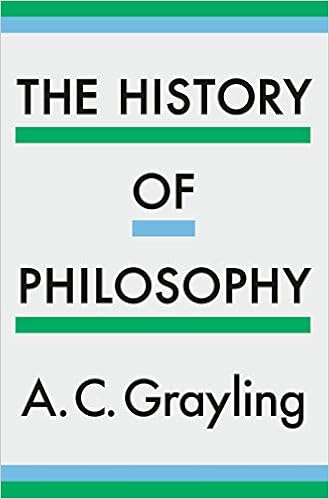
Homo ludens! 😁

steelridge58 said:
Philosophical Investigations into what is a video game


So, what actually is what is a video game? What are we really doing when we sit down to play one, and honestly, where is the actual value in all of this?
How does philosophy even find its way into the code of these games?

I figure since there are so many different branches of philosophy trying to tackle these kinds of questions, we might as well try our hand at it here too.

Looking back at the first two decades of the 21st century, the massive explosion in tech and the gaming industry itself has paved the way for a whole new category of speculative and reflective games—titles specifically designed for players looking for something a bit more intellectually stimulating. Modern culture has already started to embrace these virtual worlds and digital simulations as legitimate, and often preferred, alternatives to traditional media formats.

There’s this fascinating question raised in an essay by the Italian philosopher Stefano Gualeni regarding whether these worlds—both through their self-reflective qualities and as standalone environments—can be understood as philosophical artifacts. He suggests that we can fruitfully explore, and maybe even answer, this by looking at philosophy through its core mission: directing thought toward examining the very validity and possibilities of thought itself.

In a similar vein, philosophers of language have spent ages trying to weigh the validity and accuracy of using language—specifically text—to frame and convey thoughts, leaning on the old idea that language, especially the written word, holds a privileged, if not exclusive, relationship with how we think.

One of the early 20th-century thinkers who really pushed back against that unquestioned link between thinking and writing was Ludwig Wittgenstein.

From that viewpoint, you could argue that focusing solely on linguistic ways to mediate thought shows a certain numbness in Western philosophy; it fails to account for the specific constraints that this particular medium imposes on the flow of arguments and ideas, which ultimately leaves philosophers somewhat ill-equipped to appreciate the fun, untapped potential of alternative ways to communicate philosophical thought.

So, once we recognize those inherent limits of relying on language alone to carry thought, 21st-century philosophers have this incredible opportunity—through game design and the interactive experiences of virtual worlds—to challenge the long-held assumption that written discourse is the only context where philosophical thought can emerge and grow.
The notion that virtual worlds could be accepted as interactive arguments, academic outputs, or critical artifacts isn't some new fad; it's been firmly rooted for at least a decade now.
And if philosophizing within and through virtual worlds has already opened up new ways of thinking and new avenues of research, then I think we should open up the conversation ourselves:
- what is the greatest potential in the alliance between video games and philosophy?

addx? 😉)

Oh, what an absolutely wonderful topic. 👍

From a purely technical standpoint, yes, games are played via some form of software. However, that is a rather oversimplified way to look at it. Some might even argue that a computer game falls under the category of digital art. Digital art relies on computer-based digital coding or the electronic storage and processing of information in various formats: text, numbers, images, sounds—all contained within binary code.

Of course, there is a dark side to video games, which could certainly be discussed at length, but there also seems to be something profoundly useful about them. There is a downside to internet forums, reading the news, or watching sports as well. Negatives exist everywhere.

It isn't a bad idea to contemplate this, provided we take it a step further:


1) Video games primarily function as an interactive medium.
2) Video games viewed as designed ethical systems.
3) Players as moral agents.
4) The ethics of video gaming.
5) The fundamental nature of video games (as well as the nature of playing video games).
6) Are video games art, and if they are, what specific genre of art are we discussing?


After all, video games are a form of media—specifically electronic media—which are fields that philosophy engages with quite deeply.
Philosophy of books vs. books about philosophy in Philosophy ·
I recently finished reading Jeanne Hersch (1910–2000) and her work The History of Philosophy: Philosophical Wonder (the original was written in French, L'étonnement philosophique, likely published around 1981). For her doctorate in 1931, she studied under the French philosopher Henri Bergson, whom she provides a very fine description of in this volume. Apparently, Bergson himself was quite impressed by his student's work. In 1933, she moved to Berkeley, California, to further her studies—though she was born and raised in Geneva—where she met Martin Heidegger. 🙏 Nevertheless, she did not succumb to Heidegger's influence; in fact, she once remarked elsewhere:


The ideas he presented were not submitted to our free judgment, in accordance with the liberal stance a philosopher ought to maintain: instead, he imposed them upon us.

>

Quite a scathing critique. 😁>

However, I believe Jeanne Hersch had an even better mentor—none other than Karl Jaspers. 🙏

Her description of Jaspers is so compelling that I immediately found myself diving into Jaspers's 1937 lectures on existentialism. 🙂

As for her book The History of Philosophy: Philosophical Wonder, she skips over many philosophers, though that was entirely intentional, according to her own admission. Personally, I found her treatment of Jaspers, Martin Heidegger, Edmund Husserl, Søren Kierkegaard, and perhaps even Friedrich Nietzsche to be the most engaging parts—which, coincidentally, are the final philosophers she covers in the book. You can truly sense the connection between her and both Heidegger and Jaspers, given that she knew them personally.
Philosophy of books vs. books about philosophy in Philosophy ·
Gerald Jackson48 said:👍

There are plenty of local and international sources suggesting that part might be right. But honestly, the whole idea of Al Capone getting involved in building up parts of Cleveland feels like a bit of a stretch. Still, who knows? I really ought to dig into this more.

I have a few books on Capone, and from what I’ve gathered, those specific details just aren't mentioned. Regardless. Shoot me a private message if you have any trouble opening that folder; I added a password just so I wouldn't forget it myself. 🤦

By the way, could anyone recommend something I should absolutely avoid reading? 😁
Philosophy of books vs. books about philosophy in Philosophy ·
Gerald Jackson48 said:Super interesting stuff. Definitely grabbing a copy. 👍

I’m originally from Cleveland, and since it was always a major Port City, we were always open to different vibes and had deep ties to New York. Because of that, Americanization probably hit us way harder than the rest of the country. There’s even a story about how the Capone family made their way to the American coast through Cleveland. 😁

AL CAPONE AND MUSSOLINI BUILT THE CLEVELAND Skyscraper, which was funded by bootlegging and gambling

You are very welcome.. 😁

Gerald Jackson48 said:Super interesting stuff. Definitely grabbing a copy. 👍

I’m originally from Cleveland, and since it was always a major Port City, we were always open to different vibes and had deep ties to New York. Because of that, Americanization probably hit us way harder than the rest of the country. There’s even a story about how the Capone family made their way to the American coast through Cleveland. 😁

AL CAPONE AND MUSSOLINI BUILT THE CLEVELAND Skyscraper, which was funded by bootlegging and gambling

I feel like I’ve heard that story before—the idea that the Corleone family made their way to the USA via Seattle—but I honestly can't say for certain how much truth there actually is to it.
Philosophy of books vs. books about philosophy in Philosophy ·
steelridge58 said:I tend to circle back to certain things quite often—it’s actually part of my handle and reflects the kind of books I truly love.

One such book is The Poetics of Space by Gaston Bachelard.

It’s just one of those inexhaustible works where, every single time I pick it up again, I feel like I’m discovering something entirely new.

Just yesterday, I was mentioning my hometown in an email 😉 and how much of a piece of my heart stays there, feeling like no other place could ever really take its spot.

Then, as if on cue, I found myself returning to this book today, and because of that wonderful thing called forgetting, it felt almost like reading it for the first time, leading me straight to these passages:

"The childhood home is a lived-in house. Its intimate values are scattered throughout, difficult to pin down, always subject to shifting dialectics.
Think of all those honest stories about childhood—how they tell us that if a child doesn't have their own room, they simply retreat to a little corner to sulk!

But beyond mere memory, the childhood home is physically etched into our very being; it is a collection of organic habits. Even after twenty years away, despite the nameless steps of other houses, we will find ourselves mirroring the reflex of that 'first staircase,' never stumbling over a slightly raised step. The entire essence of the house dissolves into our own being. With that same instinctive motion, we would push open a creaking door and head toward the old attic in the dark. We carry within us the exact movement and feeling required for even the smallest latch that needs unfastening.

The houses we inhabit later undoubtedly wear down our movements into the mundane routines of everyday life. But there is a profound sense of wonder when we return to that old house after decades of wandering, only to realize that our finest, most primal movements have suddenly surged back to life, still perfectly intact. In a sense, the childhood home writes a hierarchy of living into us; we are essentially a diagram of functions within that specific house, and every other home we enter is merely a variation on that original theme. To call it a 'habit' feels far too clinical to describe this passionate connection of a body that never forgets a home it can never truly leave."

The book itself is a phenomenological exploration of poetry, delving into the philosophical and lyrical layers of our world—life, creativity, the phenomenon, and the often-overlooked or dismissed soul. It provides the initial momentum for any great work, acting as the spark where the spirit begins to shape imagination; the dialectic between inspiration and talent only becomes clear when you consider both poles—the soul and the spirit—alongside logos, the essence of what makes us human, and imagination, which is perhaps the greatest force in human nature. I honestly can't recommend it enough.

And here is one more little quote that feels perfectly on-topic:

"Any reader with even a modicum of passion simultaneously fuels and suppresses the desire to be a writer. When a page is read that is simply too beautiful, modesty stifles that urge.
But the desire is reborn. In any case, every reader who revisits a work they love knows that those favorite pages touch them deeply."

I added the bold text before your quote just because I thought it sounded more elegant. 😁

I can hardly believe my eyes at the book I picked up today. 🙏 🙏 🙏

Coca-Cola: Democratic Socialism: Americanization of the Counterculture of the 1960s

Everything about it is fascinating, but "Democratic Socialism" 🤣 🤣 I am genuinely stunned that I never thought of that phrasing myself. 🤣
Philosophy of books vs. books about philosophy in Philosophy ·
Amanda Jackson5 said:https://www.amazon.com/dp/B000000000

It is quite interesting; from the brief glance I took at some of the reviews in English, the original title is actually The Age of Surveillance Capitalism.
Philosophy of books vs. books about philosophy in Philosophy ·
Sandra Murphy33 said:Has anyone picked up "post-capitalism and a world without work" yet? 🙂

I spotted it at the library a couple of days ago. It’s a new arrival, and nobody had checked it out yet. I decided to reserve it for myself by tucking it away on a random shelf where it doesn't belong, just so the usual crowd browsing that section won't stumble upon it. ... psssssssst 😎

Who is the author of this book?