The absolute best part was how the card actually arrived at my house. It came in this envelope that felt premium—it had this texture to it, almost like... In this commercial... (Just wait until you see the moment Snoop Dogg lifts that casket)... so, there was this artificial feather, hair, fur—whatever you want to call it—that was actually sticking right out of the envelope. And of course, it was a pink envelope. Totally "Smooth." 😁 🤣 🙏
They really have mastered the art of marketing. Honestly, the internet is absolutely flooded with their video spots and those specialized clips they release. It’s clearly a massive campaign specifically tailored for the US market.
You’ll still have plenty of ways to settle those bills. There's a big difference between a provider simply "handling the heavy lifting" by processing the payment and just sending you a usage alert without a bill, versus a system where you still need to step in to authorize or complete the transaction. That’s typically how these types of services are structured. Even today, when you opt for e-billing with most major companies, you often receive a standard invoice via email, but you can then zap the payment in just two or three clicks through their official app. This should work much the same way—except instead of jumping between a dozen different apps, you'll be able to manage everything from one central hub.
But hey, let's just sit tight and see how they actually roll this out once it arrives.
I wouldn't go so far as to say you're "stuck." You only really find yourself trapped if you let things get to a point where that's your only way to settle a bill. In any modern market, there will always be X other ways to get things done. It’s a bit like saying you're tied to your specific Chase online banking app and then blaming them because you missed a payment one month. At the end of the day, they’re just one option among many. Even with barcode scanning, there’s always a third-party service running in the background that could potentially go offline right when you need it most. 🙂
In a separate thread, we discussed the legal requirement starting this September that American banks must allow third parties access to certain banking data upon your request. Hopefully, this will pave the way for new services—similar to the Swedish firm Klarna—to enter the US market. While they are currently active in about 90% of the European Union, the US isn't on their list just yet. To be fair, Klarna Bank previously offered a different kind of money-sharing service here, but it wasn't nearly as appealing.
Klarna is already operational in many parts of the EU and offers various payment methods; in some markets, they even provide credit cards that can be obtained via a German N26 account. You simply need to link your N26 account and wait a bit while they evaluate whether you qualify for a card. In my case, they approved me for $1,000 after just two days. As you continue using the account, that limit tends to grow. There are no monthly fees, and it feels like a hybrid between a charge and a revolving credit line. The app offers several options; personally, I set it up so the full amount is debited directly from my N26 account within 15 days, which means zero interest. Of course, if you decide to "split" the total into multiple installments, fees will apply. One of the best perks of Klarna is that if you cancel an online purchase within 15 days, Klarna won't charge your account for it.
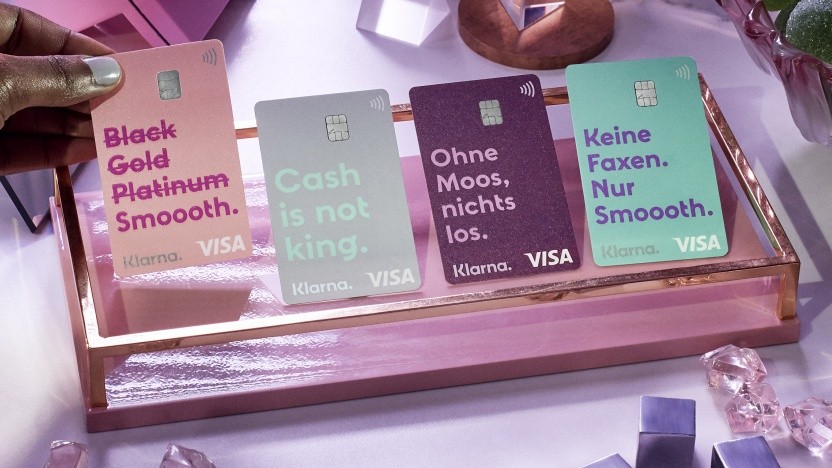
Physical cards:
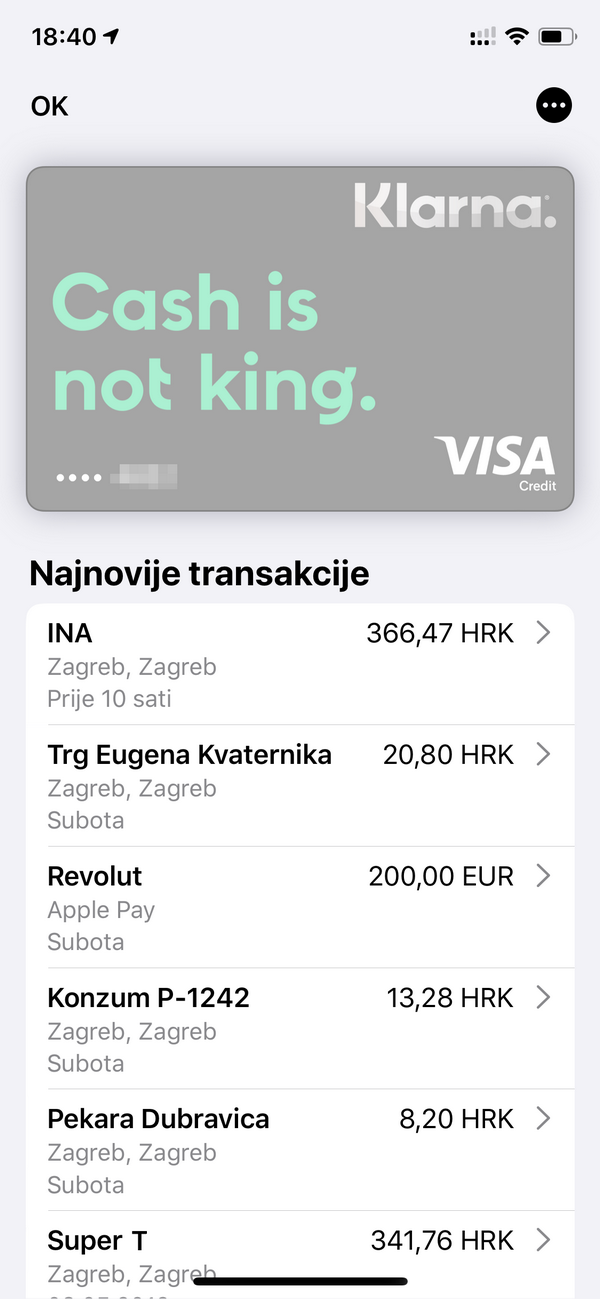
The cards also work via Apple Pay:
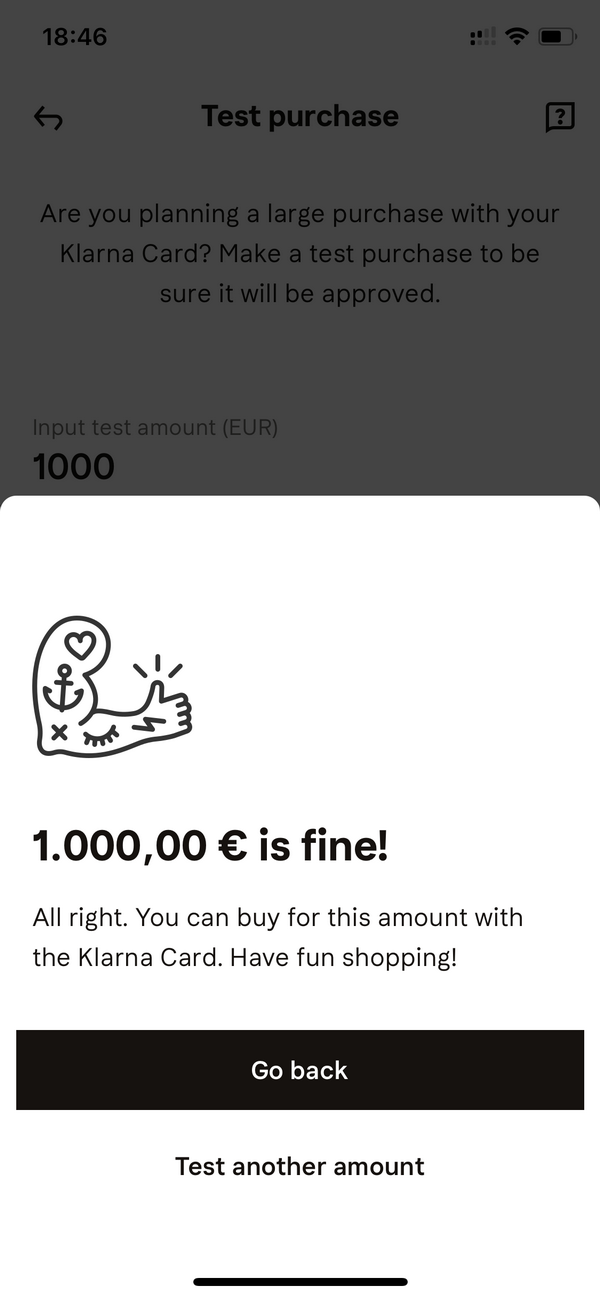
You won't know your exact spending limit until you actually test it within the app. It’s a bit like using a Diners Club card—you enter the amount and see if it clears or not. They say limits are frequently adjusted or increased based on your transaction history.
All in all, it's a pretty slick setup. I'm hoping they make their way to America once the new regulations kick in, but those who already have an N26.de account can sign up right now. Klarna Bank doesn't require any extra verification, like sending over an ID or anything else, once you link your N26 account; they pull all your necessary info directly from there. The only time Klarna asks for personal details is when you need to provide a shipping address for the card itself.
To all me, this seems incredibly redundant. What’s the point of scanning a bill's barcode if you're just going to receive that same bill in your inbox and pay it in three clicks anyway? And we're talking about handling ten different bills at once. That's the concept, at least—though whether they can actually pull off such a seamless execution remains to be seen.
Actually, this specific section of the article is far more intriguing to me than the app itself:
For startups looking to break into the market here, this represents a massive opportunity—especially since banks will be required to open up their IT interfaces by mid-September due to the PSD2 directive, allowing users to pay bills directly through various third-party apps.
I wasn't aware that banks would be mandated to grant access via third-party applications starting this September. This is a fantastic development! I've seen how smoothly this works with banks in Germany; you can elegantly access your online banking through a variety of apps that have nothing to do with your primary bank. By using your existing bank credentials, you log directly into these third-party platforms, which lets you consolidate accounts from four or five different banks into one interface. Beyond that, these apps can offer features your traditional online banking might lack—you could even apply for various credit cards in practically three clicks (by giving the credit providers a view of your account status). If I recall correctly, isn't this also a prerequisite for linking a bank account to PayPal for direct debits? It opens the door to all sorts of instant payment services tied directly to your account; in Germany, for instance, they use Venmo, or in the Netherlands, they use ideal and things like that. In Germany, these systems are even used for identity verification when accessing services that require personal data; instead of jumping through all those hoops, you simply allow them to verify you through your online banking. Here in the States, we have something similar starting to take shape through services like Login.gov.
Business Insider just put out a piece about this new bill-pay app launching this fall. Technically, the app is already live, but it’s pretty much non-functional right now. That said, if they actually deliver on the promise of letting you pull up and pay all your bills directly within the interface, wouldn't that be a total game-changer?
It looks like that Romanian Pag is in quite a rush to win over American users, since they're already pushing people to download the alpha version.
I wouldn't exactly call it a "salary," but I do have a recurring deposit hitting my Chime account from a company based in Germany, along with the occasional side hustle payment popping up now and then. That said, I suspect the main factor here is likely the six-month history of using the account (since they used to decline me before).
Back when I first opened an account, Twitter was actually one of the few major players offering support for US dollars, long before Chime became a thing—not to mention Stripe, which honestly feels like it’s in a completely different league compared to the rest. Even now, Twitter offers a much wider variety of currencies than Chime does. Plus, you can actually set up bank accounts for various markets through them; for instance, you can grab a US account and seamlessly link it to your American PayPal to withdraw funds without getting hit by any commission fees. Another big difference? Twitter provides actual debit cards, whereas Chime just gives you prepaid ones. While Twitter used to have a clear edge over Chime, it still has plenty of unique perks to offer today. That said, I’m really hoping they eventually get their act together and lower those pesky fees so they can truly compete with Chime on equal footing. At the end of the day, every one of these services has its strengths, and none of them are perfect. 🙂
I honestly don't get their logic regarding these fees. If you ask me, I’d much rather agree to a slightly less favorable currency exchange rate—just enough to let the service stay profitable—than deal with being hit by top-up fees on my debit card. That kind of upfront cost just turns people off immediately. Even Chime recently got rid of those types of charges.
And then, to top it all off, I see they're charging for bank transfers from US accounts too 🤦
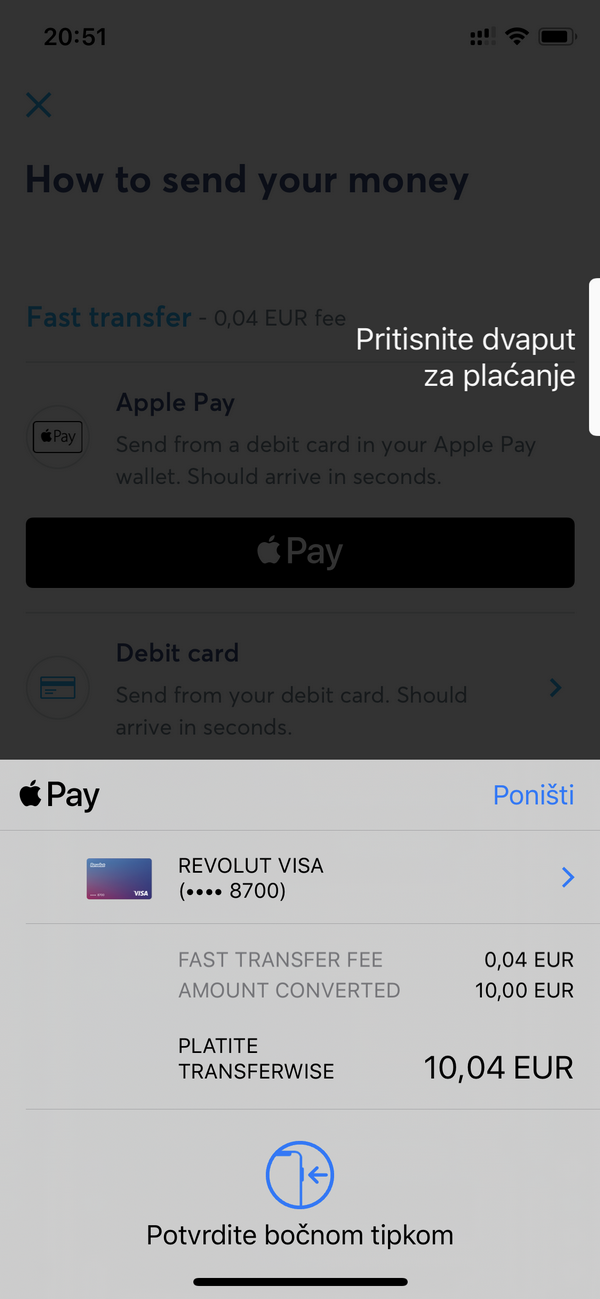
I just realized that Wise has finally added Apple Pay support for topping up accounts in America! 🙏 Previously, you could only do this if your account was registered in the USA, Switzerland, France, Spain, Ireland, or Italy. Unfortunately, it isn't showing up for my local currency yet, though it works perfectly for dollars and pounds. I’m really hoping they roll it out for all currencies soon—it would be great to have it work for everything. 🙏
I honestly don't get why they are still clinging to that "fast transfer fee" when topping up via card; almost every other service lately has phased that right out.
On the bright side, you can make a zero-fee deposit using bunq. It’s pretty much the ideal setup—you just use bunq and then the bunq app pops up automatically to confirm the payment. 👍
You might want to try one of the JP Morgan Chase ATMs; I managed to update my ZIP code there without any issues. Just make sure your card is actually active—I'm assuming you’ve already used it for a few purchases with the old ZIP code?
Just a little off-topic here, but since we were just chatting about using a Mastercard at 7-Eleven... has anyone actually tried paying their bill there using a credit card? I'm wondering if they have any restrictions, similar to how some services only accept debit cards for certain transactions.
It would be fantastic if they added support for Mastercard or Diners Club, but looking at their official page, it seems like Mastercard might show up sometime soon while Diners isn't even on their radar. It looks like they're mostly focused on American Express, which they've even mentioned isn't used by many people, even over in the United Kingdom. 🙄
ironcyclist58 said:To build on that, Venmo isn't playing nice with my Wise card (not directly, and not through Curve either—which makes sense since Curve passes along the original MCC codes now). It just keeps throwing a "you're not allowed to make this type of payment" error at me. Same exact thing happens when you try to pull cash from an ATM using Curve (whereas it works perfectly fine with Revolut or my Citibank Visa card, showing up as a standard transaction). I still need to test out Email payments or trying to pay a bill at 7-Eleven, but honestly, I've got a bad feeling it’ll be more of the same...
Could someone clarify this? 🤔
From what I can see, my Curve transactions consistently show up as Mastercard, even when the underlying card is actually a Visa. Even when I'm at places running those reward promotions—like a local Small town shop or a Walmart—I end up using my Mastercard... I keep getting those little slips to fill out because the system thinks I used a Mastercard, when in reality, I paid with a Visa. My statement even lists it as a Mastercard transaction. 🤔
I tried it myself just now, and the credit card isn't working. It keeps saying you can only pay with debit cards. From what I can tell, this seems to be the rule for all accounts now—it wasn't specified that this restriction applied only to that specific American Express account. 🤷
I was actually thinking about giving Revolut a shot, but I really didn't want to deal with the hassle of moving money around just to top up the balance. Why would USPS reject a Revolut Mastercard? If they are, I’m guessing it might be because their cards don't support D Secure...
JPMorgan Chase should really just act as their local partner for support; I highly doubt they’d restrict everything strictly to their own Mastercard. It reminds me of how a shop in Beverly Hills might run ads everywhere promoting Mastercard payments, only to display a Bank of America logo right next to it—maybe even offering some kind of sweepstakes. In those cases, you can swipe a Chime card, use Twitter, or even a Revolut card, and the terminal just spits out the receipt for the contest perfectly fine. 😁
It ought to be a standard transaction, and honestly, you should always decline Dynamic Currency Conversion if you're entering your PIN.
Wait, so USPS doesn't work for American Express? That’s strange—I actually just used my American Express via USPS about 15 minutes ago using Maestro 🤔
It’s actually pretty strange. I have both German and American PayPal accounts, and everything works perfectly fine even though I don't have any local documentation for them. The only verification I had to go through was a quick SMS code sent to my phone, and that was really it. 🤷