195 posts shown.
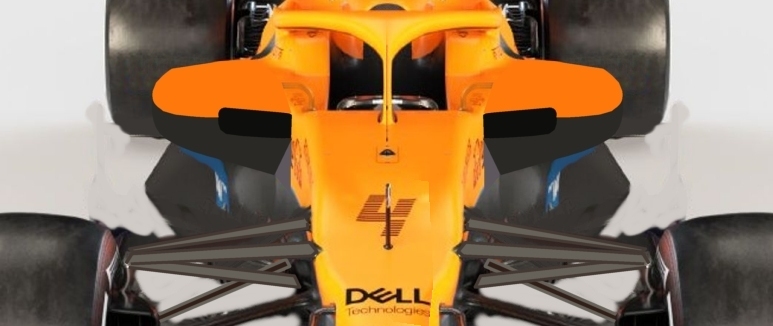
wiredseal7 said:The car starts off looking like an Aston Martin, but that raised sidepod is shorter. This design probably accommodates a compact Honda engine. There might be room for air intakes like the Aston Martin has, but you can't see them—maybe they're channeling air to the rear instead. We can already start guessing at the Red Bull or Mercedes-style sidepods and engine geometry. Everything else will likely vary quite a bit; it shouldn't be identical.
AlphaTauri really needs to find whoever leaked this.
One thing is certain: teams using split turbocharger systems (like Mercedes-Benz and Honda) tend to have similar designs where we see two specific things:
1. An elongated chassis paired with an attempt at an ultra-slim engine cover.
2. Aggressive sidepods featuring an ultra-wide outlet for hot air exhaust to stabilize the rear end.
Haas showed what Ferrari is capable of; they had that sudden drop-off and those aggressive sidepods. What I don't get is what Aston Martin is aiming for. For instance, look at the 2012 Toro Rosso or the Ferrari 1992—they didn't exactly make a name for themselves with that "double floor" style sidepod concept. They seem to think it’ll actually work in this new era.
And then there's the 2009 Renault R29. Back when the regulations shifted drastically toward cleaner cars, the team from Enstone decided to be the only ones besides Force India attempting a fake wing by bulging out the sidepods. Naturally, it wasn't a success, and they reverted to a conventional design after just a few races.

In my opinion, the next major aero shift happened when they banned the "blown diffuser," where they used to feed hot exhaust gases into the diffuser like in the early 90s. During that 2012 period, we saw just about everything, including a return to that R29 concept where they tried to bulge the sidepods to create a sort of "free" extra wing during an era where wings were heavily restricted since 2008. But Toro Rosso went even further, deepening the sidepod to create a tunnel under the radiator.
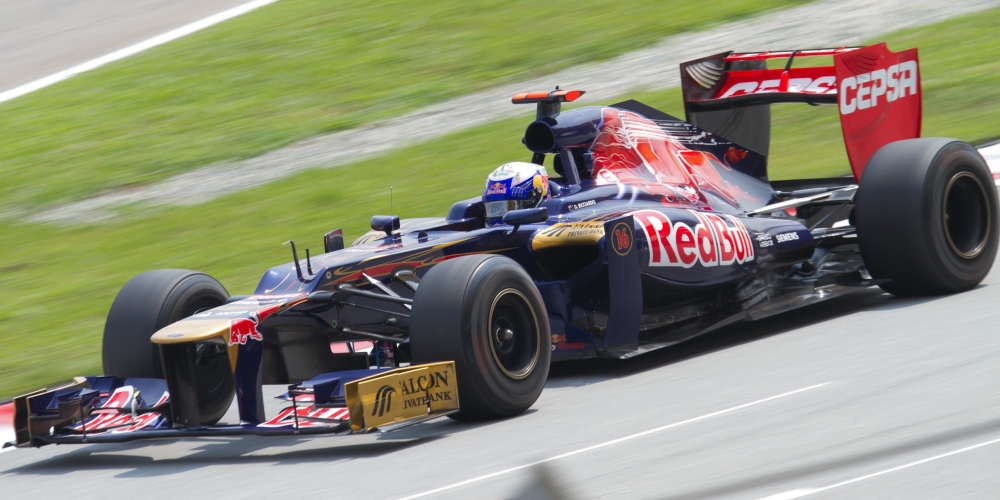
In theory, you have everything that could give you an edge: faster fluid flow toward the diffuser, massive sidepods that direct air toward the rear, and ultimately, organized airflow that provides stability. But honestly, the concept just doesn't hold water when you compare it to, say, the one guy who actually knows what he's doing—the way Red Bull approached it back in 2009 when the regs moved from heavy cars to light ones. We saw a beautiful concept where the fluid was aggressively directed toward the diffuser.

The sidepod is literally cut diagonally from the opening down to the diffuser, but that brought a huge change and worked great for Red Bull. They later used that same idea to blow the diffuser, eventually dominating during the Koanda effect era, where fast-moving fluid was aggressively channeled along the upper edge of the diffuser via the exhaust, which sat right on the downward slope of the sidepod.
I think the Red Bull RB5 concept will be very relevant in 2022, much like how the Brawn GP BGP001 shared similarities with that RB5. Aston Martin is taking a gamble this year. Haas and McLaren, however, have delivered the real deal. Haas spent a year and a half designing their stuff, which isn't something to take lightly. AlphaTauri is trying to channel air toward the diffuser conventionally, but to me, it looks just like 2013 again, with that subtle concave shape:

Who did Sauber beat by using that aggressively slim sidepod?

So, the takeaway from my somewhat ridiculous deep dive is this: an aggressively sculpted sidepod that speeds up airflow toward the diffuser is going to outperform pretty much any other concept out there.
stormybadger8 said:I honestly have no clue how accurate the Haas and Red Bull reveals actually are (though I'd bet Red Bull won't have much in common with what they showed...) but based on what we've seen so far, it looks like we're looking at two drastically different cars and concepts. The real question is just how long that stays that way...
Because it’ll probably become obvious pretty quickly who got it right and who missed the mark...
Red Bull hasn't really shown anything new besides the livery; they're basically using that FOM base model that almost every team bought for the reveal, except for Haas and McLaren. Mercedes seems to have used it the most—maybe even eight times.
Looking at all these model shots, I've started to get the impression there are essentially two ways to design the sidepods:
1. The Aston Martin approach—maximizing the sidepod surface area to manage airflow as smoothly as possible. The goal is to keep the flow steady so it hits the diffuser edges and rear wing mounts perfectly, while simultaneously interacting with the fast-moving air passing through the Venturi tunnels under the car. It’s basically a "safe" concept designed to give the team a predictable, well-behaved car on track.
2. The Haas approach—which is basically just copying Lane's concept while staying within the rules. This one feels a bit more experimental and risky because instead of smooth airflow hugging the body, the air tends to dive sharply toward the floor once it clears the sidepod, hitting the rear of the car much faster. Aston Martin tries to mimic this by creating a sort of "fake" double floor, where air compresses and accelerates through the gap between the floor and the sidepods. The Haas style seems like an attempt to compensate for the gaps left by the ban on vertical deflectors.
Edit: Did I read the first page correctly? 😁
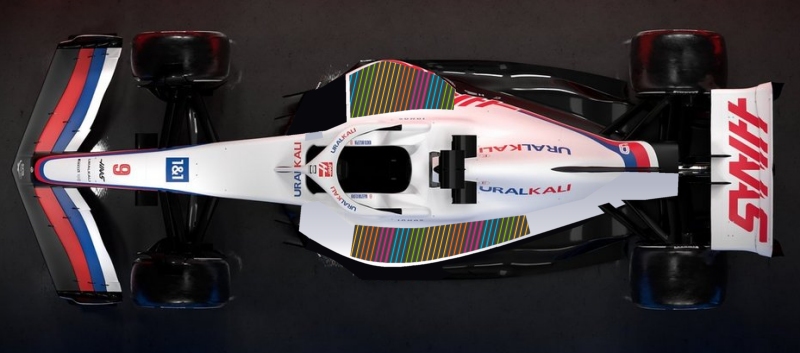 Style one and style two, for better or worse.
But check this out, a photo of the AlphaTauri leaked:
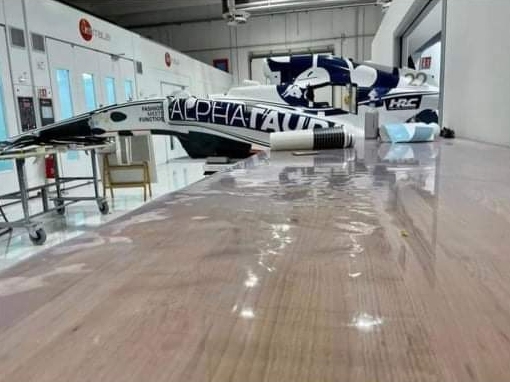
In this shot, you can see how AlphaTauri is trying to blend both the Haas and Aston Martin concepts. I expect Red Bull might try something similar.
wiredseal7 said:Haas is giving us our first look at their new cars, and honestly, that’s pretty impressive coming from a team working with such a limited budget.
On the other hand, word on the street is that Adrian Newey was leaning toward a pretty radical concept.
I’ve been looking over the details regarding the RB18's floor design, and it’s pretty interesting how much they focused on that specific area to find performance. It seems like the team really leaned into optimizing the airflow underneath the car to maximize ground effect. They spent a lot of time refining the floor edges and the transition areas to ensure the suction remains consistent, even when the car is bouncing or hitting bumps. It’s one of those things where you don't realize how much work goes into a single component until you see the technical breakdowns. They weren't just chasing raw downforce; they were trying to make the aero platform more stable and predictable for the drivers. If the floor isn't behaving, the whole car feels off, regardless of how much power you have. It's a delicate balance, honestly. I'm curious to see if this approach holds up against the upgrades coming from teams like Ferrari or McLaren later in the season.
They moved the cockpit closer to the front wheels. The rear end looks even tighter than last year, too, especially since they’re running a more compact Honda engine compared to what we saw back in '21. We've only got five days until the car is officially unveiled.
Haas was basically the first team to jump straight into developing a car for the new era, which honestly makes their 2021 season look pretty desperate.
Ostatak—I think the Italian press corps is just talking.
Absolute nonsense.It’s always the same crowd every single year, making these exact same calls about how the Ferrari car is going to look. They keep talking about this "cockpit being closer to the front wheels," but here is what they actually mean by that.
What exactly do they mean by "impossible"? Claiming the cockpit is too close to the front wheels just doesn't hold water. Everything is strictly dictated by the technical regulations—aside from the wheelbase, which isn't going to look drastically different to the naked eye anyway. Honestly, it feels like the Italians just threw out two ridiculous arguments.
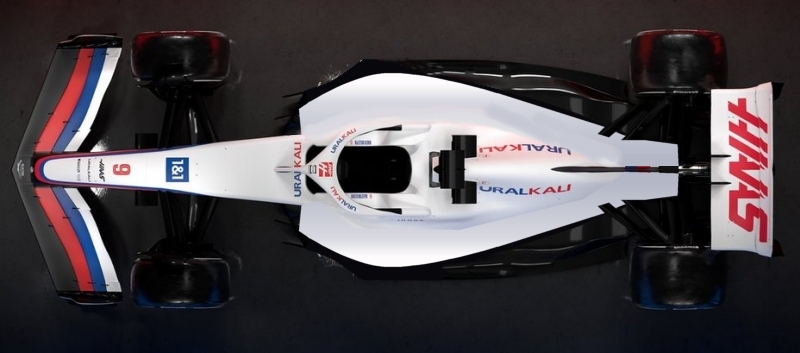
I took that shot of the Haas from above to show you what I'm thinking. I’ve reworked things and come up with two different concepts that are both perfectly legal under the current regulations.
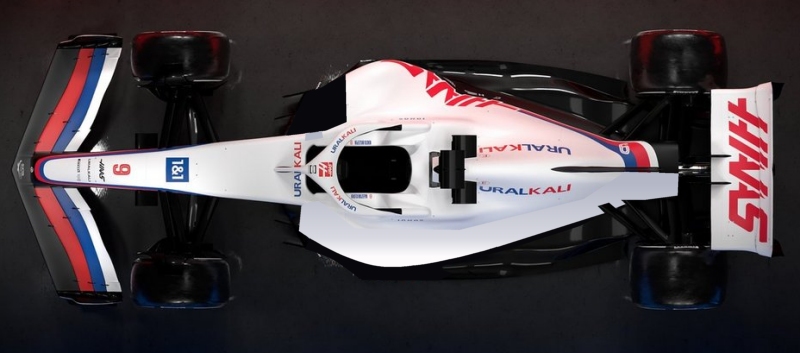 Upper concept, explanation:
 So, this is basically the Haas concept, just without that whole "Sidepod Airflow Directional Aid"—or APUVOB, if you want to be brief. And what exactly is an APUVOB? Well, let me show you right here on the Red Bull car from last year.
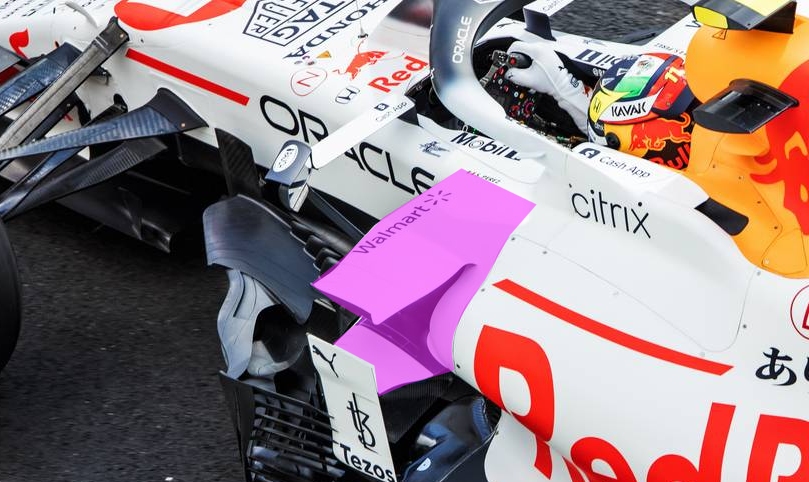
That pink highlighted area is the APUVOB—basically the part where designers have total creative freedom to interpret aerodynamic elements and wings. If I’m following this correctly, the headache from 2022 was that while you still had that design freedom, there weren't any protruding wings allowed anymore. Now, there has to be a clear, continuous edge that follows a symmetrical concave shape through the cross-section. You can't have any breaks in any part of that profile. It’s the same deal with the nose; it has to be a clearly defined concave shape symmetrically across the cross-section. This means nobody can pull off a nose like the Caterham 2014, or that dual-hole look from the Force India 2018, or those twin front ends from the Lotus 2014, or even a "finger" style nose.
So, basically, the top part of my concept sketch doesn't include an APUVOB, and the bottom image is just my best guess at how the radiator setup will actually look.
Lower concept, explanation: In this case, I used almost the entire available surface area of the APUVOB. It obstructs the sidepod air much more gently than the original Haas concept—which isn't my design, by the way—making the car feel a lot more stable. You can also see in the bottom image how the radiator is nearly larger than the one on the top Haas model, yet it somehow manages to take up less space at the same time.
Look, I’m just trying to prove that it isn't actually a case of the cockpit being closer to the front wheels. It’s more that the APUVOB is significantly longer than what we see on the Haas, which makes the entire sidepod look much longer than usual. To me, this whole thing feels like a callback to the design philosophy used on the Ferrari F1-91 back in '91. Take a look at my concept below and this image:
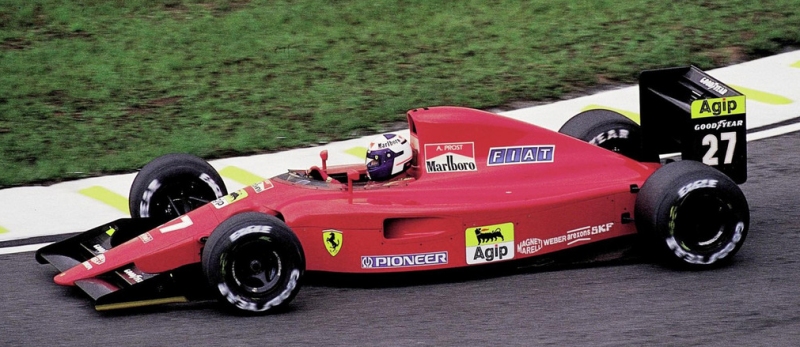
Day 1 of testing in Bahrain (March 10, 2022)
Gasly, AlphaTauri, 1m33.902s, C4 - 102 laps
Sainz, Ferrari - 1m34.359s, C3 - 52
Leclerc, Ferrari, 1m34.531s, C3 - 64
Stroll, Aston Martin, 1m34.736s, C4 - 50
Albon, Williams, 1m35.070s, C4 - 104
Norris, McLaren, 1m35.356s, C2 - 49
Bottas, Alfa Romeo, 1m35.495s, C3 - 66
Vettel, Aston Martin, 1m35.706s, C3 - 39
Russell, Mercedes, 1m35.941s, C3 - 60
Perez, Red Bull, 1m35.977s, C2 - 138
Hamilton, Mercedes, 1m36.365s, C3 - 62
Alonso, Alpine, 1m36.745s, C3 - 24
Ocon, Alpine, 1m36.768s, C2 - 42
Zhou, Alfa Romeo, 1m37.164s, C3 - 54
Fittipaldi, Haas, 1m37.422s, C2 prototype - 47
Day 2 of testing in Bahrain (March 11, 2022)
Magnussen, Haas, 1m33.207s, C4, 60 laps*
Sainz, Ferrari, 1m33.532s, C4, 60
Verstappen, Red Bull, 1m34.011s, C4, 86
Stroll, Aston Martin, 1m34.064s, C4, 70
Hamilton, Mercedes, 1m34.141s, C5, 47
Ocon, Alpine, 1m34.276s, C4, 111
Leclerc, Ferrari, 1m34.366s, C3, 54
Norris, McLaren, 1m34.609s, C3, 60
Vettel, Aston Martin, 1m36.020s, C3, 46
Tsunoda, AlphaTauri, 1m36.802s, C3, 120
Bottas, Alfa Romeo, 1m36.987s, C2, 25
Schumacher, Haas, 1m37.846s, C2, 23
Russell, Mercedes, 1m38.585s, C2 proto, 67
Latifi, Williams, 1m39.845s, C2 proto, 12
Zhou, Alfa Romeo, 1m41.805s, C2 proto, 48
Day 3 of testing in Bahrain (March 12, 2022)
Verstappen, Red Bull, 1m31.720, C5, 53 laps
Schumacher, Haas, 1m32.241s, C4, 85*
Leclerc, Ferrari, 1m32.415, C4, 51
Alonso, Alpine, 1m32.698s, C4, 122
Russell, Mercedes, 1m32.759s, C5, 71
Bottas, Alfa Romeo, 1m32.985s, C3, 68
Tsunoda, AlphaTauri, 1m33.002s, C5, 57
Perez, Red Bull, 1m33.105s, C4, 43
Norris, McLaren, 1m33.191s, C2, 90
Vettel, Aston Martin, 1m33.821s, C4, 81
Zhou, Alfa Romeo, 1m33.959s, C4, 82
Gasly, AlphaTauri, 1m34.865s, C4, 91
Sainz, Ferrari, 1m34.905s, C5, 68
Albon, Williams, 1m35.171s, C3, 18
Latifi, Williams, 1m35.634s, C3, 124
Stroll, Aston Martin, 1m36.029s, C3, 53
Hamilton, Mercedes, 1m36.217s, C5, 78
Magnussen, Haas, 1m38.616s, C2, 38
Formula 1 is a sport with roots stretching back over a century, and obviously, there was all sorts of chaos long before it officially became the sport we know today at Silverstone in 1950 and beyond. Throughout its history, we've seen different eras, and naturally, most of them are shrouded in a fair amount of myth-making.
So, it’s completely normal to be obsessed with one specific era and then refuse to accept whatever comes next. Thank goodness I'm not one of those people, though. To be honest, I wasn't a fan of the sprint format at first either, until I saw what happened at Silverstone. Growing pains are just part of the deal for Formula 1. One thing is certain: as an individual, there isn't a single thing I can do to change how Formula 1 operates. I'll either watch and enjoy it, or I'll stop watching entirely—but the fact remains that a fan who's been following this sport for over 20 years isn't just going to turn their back on it that easily.
At the end of the day, the sprint format has some flaws in how it's implemented and presented, but there's clearly still a lot of work to be done if they plan on bringing it to more tracks.
The whole concept of the sprint races in this current setup just isn't what they should be. We don't really have a standard Grand Prix weekend, and we certainly don't have a real Sprint. We need to draw a line somewhere and figure out how to actually do this better.
That points system—giving 3 for P1, 2 for P2, and 1 for P3—is honestly a joke. Why wouldn't we have a Sprint where more points are actually on the table? They could extend the scoring to more positions while still ensuring the top three get a bigger chunk than P4 and below. That would actually create some real stakes. Right now, the Sprint format feels like a procession where drivers are too scared to take risks because there are SO many more points up for grabs on Sunday. Why settle for soup when you could have a steak?
I have another idea too, something that’s kind of a mix between Formula E and NASCAR. It's a Crazy sprint that would award a total number of points equal to a standard Grand Prix weekend. This style would work great for tracks that aren't generally that exciting. The format would look like this:
Friday / 60 minutes of practice + 60 minutes of practice
Saturday / 60 minutes of qualifying to set the grid for the first Crazy sprint (93 miles race)
Sunday / 60 minutes of qualifying to set the grid for the second Crazy sprint (93 miles race)
Crazy sprint scoring: p1/16, p2/12, p3/10, p4/8, p5/6, p6/5, p7/4, p8/3, p9/2 and p10/1
I’d probably go even further. Maybe one or both of those Crazy sprint races could be part of a separate competition that counts toward the regular Formula 1 championship. Formula E used to have the Voestalpine European Cup, which covered all the races in Europe. At the end of it, whoever earns the most points in the Sprint series could get a nice trophy at the FIA Gala.
A Crazy sprint would be perfect for the less interesting tracks, and we could increase the DRS detection to 2 seconds. And obviously, if a track offers multiple configurations, it would be a blast. On a standard track, we’d have the normal race, and then for somewhere like Bahrain, you could have two Crazy sprint weekends using the outer ring and Endurance setups. One location, five races! Just imagine a Crazy sprint at Paul Ricard with the 1.2 miles Mistral, or even Jerez.
With Crazy sprints added, the Formula 1 calendar would easily hit 30+ races per season.
The situation with Lewis Hamilton is crystal clear to me. Having a car with an illegal rear wing that pulls pole in qualifying? That’s a straightforward disqualification, plain and simple. At best, they'll just swap out the wing and let him start from the pit lane for Sunday's race. Given how things are looking, if Lewis Hamilton can find enough pace in today's sprint, he might actually be able to muscle past Max Verstappen—maybe even force him wide. Even with the penalty, it doesn't really matter because he's starting from the pits anyway, whereas Max would be stuck at the back of the pack.
Max Verstappen’s situation is much more complicated. Based on what we know, it looks like he was intentionally messing with the rear wing, which goes against the spirit of the sporting regulations. It's hard to call this one because it all comes down to steward discretion, and honestly, relying on that feels like being out on a boat in choppy waters. We can sit here and vent about "stupidity" all we want, but ultimately, it's up to the officials and how they choose to view the situation.