Maria Barnes said:I'd argue it all comes down to the media. If the press decides to hammer on a disaster, they can wake up the public. Once the public is awake, they can pressure politicians, donors, and activists to actually act. If nobody knows about it, nothing happens. I noticed today that plenty of outlets are covering this—even Ban Ki-Moon was involved. Clearly, there's a push starting. People are paying attention.
I don't know how much weight this carries. But if it matters—if we're talking about an ecological disaster—then we need to shout about it. Inform people. Mobilize them. Why is this happening? Can it be stopped? At what cost? Is this a local issue or a global one that could hit our own backyard too? Anything but sitting around shrugging and calling it "old news." This issue is arguably more critical than the Swine Flu scare (look at how the media successfully mobilized the world over a manufactured crisis just to rake in funding). Here, the problem is right in front of our eyes.
Bottom line: spread the word and pass on the facts. 🙂
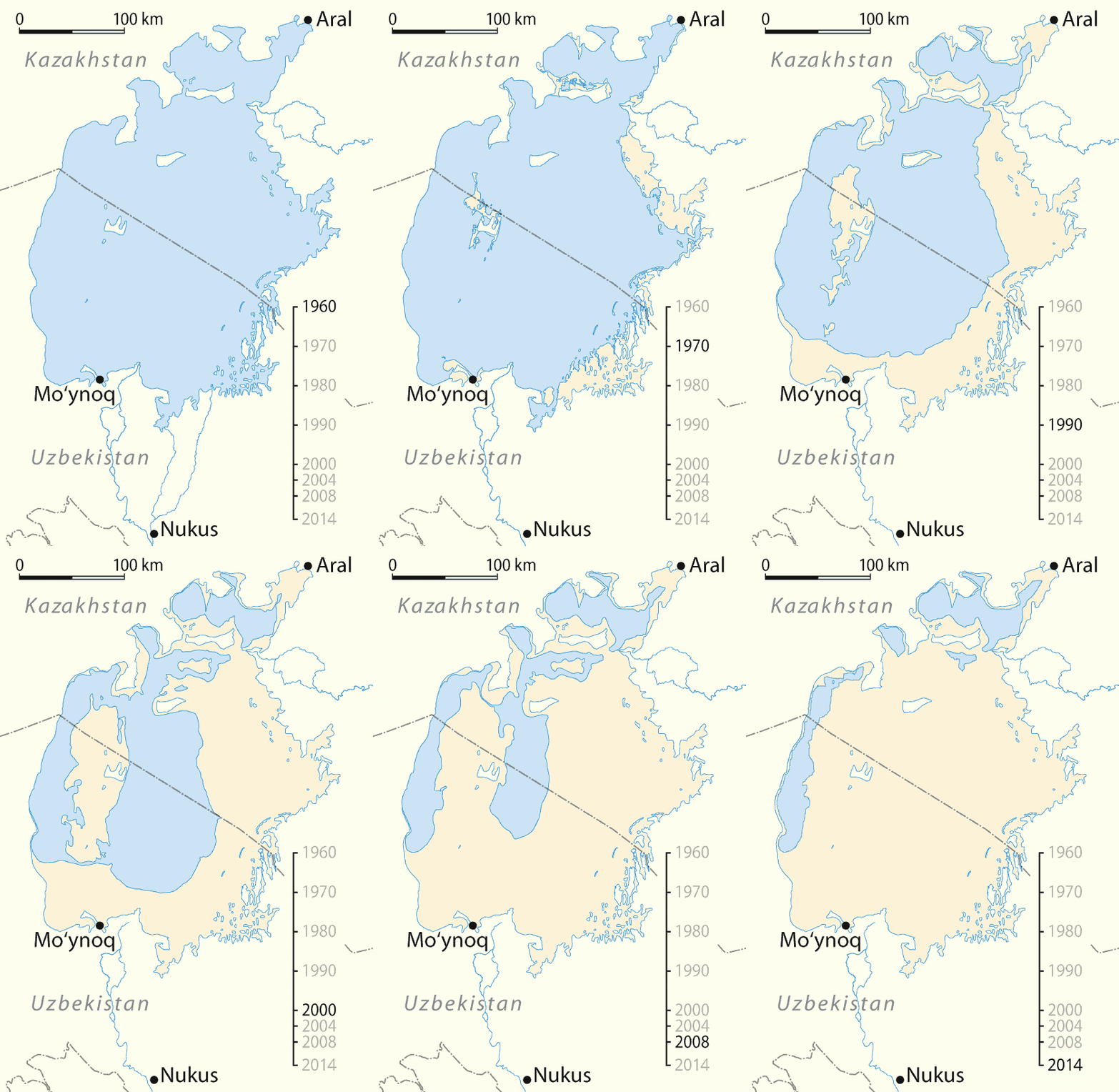
No, they're just going through the motions. When has anything concrete actually been done regarding any issue when we talk about the UN and its agencies?
I don't know how important it is. But if it matters—if they're calling it an ecological disaster—then people need to be talking about it, informing the public, mobilizing them. Why is it disappearing?
You don't even know what's going on, yet you're foaming at the mouth about how nothing is being done.🙂
The deal is, back in the day in the former Soviet Republic of Uzbekistan, the Amudarya and Syr Darya rivers were diverted into a massive canal system to irrigate cotton fields for the industry. Since the lake lost its water source, the logical result followed: it dried up.
Besides, it's all right there on Wikipedia:
http://en.wikipedia.org/wiki/Aral_SeaCan it be prevented? How? (How much money?) Is this a local or a global issue—could something similar happen in our neck of the woods? Anything but shrugging your shoulders and saying it's "old news." This problem is definitely more significant than swine flu (just look at how the world was successfully mobilized by the media over a made-up problem to pull in cash). Here, the problem is plain as day.
It can't happen here. For one, we don't have projects like that, those kinds of rivers, or a landscape that's that water-scarce. Plus, in the States, irrigation is used on maybe 0.8% of arable land. The only potential danger of that scale would be a 250-year-old project like the Danube-Sava Canal, which has its own thread on this forum.
To prevent this or restore the Aral Sea, you'd have to destroy Uzbekistan's cotton industry—which is one of the biggest in the world—and dump billions upon billions of dollars into returning the rivers to their original beds so they could supply the Aral Sea again.
What else do you want to know? I'm planning on visiting, so if I go, I'll post a travelogue here.😉