CheckEmoji Community · the emoji forum
🏠 Home 🆕 What's new ❓ Unanswered 🔥 Popular 📡 RSS Members 👥 0 online log in · register
Home › Society › Religion › Why did Jesus die?

Why did Jesus die?

Started by Angela Martin20 · · 👁 30 views · 518 replies

📡 Subscribe to replies

Participants Angela Martin20steelgardener22Harold Reyes3rowdyhawk10Henry Williamsslyviper9Megan Long21Jessica Doyle67Benjamin Taylor6Harold Richardsonvelvetmaker39Jack White10Lawrence Bailey77silentviper19Taylor Reyes3Dennis Moore4mistygull16wanderinggardener12Nicholas Edwards10Gregory Jacksonsilenthound4silverraven7ruggedeagle10Alex Ramos91 …
Paul Kern12 Paul Kern12 Active Member
106 messages
joined Feb 2018
#281 ·
Harold Reyes3 said:
Jesus clearly stated that it isn't what enters a person through their mouth that makes them unclean, but what comes out of their heart.

.

The question is whether he actually said that, considering it clashes with logic. I find it hard to believe that God's people were illogical, because they were wise people.

By saying that, you're degrading Jesus's wisdom and knowledge. Personally, I’d consider myself smarter than Jesus in that situation if he allows things that ruin your life—like pork, alcohol, drugs, etc.—while I'm over here saying "no thanks" to save my life. In that case, everyone would be wiser than Jesus, which is just plain nonsense. He couldn't have said such a thing.

Because if evil doesn't enter through the mouth in the form of alcohol—where you can end up ruined by various things, committing murder, rape, abuse, causing car accidents, getting cancer, etc.—then if this evil doesn't enter through the mouth, 🙄there's simply no logic in what you're saying.

You mention wine (as in alcohol), but Jesus actually turned water into wine.

If Jesus really turned water into wine, that isn't proof that we should be drinking. For example, if he turned water into snake venom, does that mean we should drink it? 🙄

How could Jesus drink alcohol if it's harmful and causes you to lose your mind, especially for someone so close to God who guides people toward the right path? Would he walk around the streets of Jerusalem drunk? Could a man sent by God allow something that ruins and destroys our lives?

This is right here in the Bible:

Ephesians 5:18 Do not get drunk on wine, which leads to debauchery, but instead be filled with the Holy Spirit.

It makes no sense for Jesus to have been drinking wine and alcohol after this text, especially since we know Jesus strictly followed the old laws.

Or look at this:

Luke 1:15 For he will be great in the sight of the Lord. He will drink neither wine nor strong drink, and he will be filled with the Holy Spirit even before his birth..

The Bible is basically a collection of books written by people inspired by God over many centuries.

That’s just not accurate. The Bible actually contradicts everything you're saying right here—let me show you how.

Luke says the Bible was put together by listening to people’s stories and writing down whatever they heard. To him, it’s just a standard history book—one where things could easily get mixed up or contain mistakes.

A lot of people have already jumped in to write up reports on everything that’s been going down between us.
Just like they handed them down to us from the original fathers and the servants of the Word.
So, I’ve decided to do the same thing. I'm going to dig through everything from their very beginning, piece by piece, and lay it all out for you in order, my noble Theophilus!
,

If most of the Bible doesn't sit right with you—and honestly, who are you to be the judge anyway?—then that’s your own issue to deal with.

It seems like you don't actually care for much in the Bible. Honestly, just take a look at how Jesus lived and what He taught, then compare that to your own actions—you'll see how much you truly love His word. Even when you were washing up before prayer, you were bowing face-down on the floor just like a Muslim or like Jesus himself. You've never done anything else! 🙄

You claim you follow Jesus's teachings, but honestly? It looks pretty ridiculous to me when you're bowing down and circling some hunk of stone. To my eyes, that’s just idolatry, plain and simple—just like worshiping statues or paintings.

We shouldn't be bowing down to a literal stone block. That rock is just a compass—a way to point us in the right direction when we pray to God. We aren't worshipping a piece of granite in Mecca; heaven forbid!
It’s all about staying unified. If we didn't have a clear direction to follow, everyone would just be doing their own thing and worshipping whatever they felt like. It would turn into total chaos among believers in no time!

It seems you are essentially questioning the words of Jesus—simply because they don't align with your own logic.
So, you’re actually invoking Paul—whom you were just tearing apart moments ago—to try and validate your point. Honestly, you might want to get your story straight and decide which parts of the Bible you actually accept and which you don't. You have no idea what my prayer life looks like or how I approach my time in prayer before God—you're really just grasping at straws here, I guess. You also conveniently sidestepped the issue of icons and the martyrdom of Christians, and frankly, your commentary on gambling feels a bit like saying "it doesn't matter if the ship sinks as long as the crew is happy." It's a bit dismissive, isn't it? And let's be real—you all still make pilgrimages to casinos and circle them like they're sacred sites; who are you trying to fool? If we're being honest, idolatry is very much present within Islam as well.
Charles Ross84 Charles Ross84 Member
16 messages
joined Feb 2011
#282 ·
Ethan Martinez6 said:I guess I also try to live my life the Christian way, but since I don't really know much about the things he's bringing up, he definitely has the upper hand here... And Harold Reyes3 is certainly set in his ways, maybe even a bit aggressive, but I don't think that necessarily means he's just being arrogant or clueless, because at least he's actually laying out his arguments, which I think most people here aren't really doing... To be honest, the idea that Christians chose to ignore Jesus in favor of someone else feels like a bit of a stretch to me, but man, it really does make me wonder.

What’s weird about that? They weren't really listening to him when he was alive either. Especially his apostles. Doubt, betrayal, cowardice... they didn't even show up at his grave until the women basically dragged them there.
Ethan Martinez6 Ethan Martinez6 Member
17 messages
joined Nov 2010
#283 ·
Harold Reyes3 said:
so what I really want is to hear how someone who disagrees with you explains those same passages...

Well, just go ask! And once you find out, report back here so I can give my two cents on their arguments.😁

Regarding clothing, I think it's mostly about the climate. If you've ever been to Egypt, when that midday sun hits at 122°F and the wind picks up, you feel the sand hitting your skin—ugh! No sane person is walking around in short sleeves or leaving their head uncovered there.


Wrong. It isn't about the heat; it's specifically because of Divine mandates.

Because God states in the Quran why women should cover up: to protect them from harassers, which is better for them.

If it were just about the heat, who actually wants to wear layers of clothes when it's over 104°F outside?🙄

It's the same with circumcision; the hygiene reasons in those temperatures aren't the same as they would be for, say, a Scandinavian.

That isn't an excuse to skip it. If the law says it must be done, then it must be done.

Plus, an uncircumcised male organ can always collect droplets of urine under the foreskin regardless of where he is, which can cause infections in a woman during sex. It doesn't matter if it's hot or cold.

And as for women liking it, uhh, I bet uncircumcised men will claim the exact same thing for themselves.

I’m just going off what I’ve heard from girls who have actually been through it 😁 so, honestly? We guys definitely have a massive leg up! Hahaha

I mean, I think you're definitely missing the mark there, because honestly, when it's super hot out, wearing something long is actually way more comfortable since those long robes kind of keep you cool, and they obviously protect your skin from getting burned.

I still feel like there’s just a massive amount of tradition getting all tangled up with faith and science... and regarding that last part, it sounds to me like maybe you were hanging out with some loose women lol, so I wouldn't go bragging about that if I were you.😛
Harold Reyes3 Harold Reyes3 Active Member
65 messages
joined Jan 2011
#284 ·
Paul Kern12 said:It seems you are essentially questioning the words of Jesus—simply because they don't align with your own logic.
So, you’re actually invoking Paul—whom you were just tearing apart moments ago—to try and validate your point. Honestly, you might want to get your story straight and decide which parts of the Bible you actually accept and which you don't. You have no idea what my prayer life looks like or how I approach my time in prayer before God—you're really just grasping at straws here, I guess. You also conveniently sidestepped the issue of icons and the martyrdom of Christians, and frankly, your commentary on gambling feels a bit like saying "it doesn't matter if the ship sinks as long as the crew is happy." It's a bit dismissive, isn't it? And let's be real—you all still make pilgrimages to casinos and circle them like they're sacred sites; who are you trying to fool? If we're being honest, idolatry is very much present within Islam as well.


So, you're basically questioning Jesus' statement that "it doesn't make sense to you."

Look, if I take what Jesus says about being allowed to drink alcohol at face value without using any common sense, I’m basically asking for trouble. If I decide that "Jesus says it's okay" means I can hop in my car wasted late at night, I’m going to end up in a massive wreck. One second I'm driving, the next—boom! I hit another car, kill an entire family, and take myself out with them in the crash. Use your head!

And all because Jesus gave me the green light to enjoy some alcohol! 👍 It just doesn't make any sense! There’s zero logic here.

So now you're suddenly quoting Paul to back up your point? That’s rich, especially since you were tearing him apart just a moment ago!

Even if we look at what Paul wrote, it only reinforces exactly what I'm saying!

If Jesus says we shouldn't scrap the laws, but Paul is out here giving the green light, then you’ve basically found the blueprint for how Christianity actually formed. It makes perfect sense why Christians don't follow Jesus's specific legal path—it's all about following the logic of the shift. Honestly, I don't see what the big deal is; if you follow Paul's reasoning, it’s perfectly logical.

You skillfully sidestepped any mention of the images and the killings of Christians.

What kind of pictures and murders are we talking about??

Who are you trying to fool by making pilgrimages and walking circles around a stone? You can't hide it—idolatry definitely has a place in Islam.

We wouldn't ever dream of doing that if God hadn't commanded it! He’s the one who told us exactly which way to face when we pray to Him. See, there's no issue here. A real problem only exists if someone tells you to bow down to a block of wood instead of God—now *that* would be idolatry.
Harold Reyes3 Harold Reyes3 Active Member
65 messages
joined Jan 2011
#285 ·
Ethan Martinez6 said:I mean, I think you're definitely missing the mark there, because honestly, when it's super hot out, wearing something long is actually way more comfortable since those long robes kind of keep you cool, and they obviously protect your skin from getting burned.

I still feel like there’s just a massive amount of tradition getting all tangled up with faith and science... and regarding that last part, it sounds to me like maybe you were hanging out with some loose women lol, so I wouldn't go bragging about that if I were you.😛


I haven't actually hung out with anyone; I just read something on a forum, plain and simple.
Paul Kern12 Paul Kern12 Active Member
106 messages
joined Feb 2018
#286 ·
Harold Reyes3 said:
So, you're basically questioning Jesus' statement that "it doesn't make sense to you."

Look, if I take what Jesus says about being allowed to drink alcohol at face value without using any common sense, I’m basically asking for trouble. If I decide that "Jesus says it's okay" means I can hop in my car wasted late at night, I’m going to end up in a massive wreck. One second I'm driving, the next—boom! I hit another car, kill an entire family, and take myself out with them in the crash. Use your head!

And all because Jesus gave me the green light to enjoy some alcohol! 👍 It just doesn't make any sense! There’s zero logic here.

So now you're suddenly quoting Paul to back up your point? That’s rich, especially since you were tearing him apart just a moment ago!

Even if we look at what Paul wrote, it only reinforces exactly what I'm saying!

If Jesus says we shouldn't scrap the laws, but Paul is out here giving the green light, then you’ve basically found the blueprint for how Christianity actually formed. It makes perfect sense why Christians don't follow Jesus's specific legal path—it's all about following the logic of the shift. Honestly, I don't see what the big deal is; if you follow Paul's reasoning, it’s perfectly logical.

You skillfully sidestepped any mention of the images and the killings of Christians.

What kind of pictures and murders are we talking about??

Who are you trying to fool by making pilgrimages and walking circles around a stone? You can't hide it—idolatry definitely has a place in Islam.

We wouldn't ever dream of doing that if God hadn't commanded it! He’s the one who told us exactly which way to face when we pray to Him. See, there's no issue here. A real problem only exists if someone tells you to bow down to a block of wood instead of God—now *that* would be idolatry.

Using Hollywood depictions of "Jesus" as an argument, and citing the near-daily killings of Christians by Muslims... it seems you have somewhat missed the point.
Why don't you tell us here what that die represents (or who it represents) that you all make pilgrimages to?
Harold Reyes3 Harold Reyes3 Active Member
65 messages
joined Jan 2011
#287 ·
Paul Kern12 said:Using Hollywood depictions of "Jesus" as an argument, and citing the near-daily killings of Christians by Muslims... it seems you have somewhat missed the point.
Why don't you tell us here what that die represents (or who it represents) that you all make pilgrimages to?


Using Hollywood movies as an argument for what "Jesus" looks like.

Well, from everything we know about Jesus, he had long curly hair and a beard.

And the claim about Christians being killed by Muslims almost every day.

Where is that happening? From what I understand regarding Islam, if a Muslim kills a Christian without any reason, by God's grace, they would certainly deserve hell after death.

Plus, you're forgetting what Muhammad said: anyone who kills a Christian or a person living in an Islamic state—where they pay taxes—won't enter paradise.
Basically, Christian lives are protected under Islam. Just look at how many Christians exist in the Islamic world! If Islam were truly a violent religion toward them, do you really think they’d still be there after more than fifteen hundred years?

In fact, I was watching a Western documentary the other night about Islamic history and stuff.

When Muslims took over Jerusalem, it actually turned out well for the Christian leaders. They could practice their faith, and they actually paid less in taxes to the Islamic state than they did to the Roman rulers before the Muslims arrived in Jerusalem.

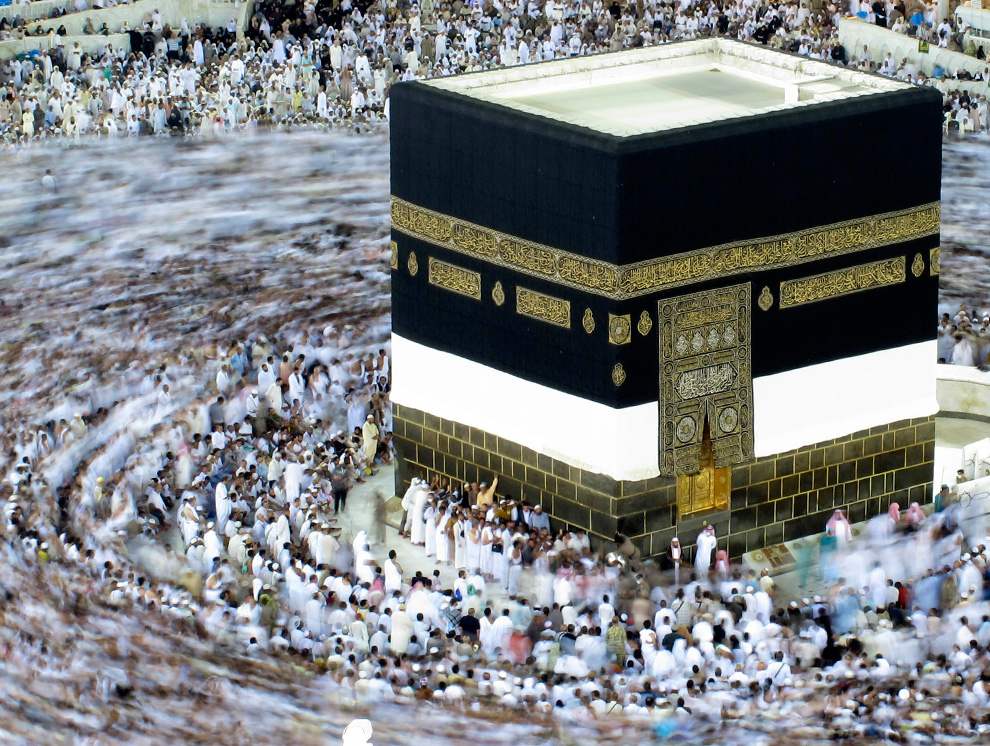
Come on, why don't you explain to us what that cube actually represents (or who it represents) that people pilgrimage toward?

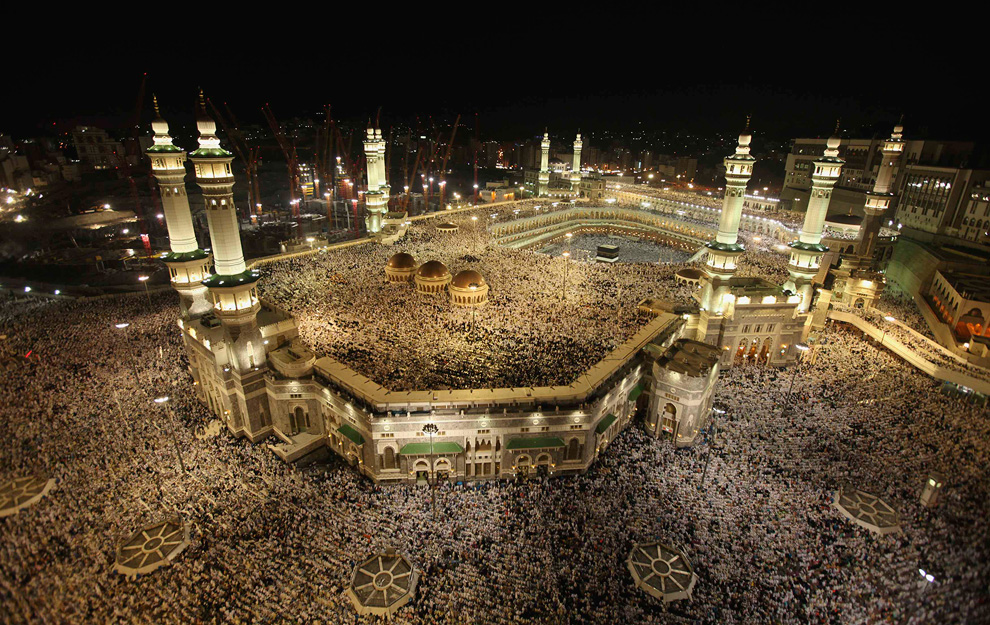
That cube is known as the first House of God. It was built by Abraham and his son Ishmael. That's why it's a holy site for Muslims.

It's just the direction people face during prayer; we aren't actually worshipping a stone.

image

image

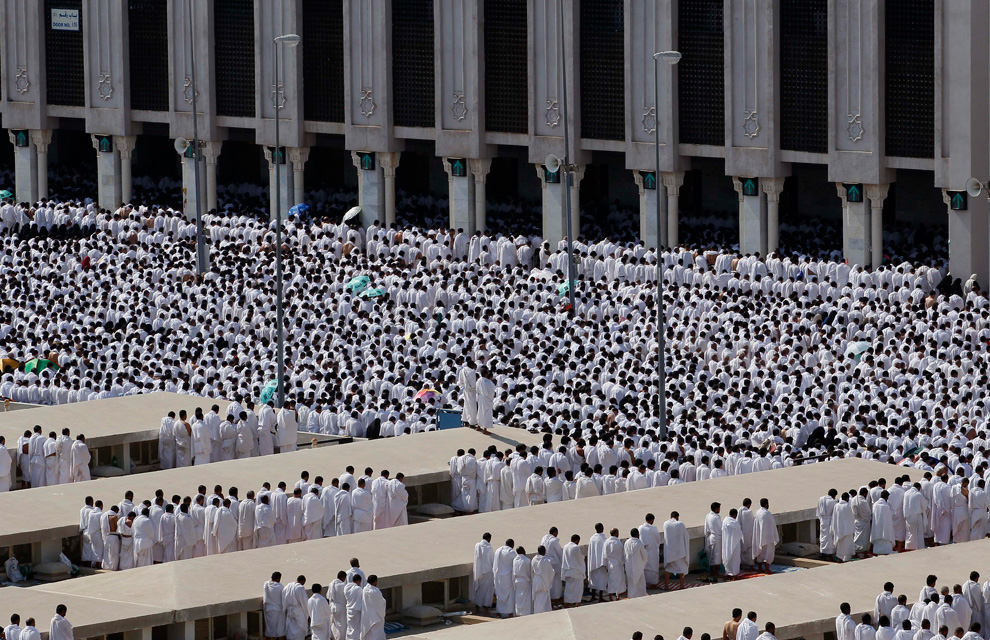
image

Hajj is a religious duty for Muslims to visit these holy sites. It's also a way to prepare for Judgment Day. Standing on Arafat near Mecca is like a mini-simulation of Judgment Day itself—millions of people in one spot, everyone dressed exactly the same, whether they're kings or paupers. There is absolutely no difference between them.

image
Jose Young4 Jose Young4 Newcomer
2 messages
joined Feb 2011
#288 ·
Paul Kern12 said:Using Hollywood depictions of "Jesus" as an argument, and citing the near-daily killings of Christians by Muslims... it seems you have somewhat missed the point.
Why don't you tell us here what that die represents (or who it represents) that you all make pilgrimages to?

I’ve already shared this link before, but it doesn't matter...
here is what science has uncovered regarding why Muslims face the Qibla in Mecca during prayer.
http://www.youtube.com/watch?v=IZYdUy5tkXM

But honestly, for us Muslims, we don't even need these obvious scientific facts; it's enough that God commanded it. Just imagine the chaos if everyone just prayed facing whichever direction they felt like—it would be total madness. This way, everyone stays united and focused on a single direction.
David Booth7 David Booth7 Member
19 messages
joined Feb 2011
#289 ·
Harold Reyes3 said:
Using Hollywood movies as an argument for what "Jesus" looks like.

Well, from everything we know about Jesus, he had long curly hair and a beard.

And the claim about Christians being killed by Muslims almost every day.

Where is that happening? From what I understand regarding Islam, if a Muslim kills a Christian without any reason, by God's grace, they would certainly deserve hell after death.

Plus, you're forgetting what Muhammad said: anyone who kills a Christian or a person living in an Islamic state—where they pay taxes—won't enter paradise.
Basically, Christian lives are protected under Islam. Just look at how many Christians exist in the Islamic world! If Islam were truly a violent religion toward them, do you really think they’d still be there after more than fifteen hundred years?

In fact, I was watching a Western documentary the other night about Islamic history and stuff.

When Muslims took over Jerusalem, it actually turned out well for the Christian leaders. They could practice their faith, and they actually paid less in taxes to the Islamic state than they did to the Roman rulers before the Muslims arrived in Jerusalem.

Come on, why don't you explain to us what that cube actually represents (or who it represents) that people pilgrimage toward?

That cube is known as the first House of God. It was built by Abraham and his son Ishmael. That's why it's a holy site for Muslims.

It's just the direction people face during prayer; we aren't actually worshipping a stone.

image

image

image

Hajj is a religious duty for Muslims to visit these holy sites. It's also a way to prepare for Judgment Day. Standing on Arafat near Mecca is like a mini-simulation of Judgment Day itself—millions of people in one spot, everyone dressed exactly the same, whether they're kings or paupers. There is absolutely no difference between them.

image

Saying the Kaaba was the FIRST one isn't exactly accurate...
and besides, the Kaaba wasn't even the very first direction people turned toward in prayer...
and that part about there being no differences? Well, that's not quite right either...

We aren't really here to debate the Kaaba, so I won't get sidetracked, though if anyone actually needs proof, I could always provide some...
Ethan Martinez6 Ethan Martinez6 Member
17 messages
joined Nov 2010
#290 ·
Harold Reyes3 said:
Using Hollywood movies as an argument for what "Jesus" looks like.

Well, from everything we know about Jesus, he had long curly hair and a beard.

And the claim about Christians being killed by Muslims almost every day.

Where is that happening? From what I understand regarding Islam, if a Muslim kills a Christian without any reason, by God's grace, they would certainly deserve hell after death.

Plus, you're forgetting what Muhammad said: anyone who kills a Christian or a person living in an Islamic state—where they pay taxes—won't enter paradise.
Basically, Christian lives are protected under Islam. Just look at how many Christians exist in the Islamic world! If Islam were truly a violent religion toward them, do you really think they’d still be there after more than fifteen hundred years?

In fact, I was watching a Western documentary the other night about Islamic history and stuff.

When Muslims took over Jerusalem, it actually turned out well for the Christian leaders. They could practice their faith, and they actually paid less in taxes to the Islamic state than they did to the Roman rulers before the Muslims arrived in Jerusalem.

Come on, why don't you explain to us what that cube actually represents (or who it represents) that people pilgrimage toward?

That cube is known as the first House of God. It was built by Abraham and his son Ishmael. That's why it's a holy site for Muslims.

It's just the direction people face during prayer; we aren't actually worshipping a stone.

image

image

image

Hajj is a religious duty for Muslims to visit these holy sites. It's also a way to prepare for Judgment Day. Standing on Arafat near Mecca is like a mini-simulation of Judgment Day itself—millions of people in one spot, everyone dressed exactly the same, whether they're kings or paupers. There is absolutely no difference between them.

image

But I guess, if that's the case, why can't Jews or Christians go there, and it's just for Muslims?
Paul Kern12 Paul Kern12 Active Member
106 messages
joined Feb 2018
#291 ·
Harold Reyes3 said:
Using Hollywood movies as an argument for what "Jesus" looks like.

Well, from everything we know about Jesus, he had long curly hair and a beard.

And the claim about Christians being killed by Muslims almost every day.

Where is that happening? From what I understand regarding Islam, if a Muslim kills a Christian without any reason, by God's grace, they would certainly deserve hell after death.

Plus, you're forgetting what Muhammad said: anyone who kills a Christian or a person living in an Islamic state—where they pay taxes—won't enter paradise.
Basically, Christian lives are protected under Islam. Just look at how many Christians exist in the Islamic world! If Islam were truly a violent religion toward them, do you really think they’d still be there after more than fifteen hundred years?

In fact, I was watching a Western documentary the other night about Islamic history and stuff.

When Muslims took over Jerusalem, it actually turned out well for the Christian leaders. They could practice their faith, and they actually paid less in taxes to the Islamic state than they did to the Roman rulers before the Muslims arrived in Jerusalem.

Come on, why don't you explain to us what that cube actually represents (or who it represents) that people pilgrimage toward?

That cube is known as the first House of God. It was built by Abraham and his son Ishmael. That's why it's a holy site for Muslims.

It's just the direction people face during prayer; we aren't actually worshipping a stone.

image

image

image

Hajj is a religious duty for Muslims to visit these holy sites. It's also a way to prepare for Judgment Day. Standing on Arafat near Mecca is like a mini-simulation of Judgment Day itself—millions of people in one spot, everyone dressed exactly the same, whether they're kings or paupers. There is absolutely no difference between them.

image

It was actually painters during the Middle Ages who depicted Jesus that way. I think you’ve missed the mark again here.
Anything other than God—whom we are actually making a pilgrimage toward—is nothing more than an IDOL!!!
Ethan Martinez6 Ethan Martinez6 Member
17 messages
joined Nov 2010
#292 ·
Paul Kern12 said:It was actually painters during the Middle Ages who depicted Jesus that way. I think you’ve missed the mark again here.
Anything other than God—whom we are actually making a pilgrimage toward—is nothing more than an IDOL!!!

I guess they probably painted him that way based on the Shroud of Turin, which is a relic, so maybe it isn't actually wrong, if that makes sense...
Rachel Taylor2 Rachel Taylor2 Member
20 messages
joined Jan 2011
#293 ·
Paul Kern12 said:It was actually painters during the Middle Ages who depicted Jesus that way. I think you’ve missed the mark again here.
Anything other than God—whom we are actually making a pilgrimage toward—is nothing more than an IDOL!!!

I mean, can you even paint or draw "God"... 😕,
idols are things you actually worship and pray to—you know, statues, icons of saints, deceased figures, or even a patron saint of a specific city and all that... But pilgrimages? Those are practiced by almost every faith out there.
Linda Walker37 Linda Walker37 Member
44 messages
joined Oct 2009
#294 ·
Rachel Taylor2 said:I mean, can you even paint or draw "God"... 😕,
idols are things you actually worship and pray to—you know, statues, icons of saints, deceased figures, or even a patron saint of a specific city and all that... But pilgrimages? Those are practiced by almost every faith out there.

Idols are false gods that people bow down to through images and statues. They aren't the actual images of the Virgin Mary
or Jesus...
Charles Ross84 Charles Ross84 Member
16 messages
joined Feb 2011
#295 ·
So, which gods are actually "real"? To me, they all feel exactly the same—totally fake, whether you're looking at a painting or some statue.
But then again, like Mark Twain once said:

It’s easy to kill the truth, but a well-told lie? That lives forever.
Alex Ramos91 Alex Ramos91 Member
30 messages
joined Jan 2011
#296 ·
Finally catching my breath here, so I figured I’d jump back in and catch up on some of this backlog... 🙂

So, I see Aaron got banned. That means his comments are just sitting there on ice until—if he ever actually gets unbanned—they finally see the light of day.

Kenneth Barnes7 said:First off, just to be clear: I’m not going to paraphrase you. It’s easier if I just copy your words directly here before I respond. If you don't mind. 😁

Right at the start of your post, you claim: "You overlooked my earlier point about God being love itself—that for God to express and receive love, He couldn't have been alone."

Honestly, I didn't skip that part. I could have easily fired back at you, but I didn't want to sound accusatory—not even once. But fine, since you're asking, here’s my response. In that post, you claimed: "A If God is love, then He had to have someone to give that love to—and someone to receive it. If God’s primary attribute were dependent on creation, then He wouldn't be God. He doesn't need us to exist. If God hadn't bothered creating the world and humanity, He still could have been love. Period."

You're being a little unclear; honestly, you're just contradicting yourself. Look at the bolded parts!
Make up your mind. Could love exist if man hadn't created it, or could it not?

You claim God can't be dependent on His creation, yet you contradict yourself in the next breath: "He had to have someone to love and receive love from." 🤷 😕

I didn't respond to that, mostly just to avoid dealing with that tone.
--------------------------------------------------------------------------

No, let's keep moving:

You claim Genesis 2:23 and then quote: "Therefore a man shall leave his father and mother and hold fast to his wife, and they shall become one flesh." — that’s actually Genesis 2:24, but let's not split hairs. 😁
You could respond like this: They might be "one body" metaphorically, sure, but realistically? They are TWO. It’s just a figure of speech. If you apply that same logic to Jesus and God—well, they might share a unique bond, but again, they are TWO.

Looking at that chart you posted—it basically says the Father isn't the Holy Spirit and isn't Jesus, yet they’re all labeled as God. So, "God" is just a shared title, but they aren't the same entity? That's how the graphic lays it out. My question is: are they one or are they not? Are they one, yet distinct?

--------------------------------------------------------------------------

Look at it from another perspective. He existed eternally in perfect communion with the Father—wrapped in glory, holiness, and purity—only to abandon all that to dwell on this fallen, filthy planet among people who hated him and spat in his face...

So, you’re saying Jesus walked away from that community—abandoned the glory, the holiness, and the purity—essentially separating Himself from the Father? I get what you're getting at regarding how monumental that act of renunciation was, but I have to push back. You can't just split one God into different pieces, not when we're talking about His absolute fullness and perfection.
--------------------------------------------------------------------------

So you claim he knew he was the Son of God. But if he's actually God himself, how could his knowledge be limited? Or was that lack of omniscience just the "humanity" part of him?
If that's the case, what exactly was this "divine" element within him? What specific attributes of God did he possess?

--------------------------------------------------------------------------

You claim: "And since he loves righteousness more than all others and hates wickedness (Hebrews 1:9), he will judge on the day of judgment."

Judge as a man? How can someone judge as a mere man if they lack the attribute of omniscience inherent to a human form?

--------------------------------------------------------------------------

Furthermore, you say: "Toward the end of his earthly life, Jesus promised his disciples that when he returned to the Father, he would send them a new defender."

Ah, there’s that famous word "defender" again... In the original Greek, as many likely know, it’s "parakletos." On this link, the meaning is explained precisely like this: "summoned, called to one's side, esp. called to one's aid
a) one who pleads another's cause before a judge, a pleader, counsel for defense, legal assistant, an advocate
b) one who pleads another's cause with one, an intercessor"

"called, summoned to someone's side, called to their aid
a) one who prays for another before a judge, a defense attorney, a legal representative, an advocate
b) ONE WHO INTERCEDES FOR ANOTHER, a mediator"

In Islam, the only individual granted the right to intercede on the Day of Judgment is the Prophet. Given that Jesus says this person will come after him, it's clear he isn't talking about himself. In Islamic tradition, many refer to the Prophet as a "shefadzija"—one who intercedes. I don't want to take up too much space by quoting the Quran or the sayings of the Prophet, but that is fundamental Islamic doctrine.

How would you interpret this? As mere deception or something else? To reiterate, in the American standard translations, that word is explicitly rendered as "defender."

--------------------------------------------------------------------------

Well, you asked for my thoughts on the passages at the very end. So, let's see. 🙂

Isaiah 53 (link)

First off, there are several things here that simply don't align with Islam. Taking on someone else's guilt, someone else's sins. The Quran explicitly states that everyone will carry their own burden.

It's a bit illogical: God, out of goodness, sacrifices his son only to then resurrect him and raise him to his right hand. If he had truly sacrificed him, he should have just left it at that for the "dramatic effect"... It claims he sacrificed him, yet then brings him back to life... 🤷

And Psalm 22 (link)

It says in verses 23 and 24: "I will proclaim your name to my brothers
and praise you before the whole community:
24 You who fear God, praise him!
All you people of Jacob, sing his praise!
All you people of Israel, revere him!"

Why should they fear "Love"? Why fear Him if He is Love?

Besides, the whole narrative sounds like God calling out rather than a son addressing a father...
"10 You, you drew me from my mother's womb
and made me secure against her breast.
11 From birth, I have been yours;
from my mother's womb, you are my God!"

Apologies for the delay and the length of this post. Best regards.
😉

P.S. I tried using these dashes to separate the sections; hopefully, it's easy enough to follow. 🙂

Alright, let me try to break this down so it actually makes sense...
Look, here’s the thing: God could have been the very definition of love regardless of whether He ever bothered to create humanity or not. It’s not about us. It’s because God Himself exists as the Trinity—three persons in one. That internal relationship is where the essence of love lives, independent of everything else.
Look, if you want to talk about love, let’s get one thing straight: you can't have it in a vacuum. Love isn't just some abstract concept you sit around thinking about; you actually have to be able to give it to someone and, eventually, receive it back. It's a two-way street. Think about the Trinity—the Father, the Son, and the Holy Spirit. They didn't just suddenly decide to start loving each other. They've existed "always," long before the world was even a thought. There was this perfect, seamless unity and mutual love between them from the very beginning. That deep, internal connection? That’s what eventually overflowed and fueled the entire act of creation itself. It all started there.

Look, here’s the thing: if God existed before the angels or the entire universe were even a thought, and He was the only person in existence, then He couldn't have been "love." It just doesn't add up. It makes it seem like His most defining characteristic depends entirely on the creatures He eventually made. And honestly? A god like that isn't even God. A real God—the actual Almighty—wouldn't need His core nature to rely on some random creation just to function. That's just bad logic.

Ugh, hopefully that makes things clear now? 😉

Kenneth Barnes7 said:First off, just to be clear: I’m not going to paraphrase you. It’s easier if I just copy your words directly here before I respond. If you don't mind. 😁

Right at the start of your post, you claim: "You overlooked my earlier point about God being love itself—that for God to express and receive love, He couldn't have been alone."

Honestly, I didn't skip that part. I could have easily fired back at you, but I didn't want to sound accusatory—not even once. But fine, since you're asking, here’s my response. In that post, you claimed: "A If God is love, then He had to have someone to give that love to—and someone to receive it. If God’s primary attribute were dependent on creation, then He wouldn't be God. He doesn't need us to exist. If God hadn't bothered creating the world and humanity, He still could have been love. Period."

You're being a little unclear; honestly, you're just contradicting yourself. Look at the bolded parts!
Make up your mind. Could love exist if man hadn't created it, or could it not?

You claim God can't be dependent on His creation, yet you contradict yourself in the next breath: "He had to have someone to love and receive love from." 🤷 😕

I didn't respond to that, mostly just to avoid dealing with that tone.
--------------------------------------------------------------------------

No, let's keep moving:

You claim Genesis 2:23 and then quote: "Therefore a man shall leave his father and mother and hold fast to his wife, and they shall become one flesh." — that’s actually Genesis 2:24, but let's not split hairs. 😁
You could respond like this: They might be "one body" metaphorically, sure, but realistically? They are TWO. It’s just a figure of speech. If you apply that same logic to Jesus and God—well, they might share a unique bond, but again, they are TWO.

Looking at that chart you posted—it basically says the Father isn't the Holy Spirit and isn't Jesus, yet they’re all labeled as God. So, "God" is just a shared title, but they aren't the same entity? That's how the graphic lays it out. My question is: are they one or are they not? Are they one, yet distinct?

--------------------------------------------------------------------------

Look at it from another perspective. He existed eternally in perfect communion with the Father—wrapped in glory, holiness, and purity—only to abandon all that to dwell on this fallen, filthy planet among people who hated him and spat in his face...

So, you’re saying Jesus walked away from that community—abandoned the glory, the holiness, and the purity—essentially separating Himself from the Father? I get what you're getting at regarding how monumental that act of renunciation was, but I have to push back. You can't just split one God into different pieces, not when we're talking about His absolute fullness and perfection.
--------------------------------------------------------------------------

So you claim he knew he was the Son of God. But if he's actually God himself, how could his knowledge be limited? Or was that lack of omniscience just the "humanity" part of him?
If that's the case, what exactly was this "divine" element within him? What specific attributes of God did he possess?

--------------------------------------------------------------------------

You claim: "And since he loves righteousness more than all others and hates wickedness (Hebrews 1:9), he will judge on the day of judgment."

Judge as a man? How can someone judge as a mere man if they lack the attribute of omniscience inherent to a human form?

--------------------------------------------------------------------------

Furthermore, you say: "Toward the end of his earthly life, Jesus promised his disciples that when he returned to the Father, he would send them a new defender."

Ah, there’s that famous word "defender" again... In the original Greek, as many likely know, it’s "parakletos." On this link, the meaning is explained precisely like this: "summoned, called to one's side, esp. called to one's aid
a) one who pleads another's cause before a judge, a pleader, counsel for defense, legal assistant, an advocate
b) one who pleads another's cause with one, an intercessor"

"called, summoned to someone's side, called to their aid
a) one who prays for another before a judge, a defense attorney, a legal representative, an advocate
b) ONE WHO INTERCEDES FOR ANOTHER, a mediator"

In Islam, the only individual granted the right to intercede on the Day of Judgment is the Prophet. Given that Jesus says this person will come after him, it's clear he isn't talking about himself. In Islamic tradition, many refer to the Prophet as a "shefadzija"—one who intercedes. I don't want to take up too much space by quoting the Quran or the sayings of the Prophet, but that is fundamental Islamic doctrine.

How would you interpret this? As mere deception or something else? To reiterate, in the American standard translations, that word is explicitly rendered as "defender."

--------------------------------------------------------------------------

Well, you asked for my thoughts on the passages at the very end. So, let's see. 🙂

Isaiah 53 (link)

First off, there are several things here that simply don't align with Islam. Taking on someone else's guilt, someone else's sins. The Quran explicitly states that everyone will carry their own burden.

It's a bit illogical: God, out of goodness, sacrifices his son only to then resurrect him and raise him to his right hand. If he had truly sacrificed him, he should have just left it at that for the "dramatic effect"... It claims he sacrificed him, yet then brings him back to life... 🤷

And Psalm 22 (link)

It says in verses 23 and 24: "I will proclaim your name to my brothers
and praise you before the whole community:
24 You who fear God, praise him!
All you people of Jacob, sing his praise!
All you people of Israel, revere him!"

Why should they fear "Love"? Why fear Him if He is Love?

Besides, the whole narrative sounds like God calling out rather than a son addressing a father...
"10 You, you drew me from my mother's womb
and made me secure against her breast.
11 From birth, I have been yours;
from my mother's womb, you are my God!"

Apologies for the delay and the length of this post. Best regards.
😉

P.S. I tried using these dashes to separate the sections; hopefully, it's easy enough to follow. 🙂

Thanks for being polite about it, but honestly, let’s be real—your comment isn't exactly coming at me with an aggressive tone. 👍

Kenneth Barnes7 said:First off, just to be clear: I’m not going to paraphrase you. It’s easier if I just copy your words directly here before I respond. If you don't mind. 😁

Right at the start of your post, you claim: "You overlooked my earlier point about God being love itself—that for God to express and receive love, He couldn't have been alone."

Honestly, I didn't skip that part. I could have easily fired back at you, but I didn't want to sound accusatory—not even once. But fine, since you're asking, here’s my response. In that post, you claimed: "A If God is love, then He had to have someone to give that love to—and someone to receive it. If God’s primary attribute were dependent on creation, then He wouldn't be God. He doesn't need us to exist. If God hadn't bothered creating the world and humanity, He still could have been love. Period."

You're being a little unclear; honestly, you're just contradicting yourself. Look at the bolded parts!
Make up your mind. Could love exist if man hadn't created it, or could it not?

You claim God can't be dependent on His creation, yet you contradict yourself in the next breath: "He had to have someone to love and receive love from." 🤷 😕

I didn't respond to that, mostly just to avoid dealing with that tone.
--------------------------------------------------------------------------

No, let's keep moving:

You claim Genesis 2:23 and then quote: "Therefore a man shall leave his father and mother and hold fast to his wife, and they shall become one flesh." — that’s actually Genesis 2:24, but let's not split hairs. 😁
You could respond like this: They might be "one body" metaphorically, sure, but realistically? They are TWO. It’s just a figure of speech. If you apply that same logic to Jesus and God—well, they might share a unique bond, but again, they are TWO.

Looking at that chart you posted—it basically says the Father isn't the Holy Spirit and isn't Jesus, yet they’re all labeled as God. So, "God" is just a shared title, but they aren't the same entity? That's how the graphic lays it out. My question is: are they one or are they not? Are they one, yet distinct?

--------------------------------------------------------------------------

Look at it from another perspective. He existed eternally in perfect communion with the Father—wrapped in glory, holiness, and purity—only to abandon all that to dwell on this fallen, filthy planet among people who hated him and spat in his face...

So, you’re saying Jesus walked away from that community—abandoned the glory, the holiness, and the purity—essentially separating Himself from the Father? I get what you're getting at regarding how monumental that act of renunciation was, but I have to push back. You can't just split one God into different pieces, not when we're talking about His absolute fullness and perfection.
--------------------------------------------------------------------------

So you claim he knew he was the Son of God. But if he's actually God himself, how could his knowledge be limited? Or was that lack of omniscience just the "humanity" part of him?
If that's the case, what exactly was this "divine" element within him? What specific attributes of God did he possess?

--------------------------------------------------------------------------

You claim: "And since he loves righteousness more than all others and hates wickedness (Hebrews 1:9), he will judge on the day of judgment."

Judge as a man? How can someone judge as a mere man if they lack the attribute of omniscience inherent to a human form?

--------------------------------------------------------------------------

Furthermore, you say: "Toward the end of his earthly life, Jesus promised his disciples that when he returned to the Father, he would send them a new defender."

Ah, there’s that famous word "defender" again... In the original Greek, as many likely know, it’s "parakletos." On this link, the meaning is explained precisely like this: "summoned, called to one's side, esp. called to one's aid
a) one who pleads another's cause before a judge, a pleader, counsel for defense, legal assistant, an advocate
b) one who pleads another's cause with one, an intercessor"

"called, summoned to someone's side, called to their aid
a) one who prays for another before a judge, a defense attorney, a legal representative, an advocate
b) ONE WHO INTERCEDES FOR ANOTHER, a mediator"

In Islam, the only individual granted the right to intercede on the Day of Judgment is the Prophet. Given that Jesus says this person will come after him, it's clear he isn't talking about himself. In Islamic tradition, many refer to the Prophet as a "shefadzija"—one who intercedes. I don't want to take up too much space by quoting the Quran or the sayings of the Prophet, but that is fundamental Islamic doctrine.

How would you interpret this? As mere deception or something else? To reiterate, in the American standard translations, that word is explicitly rendered as "defender."

--------------------------------------------------------------------------

Well, you asked for my thoughts on the passages at the very end. So, let's see. 🙂

Isaiah 53 (link)

First off, there are several things here that simply don't align with Islam. Taking on someone else's guilt, someone else's sins. The Quran explicitly states that everyone will carry their own burden.

It's a bit illogical: God, out of goodness, sacrifices his son only to then resurrect him and raise him to his right hand. If he had truly sacrificed him, he should have just left it at that for the "dramatic effect"... It claims he sacrificed him, yet then brings him back to life... 🤷

And Psalm 22 (link)

It says in verses 23 and 24: "I will proclaim your name to my brothers
and praise you before the whole community:
24 You who fear God, praise him!
All you people of Jacob, sing his praise!
All you people of Israel, revere him!"

Why should they fear "Love"? Why fear Him if He is Love?

Besides, the whole narrative sounds like God calling out rather than a son addressing a father...
"10 You, you drew me from my mother's womb
and made me secure against her breast.
11 From birth, I have been yours;
from my mother's womb, you are my God!"

Apologies for the delay and the length of this post. Best regards.
😉

P.S. I tried using these dashes to separate the sections; hopefully, it's easy enough to follow. 🙂

Look, it’s simple: the Father and the Son—they are two, yet they are one. I know, it sounds like a contradiction, but hear me out. They are two distinct persons, sure, but they share the exact same divine nature. Both are eternal, both are all-powerful, both are all-knowing, and both are omnipresent. And don't even get me started on the fact that every single one of those divine attributes applies to the Holy Spirit as well. It's all connected.

I'll get back to David Booth7 about this later.

Kenneth Barnes7 said:First off, just to be clear: I’m not going to paraphrase you. It’s easier if I just copy your words directly here before I respond. If you don't mind. 😁

Right at the start of your post, you claim: "You overlooked my earlier point about God being love itself—that for God to express and receive love, He couldn't have been alone."

Honestly, I didn't skip that part. I could have easily fired back at you, but I didn't want to sound accusatory—not even once. But fine, since you're asking, here’s my response. In that post, you claimed: "A If God is love, then He had to have someone to give that love to—and someone to receive it. If God’s primary attribute were dependent on creation, then He wouldn't be God. He doesn't need us to exist. If God hadn't bothered creating the world and humanity, He still could have been love. Period."

You're being a little unclear; honestly, you're just contradicting yourself. Look at the bolded parts!
Make up your mind. Could love exist if man hadn't created it, or could it not?

You claim God can't be dependent on His creation, yet you contradict yourself in the next breath: "He had to have someone to love and receive love from." 🤷 😕

I didn't respond to that, mostly just to avoid dealing with that tone.
--------------------------------------------------------------------------

No, let's keep moving:

You claim Genesis 2:23 and then quote: "Therefore a man shall leave his father and mother and hold fast to his wife, and they shall become one flesh." — that’s actually Genesis 2:24, but let's not split hairs. 😁
You could respond like this: They might be "one body" metaphorically, sure, but realistically? They are TWO. It’s just a figure of speech. If you apply that same logic to Jesus and God—well, they might share a unique bond, but again, they are TWO.

Looking at that chart you posted—it basically says the Father isn't the Holy Spirit and isn't Jesus, yet they’re all labeled as God. So, "God" is just a shared title, but they aren't the same entity? That's how the graphic lays it out. My question is: are they one or are they not? Are they one, yet distinct?

--------------------------------------------------------------------------

Look at it from another perspective. He existed eternally in perfect communion with the Father—wrapped in glory, holiness, and purity—only to abandon all that to dwell on this fallen, filthy planet among people who hated him and spat in his face...

So, you’re saying Jesus walked away from that community—abandoned the glory, the holiness, and the purity—essentially separating Himself from the Father? I get what you're getting at regarding how monumental that act of renunciation was, but I have to push back. You can't just split one God into different pieces, not when we're talking about His absolute fullness and perfection.
--------------------------------------------------------------------------

So you claim he knew he was the Son of God. But if he's actually God himself, how could his knowledge be limited? Or was that lack of omniscience just the "humanity" part of him?
If that's the case, what exactly was this "divine" element within him? What specific attributes of God did he possess?

--------------------------------------------------------------------------

You claim: "And since he loves righteousness more than all others and hates wickedness (Hebrews 1:9), he will judge on the day of judgment."

Judge as a man? How can someone judge as a mere man if they lack the attribute of omniscience inherent to a human form?

--------------------------------------------------------------------------

Furthermore, you say: "Toward the end of his earthly life, Jesus promised his disciples that when he returned to the Father, he would send them a new defender."

Ah, there’s that famous word "defender" again... In the original Greek, as many likely know, it’s "parakletos." On this link, the meaning is explained precisely like this: "summoned, called to one's side, esp. called to one's aid
a) one who pleads another's cause before a judge, a pleader, counsel for defense, legal assistant, an advocate
b) one who pleads another's cause with one, an intercessor"

"called, summoned to someone's side, called to their aid
a) one who prays for another before a judge, a defense attorney, a legal representative, an advocate
b) ONE WHO INTERCEDES FOR ANOTHER, a mediator"

In Islam, the only individual granted the right to intercede on the Day of Judgment is the Prophet. Given that Jesus says this person will come after him, it's clear he isn't talking about himself. In Islamic tradition, many refer to the Prophet as a "shefadzija"—one who intercedes. I don't want to take up too much space by quoting the Quran or the sayings of the Prophet, but that is fundamental Islamic doctrine.

How would you interpret this? As mere deception or something else? To reiterate, in the American standard translations, that word is explicitly rendered as "defender."

--------------------------------------------------------------------------

Well, you asked for my thoughts on the passages at the very end. So, let's see. 🙂

Isaiah 53 (link)

First off, there are several things here that simply don't align with Islam. Taking on someone else's guilt, someone else's sins. The Quran explicitly states that everyone will carry their own burden.

It's a bit illogical: God, out of goodness, sacrifices his son only to then resurrect him and raise him to his right hand. If he had truly sacrificed him, he should have just left it at that for the "dramatic effect"... It claims he sacrificed him, yet then brings him back to life... 🤷

And Psalm 22 (link)

It says in verses 23 and 24: "I will proclaim your name to my brothers
and praise you before the whole community:
24 You who fear God, praise him!
All you people of Jacob, sing his praise!
All you people of Israel, revere him!"

Why should they fear "Love"? Why fear Him if He is Love?

Besides, the whole narrative sounds like God calling out rather than a son addressing a father...
"10 You, you drew me from my mother's womb
and made me secure against her breast.
11 From birth, I have been yours;
from my mother's womb, you are my God!"

Apologies for the delay and the length of this post. Best regards.
😉

P.S. I tried using these dashes to separate the sections; hopefully, it's easy enough to follow. 🙂

Look, I already laid it out for you above—they’re essentially the same thing, but they aren't actually the same person.

Look, I get it—as humans, we’re basically trying to grasp the ocean with a plastic spoon. It’s impossible to fully wrap our heads around the depths of God. But let’s be real: God actually made Himself known through the Bible. You look at all three persons in the Bible, and they all carry those divine characteristics. Honestly, that whole "God is love" argument? It just proves the point even further.

Kenneth Barnes7 said:First off, just to be clear: I’m not going to paraphrase you. It’s easier if I just copy your words directly here before I respond. If you don't mind. 😁

Right at the start of your post, you claim: "You overlooked my earlier point about God being love itself—that for God to express and receive love, He couldn't have been alone."

Honestly, I didn't skip that part. I could have easily fired back at you, but I didn't want to sound accusatory—not even once. But fine, since you're asking, here’s my response. In that post, you claimed: "A If God is love, then He had to have someone to give that love to—and someone to receive it. If God’s primary attribute were dependent on creation, then He wouldn't be God. He doesn't need us to exist. If God hadn't bothered creating the world and humanity, He still could have been love. Period."

You're being a little unclear; honestly, you're just contradicting yourself. Look at the bolded parts!
Make up your mind. Could love exist if man hadn't created it, or could it not?

You claim God can't be dependent on His creation, yet you contradict yourself in the next breath: "He had to have someone to love and receive love from." 🤷 😕

I didn't respond to that, mostly just to avoid dealing with that tone.
--------------------------------------------------------------------------

No, let's keep moving:

You claim Genesis 2:23 and then quote: "Therefore a man shall leave his father and mother and hold fast to his wife, and they shall become one flesh." — that’s actually Genesis 2:24, but let's not split hairs. 😁
You could respond like this: They might be "one body" metaphorically, sure, but realistically? They are TWO. It’s just a figure of speech. If you apply that same logic to Jesus and God—well, they might share a unique bond, but again, they are TWO.

Looking at that chart you posted—it basically says the Father isn't the Holy Spirit and isn't Jesus, yet they’re all labeled as God. So, "God" is just a shared title, but they aren't the same entity? That's how the graphic lays it out. My question is: are they one or are they not? Are they one, yet distinct?

--------------------------------------------------------------------------

Look at it from another perspective. He existed eternally in perfect communion with the Father—wrapped in glory, holiness, and purity—only to abandon all that to dwell on this fallen, filthy planet among people who hated him and spat in his face...

So, you’re saying Jesus walked away from that community—abandoned the glory, the holiness, and the purity—essentially separating Himself from the Father? I get what you're getting at regarding how monumental that act of renunciation was, but I have to push back. You can't just split one God into different pieces, not when we're talking about His absolute fullness and perfection.
--------------------------------------------------------------------------

So you claim he knew he was the Son of God. But if he's actually God himself, how could his knowledge be limited? Or was that lack of omniscience just the "humanity" part of him?
If that's the case, what exactly was this "divine" element within him? What specific attributes of God did he possess?

--------------------------------------------------------------------------

You claim: "And since he loves righteousness more than all others and hates wickedness (Hebrews 1:9), he will judge on the day of judgment."

Judge as a man? How can someone judge as a mere man if they lack the attribute of omniscience inherent to a human form?

--------------------------------------------------------------------------

Furthermore, you say: "Toward the end of his earthly life, Jesus promised his disciples that when he returned to the Father, he would send them a new defender."

Ah, there’s that famous word "defender" again... In the original Greek, as many likely know, it’s "parakletos." On this link, the meaning is explained precisely like this: "summoned, called to one's side, esp. called to one's aid
a) one who pleads another's cause before a judge, a pleader, counsel for defense, legal assistant, an advocate
b) one who pleads another's cause with one, an intercessor"

"called, summoned to someone's side, called to their aid
a) one who prays for another before a judge, a defense attorney, a legal representative, an advocate
b) ONE WHO INTERCEDES FOR ANOTHER, a mediator"

In Islam, the only individual granted the right to intercede on the Day of Judgment is the Prophet. Given that Jesus says this person will come after him, it's clear he isn't talking about himself. In Islamic tradition, many refer to the Prophet as a "shefadzija"—one who intercedes. I don't want to take up too much space by quoting the Quran or the sayings of the Prophet, but that is fundamental Islamic doctrine.

How would you interpret this? As mere deception or something else? To reiterate, in the American standard translations, that word is explicitly rendered as "defender."

--------------------------------------------------------------------------

Well, you asked for my thoughts on the passages at the very end. So, let's see. 🙂

Isaiah 53 (link)

First off, there are several things here that simply don't align with Islam. Taking on someone else's guilt, someone else's sins. The Quran explicitly states that everyone will carry their own burden.

It's a bit illogical: God, out of goodness, sacrifices his son only to then resurrect him and raise him to his right hand. If he had truly sacrificed him, he should have just left it at that for the "dramatic effect"... It claims he sacrificed him, yet then brings him back to life... 🤷

And Psalm 22 (link)

It says in verses 23 and 24: "I will proclaim your name to my brothers
and praise you before the whole community:
24 You who fear God, praise him!
All you people of Jacob, sing his praise!
All you people of Israel, revere him!"

Why should they fear "Love"? Why fear Him if He is Love?

Besides, the whole narrative sounds like God calling out rather than a son addressing a father...
"10 You, you drew me from my mother's womb
and made me secure against her breast.
11 From birth, I have been yours;
from my mother's womb, you are my God!"

Apologies for the delay and the length of this post. Best regards.
😉

P.S. I tried using these dashes to separate the sections; hopefully, it's easy enough to follow. 🙂

He never truly separated himself from the Father—I mean, even during His time here on Earth, He was crystal clear about being one with Him. It’s right there in the text: "I and the Father are one" (John 10:30). You can't just ignore that part.

Look, those three hours on the cross when He cried out, "My God, my God, why have you forsaken me?"—that wasn't just some random outburst. That was the moment that perfect, unbreakable bond He had with the Father was shattered. Why? Because He took the weight of every single sin in the world onto His own shoulders. At that point, the perfect and holy God had to deliver a righteous judgment. He had to judge the very sin that He Himself had taken upon Himself. It’s heavy, and it's exactly what happened.
The cry from the cross was pretty much the only time Jesus actually addressed the Father as "God." Usually, he just called him "Father." But once he settled the debt for our sins—shouting "It is finished" (which basically means "Paid in full")—he was back in that close communion with the Father, calling out to Him as "God" again.Father."Father, into Your hands I commit my spirit!" (Luke 24:46).

Kenneth Barnes7 said:First off, just to be clear: I’m not going to paraphrase you. It’s easier if I just copy your words directly here before I respond. If you don't mind. 😁

Right at the start of your post, you claim: "You overlooked my earlier point about God being love itself—that for God to express and receive love, He couldn't have been alone."

Honestly, I didn't skip that part. I could have easily fired back at you, but I didn't want to sound accusatory—not even once. But fine, since you're asking, here’s my response. In that post, you claimed: "A If God is love, then He had to have someone to give that love to—and someone to receive it. If God’s primary attribute were dependent on creation, then He wouldn't be God. He doesn't need us to exist. If God hadn't bothered creating the world and humanity, He still could have been love. Period."

You're being a little unclear; honestly, you're just contradicting yourself. Look at the bolded parts!
Make up your mind. Could love exist if man hadn't created it, or could it not?

You claim God can't be dependent on His creation, yet you contradict yourself in the next breath: "He had to have someone to love and receive love from." 🤷 😕

I didn't respond to that, mostly just to avoid dealing with that tone.
--------------------------------------------------------------------------

No, let's keep moving:

You claim Genesis 2:23 and then quote: "Therefore a man shall leave his father and mother and hold fast to his wife, and they shall become one flesh." — that’s actually Genesis 2:24, but let's not split hairs. 😁
You could respond like this: They might be "one body" metaphorically, sure, but realistically? They are TWO. It’s just a figure of speech. If you apply that same logic to Jesus and God—well, they might share a unique bond, but again, they are TWO.

Looking at that chart you posted—it basically says the Father isn't the Holy Spirit and isn't Jesus, yet they’re all labeled as God. So, "God" is just a shared title, but they aren't the same entity? That's how the graphic lays it out. My question is: are they one or are they not? Are they one, yet distinct?

--------------------------------------------------------------------------

Look at it from another perspective. He existed eternally in perfect communion with the Father—wrapped in glory, holiness, and purity—only to abandon all that to dwell on this fallen, filthy planet among people who hated him and spat in his face...

So, you’re saying Jesus walked away from that community—abandoned the glory, the holiness, and the purity—essentially separating Himself from the Father? I get what you're getting at regarding how monumental that act of renunciation was, but I have to push back. You can't just split one God into different pieces, not when we're talking about His absolute fullness and perfection.
--------------------------------------------------------------------------

So you claim he knew he was the Son of God. But if he's actually God himself, how could his knowledge be limited? Or was that lack of omniscience just the "humanity" part of him?
If that's the case, what exactly was this "divine" element within him? What specific attributes of God did he possess?

--------------------------------------------------------------------------

You claim: "And since he loves righteousness more than all others and hates wickedness (Hebrews 1:9), he will judge on the day of judgment."

Judge as a man? How can someone judge as a mere man if they lack the attribute of omniscience inherent to a human form?

--------------------------------------------------------------------------

Furthermore, you say: "Toward the end of his earthly life, Jesus promised his disciples that when he returned to the Father, he would send them a new defender."

Ah, there’s that famous word "defender" again... In the original Greek, as many likely know, it’s "parakletos." On this link, the meaning is explained precisely like this: "summoned, called to one's side, esp. called to one's aid
a) one who pleads another's cause before a judge, a pleader, counsel for defense, legal assistant, an advocate
b) one who pleads another's cause with one, an intercessor"

"called, summoned to someone's side, called to their aid
a) one who prays for another before a judge, a defense attorney, a legal representative, an advocate
b) ONE WHO INTERCEDES FOR ANOTHER, a mediator"

In Islam, the only individual granted the right to intercede on the Day of Judgment is the Prophet. Given that Jesus says this person will come after him, it's clear he isn't talking about himself. In Islamic tradition, many refer to the Prophet as a "shefadzija"—one who intercedes. I don't want to take up too much space by quoting the Quran or the sayings of the Prophet, but that is fundamental Islamic doctrine.

How would you interpret this? As mere deception or something else? To reiterate, in the American standard translations, that word is explicitly rendered as "defender."

--------------------------------------------------------------------------

Well, you asked for my thoughts on the passages at the very end. So, let's see. 🙂

Isaiah 53 (link)

First off, there are several things here that simply don't align with Islam. Taking on someone else's guilt, someone else's sins. The Quran explicitly states that everyone will carry their own burden.

It's a bit illogical: God, out of goodness, sacrifices his son only to then resurrect him and raise him to his right hand. If he had truly sacrificed him, he should have just left it at that for the "dramatic effect"... It claims he sacrificed him, yet then brings him back to life... 🤷

And Psalm 22 (link)

It says in verses 23 and 24: "I will proclaim your name to my brothers
and praise you before the whole community:
24 You who fear God, praise him!
All you people of Jacob, sing his praise!
All you people of Israel, revere him!"

Why should they fear "Love"? Why fear Him if He is Love?

Besides, the whole narrative sounds like God calling out rather than a son addressing a father...
"10 You, you drew me from my mother's womb
and made me secure against her breast.
11 From birth, I have been yours;
from my mother's womb, you are my God!"

Apologies for the delay and the length of this post. Best regards.
😉

P.S. I tried using these dashes to separate the sections; hopefully, it's easy enough to follow. 🙂

Look, here’s how I see it: Jesus basically "put on" a human nature. That doesn't mean he somehow stopped being God in his essence. It's more like he voluntarily set aside those divine privileges while he was walking this earth—just like that passage from Philippians 2 we were talking about earlier.

His divine nature was made manifest on the Mount of Transfiguration when He transformed in glory before His three closest apostles—Matthew 17:1-8

Kenneth Barnes7 said:First off, just to be clear: I’m not going to paraphrase you. It’s easier if I just copy your words directly here before I respond. If you don't mind. 😁

Right at the start of your post, you claim: "You overlooked my earlier point about God being love itself—that for God to express and receive love, He couldn't have been alone."

Honestly, I didn't skip that part. I could have easily fired back at you, but I didn't want to sound accusatory—not even once. But fine, since you're asking, here’s my response. In that post, you claimed: "A If God is love, then He had to have someone to give that love to—and someone to receive it. If God’s primary attribute were dependent on creation, then He wouldn't be God. He doesn't need us to exist. If God hadn't bothered creating the world and humanity, He still could have been love. Period."

You're being a little unclear; honestly, you're just contradicting yourself. Look at the bolded parts!
Make up your mind. Could love exist if man hadn't created it, or could it not?

You claim God can't be dependent on His creation, yet you contradict yourself in the next breath: "He had to have someone to love and receive love from." 🤷 😕

I didn't respond to that, mostly just to avoid dealing with that tone.
--------------------------------------------------------------------------

No, let's keep moving:

You claim Genesis 2:23 and then quote: "Therefore a man shall leave his father and mother and hold fast to his wife, and they shall become one flesh." — that’s actually Genesis 2:24, but let's not split hairs. 😁
You could respond like this: They might be "one body" metaphorically, sure, but realistically? They are TWO. It’s just a figure of speech. If you apply that same logic to Jesus and God—well, they might share a unique bond, but again, they are TWO.

Looking at that chart you posted—it basically says the Father isn't the Holy Spirit and isn't Jesus, yet they’re all labeled as God. So, "God" is just a shared title, but they aren't the same entity? That's how the graphic lays it out. My question is: are they one or are they not? Are they one, yet distinct?

--------------------------------------------------------------------------

Look at it from another perspective. He existed eternally in perfect communion with the Father—wrapped in glory, holiness, and purity—only to abandon all that to dwell on this fallen, filthy planet among people who hated him and spat in his face...

So, you’re saying Jesus walked away from that community—abandoned the glory, the holiness, and the purity—essentially separating Himself from the Father? I get what you're getting at regarding how monumental that act of renunciation was, but I have to push back. You can't just split one God into different pieces, not when we're talking about His absolute fullness and perfection.
--------------------------------------------------------------------------

So you claim he knew he was the Son of God. But if he's actually God himself, how could his knowledge be limited? Or was that lack of omniscience just the "humanity" part of him?
If that's the case, what exactly was this "divine" element within him? What specific attributes of God did he possess?

--------------------------------------------------------------------------

You claim: "And since he loves righteousness more than all others and hates wickedness (Hebrews 1:9), he will judge on the day of judgment."

Judge as a man? How can someone judge as a mere man if they lack the attribute of omniscience inherent to a human form?

--------------------------------------------------------------------------

Furthermore, you say: "Toward the end of his earthly life, Jesus promised his disciples that when he returned to the Father, he would send them a new defender."

Ah, there’s that famous word "defender" again... In the original Greek, as many likely know, it’s "parakletos." On this link, the meaning is explained precisely like this: "summoned, called to one's side, esp. called to one's aid
a) one who pleads another's cause before a judge, a pleader, counsel for defense, legal assistant, an advocate
b) one who pleads another's cause with one, an intercessor"

"called, summoned to someone's side, called to their aid
a) one who prays for another before a judge, a defense attorney, a legal representative, an advocate
b) ONE WHO INTERCEDES FOR ANOTHER, a mediator"

In Islam, the only individual granted the right to intercede on the Day of Judgment is the Prophet. Given that Jesus says this person will come after him, it's clear he isn't talking about himself. In Islamic tradition, many refer to the Prophet as a "shefadzija"—one who intercedes. I don't want to take up too much space by quoting the Quran or the sayings of the Prophet, but that is fundamental Islamic doctrine.

How would you interpret this? As mere deception or something else? To reiterate, in the American standard translations, that word is explicitly rendered as "defender."

--------------------------------------------------------------------------

Well, you asked for my thoughts on the passages at the very end. So, let's see. 🙂

Isaiah 53 (link)

First off, there are several things here that simply don't align with Islam. Taking on someone else's guilt, someone else's sins. The Quran explicitly states that everyone will carry their own burden.

It's a bit illogical: God, out of goodness, sacrifices his son only to then resurrect him and raise him to his right hand. If he had truly sacrificed him, he should have just left it at that for the "dramatic effect"... It claims he sacrificed him, yet then brings him back to life... 🤷

And Psalm 22 (link)

It says in verses 23 and 24: "I will proclaim your name to my brothers
and praise you before the whole community:
24 You who fear God, praise him!
All you people of Jacob, sing his praise!
All you people of Israel, revere him!"

Why should they fear "Love"? Why fear Him if He is Love?

Besides, the whole narrative sounds like God calling out rather than a son addressing a father...
"10 You, you drew me from my mother's womb
and made me secure against her breast.
11 From birth, I have been yours;
from my mother's womb, you are my God!"

Apologies for the delay and the length of this post. Best regards.
😉

P.S. I tried using these dashes to separate the sections; hopefully, it's easy enough to follow. 🙂

I didn't quite finish my thought there. Jesus, in His glorified, resurrected body, is still human, but He is also fully God. Right now, He is in glory, sitting at the right hand of the Father—meaning He’s no longer in the position described in Philippians 2 where He was stripped of equality with God.😉
But since He is also the Son of Man, that gives Him the most legitimate right to judge people—and to do so most justly: as a man, because He lived through everything we go through, and as God, because He is all-knowing.

Kenneth Barnes7 said:First off, just to be clear: I’m not going to paraphrase you. It’s easier if I just copy your words directly here before I respond. If you don't mind. 😁

Right at the start of your post, you claim: "You overlooked my earlier point about God being love itself—that for God to express and receive love, He couldn't have been alone."

Honestly, I didn't skip that part. I could have easily fired back at you, but I didn't want to sound accusatory—not even once. But fine, since you're asking, here’s my response. In that post, you claimed: "A If God is love, then He had to have someone to give that love to—and someone to receive it. If God’s primary attribute were dependent on creation, then He wouldn't be God. He doesn't need us to exist. If God hadn't bothered creating the world and humanity, He still could have been love. Period."

You're being a little unclear; honestly, you're just contradicting yourself. Look at the bolded parts!
Make up your mind. Could love exist if man hadn't created it, or could it not?

You claim God can't be dependent on His creation, yet you contradict yourself in the next breath: "He had to have someone to love and receive love from." 🤷 😕

I didn't respond to that, mostly just to avoid dealing with that tone.
--------------------------------------------------------------------------

No, let's keep moving:

You claim Genesis 2:23 and then quote: "Therefore a man shall leave his father and mother and hold fast to his wife, and they shall become one flesh." — that’s actually Genesis 2:24, but let's not split hairs. 😁
You could respond like this: They might be "one body" metaphorically, sure, but realistically? They are TWO. It’s just a figure of speech. If you apply that same logic to Jesus and God—well, they might share a unique bond, but again, they are TWO.

Looking at that chart you posted—it basically says the Father isn't the Holy Spirit and isn't Jesus, yet they’re all labeled as God. So, "God" is just a shared title, but they aren't the same entity? That's how the graphic lays it out. My question is: are they one or are they not? Are they one, yet distinct?

--------------------------------------------------------------------------

Look at it from another perspective. He existed eternally in perfect communion with the Father—wrapped in glory, holiness, and purity—only to abandon all that to dwell on this fallen, filthy planet among people who hated him and spat in his face...

So, you’re saying Jesus walked away from that community—abandoned the glory, the holiness, and the purity—essentially separating Himself from the Father? I get what you're getting at regarding how monumental that act of renunciation was, but I have to push back. You can't just split one God into different pieces, not when we're talking about His absolute fullness and perfection.
--------------------------------------------------------------------------

So you claim he knew he was the Son of God. But if he's actually God himself, how could his knowledge be limited? Or was that lack of omniscience just the "humanity" part of him?
If that's the case, what exactly was this "divine" element within him? What specific attributes of God did he possess?

--------------------------------------------------------------------------

You claim: "And since he loves righteousness more than all others and hates wickedness (Hebrews 1:9), he will judge on the day of judgment."

Judge as a man? How can someone judge as a mere man if they lack the attribute of omniscience inherent to a human form?

--------------------------------------------------------------------------

Furthermore, you say: "Toward the end of his earthly life, Jesus promised his disciples that when he returned to the Father, he would send them a new defender."

Ah, there’s that famous word "defender" again... In the original Greek, as many likely know, it’s "parakletos." On this link, the meaning is explained precisely like this: "summoned, called to one's side, esp. called to one's aid
a) one who pleads another's cause before a judge, a pleader, counsel for defense, legal assistant, an advocate
b) one who pleads another's cause with one, an intercessor"

"called, summoned to someone's side, called to their aid
a) one who prays for another before a judge, a defense attorney, a legal representative, an advocate
b) ONE WHO INTERCEDES FOR ANOTHER, a mediator"

In Islam, the only individual granted the right to intercede on the Day of Judgment is the Prophet. Given that Jesus says this person will come after him, it's clear he isn't talking about himself. In Islamic tradition, many refer to the Prophet as a "shefadzija"—one who intercedes. I don't want to take up too much space by quoting the Quran or the sayings of the Prophet, but that is fundamental Islamic doctrine.

How would you interpret this? As mere deception or something else? To reiterate, in the American standard translations, that word is explicitly rendered as "defender."

--------------------------------------------------------------------------

Well, you asked for my thoughts on the passages at the very end. So, let's see. 🙂

Isaiah 53 (link)

First off, there are several things here that simply don't align with Islam. Taking on someone else's guilt, someone else's sins. The Quran explicitly states that everyone will carry their own burden.

It's a bit illogical: God, out of goodness, sacrifices his son only to then resurrect him and raise him to his right hand. If he had truly sacrificed him, he should have just left it at that for the "dramatic effect"... It claims he sacrificed him, yet then brings him back to life... 🤷

And Psalm 22 (link)

It says in verses 23 and 24: "I will proclaim your name to my brothers
and praise you before the whole community:
24 You who fear God, praise him!
All you people of Jacob, sing his praise!
All you people of Israel, revere him!"

Why should they fear "Love"? Why fear Him if He is Love?

Besides, the whole narrative sounds like God calling out rather than a son addressing a father...
"10 You, you drew me from my mother's womb
and made me secure against her breast.
11 From birth, I have been yours;
from my mother's womb, you are my God!"

Apologies for the delay and the length of this post. Best regards.
😉

P.S. I tried using these dashes to separate the sections; hopefully, it's easy enough to follow. 🙂

Hmm, I have to admit, I don't see what's so wrong with the translation "defender." After all, a defender is someone who stands up for another. Maybe the most accurate translation would be "advocate," but that's not far from "defender."
But look, Jesus wasn't talking about the parakletos in the context of Judgment Day, because He told the disciples: "And I will pray to the Father, and He will give you another Defender to be with you forever: the Spirit of Truth, whom the world cannot receive, because it neither sees Him nor knows Him. But you know Him because He dwells with you and will be in you." (John 14:16-17)

The point is, the disciples already know Him, and they'll still be around when the parakletos arrives.

to be continued...
Alex Ramos91 Alex Ramos91 Member
30 messages
joined Jan 2011
#297 ·
Kenneth Barnes7 said:First off, just to be clear: I’m not going to paraphrase you. It’s easier if I just copy your words directly here before I respond. If you don't mind. 😁

Right at the start of your post, you claim: "You overlooked my earlier point about God being love itself—that for God to express and receive love, He couldn't have been alone."

Honestly, I didn't skip that part. I could have easily fired back at you, but I didn't want to sound accusatory—not even once. But fine, since you're asking, here’s my response. In that post, you claimed: "A If God is love, then He had to have someone to give that love to—and someone to receive it. If God’s primary attribute were dependent on creation, then He wouldn't be God. He doesn't need us to exist. If God hadn't bothered creating the world and humanity, He still could have been love. Period."

You're being a little unclear; honestly, you're just contradicting yourself. Look at the bolded parts!
Make up your mind. Could love exist if man hadn't created it, or could it not?

You claim God can't be dependent on His creation, yet you contradict yourself in the next breath: "He had to have someone to love and receive love from." 🤷 😕

I didn't respond to that, mostly just to avoid dealing with that tone.
--------------------------------------------------------------------------

No, let's keep moving:

You claim Genesis 2:23 and then quote: "Therefore a man shall leave his father and mother and hold fast to his wife, and they shall become one flesh." — that’s actually Genesis 2:24, but let's not split hairs. 😁
You could respond like this: They might be "one body" metaphorically, sure, but realistically? They are TWO. It’s just a figure of speech. If you apply that same logic to Jesus and God—well, they might share a unique bond, but again, they are TWO.

Looking at that chart you posted—it basically says the Father isn't the Holy Spirit and isn't Jesus, yet they’re all labeled as God. So, "God" is just a shared title, but they aren't the same entity? That's how the graphic lays it out. My question is: are they one or are they not? Are they one, yet distinct?

--------------------------------------------------------------------------

Look at it from another perspective. He existed eternally in perfect communion with the Father—wrapped in glory, holiness, and purity—only to abandon all that to dwell on this fallen, filthy planet among people who hated him and spat in his face...

So, you’re saying Jesus walked away from that community—abandoned the glory, the holiness, and the purity—essentially separating Himself from the Father? I get what you're getting at regarding how monumental that act of renunciation was, but I have to push back. You can't just split one God into different pieces, not when we're talking about His absolute fullness and perfection.
--------------------------------------------------------------------------

So you claim he knew he was the Son of God. But if he's actually God himself, how could his knowledge be limited? Or was that lack of omniscience just the "humanity" part of him?
If that's the case, what exactly was this "divine" element within him? What specific attributes of God did he possess?

--------------------------------------------------------------------------

You claim: "And since he loves righteousness more than all others and hates wickedness (Hebrews 1:9), he will judge on the day of judgment."

Judge as a man? How can someone judge as a mere man if they lack the attribute of omniscience inherent to a human form?

--------------------------------------------------------------------------

Furthermore, you say: "Toward the end of his earthly life, Jesus promised his disciples that when he returned to the Father, he would send them a new defender."

Ah, there’s that famous word "defender" again... In the original Greek, as many likely know, it’s "parakletos." On this link, the meaning is explained precisely like this: "summoned, called to one's side, esp. called to one's aid
a) one who pleads another's cause before a judge, a pleader, counsel for defense, legal assistant, an advocate
b) one who pleads another's cause with one, an intercessor"

"called, summoned to someone's side, called to their aid
a) one who prays for another before a judge, a defense attorney, a legal representative, an advocate
b) ONE WHO INTERCEDES FOR ANOTHER, a mediator"

In Islam, the only individual granted the right to intercede on the Day of Judgment is the Prophet. Given that Jesus says this person will come after him, it's clear he isn't talking about himself. In Islamic tradition, many refer to the Prophet as a "shefadzija"—one who intercedes. I don't want to take up too much space by quoting the Quran or the sayings of the Prophet, but that is fundamental Islamic doctrine.

How would you interpret this? As mere deception or something else? To reiterate, in the American standard translations, that word is explicitly rendered as "defender."

--------------------------------------------------------------------------

Well, you asked for my thoughts on the passages at the very end. So, let's see. 🙂

Isaiah 53 (link)

First off, there are several things here that simply don't align with Islam. Taking on someone else's guilt, someone else's sins. The Quran explicitly states that everyone will carry their own burden.

It's a bit illogical: God, out of goodness, sacrifices his son only to then resurrect him and raise him to his right hand. If he had truly sacrificed him, he should have just left it at that for the "dramatic effect"... It claims he sacrificed him, yet then brings him back to life... 🤷

And Psalm 22 (link)

It says in verses 23 and 24: "I will proclaim your name to my brothers
and praise you before the whole community:
24 You who fear God, praise him!
All you people of Jacob, sing his praise!
All you people of Israel, revere him!"

Why should they fear "Love"? Why fear Him if He is Love?

Besides, the whole narrative sounds like God calling out rather than a son addressing a father...
"10 You, you drew me from my mother's womb
and made me secure against her breast.
11 From birth, I have been yours;
from my mother's womb, you are my God!"

Apologies for the delay and the length of this post. Best regards.
😉

P.S. I tried using these dashes to separate the sections; hopefully, it's easy enough to follow. 🙂

Look, I get that it doesn't square with the Quran, but it's definitely not inconsistent with the Torah (which the Quran actually recognizes).
The moment people sinned in Eden, God had to kill an animal to cover their shame: Genesis 3:21 And God, Yahweh, made garments of skin for Adam and his wife to wear.

Under Moses' law, which God gave him, Jews were required to offer animal sacrifices for their sins. If they messed up and realized their sin, they had to take a spotless lamb to the temple, present it to the priest, lay their hands on the lamb's head (as a symbol of their sins transferring to that lamb), and then it would be slaughtered.
The Jewish people knew exactly what a substitute sacrifice meant. That's why when John the Baptist pointed to Jesus and said, "He is the lamb of God who takes away the sin of the world," everyone knew exactly what he was talking about.

All those old sacrificial laws were just shadows—mere pictures of the true Sacrifice that was coming. Because, as it says in Hebrews, animal blood could never actually carry away human sin. There had to be a perfect sacrifice, a perfect man—without flaw. But He also had to be greater than man, because if Jesus were just a man, He could only die for one person. But since He is the eternal God, the price He paid was enough for everyone. Now, it’s up to us to accept this free gift of forgiveness from God.

And honestly, I can't even put into words how much Jesus' sacrifice means to me. It frees me from God's righteous anger over my own failures, and now I know I'm secure, adopted into His family. The blood of His son cleanses me from all sin, and knowing that, I can boldly come before God, knowing I'm coming to a Father who loves me and won't hold my sins against me.
Beyond that, Jesus' sacrifice is such an incredible inspiration when I think about the love He showed: Paul says it: The love of Christ compels me (2 Cor 5:14)...

Now that I'm reconciled with God, I am free to do what pleases Him—not so I can try to balance out my sins with good deeds to earn my way into Paradise, but because God has already solved the sin problem and I am already saved. 😍
The difference between these two approaches is massive.

But my question was also an objective one—how do you explain the literal fulfillment of Isaiah's prophecy in Jesus? 🤔

Kenneth Barnes7 said:First off, just to be clear: I’m not going to paraphrase you. It’s easier if I just copy your words directly here before I respond. If you don't mind. 😁

Right at the start of your post, you claim: "You overlooked my earlier point about God being love itself—that for God to express and receive love, He couldn't have been alone."

Honestly, I didn't skip that part. I could have easily fired back at you, but I didn't want to sound accusatory—not even once. But fine, since you're asking, here’s my response. In that post, you claimed: "A If God is love, then He had to have someone to give that love to—and someone to receive it. If God’s primary attribute were dependent on creation, then He wouldn't be God. He doesn't need us to exist. If God hadn't bothered creating the world and humanity, He still could have been love. Period."

You're being a little unclear; honestly, you're just contradicting yourself. Look at the bolded parts!
Make up your mind. Could love exist if man hadn't created it, or could it not?

You claim God can't be dependent on His creation, yet you contradict yourself in the next breath: "He had to have someone to love and receive love from." 🤷 😕

I didn't respond to that, mostly just to avoid dealing with that tone.
--------------------------------------------------------------------------

No, let's keep moving:

You claim Genesis 2:23 and then quote: "Therefore a man shall leave his father and mother and hold fast to his wife, and they shall become one flesh." — that’s actually Genesis 2:24, but let's not split hairs. 😁
You could respond like this: They might be "one body" metaphorically, sure, but realistically? They are TWO. It’s just a figure of speech. If you apply that same logic to Jesus and God—well, they might share a unique bond, but again, they are TWO.

Looking at that chart you posted—it basically says the Father isn't the Holy Spirit and isn't Jesus, yet they’re all labeled as God. So, "God" is just a shared title, but they aren't the same entity? That's how the graphic lays it out. My question is: are they one or are they not? Are they one, yet distinct?

--------------------------------------------------------------------------

Look at it from another perspective. He existed eternally in perfect communion with the Father—wrapped in glory, holiness, and purity—only to abandon all that to dwell on this fallen, filthy planet among people who hated him and spat in his face...

So, you’re saying Jesus walked away from that community—abandoned the glory, the holiness, and the purity—essentially separating Himself from the Father? I get what you're getting at regarding how monumental that act of renunciation was, but I have to push back. You can't just split one God into different pieces, not when we're talking about His absolute fullness and perfection.
--------------------------------------------------------------------------

So you claim he knew he was the Son of God. But if he's actually God himself, how could his knowledge be limited? Or was that lack of omniscience just the "humanity" part of him?
If that's the case, what exactly was this "divine" element within him? What specific attributes of God did he possess?

--------------------------------------------------------------------------

You claim: "And since he loves righteousness more than all others and hates wickedness (Hebrews 1:9), he will judge on the day of judgment."

Judge as a man? How can someone judge as a mere man if they lack the attribute of omniscience inherent to a human form?

--------------------------------------------------------------------------

Furthermore, you say: "Toward the end of his earthly life, Jesus promised his disciples that when he returned to the Father, he would send them a new defender."

Ah, there’s that famous word "defender" again... In the original Greek, as many likely know, it’s "parakletos." On this link, the meaning is explained precisely like this: "summoned, called to one's side, esp. called to one's aid
a) one who pleads another's cause before a judge, a pleader, counsel for defense, legal assistant, an advocate
b) one who pleads another's cause with one, an intercessor"

"called, summoned to someone's side, called to their aid
a) one who prays for another before a judge, a defense attorney, a legal representative, an advocate
b) ONE WHO INTERCEDES FOR ANOTHER, a mediator"

In Islam, the only individual granted the right to intercede on the Day of Judgment is the Prophet. Given that Jesus says this person will come after him, it's clear he isn't talking about himself. In Islamic tradition, many refer to the Prophet as a "shefadzija"—one who intercedes. I don't want to take up too much space by quoting the Quran or the sayings of the Prophet, but that is fundamental Islamic doctrine.

How would you interpret this? As mere deception or something else? To reiterate, in the American standard translations, that word is explicitly rendered as "defender."

--------------------------------------------------------------------------

Well, you asked for my thoughts on the passages at the very end. So, let's see. 🙂

Isaiah 53 (link)

First off, there are several things here that simply don't align with Islam. Taking on someone else's guilt, someone else's sins. The Quran explicitly states that everyone will carry their own burden.

It's a bit illogical: God, out of goodness, sacrifices his son only to then resurrect him and raise him to his right hand. If he had truly sacrificed him, he should have just left it at that for the "dramatic effect"... It claims he sacrificed him, yet then brings him back to life... 🤷

And Psalm 22 (link)

It says in verses 23 and 24: "I will proclaim your name to my brothers
and praise you before the whole community:
24 You who fear God, praise him!
All you people of Jacob, sing his praise!
All you people of Israel, revere him!"

Why should they fear "Love"? Why fear Him if He is Love?

Besides, the whole narrative sounds like God calling out rather than a son addressing a father...
"10 You, you drew me from my mother's womb
and made me secure against her breast.
11 From birth, I have been yours;
from my mother's womb, you are my God!"

Apologies for the delay and the length of this post. Best regards.
😉

P.S. I tried using these dashes to separate the sections; hopefully, it's easy enough to follow. 🙂

Jesus offered the sacrifice—His very human life. He shed His blood and endured the hell of being separated from God for three hours while the waves of God's wrath crashed over Him. 😢
The Resurrection is the literal proof that God accepted Jesus' sacrifice and that the work of Salvation is truly finished. 👍

Kenneth Barnes7 said:First off, just to be clear: I’m not going to paraphrase you. It’s easier if I just copy your words directly here before I respond. If you don't mind. 😁

Right at the start of your post, you claim: "You overlooked my earlier point about God being love itself—that for God to express and receive love, He couldn't have been alone."

Honestly, I didn't skip that part. I could have easily fired back at you, but I didn't want to sound accusatory—not even once. But fine, since you're asking, here’s my response. In that post, you claimed: "A If God is love, then He had to have someone to give that love to—and someone to receive it. If God’s primary attribute were dependent on creation, then He wouldn't be God. He doesn't need us to exist. If God hadn't bothered creating the world and humanity, He still could have been love. Period."

You're being a little unclear; honestly, you're just contradicting yourself. Look at the bolded parts!
Make up your mind. Could love exist if man hadn't created it, or could it not?

You claim God can't be dependent on His creation, yet you contradict yourself in the next breath: "He had to have someone to love and receive love from." 🤷 😕

I didn't respond to that, mostly just to avoid dealing with that tone.
--------------------------------------------------------------------------

No, let's keep moving:

You claim Genesis 2:23 and then quote: "Therefore a man shall leave his father and mother and hold fast to his wife, and they shall become one flesh." — that’s actually Genesis 2:24, but let's not split hairs. 😁
You could respond like this: They might be "one body" metaphorically, sure, but realistically? They are TWO. It’s just a figure of speech. If you apply that same logic to Jesus and God—well, they might share a unique bond, but again, they are TWO.

Looking at that chart you posted—it basically says the Father isn't the Holy Spirit and isn't Jesus, yet they’re all labeled as God. So, "God" is just a shared title, but they aren't the same entity? That's how the graphic lays it out. My question is: are they one or are they not? Are they one, yet distinct?

--------------------------------------------------------------------------

Look at it from another perspective. He existed eternally in perfect communion with the Father—wrapped in glory, holiness, and purity—only to abandon all that to dwell on this fallen, filthy planet among people who hated him and spat in his face...

So, you’re saying Jesus walked away from that community—abandoned the glory, the holiness, and the purity—essentially separating Himself from the Father? I get what you're getting at regarding how monumental that act of renunciation was, but I have to push back. You can't just split one God into different pieces, not when we're talking about His absolute fullness and perfection.
--------------------------------------------------------------------------

So you claim he knew he was the Son of God. But if he's actually God himself, how could his knowledge be limited? Or was that lack of omniscience just the "humanity" part of him?
If that's the case, what exactly was this "divine" element within him? What specific attributes of God did he possess?

--------------------------------------------------------------------------

You claim: "And since he loves righteousness more than all others and hates wickedness (Hebrews 1:9), he will judge on the day of judgment."

Judge as a man? How can someone judge as a mere man if they lack the attribute of omniscience inherent to a human form?

--------------------------------------------------------------------------

Furthermore, you say: "Toward the end of his earthly life, Jesus promised his disciples that when he returned to the Father, he would send them a new defender."

Ah, there’s that famous word "defender" again... In the original Greek, as many likely know, it’s "parakletos." On this link, the meaning is explained precisely like this: "summoned, called to one's side, esp. called to one's aid
a) one who pleads another's cause before a judge, a pleader, counsel for defense, legal assistant, an advocate
b) one who pleads another's cause with one, an intercessor"

"called, summoned to someone's side, called to their aid
a) one who prays for another before a judge, a defense attorney, a legal representative, an advocate
b) ONE WHO INTERCEDES FOR ANOTHER, a mediator"

In Islam, the only individual granted the right to intercede on the Day of Judgment is the Prophet. Given that Jesus says this person will come after him, it's clear he isn't talking about himself. In Islamic tradition, many refer to the Prophet as a "shefadzija"—one who intercedes. I don't want to take up too much space by quoting the Quran or the sayings of the Prophet, but that is fundamental Islamic doctrine.

How would you interpret this? As mere deception or something else? To reiterate, in the American standard translations, that word is explicitly rendered as "defender."

--------------------------------------------------------------------------

Well, you asked for my thoughts on the passages at the very end. So, let's see. 🙂

Isaiah 53 (link)

First off, there are several things here that simply don't align with Islam. Taking on someone else's guilt, someone else's sins. The Quran explicitly states that everyone will carry their own burden.

It's a bit illogical: God, out of goodness, sacrifices his son only to then resurrect him and raise him to his right hand. If he had truly sacrificed him, he should have just left it at that for the "dramatic effect"... It claims he sacrificed him, yet then brings him back to life... 🤷

And Psalm 22 (link)

It says in verses 23 and 24: "I will proclaim your name to my brothers
and praise you before the whole community:
24 You who fear God, praise him!
All you people of Jacob, sing his praise!
All you people of Israel, revere him!"

Why should they fear "Love"? Why fear Him if He is Love?

Besides, the whole narrative sounds like God calling out rather than a son addressing a father...
"10 You, you drew me from my mother's womb
and made me secure against her breast.
11 From birth, I have been yours;
from my mother's womb, you are my God!"

Apologies for the delay and the length of this post. Best regards.
😉

P.S. I tried using these dashes to separate the sections; hopefully, it's easy enough to follow. 🙂

We're talking about awe and reverence here. I mean, shouldn't a person feel that in the presence of an almighty, holy God?

Kenneth Barnes7 said:First off, just to be clear: I’m not going to paraphrase you. It’s easier if I just copy your words directly here before I respond. If you don't mind. 😁

Right at the start of your post, you claim: "You overlooked my earlier point about God being love itself—that for God to express and receive love, He couldn't have been alone."

Honestly, I didn't skip that part. I could have easily fired back at you, but I didn't want to sound accusatory—not even once. But fine, since you're asking, here’s my response. In that post, you claimed: "A If God is love, then He had to have someone to give that love to—and someone to receive it. If God’s primary attribute were dependent on creation, then He wouldn't be God. He doesn't need us to exist. If God hadn't bothered creating the world and humanity, He still could have been love. Period."

You're being a little unclear; honestly, you're just contradicting yourself. Look at the bolded parts!
Make up your mind. Could love exist if man hadn't created it, or could it not?

You claim God can't be dependent on His creation, yet you contradict yourself in the next breath: "He had to have someone to love and receive love from." 🤷 😕

I didn't respond to that, mostly just to avoid dealing with that tone.
--------------------------------------------------------------------------

No, let's keep moving:

You claim Genesis 2:23 and then quote: "Therefore a man shall leave his father and mother and hold fast to his wife, and they shall become one flesh." — that’s actually Genesis 2:24, but let's not split hairs. 😁
You could respond like this: They might be "one body" metaphorically, sure, but realistically? They are TWO. It’s just a figure of speech. If you apply that same logic to Jesus and God—well, they might share a unique bond, but again, they are TWO.

Looking at that chart you posted—it basically says the Father isn't the Holy Spirit and isn't Jesus, yet they’re all labeled as God. So, "God" is just a shared title, but they aren't the same entity? That's how the graphic lays it out. My question is: are they one or are they not? Are they one, yet distinct?

--------------------------------------------------------------------------

Look at it from another perspective. He existed eternally in perfect communion with the Father—wrapped in glory, holiness, and purity—only to abandon all that to dwell on this fallen, filthy planet among people who hated him and spat in his face...

So, you’re saying Jesus walked away from that community—abandoned the glory, the holiness, and the purity—essentially separating Himself from the Father? I get what you're getting at regarding how monumental that act of renunciation was, but I have to push back. You can't just split one God into different pieces, not when we're talking about His absolute fullness and perfection.
--------------------------------------------------------------------------

So you claim he knew he was the Son of God. But if he's actually God himself, how could his knowledge be limited? Or was that lack of omniscience just the "humanity" part of him?
If that's the case, what exactly was this "divine" element within him? What specific attributes of God did he possess?

--------------------------------------------------------------------------

You claim: "And since he loves righteousness more than all others and hates wickedness (Hebrews 1:9), he will judge on the day of judgment."

Judge as a man? How can someone judge as a mere man if they lack the attribute of omniscience inherent to a human form?

--------------------------------------------------------------------------

Furthermore, you say: "Toward the end of his earthly life, Jesus promised his disciples that when he returned to the Father, he would send them a new defender."

Ah, there’s that famous word "defender" again... In the original Greek, as many likely know, it’s "parakletos." On this link, the meaning is explained precisely like this: "summoned, called to one's side, esp. called to one's aid
a) one who pleads another's cause before a judge, a pleader, counsel for defense, legal assistant, an advocate
b) one who pleads another's cause with one, an intercessor"

"called, summoned to someone's side, called to their aid
a) one who prays for another before a judge, a defense attorney, a legal representative, an advocate
b) ONE WHO INTERCEDES FOR ANOTHER, a mediator"

In Islam, the only individual granted the right to intercede on the Day of Judgment is the Prophet. Given that Jesus says this person will come after him, it's clear he isn't talking about himself. In Islamic tradition, many refer to the Prophet as a "shefadzija"—one who intercedes. I don't want to take up too much space by quoting the Quran or the sayings of the Prophet, but that is fundamental Islamic doctrine.

How would you interpret this? As mere deception or something else? To reiterate, in the American standard translations, that word is explicitly rendered as "defender."

--------------------------------------------------------------------------

Well, you asked for my thoughts on the passages at the very end. So, let's see. 🙂

Isaiah 53 (link)

First off, there are several things here that simply don't align with Islam. Taking on someone else's guilt, someone else's sins. The Quran explicitly states that everyone will carry their own burden.

It's a bit illogical: God, out of goodness, sacrifices his son only to then resurrect him and raise him to his right hand. If he had truly sacrificed him, he should have just left it at that for the "dramatic effect"... It claims he sacrificed him, yet then brings him back to life... 🤷

And Psalm 22 (link)

It says in verses 23 and 24: "I will proclaim your name to my brothers
and praise you before the whole community:
24 You who fear God, praise him!
All you people of Jacob, sing his praise!
All you people of Israel, revere him!"

Why should they fear "Love"? Why fear Him if He is Love?

Besides, the whole narrative sounds like God calling out rather than a son addressing a father...
"10 You, you drew me from my mother's womb
and made me secure against her breast.
11 From birth, I have been yours;
from my mother's womb, you are my God!"

Apologies for the delay and the length of this post. Best regards.
😉

P.S. I tried using these dashes to separate the sections; hopefully, it's easy enough to follow. 🙂

Right, this Psalm was written by David (who, as a prophet, also wrote inspired words regarding David's son). And the Father is David's God, just as He is Jesus'.
So, there's nothing controversial about that.

But look, you've picked two points that aren't even the main issue here.

I was actually focusing on the prophetic part where it's crystal clear that David's son was meant to be crucified—that they'd divide his clothes, mock him, and that everyone would abandon him... Here's the link to that post again.
Alex Ramos91 Alex Ramos91 Member
30 messages
joined Jan 2011
#298 ·
David Booth7 said:Wait, you're actually using the Shema as proof for the Trinity????
What are you even talking about here?? Is your Hebrew just something you pulled off a random website??
Deuteronomy 6:4
שמע ישראל יהוה אלהינו יהוה אחד
Shema Yisrael Yahweh Eloheinu Yahweh ehad

That Hebrew word *Ehad* that you're forcefully pulling out of context actually means: one, unique, single, a single entity/being!!!
And honestly, you made a huge mistake by ignoring the nouns right before the word *ehad*. "YAHWEH EHAD" means Yahweh is single alone—as in, the one and only...
So, there is a real difference in Genesis 2:23 when you actually look at the Hebrew text:
עלכן יעזבאיש אתאביו ואתאמו ודבק באשתו והיו לבשר אחד
alken yazaviš, etaviv ve etimov, vedavak beištov, vehaiu levasar ehad
a man and a woman become one flesh when they have a child....
(sourced from: M.G.P.4444)

Best,

Look, maybe my Hebrew comes from the internet, but I actually double-checked this with a buddy of mine who studied Hebrew seriously.

You can dig into the details at this link (in English), and since apparently English is such a struggle for you, here’s a Google Translate version in German click

Anyway, the article compares the usage of the Hebrew words *yachid* and *echad*.
The first one always refers to a numerical "one"—just a single unit.
But *echad* can be a number, sure, but it’s also used to mean a "unified one"—like in Genesis 2:24, Genesis 11:6, 2 Chronicles 30:12, Ezra 2:64...
And that same "unified one" concept is exactly how it works in the Jewish Shema: "God is one"—meaning a unified oneness.

There's actually evidence for this: during the early Christian era, when people started talking about God as the Trinity, Jews would switch out the original *echad* for *yachid* when reciting the Shema.

David Booth7 said:Wait, you're actually using the Shema as proof for the Trinity????
What are you even talking about here?? Is your Hebrew just something you pulled off a random website??
Deuteronomy 6:4
שמע ישראל יהוה אלהינו יהוה אחד
Shema Yisrael Yahweh Eloheinu Yahweh ehad

That Hebrew word *Ehad* that you're forcefully pulling out of context actually means: one, unique, single, a single entity/being!!!
And honestly, you made a huge mistake by ignoring the nouns right before the word *ehad*. "YAHWEH EHAD" means Yahweh is single alone—as in, the one and only...
So, there is a real difference in Genesis 2:23 when you actually look at the Hebrew text:
עלכן יעזבאיש אתאביו ואתאמו ודבק באשתו והיו לבשר אחד
alken yazaviš, etaviv ve etimov, vedavak beištov, vehaiu levasar ehad
a man and a woman become one flesh when they have a child....
(sourced from: M.G.P.4444)

Best,

In one sense, yeah—a child is the physical manifestation of two people becoming "one flesh."

But when Jesus was talking about divorce, he pointed directly back to Genesis 2:24 as his argument against it:
He answered, "Haven't you read that at the beginning the Creator made them male and female and said: 'For this reason a man will leave his father and mother and be united to his wife, and the two will become one flesh'? So they are no longer two, but one flesh. Therefore what God has joined together, let no man separate." (Matthew 19:4-6)

There isn't a single mention of children here. It's about the marriage itself—how through the union and intimacy of husband and wife, they become one flesh, whether they have kids or not. Paul makes the exact same point in 1 Corinthians 6:16: Do you not know that he who unites himself with a prostitute is one with her? For it is said, "The two will become one flesh."

Like my friend said: Moses used that same word in the Shema ("Hear, O Israel...") to describe God's oneness, and then used it again in Genesis 2 to describe the unified oneness of a marriage.
Look, God's oneness isn't some indivisible, unbreakable thing.

Hey,
mš
Kenneth Barnes7 Kenneth Barnes7 Member
16 messages
joined Feb 2011
#299 ·
Alex Ramos91 said:Finally catching my breath here, so I figured I’d jump back in and catch up on some of this backlog... 🙂

So, I see Aaron got banned. That means his comments are just sitting there on ice until—if he ever actually gets unbanned—they finally see the light of day.

Alright, let me try to break this down so it actually makes sense...
Look, here’s the thing: God could have been the very definition of love regardless of whether He ever bothered to create humanity or not. It’s not about us. It’s because God Himself exists as the Trinity—three persons in one. That internal relationship is where the essence of love lives, independent of everything else.
Look, if you want to talk about love, let’s get one thing straight: you can't have it in a vacuum. Love isn't just some abstract concept you sit around thinking about; you actually have to be able to give it to someone and, eventually, receive it back. It's a two-way street. Think about the Trinity—the Father, the Son, and the Holy Spirit. They didn't just suddenly decide to start loving each other. They've existed "always," long before the world was even a thought. There was this perfect, seamless unity and mutual love between them from the very beginning. That deep, internal connection? That’s what eventually overflowed and fueled the entire act of creation itself. It all started there.

Look, here’s the thing: if God existed before the angels or the entire universe were even a thought, and He was the only person in existence, then He couldn't have been "love." It just doesn't add up. It makes it seem like His most defining characteristic depends entirely on the creatures He eventually made. And honestly? A god like that isn't even God. A real God—the actual Almighty—wouldn't need His core nature to rely on some random creation just to function. That's just bad logic.

Ugh, hopefully that makes things clear now? 😉

Thanks for being polite about it, but honestly, let’s be real—your comment isn't exactly coming at me with an aggressive tone. 👍

Look, it’s simple: the Father and the Son—they are two, yet they are one. I know, it sounds like a contradiction, but hear me out. They are two distinct persons, sure, but they share the exact same divine nature. Both are eternal, both are all-powerful, both are all-knowing, and both are omnipresent. And don't even get me started on the fact that every single one of those divine attributes applies to the Holy Spirit as well. It's all connected.

I'll get back to David Booth7 about this later.

Look, I already laid it out for you above—they’re essentially the same thing, but they aren't actually the same person.

Look, I get it—as humans, we’re basically trying to grasp the ocean with a plastic spoon. It’s impossible to fully wrap our heads around the depths of God. But let’s be real: God actually made Himself known through the Bible. You look at all three persons in the Bible, and they all carry those divine characteristics. Honestly, that whole "God is love" argument? It just proves the point even further.

He never truly separated himself from the Father—I mean, even during His time here on Earth, He was crystal clear about being one with Him. It’s right there in the text: "I and the Father are one" (John 10:30). You can't just ignore that part.

Look, those three hours on the cross when He cried out, "My God, my God, why have you forsaken me?"—that wasn't just some random outburst. That was the moment that perfect, unbreakable bond He had with the Father was shattered. Why? Because He took the weight of every single sin in the world onto His own shoulders. At that point, the perfect and holy God had to deliver a righteous judgment. He had to judge the very sin that He Himself had taken upon Himself. It’s heavy, and it's exactly what happened.
The cry from the cross was pretty much the only time Jesus actually addressed the Father as "God." Usually, he just called him "Father." But once he settled the debt for our sins—shouting "It is finished" (which basically means "Paid in full")—he was back in that close communion with the Father, calling out to Him as "God" again.Father."Father, into Your hands I commit my spirit!" (Luke 24:46).

Look, here’s how I see it: Jesus basically "put on" a human nature. That doesn't mean he somehow stopped being God in his essence. It's more like he voluntarily set aside those divine privileges while he was walking this earth—just like that passage from Philippians 2 we were talking about earlier.

His divine nature was made manifest on the Mount of Transfiguration when He transformed in glory before His three closest apostles—Matthew 17:1-8

I didn't quite finish my thought there. Jesus, in His glorified, resurrected body, is still human, but He is also fully God. Right now, He is in glory, sitting at the right hand of the Father—meaning He’s no longer in the position described in Philippians 2 where He was stripped of equality with God.😉
But since He is also the Son of Man, that gives Him the most legitimate right to judge people—and to do so most justly: as a man, because He lived through everything we go through, and as God, because He is all-knowing.

Hmm, I have to admit, I don't see what's so wrong with the translation "defender." After all, a defender is someone who stands up for another. Maybe the most accurate translation would be "advocate," but that's not far from "defender."
But look, Jesus wasn't talking about the parakletos in the context of Judgment Day, because He told the disciples: "And I will pray to the Father, and He will give you another Defender to be with you forever: the Spirit of Truth, whom the world cannot receive, because it neither sees Him nor knows Him. But you know Him because He dwells with you and will be in you." (John 14:16-17)

The point is, the disciples already know Him, and they'll still be around when the parakletos arrives.

to be continued...

🙂

Thanks for putting in the effort to answer. I'm not going to drag this out into a massive debate—I asked my questions, you gave your answers, and now it's up to the judge. 🙂 Personally, I enjoy learning something new every day.

I only brought up the "defender" bit to point out that my whole goal was to highlight how the translation of *parakletos* mirrors what Muslims believe regarding Muhammad (peace be upon him)—that specific figure who intercedes for us on Judgment Day. There is actually a huge debate over this word and similar passages, which some view as a sign foretelling the coming of Muhammad (peace be upon him).

Also, since you mentioned that Jesus would intercede with his Father and eventually judge us, I pointed out that based on the words you quoted—"At the end of His earthly life, Jesus promised His disciples that when He goes to the Father, He will send them a new defender"—it clearly implies that this "someone" follows Jesus. That was my way of hinting at the possibility that this "someone" is Muhammad (peace be upon him).
Anyway, that was just a side note. 🙂

Thanks again for your patience and your responses. 🙂
Kenneth Barnes7 Kenneth Barnes7 Member
16 messages
joined Feb 2011
#300 ·
Alex Ramos91 said:Look, I get that it doesn't square with the Quran, but it's definitely not inconsistent with the Torah (which the Quran actually recognizes).
The moment people sinned in Eden, God had to kill an animal to cover their shame: Genesis 3:21 And God, Yahweh, made garments of skin for Adam and his wife to wear.

Under Moses' law, which God gave him, Jews were required to offer animal sacrifices for their sins. If they messed up and realized their sin, they had to take a spotless lamb to the temple, present it to the priest, lay their hands on the lamb's head (as a symbol of their sins transferring to that lamb), and then it would be slaughtered.
The Jewish people knew exactly what a substitute sacrifice meant. That's why when John the Baptist pointed to Jesus and said, "He is the lamb of God who takes away the sin of the world," everyone knew exactly what he was talking about.

All those old sacrificial laws were just shadows—mere pictures of the true Sacrifice that was coming. Because, as it says in Hebrews, animal blood could never actually carry away human sin. There had to be a perfect sacrifice, a perfect man—without flaw. But He also had to be greater than man, because if Jesus were just a man, He could only die for one person. But since He is the eternal God, the price He paid was enough for everyone. Now, it’s up to us to accept this free gift of forgiveness from God.

And honestly, I can't even put into words how much Jesus' sacrifice means to me. It frees me from God's righteous anger over my own failures, and now I know I'm secure, adopted into His family. The blood of His son cleanses me from all sin, and knowing that, I can boldly come before God, knowing I'm coming to a Father who loves me and won't hold my sins against me.
Beyond that, Jesus' sacrifice is such an incredible inspiration when I think about the love He showed: Paul says it: The love of Christ compels me (2 Cor 5:14)...

Now that I'm reconciled with God, I am free to do what pleases Him—not so I can try to balance out my sins with good deeds to earn my way into Paradise, but because God has already solved the sin problem and I am already saved. 😍
The difference between these two approaches is massive.

But my question was also an objective one—how do you explain the literal fulfillment of Isaiah's prophecy in Jesus? 🤔

Jesus offered the sacrifice—His very human life. He shed His blood and endured the hell of being separated from God for three hours while the waves of God's wrath crashed over Him. 😢
The Resurrection is the literal proof that God accepted Jesus' sacrifice and that the work of Salvation is truly finished. 👍

We're talking about awe and reverence here. I mean, shouldn't a person feel that in the presence of an almighty, holy God?

Right, this Psalm was written by David (who, as a prophet, also wrote inspired words regarding David's son). And the Father is David's God, just as He is Jesus'.
So, there's nothing controversial about that.

But look, you've picked two points that aren't even the main issue here.

I was actually focusing on the prophetic part where it's crystal clear that David's son was meant to be crucified—that they'd divide his clothes, mock him, and that everyone would abandon him... Here's the link to that post again.

Of course, I just want to emphasize that in Islam, no one carries the sins of another. We all "start" from our own baseline.
As for the quotes you mentioned, I've read through them carefully, but honestly, I don't feel qualified enough to comment on or analyze the Bible and its various parts. I'll try to find more time to study so I can be better prepared for this conversation. I don't want to throw around claims about the internal theology of the Bible until I've mastered the details to a certain level. 🙂

My goal in this thread was simply to learn and understand; if it came off as an accusation, my apologies. I just want to pick up more knowledge regarding comparative religions. 🙂

Best regards. 🙂

You must log in or register to reply here.

Log in Register

🔗 Similar threads